
Sewer Cleaning
Get a free quote for sewer cleaning from your local plumbing team.
We’ll contact you about your sewer cleaning request. Privacy policy
Hear from Our Customers

Most Granite Bay homes were built in the mid-1980s. That means the sewer lateral running from your house to the Placer County main has been underground for 35 to 40 years and in many cases, it’s clay or cast iron pipe, not modern PVC. Those older materials crack, shift at the joints, and give tree roots exactly the foothold they need to grow inside your line. By the time you notice a slow drain or a gurgling toilet, the problem has usually been building for a while.
A professional sewer cleaning stops that progression before it becomes a repair conversation. For homes in Granite Bay neighborhoods like Los Lagos, Douglas Ranch, or Folsom Lake Estates where lots are large, trees are mature, and lateral lines can run a long distance to the street staying ahead of root intrusion is the difference between a routine service call and a five-figure repair.
The other thing worth knowing: a sewage backup in a home worth $1.5M doesn’t just create a mess. It creates flooring damage, potential foundation exposure, and a cleanup bill that most standard homeowner’s policies won’t cover without a specific sewer backup rider. A sewer cleaning every 18 to 24 months is genuinely one of the most cost-effective things you can do to protect what you’ve built here in Granite Bay.
We’re locally owned and have been operating across El Dorado, Sacramento, and Placer County for over 24 years. That’s not a corporate number it’s direct experience working in Granite Bay neighborhoods, knowing the pipe types common in the area’s 1980s-era construction, and understanding what the region’s oak tree root systems actually do to underground sewer lines over time.
When you call, you get upfront pricing before any work starts. No estimates that balloon mid-job. No alarming camera footage followed by a high-pressure pitch. Our customers have noted that the final invoice sometimes came in below the original estimate because when the job turns out to be simpler than expected, that’s what you get charged for. That’s not a common practice in this industry, but it’s how we’ve built a 4.7-star Google rating from 93 verified reviews across this region.
If something goes wrong at 10 PM on a Saturday which sewer problems have a habit of doing our 24/7 emergency line is real, not a voicemail box.
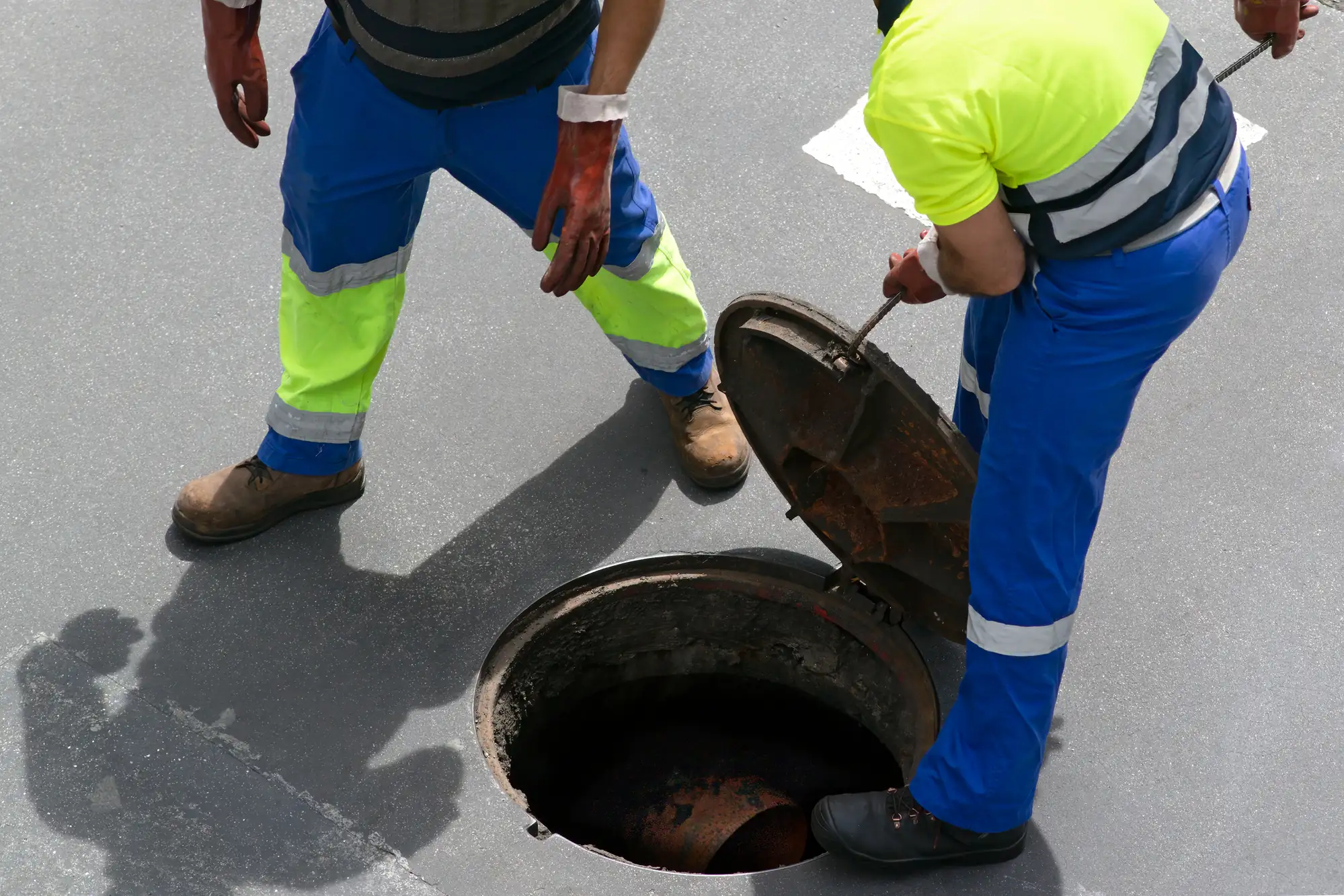
It starts with a camera inspection. Before any cleaning begins, a waterproof camera goes into the line so you can see exactly what’s there root intrusion, grease buildup, a cracked joint, or just a partial blockage that’s been slowing things down. You see the same screen we see. There’s no “trust us, it’s bad” moment. Whatever is in that pipe, you’ll know about it firsthand.
From there, the cleaning method matches what the camera found. Mechanical snaking handles most standard blockages and is often the right call for a routine cleaning. For heavier root intrusion or significant buildup which is common in Granite Bay homes with mature landscaping and older pipe materials hydro jetting uses high-pressure water to clear the line thoroughly, not just punch a hole through the obstruction. The difference matters, because a line that’s only partially cleared will block again faster.
Because Granite Bay is an unincorporated community governed by Placer County rather than a city, permit requirements and inspections for any repair work run through the Placer County Community Development Resource Agency. For a standard sewer cleaning, no permit is required but if the inspection reveals a repair is needed, we handle that process correctly from the start. After the job is done, the line gets a post-service camera pass to confirm it’s clear, and a follow-up to make sure everything is still flowing the way it should.
Ready to get started?
Every sewer cleaning service we provide includes a camera inspection before and after the work, so you have a clear picture of your line’s condition at both ends of the visit. You’re not paying for a guess you’re paying for a documented look at what’s actually happening underground. For Granite Bay homeowners with large lots, long lateral lines, and mature trees overhead, that documentation is genuinely useful: it tells you whether you’re dealing with a one-time clearing or a recurring root intrusion pattern that warrants more frequent maintenance.
The cleaning itself is priced upfront and in full before anything starts. Snaking typically runs $250 to $500 for a main sewer line. Hydro jetting which is often the right call for homes in Wexford, Wedgewood, or Silverwood where older pipe and established root systems are common generally runs $350 to $600 or more depending on line length and condition. You’ll know which applies to your situation before the work begins, and that number won’t change on you.
It’s also worth confirming whether your property connects to Placer County’s Sewer Maintenance District 2 municipal system or runs on a private septic system particularly on larger lots near the edges of the Granite Bay community. Most Granite Bay addresses are on the SMD 2 municipal system, but it’s a quick confirmation that affects how the service is scoped. If you’re not sure, we can help you sort that out before the visit.

Granite Bay’s sewer root problem is a combination of timing and biology. Most homes here were built between the late 1970s and early 1990s, and the trees planted on those properties at the time valley oaks, ornamental trees, and custom landscaping have now been growing for 35 to 40 years. Root systems that size are actively seeking moisture underground, and your sewer lateral is one of the most reliable moisture sources on the property.
The pipe materials common in that era of Granite Bay construction make the problem worse. Clay and cast iron sewer laterals develop small cracks and joint separations over time, and those gaps are exactly where roots enter. Once inside, they don’t stop growing. A camera inspection will show you whether you’re dealing with fine root tendrils that can be cleared with a standard snaking, or a more established intrusion that needs hydro jetting to fully remove. Either way, the answer starts with seeing what’s actually in the line not assuming.
For most homes, every 18 to 24 months is a reasonable baseline. But Granite Bay properties with mature trees close to the sewer lateral which describes a significant portion of homes in neighborhoods like Los Lagos, Hidden Lake Estates, and Douglas Ranch often benefit from annual cleaning, especially once root intrusion has been confirmed by a camera inspection. Once roots have found their way into a line, they come back. The question is how fast.
Seasonal timing also plays a role here. Granite Bay’s long, dry summers drive root growth toward underground moisture sources, which means intrusion problems tend to deepen between May and September even when symptoms aren’t obvious yet. Then when the first heavy rains arrive in November or December, a partial blockage that was manageable in dry conditions can become a full backup quickly. Scheduling a cleaning in the spring before the dry season pushes roots deeper is a practical way to stay ahead of that cycle.
Snaking uses a motorized auger to break through or pull out a blockage. It’s effective for most standard clogs grease accumulation, a soft obstruction, or minor root intrusion and it’s typically the faster and less expensive option. For a routine maintenance cleaning on a line that’s in decent shape, snaking is often exactly what’s needed.
Hydro jetting uses high-pressure water to scour the interior walls of the pipe. It doesn’t just punch through a blockage it removes the buildup from the pipe walls themselves, including root tendrils, grease film, and mineral deposits that a snake would leave behind. For Granite Bay homes with older clay or cast iron laterals and established root intrusion, hydro jetting tends to produce a more thorough clean and a longer interval before the next service is needed. The camera inspection before the job is what determines which method is actually appropriate for your line not a default recommendation.
For a main sewer line, snaking typically runs between $250 and $500. Hydro jetting which is more thorough and often the right call for older lines with root intrusion generally runs $350 to $600 or more, depending on the length of the line and what the camera finds. On large-lot Granite Bay properties where the lateral line runs a longer distance from the house to the Placer County sewer main, the scope of the job can affect the final number.
What won’t happen is a price that changes after the work starts. We quote the full cost upfront before anything begins, and that number is what you pay. There are no mid-job discoveries that suddenly require an additional charge. In some cases, the final invoice has actually come in below the original estimate because if the job turns out to be simpler than expected, the price reflects that.
Most Granite Bay addresses are connected to Placer County’s Sewer Maintenance District 2 municipal system, which routes wastewater to the Dry Creek Wastewater Treatment Plant in Roseville. If your home is in one of the established Granite Bay subdivisions Wexford, Wedgewood, Granite Bay Hills, Silverwood, or most of the named neighborhoods closer to Auburn-Folsom Road you’re almost certainly on the municipal system.
That said, larger parcels on the edges of the Granite Bay community, particularly those closer to the rural boundaries of the Granite Bay CDP, may still be on private septic systems. If you’re not sure which applies to your property, the quickest way to confirm is to check your Placer County property records or call the South Placer Municipal Utility District directly. It’s worth knowing before you schedule a sewer cleaning, because the service approach differs between a municipal lateral and a septic system and a contractor who doesn’t ask that question upfront probably should.
It can, and for a market where median sale prices are running around $1.5 million, it’s one of the more practical things a buyer can do during due diligence. A standard home inspection doesn’t include a sewer scope it covers visible and accessible systems, not what’s happening 20 or 30 feet underground in a lateral line that may be 40 years old. A failed or heavily root-intruded sewer lateral isn’t visible in a walkthrough, but it can cost thousands to repair after closing.
In Granite Bay specifically, where a large share of homes were built in the 1980s with clay or cast iron laterals and have decades of tree root exposure, the probability of finding something worth knowing about is genuinely higher than in a newer development. A pre-purchase sewer camera inspection gives you a clear picture of the line’s condition before you sign anything and if there is a problem, it becomes a negotiating point rather than a surprise. We can scope the line and walk you through exactly what the camera shows, so you’re making an informed decision on a significant investment.