Not all water heaters work the same way. Learn which type fits your El Dorado County home's needs and budget best.
Share:
Summary:
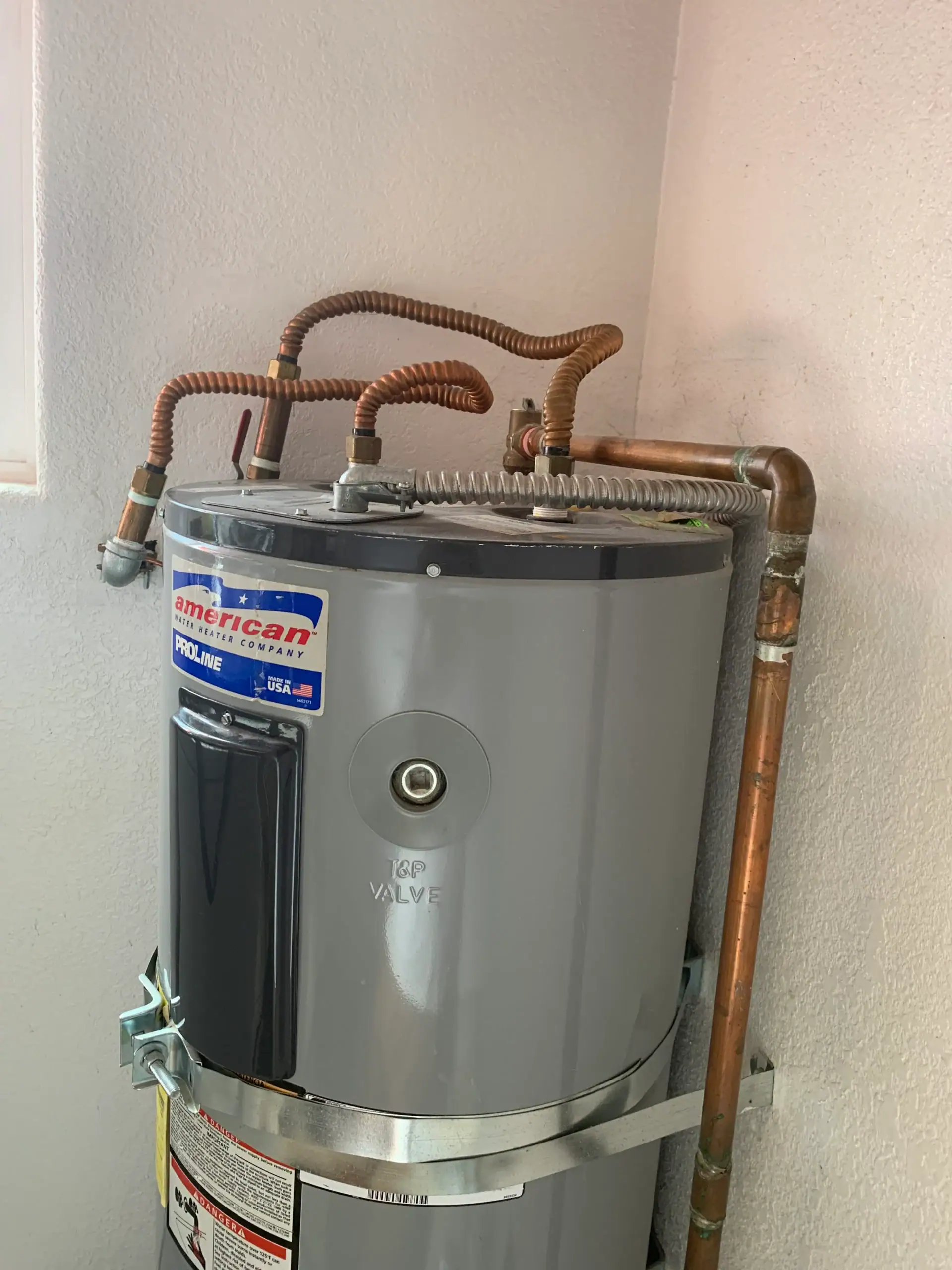
Tank water heaters are the workhorses you probably grew up with. Cold water enters a 40-80 gallon insulated tank, where a gas burner or electric heating elements keep it hot and ready 24/7.
Think of it like a big thermos that’s always plugged in. When you turn on your shower, hot water flows out the top while cold water refills from the bottom. Simple, reliable, and every plumber in El Dorado County can fix them without breaking a sweat.
The downside? Your tank is heating water whether you’re home or on vacation. That constant reheating costs you about $400-600 per year in energy bills for the average El Dorado County household.
Gas tank water heaters heat water faster and cost less to operate than electric models. In El Dorado County, where PG&E rates keep climbing, gas typically runs about 50% cheaper than electric for the same amount of hot water.
Gas units need proper venting and a gas line, which adds to installation costs if you don’t already have them. But they’ll heat a full tank in about 30-40 minutes versus 60-90 minutes for electric. During power outages, gas water heaters with pilot lights keep working while electric units shut down completely.
Electric tank heaters cost less upfront and are easier to install almost anywhere with adequate electrical service. They’re also safer since there’s no combustion or gas lines involved. The trade-off is higher operating costs and slower recovery times when you drain the tank.
For most El Dorado County homes, gas makes more financial sense if you already have a gas line. If you’re starting from scratch or have solar panels offsetting electric costs, electric might work better for your situation.
Tank water heaters typically last 8-12 years in El Dorado County’s hard water conditions. The minerals in our local water accelerate corrosion inside the tank, which is why you’ll see rust-colored water or hear popping sounds as sediment builds up.
Regular maintenance extends their life significantly. Flushing the tank annually removes sediment buildup, and replacing the anode rod every 3-5 years prevents the tank from corroding through. Most homeowners skip this maintenance, which is why tanks fail earlier than they should.
When tank water heaters fail, they usually leak. A 50-gallon tank can dump a lot of water fast, potentially causing thousands in damage. That’s why many El Dorado County homeowners replace tanks proactively around the 8-10 year mark rather than risk a flood.
Signs your tank is failing include discolored water, metallic tastes, rumbling sounds, and visible rust on the tank exterior. If your water heater is over 10 years old and showing these symptoms, replacement usually makes more sense than repairs.
Want live answers?
Connect with a Murray Plumbing expert for fast, friendly support.
Tankless water heaters heat water instantly as it flows through the unit. When you open a hot water tap, cold water travels through a heat exchanger where gas burners or electric coils heat it to your desired temperature in seconds.
No storage tank means no standby heat loss. You’re only paying to heat water when you actually use it. For El Dorado County households using less than 40 gallons of hot water daily, tankless units can cut energy costs by 25-35%.
The catch is flow rate limitations. Most whole-house tankless units deliver 2-5 gallons per minute, which might not keep up if you’re running the dishwasher while someone showers. Gas tankless units typically provide higher flow rates than electric models.
Gas tankless water heaters are the heavy hitters, delivering 5-10+ gallons per minute of hot water. They work well for larger El Dorado County families and maintain consistent performance even when groundwater temperatures drop in winter.
Installation requires adequate gas supply (usually 3/4″ line minimum) and proper venting. Many homes need gas line upgrades, which adds $1,500-2,500 to installation costs. But the higher flow rates and lower operating costs usually justify the investment for busy households.
Electric tankless units are compact and easier to install but deliver lower flow rates, typically 2-4 gallons per minute. They work well for smaller homes or as point-of-use heaters for specific fixtures. However, they require substantial electrical upgrades in most homes – often 200-amp service with multiple dedicated circuits.
For El Dorado County’s climate and typical household sizes, gas tankless usually provides better performance and long-term value. Electric tankless makes sense for smaller homes, condos, or situations where gas isn’t available.
Tankless water heaters cost $2,500-4,500 installed in El Dorado County, roughly double the price of tank replacements. The higher upfront cost often pays back through energy savings over their 15-20 year lifespan, especially for households that use hot water efficiently.
Maintenance requirements are more demanding than tank units. Annual descaling is essential in our hard water area, and repairs tend to be more expensive due to complex controls and heat exchangers. However, tankless units rarely fail catastrophically like tanks can.
The “endless hot water” marketing is mostly true, but there are practical limitations. If your household regularly uses multiple hot water fixtures simultaneously, a single tankless unit might struggle to keep up. Some El Dorado County homes install multiple smaller units or combine tankless with a small storage tank for peak demand periods.
Cold water sandwich effect is another consideration – brief temperature fluctuations when hot water demand changes quickly. Most modern units minimize this, but it’s worth understanding before making the switch from a tank system.
The best water heater for your home depends on your hot water usage patterns, budget, and existing infrastructure. Families using less than 40 gallons daily often benefit most from tankless efficiency, while larger households might prefer the simplicity and lower upfront costs of quality tank units.
Consider your home’s age and utility setup. Older El Dorado County homes might need significant electrical or gas line upgrades for tankless installation, which affects the overall value proposition. Sometimes a high-efficiency tank water heater provides the best balance of performance and cost.
Don’t make this decision during an emergency if you can avoid it. Planning ahead gives you time to evaluate options properly and potentially take advantage of rebates or financing programs. When you’re ready to upgrade or facing an unexpected failure, we can help you choose the right system for your specific situation and budget.
Article details:
Share:
Continue learning: