
Hear from Our Customers
Most East Sacramento homes were built between the 1920s and 1950s. That means the clay or cast iron pipe running from your house to the city main has been underground for 70 to 130 years and it was never meant to last this long. When it starts failing, you notice it slowly: a drain that gurgles, a toilet that backs up after heavy rain, a smell you can’t quite place. By the time those signs show up consistently, the pipe has usually been compromised for a while.
What changes after a proper sewer repair isn’t just that the drains run clean. It’s that you stop holding your breath every time you have guests over. You stop wondering if the backup that happened last November is going to happen again this winter when Sacramento’s rains come through and the ground shifts. You get a straight answer about what’s actually wrong and what it will cost to fix it before anyone starts digging.
For homeowners in the Fab 40s or around McKinley Park, there’s another layer to this. Your landscaping isn’t just decoration it’s part of what makes your property worth what it’s worth. We use trenchless repair methods wherever conditions allow, which means we can address the line without a backhoe tearing through your front yard. The mature trees, the established gardens, the brick paths they stay exactly where they are.
We’ve been doing this work in Sacramento County for over two decades. Not as a franchise. Not as a call center with rotating crews. Ryan Murray runs this operation personally, which means when something goes sideways on a job, there’s a real person accountable for it not an 800 number.
East Sacramento is the kind of neighborhood where homeowners do their research. You’re going to check the license, read the reviews, and probably get a second opinion if the first quote sounds off. That’s smart and it’s exactly the kind of customer we work well with. Our CSLB C-36 license is active and verifiable at cslb.ca.gov. Our 4.7-star Google rating reflects what customers actually say after the job is done, not before.
We’ve worked on the same type of aging clay and cast iron laterals that run under homes from Folsom Boulevard to Elvas Avenue. We know what Sacramento’s soil does to those pipes over a wet winter. We know the City of Sacramento’s permit process because we handle it on every job you don’t have to chase down an inspector or figure out which department to call.
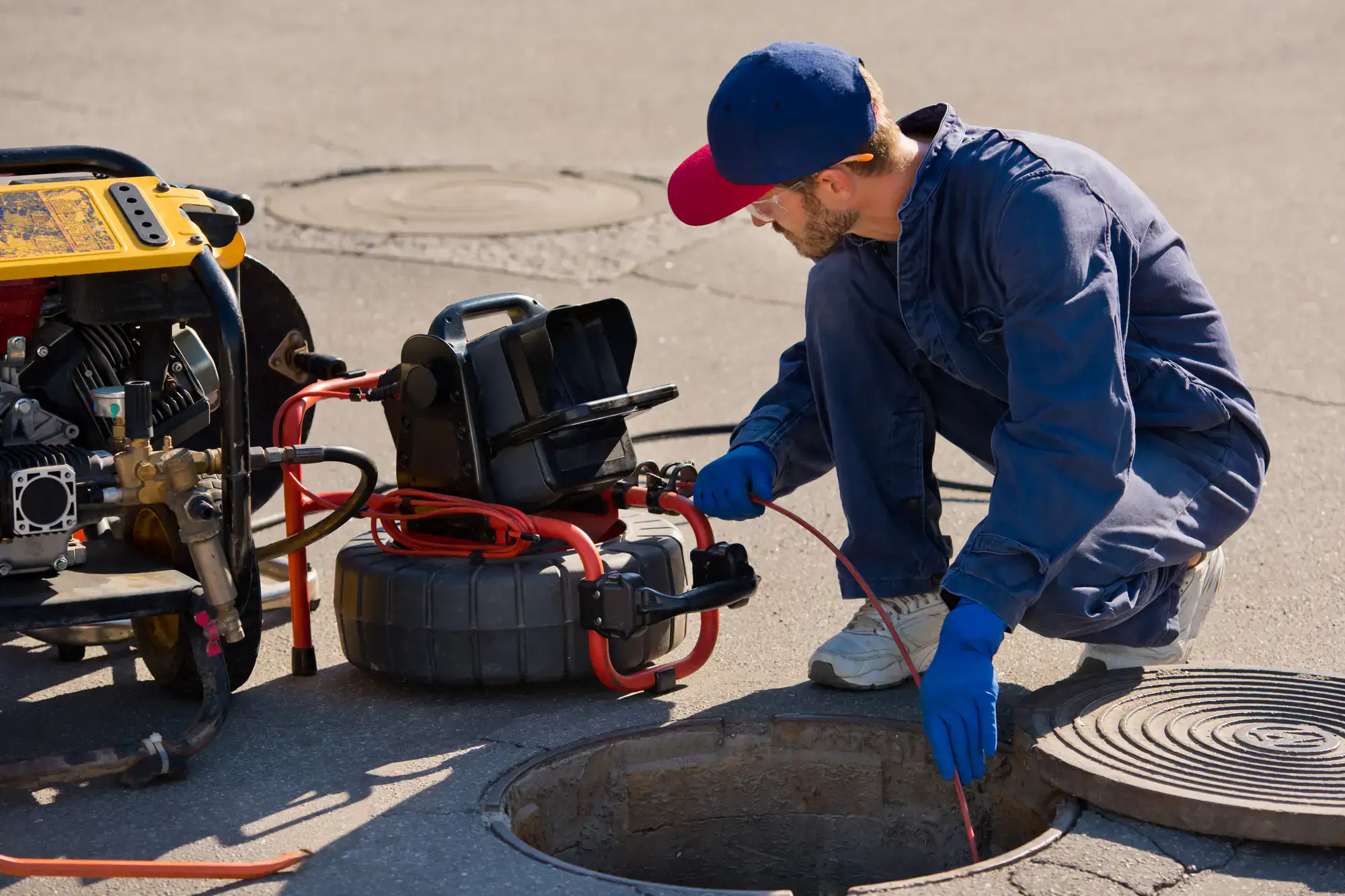
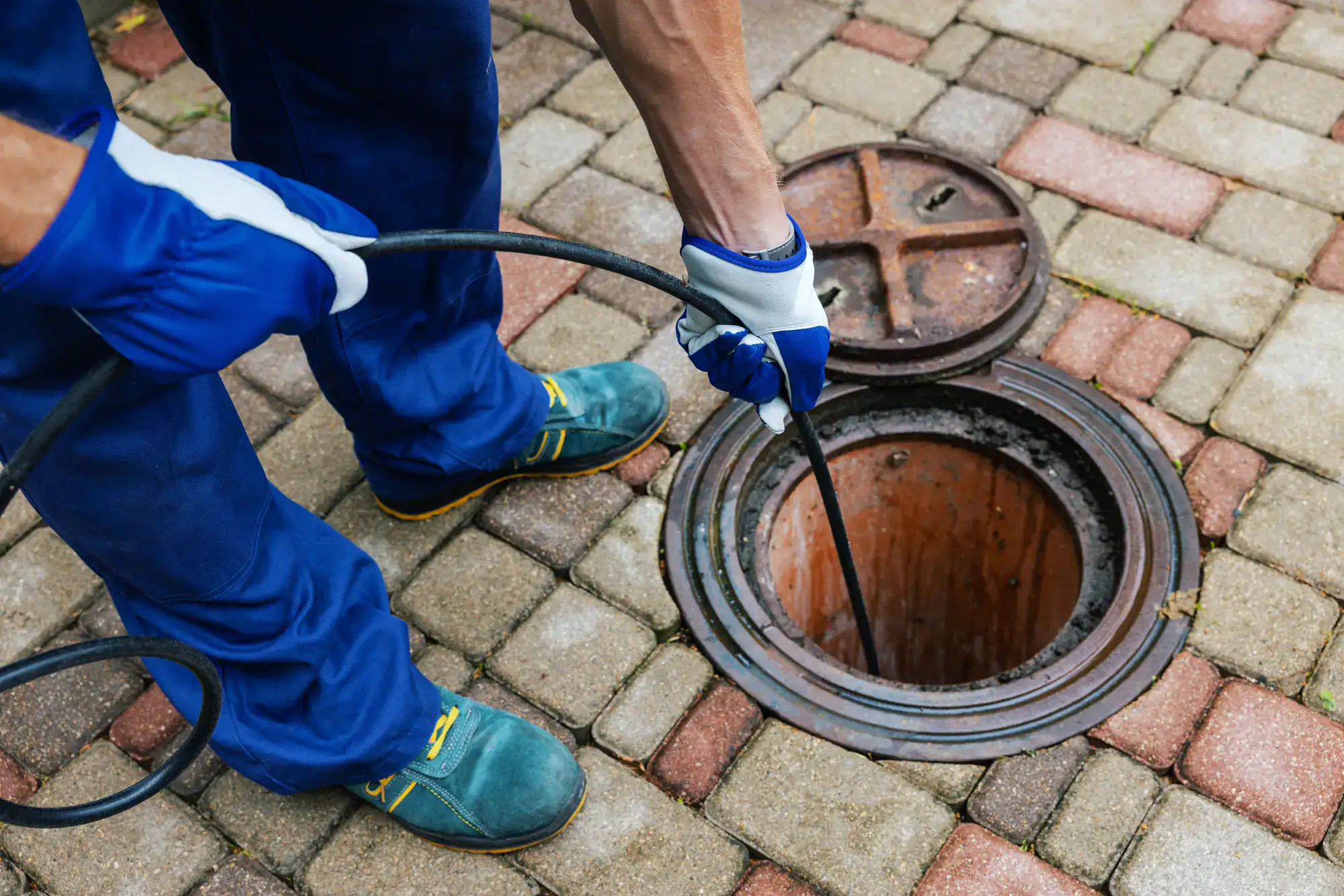
Every sewer job starts with a camera inspection no exceptions. We run a video line through your lateral so you can see exactly what’s happening inside the pipe. Root intrusion, a collapsed section, a bellied joint, mineral buildup from decades of Sacramento’s hard water whatever it is, you see it on screen before we recommend anything. That’s not an upsell. It’s how we make sure we’re fixing the right problem.
Once we know what we’re dealing with, we give you a specific number. Not a range. Not a “starting at” figure. A real price for the actual repair your pipe needs and it won’t change once work begins. If the job turns out to be simpler than the camera suggested, the price goes down. That’s happened before, and we’ll tell you when it does.
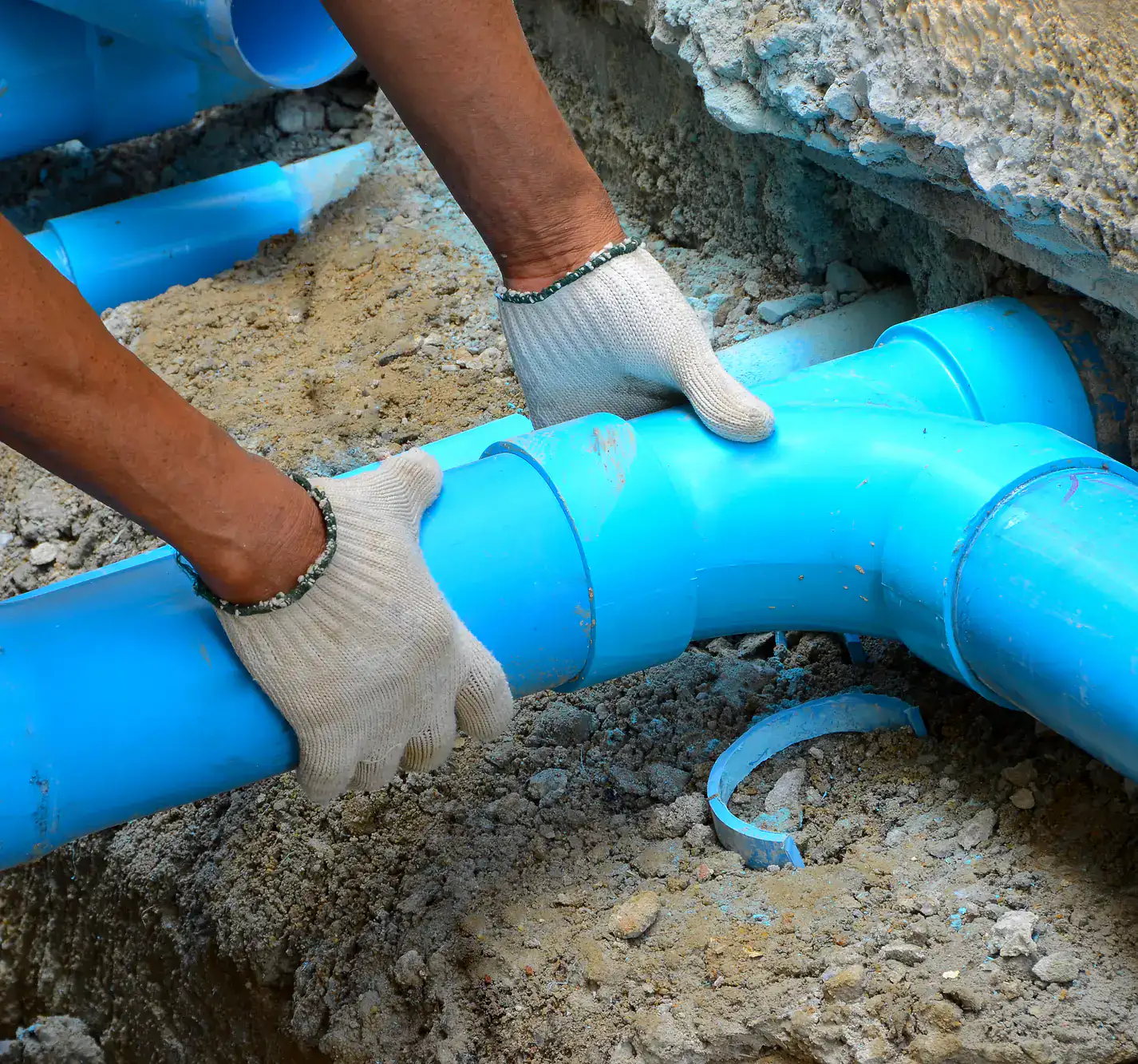
From there, we pull the required City of Sacramento permit, complete the repair trenchless where conditions allow, open trench when necessary and coordinate the city inspection to close the permit. East Sacramento falls under Sacramento city code, not county jurisdiction, so the permitting process here is specific to the city’s requirements. We manage all of it. When we leave, the job is done, the permit is closed, and you have documentation that the work was done correctly and to code which matters when your home is worth what East Sacramento homes are worth.
Ready to get started?
Sewer repairs in East Sacramento aren’t one-size-fits-all, and we don’t treat them that way. A spot repair on a single cracked section of clay pipe is a different job than relining a 60-foot lateral that’s been infiltrated by elm roots for the past decade. The camera inspection at the start of every job is what lets us tell the difference and recommend only what your specific pipe actually needs.
For pipes that are structurally compromised but still largely intact, pipe lining (CIPP) is often the right call. We insert a resin-saturated liner, cure it in place, and you end up with a smooth, root-resistant interior without excavating the yard. For pipes that have collapsed or shifted too far for lining, pipe bursting lets us pull a new line through the old one again, with minimal digging. Both methods are well-suited to East Sacramento’s older properties, where the alternative a full open-trench replacement can mean tearing up mature landscaping that took 40 years to grow.
When the scope calls for a full replacement, we handle that too. We work with the Sacramento Area Sewer District’s framework, understanding that SacSewer covers the public main while the private lateral from your home to that main is your responsibility. We also carry general liability insurance and hold our C-36 license in good standing, so you’re covered if anything unexpected comes up during the job.
This is the right question to ask before agreeing to anything and the honest answer is that you can’t know without a camera inspection. A contractor who tells you that you need full replacement before looking inside the pipe is guessing, and that guess tends to cost homeowners several thousand dollars more than necessary.
In East Sacramento, the most common scenario we see is partial damage: a section of clay pipe cracked by root intrusion, or a joint that’s separated due to seasonal soil movement. These situations are often repairable with a spot fix or a pipe lining rather than a full replacement. Full replacement makes sense when the pipe has multiple collapse points, when it’s bellied severely along its length, or when the pipe wall has deteriorated to the point where lining won’t hold. The camera footage tells that story clearly and we show it to you so you can see what we’re seeing before you make any decision.
The range is genuinely wide, and anyone who gives you a number without seeing the pipe first is estimating blindly. That said, here’s a realistic breakdown: minor repairs clearing a root blockage and patching a small section can run $650 to $1,500. A pipe lining on a standard residential lateral typically falls between $3,000 and $6,000 depending on length and condition. A full sewer line replacement on an East Sacramento property, where laterals can run 50 to 80 feet from the home to the city main, generally ranges from $7,000 to $15,000.
The age of East Sacramento’s housing stock matters here. Homes in the Fab 40s and around McKinley Park have laterals that are 90 to 130 years old and older pipes in worse condition cost more to address than newer ones. What you spend on a camera inspection upfront is almost always recovered by avoiding an unnecessary recommendation. We give you the specific number before work starts, and that number doesn’t change.
Yes sewer repair and replacement in East Sacramento requires a permit from the City of Sacramento, and a city inspection is required to close it out. This isn’t optional, and it’s not a formality. Unpermitted sewer work is a code violation under Sacramento City Code Chapter 13.08, and it creates a real liability problem when you go to sell or refinance a home. In a neighborhood where properties regularly sell for $700,000 to over $1 million, that’s not a risk worth taking.
We handle the entire permit process on your behalf. We pull the permit before work begins, complete the repair, and coordinate the City of Sacramento inspection to close it. You don’t need to figure out which department to contact or what forms to submit. When the job is done, you have a closed permit and documentation that the work was performed correctly and to code which is exactly what a future buyer’s inspector or lender will want to see.
It comes down to what Sacramento’s wet winters do to aging pipe infrastructure. East Sacramento’s clay-heavy soil absorbs water and expands when it’s saturated, which puts direct mechanical pressure on buried pipes. Joints that have been slowly separating for years common in 80- to 100-year-old clay laterals can shift or crack further under that pressure. At the same time, heavy rainfall increases the volume of water moving through the system, which overwhelms a pipe that’s already partially blocked by roots or debris.
The result is that a line which drains slowly but “works” during dry months suddenly backs up completely during the first major rain event of the season. If you’re noticing this pattern slow drains in fall, backups in winter the pipe has likely been compromised for longer than the backup suggests. A camera inspection before the rainy season is the most straightforward way to find out what you’re dealing with before it becomes an emergency.
This is one of the most common sources of confusion for East Sacramento homeowners, and it matters a lot when you’re dealing with a backup. The Sacramento Area Sewer District (SacSewer) is responsible for the public sewer main the larger pipe running under the street. If there’s a problem in that main line, SacSewer handles it at no cost to you and responds 24/7.
The private lateral the pipe that runs from your home to that public main is entirely your responsibility as the property owner. That includes everything from the point where it exits your foundation to where it connects to the city main at the street. In East Sacramento, that lateral is almost always the original pipe installed when the home was built, which means it’s the same 70- to 130-year-old clay or cast iron that’s the source of most residential sewer problems in the neighborhood. If SacSewer comes out and confirms the issue is in your lateral, they’ll tell you to hire a licensed contractor and that’s where we come in.
Tree roots are the single most common cause of sewer line failure in East Sacramento and the neighborhood’s famous tree canopy makes this more than a generic warning. The mature elms, oaks, and sycamores lining streets throughout the Fab 40s and McKinley Park have root systems that extend 30 to 50 feet from the trunk. Those roots are drawn to the moisture and nutrients inside aging sewer pipes, and they find their way in through hairline cracks and joint separations that develop naturally in clay and cast iron over decades.
Once roots are inside, they don’t stay small. They grow with every season, and repeated snaking only clears them temporarily the roots grow back, usually within months. The permanent fix depends on the condition of the pipe wall. If the pipe is structurally sound, hydro jetting followed by a pipe lining creates a smooth, root-resistant interior that stops the cycle. If the roots have compromised the pipe wall itself, a more involved repair or replacement is needed. The camera inspection tells us which situation you’re in and that determines the right approach, not a blanket recommendation.