
Hear from Our Customers
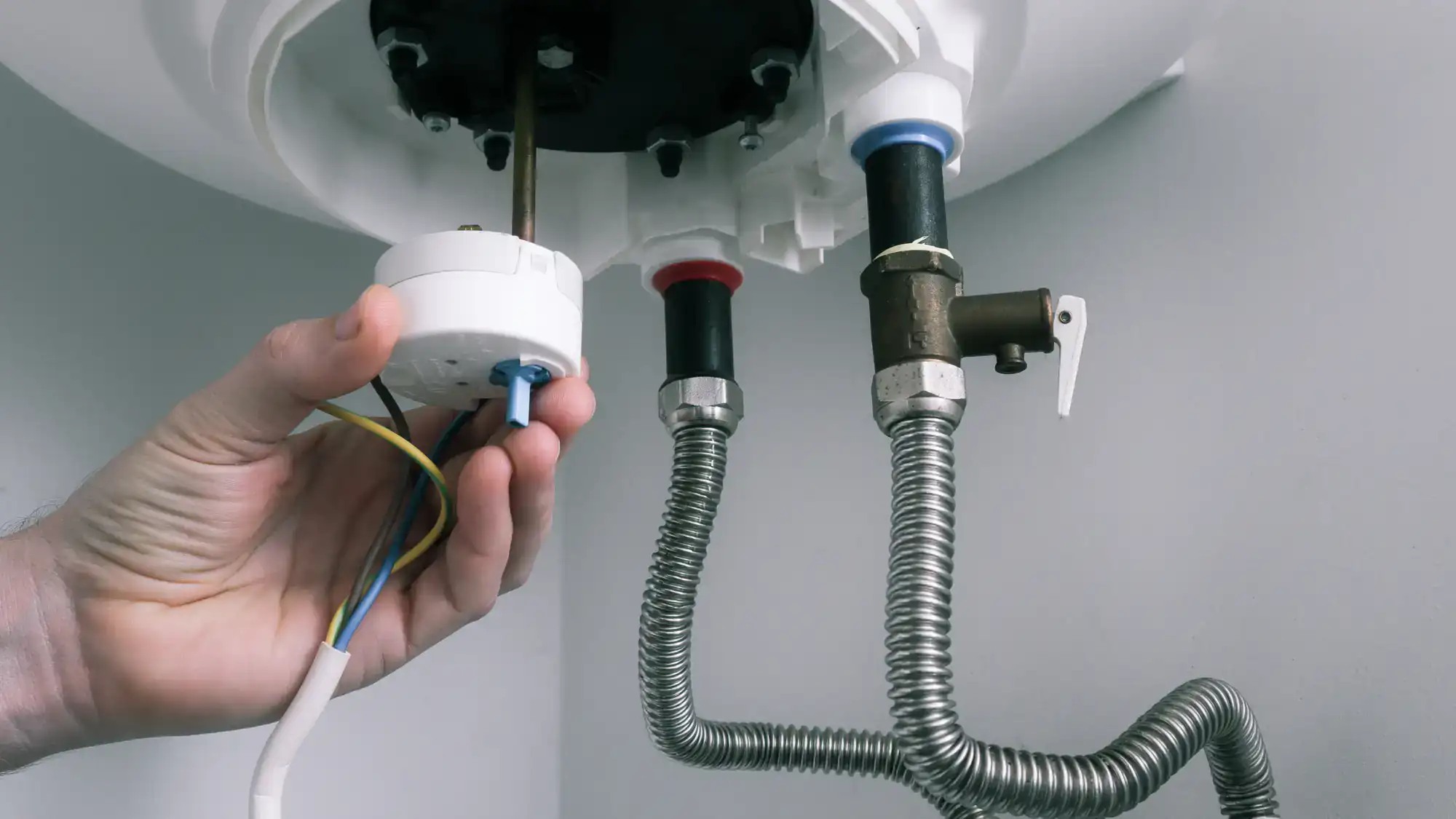
When your water heater is done, you feel it everywhere cold showers before school, slow mornings, that low-grade stress of wondering when it’s finally going to give out completely. Getting it replaced isn’t just about hot water. It’s about getting your routine back without worrying about what’s happening behind the utility closet door.
Here’s what most people in Antelope don’t realize: the water running through your home comes from Sacramento Suburban Water District groundwater sources, and it carries a significant amount of calcium and magnesium. That mineral content settles at the bottom of your tank over time, hardens into sediment, and forces your water heater to work harder than it should. That rumbling or popping sound you’ve been hearing? That’s not normal aging that’s your unit burning through extra energy just to heat water past a layer of mineral buildup. In Antelope’s water conditions, this process happens faster than most national averages suggest.
Add to that the fact that most homes in Antelope were built between the late 1980s and late 1990s. A home built in 1990 is now 35 years old. If your water heater hasn’t been replaced in the last decade, or if it’s the original unit, it’s not a question of if it fails it’s when. A proper hot water heater replacement in Antelope means getting the right size unit, installed correctly, with a permit pulled through Sacramento County so your warranty is protected and your home sale won’t hit a snag down the road.
We’ve been serving Sacramento-area homeowners for over 60 years. Five generations of family ownership. Not a franchise, not a call center the same company, the same standards, decade after decade. When you call, you’re getting a team that has our name on every job and a reputation we’ve spent six decades building.
Antelope sits right at the edge of Sacramento County and Placer County, and the homes here reflect that mostly built in the late ’80s and ’90s, owner-occupied, family-oriented, and now at the age where original plumbing systems are starting to show their years. Our technicians know what to expect when they open up a utility closet in a 30-year-old Antelope home. We’ve seen the corroded flex connectors, the aging pressure relief valves, the sediment-packed tanks. We know what needs to be addressed and what can wait and we’ll tell you honestly either way.
With a 4.7-star rating across hundreds of verified reviews, the feedback is consistent: on time, professional, cleaned up after ourselves, and the bill came in at or under the estimate.

It starts with a call. You describe what’s going on no hot water, strange sounds, visible leak, or just an old unit you’ve been meaning to replace and we give you a real estimate before anyone shows up at your door. Not a range designed to get a foot in the door. An actual number you can count on.
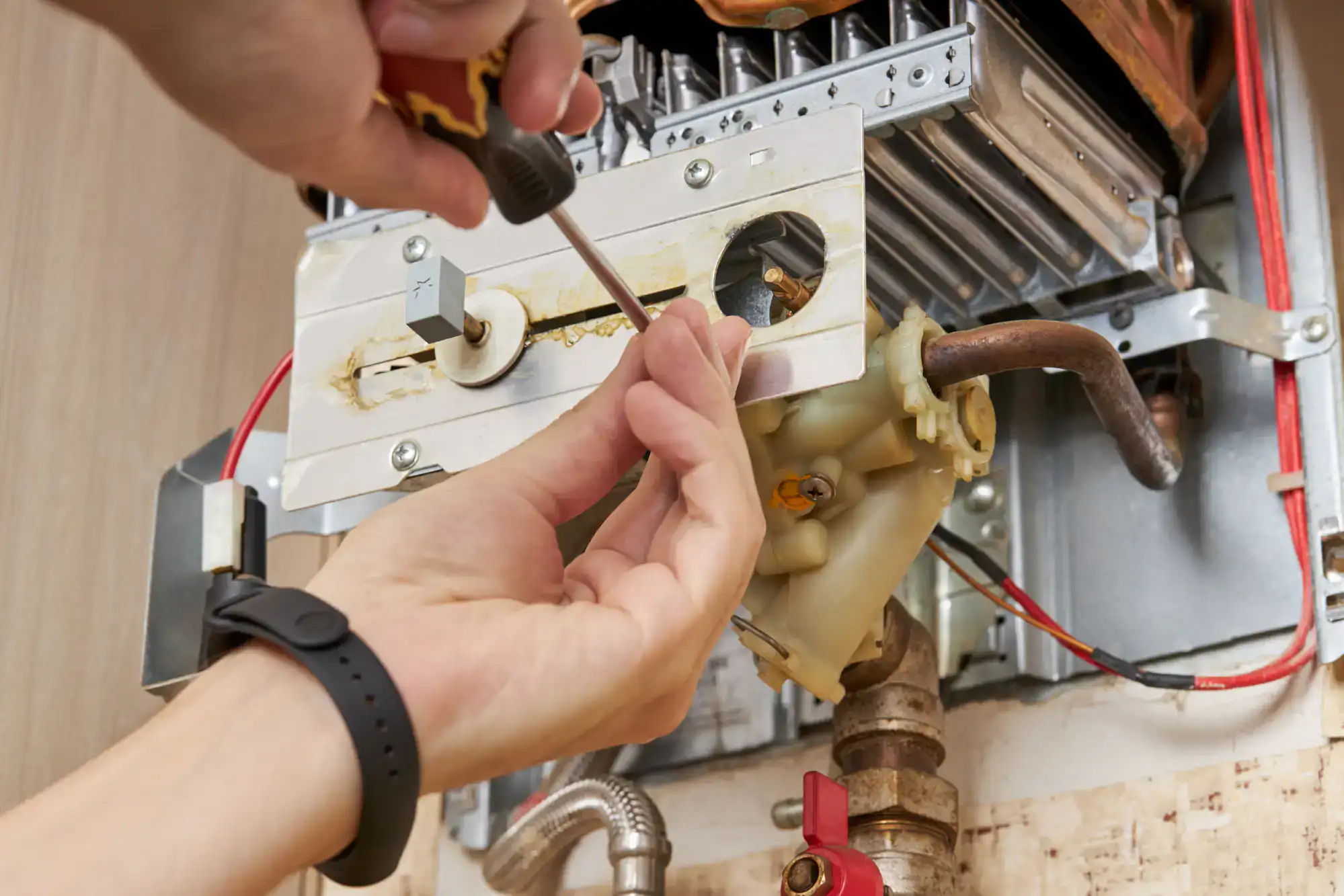
When our technician arrives, the first thing they do is assess the full picture. In a 30-year-old Antelope home, that means checking the unit itself, the connections around it, the venting if it’s gas, and the condition of the supply lines. Hard water from the Sacramento Suburban Water District leaves its mark on everything it touches, and a replacement done right accounts for what the water has been doing to the surrounding components not just the tank itself. If something else needs attention, you’ll hear about it before any work begins, not after.
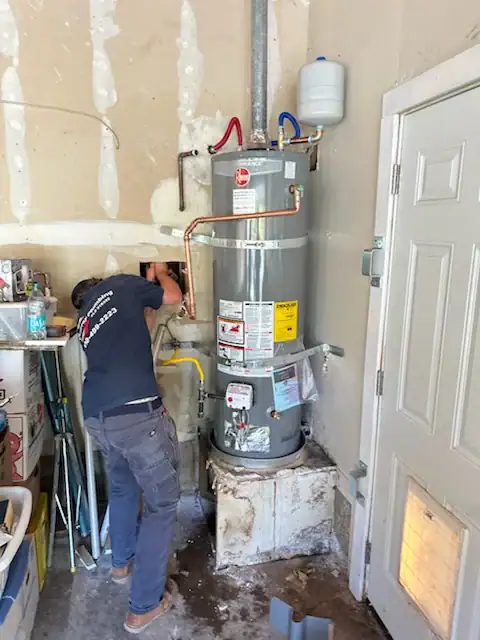
From there, the old unit comes out and the new one goes in. Most standard tank replacements are done in a single visit often in under an hour from arrival to hot water flowing. We handle the Sacramento County permit as part of the job, so your installation is fully documented, code-compliant, and covered from day one. No loose ends, no paperwork you have to chase down yourself.
Ready to get started?
Not every home in Antelope needs the same solution. A tankless water heater makes a lot of sense for certain households longer lifespan (20 years vs. 8–15 for a tank), lower monthly energy costs, and no standby heat loss. But in Antelope’s hard water conditions, a tankless unit also requires annual descaling to keep the heat exchanger clear of mineral buildup. If that maintenance gets skipped, you lose efficiency fast. We’ll walk you through that honestly before you commit to anything.
For most Antelope homes single-family residences in the late-1980s to late-1990s build era a high-efficiency tank replacement in the 40- to 50-gallon range is the right call. It’s straightforward, cost-effective, and gets your household back to normal the same day. Replacement costs for a standard tank unit typically run between $882 and $1,816 depending on the unit and the complexity of the installation. Tankless systems generally range from $1,400 to $3,900. Either way, you’ll know the number before work starts.
Every installation includes Sacramento County permit acquisition, certified installation that keeps your manufacturer warranty valid, and a full check of the surrounding components supply lines, pressure relief valve, venting, and connections. We hold Certified Installer status, which matters when you need a warranty claim honored or when a home inspector asks for documentation during a sale. One call, one crew, everything handled.
Yes and it’s not optional. California Plumbing Code Section 502.1 states that it’s unlawful to install, remove, or replace a water heater without a permit from the Authority Having Jurisdiction. In Antelope, that’s Sacramento County, since Antelope is an unincorporated community governed by the Sacramento County Board of Supervisors not a city building department. That’s a detail a lot of homeowners miss.
The permit requirement exists to make sure the installation is inspected and meets current California building codes, including energy efficiency standards for new units. Skipping the permit doesn’t just put you at risk of a code violation it can void the manufacturer’s warranty on your new water heater and create problems when you go to sell your home. We pull the permit as a standard part of every job, so you don’t have to think about it.
The honest answer depends on the age of the unit and what’s actually wrong with it. A good rule of thumb is the 10% rule: if the cost of a repair exceeds 10% of what a full replacement would cost, replacement almost always makes more financial sense. For a unit that’s already 10 or more years old, most repairs are just buying time on a system that’s already past its prime.
In Antelope specifically, hard water from Sacramento Suburban Water District groundwater sources accelerates sediment buildup inside tank heaters. That sediment shortens the effective lifespan of the unit and drives up your energy bill as the burner works harder to heat through it. Homes in Antelope’s dominant build era late 1980s through late 1990s are now 25 to 35 years old, which means many units are on their second or third replacement cycle. If your unit is making noise, taking longer to recover, or showing rust-colored water, those are signs the decision has likely already been made for you.
For a standard tank water heater replacement in a single-family home, most jobs are completed in a single visit often in under an hour from the time our technician arrives to the time hot water is flowing again. That includes removing the old unit, installing the new one, checking all connections, and testing the system before leaving.
More complex jobs like switching from a tank to a tankless system, or situations where the surrounding plumbing or venting needs attention take longer and will be scoped out before work begins. In older Antelope homes, it’s not uncommon to find aging flex connectors or corroded supply lines that need to be addressed at the same time. If that’s the case, you’ll know about it upfront, not after the fact. The goal is always to leave your home with everything working correctly, not just the new unit installed.
The core difference is how they store and heat water. A tank unit holds 40 to 50 gallons of preheated water ready to go at any time, which means there’s always some energy being used to keep that water warm even when you’re not using it. A tankless unit heats water on demand, which eliminates that standby loss and can meaningfully reduce your monthly energy costs. Tankless units also last significantly longer around 20 years versus 8 to 15 for a standard tank.
The important caveat for Antelope homeowners is hard water. The calcium and magnesium minerals in Sacramento Suburban Water District’s groundwater supply will build up inside a tankless heat exchanger over time, reducing flow rates and efficiency. Annual descaling is the fix but it needs to actually happen. If you’re considering a tankless upgrade, we’ll walk you through what that maintenance looks like and what it costs so you can make a fully informed decision. There’s no wrong answer just the right fit for your household.
For a standard tank water heater replacement, costs in the Antelope area typically run between $882 and $1,816, with the national average landing around $1,338. The final number depends on the unit size, the brand, and what our technician finds when they assess the existing setup. In a 30-year-old Antelope home, it’s not unusual to find that supply lines or other connections need to be updated at the same time which affects the total.
Tankless water heater installations generally range from $1,400 to $3,900 depending on the capacity of the unit and the complexity of the conversion. If you’re switching fuel types or need venting modifications, that adds to the scope. We give you an honest estimate before any work begins not a lowball number to get in the door. Customers have consistently noted that their final bill came in at or under the original quote. That’s just how we operate.
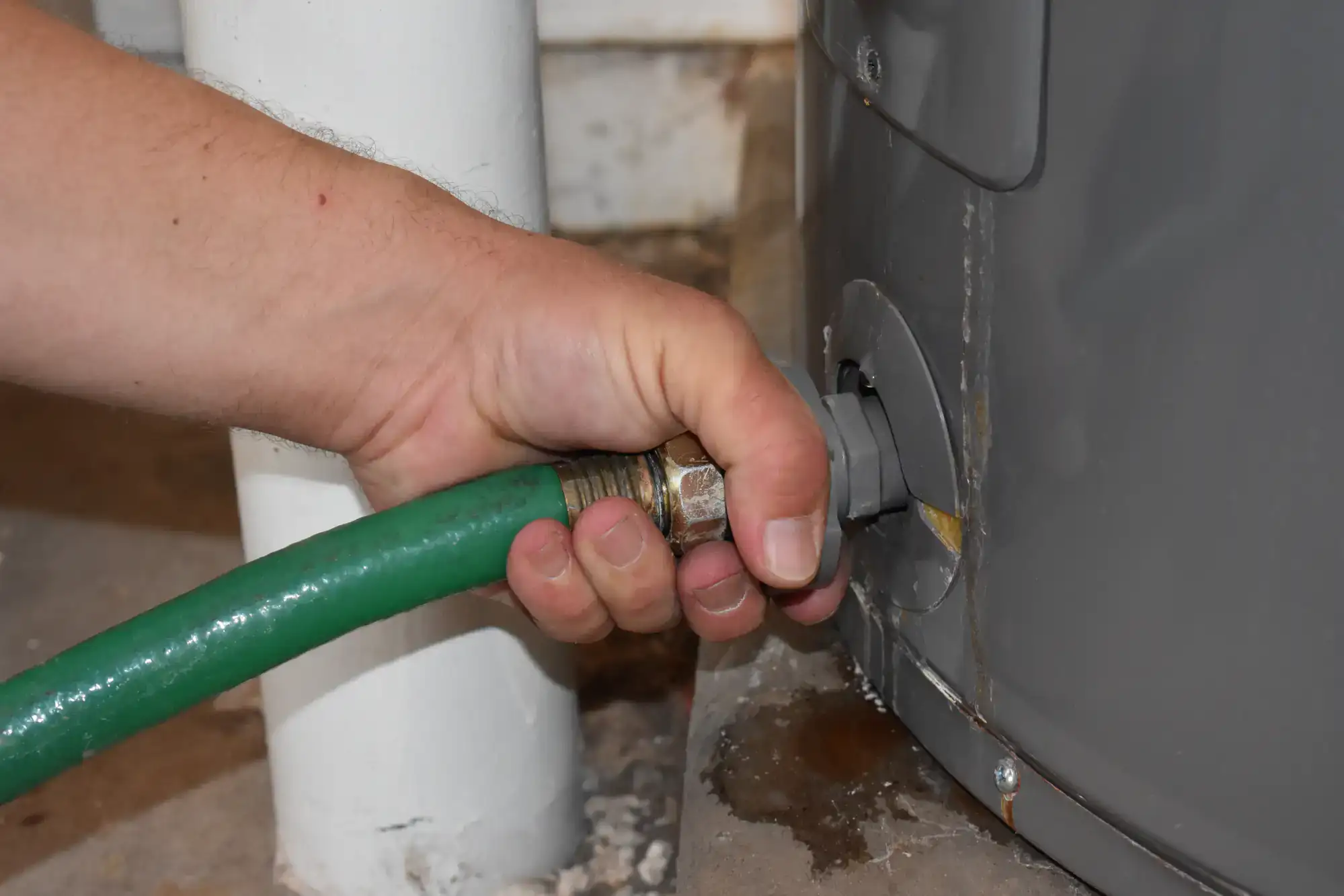
The most common reason is the water itself. Sacramento Suburban Water District, whose facilities are based on Elverta Road right here in Antelope, draws water from groundwater sources that carry elevated levels of calcium and magnesium. That mineral content flows into your water heater every day and gradually settles at the bottom of the tank as sediment. Over time, it hardens, insulates the heating element from the water above it, and forces the unit to run longer and hotter to compensate. That’s what causes the rumbling or popping sounds, the rising energy bills, and the shortened lifespan.
Most tank water heaters are rated to last 8 to 15 years under average conditions. In Antelope’s hard water environment, units often show significant performance decline closer to the 8-year mark sometimes earlier if the unit was never flushed. Regular annual flushing can slow this process, but once sediment has hardened into a thick layer, flushing doesn’t fully reverse it. If your unit is 8 years or older and showing signs of strain, a water heater replacement in Antelope is worth getting a real estimate on because running an inefficient unit to the point of failure usually costs more in energy and emergency service than a planned replacement would have.