
Hear from Our Customers
Most Granite Bay residents aren’t home when things go wrong. You’re on Douglas Boulevard heading back from Roseville or Folsom, and you walk in to find cold water and a puddle forming near the utility closet. That’s not a small inconvenience in a home this size it’s a disruption that touches every bathroom, every person, and every hour of your evening.
Getting your water heater repaired quickly means more than comfort. It means stopping water damage before it starts. A slow leak left overnight in a finished utility room or basement can turn into a remediation bill that runs well past a thousand dollars. The repair itself is almost always the cheaper call and the faster you move on it, the more options you have.
Granite Bay’s water supply is hard. The mineral content coming through your pipes whether you’re on one of the eight community water systems serving the area or drawing from a private well on a larger lot near Folsom Lake accelerates sediment buildup inside your tank. That rumbling or popping sound your water heater makes isn’t normal aging. It’s a warning. A technician who understands local water conditions can tell you whether a flush and maintenance call buys you years, or whether the unit is past the point where repair makes financial sense.
We’ve built our reputation on one thing that’s surprisingly rare in this industry: doing exactly what was said, for exactly what was quoted. Customers have noted more than once that their final invoice came in below the original estimate. That’s not an accident. It’s a reflection of how we operate: diagnose first, explain what was found, give a number you can trust, and then do the work.
When our technician comes to your home in Granite Bay, they’re not walking in with a replacement in mind before they’ve looked at anything. We run a proper diagnostic, walk you through the findings, and give you a clear picture of your options. Whether you’re in Los Lagos, Folsom Lake Estates, or a home off Auburn-Folsom Road, the approach is the same honest, efficient, and built around what’s actually right for your situation.
Our 4.7-star Google rating across 93 reviews reflects a team that performs consistently, not just occasionally.
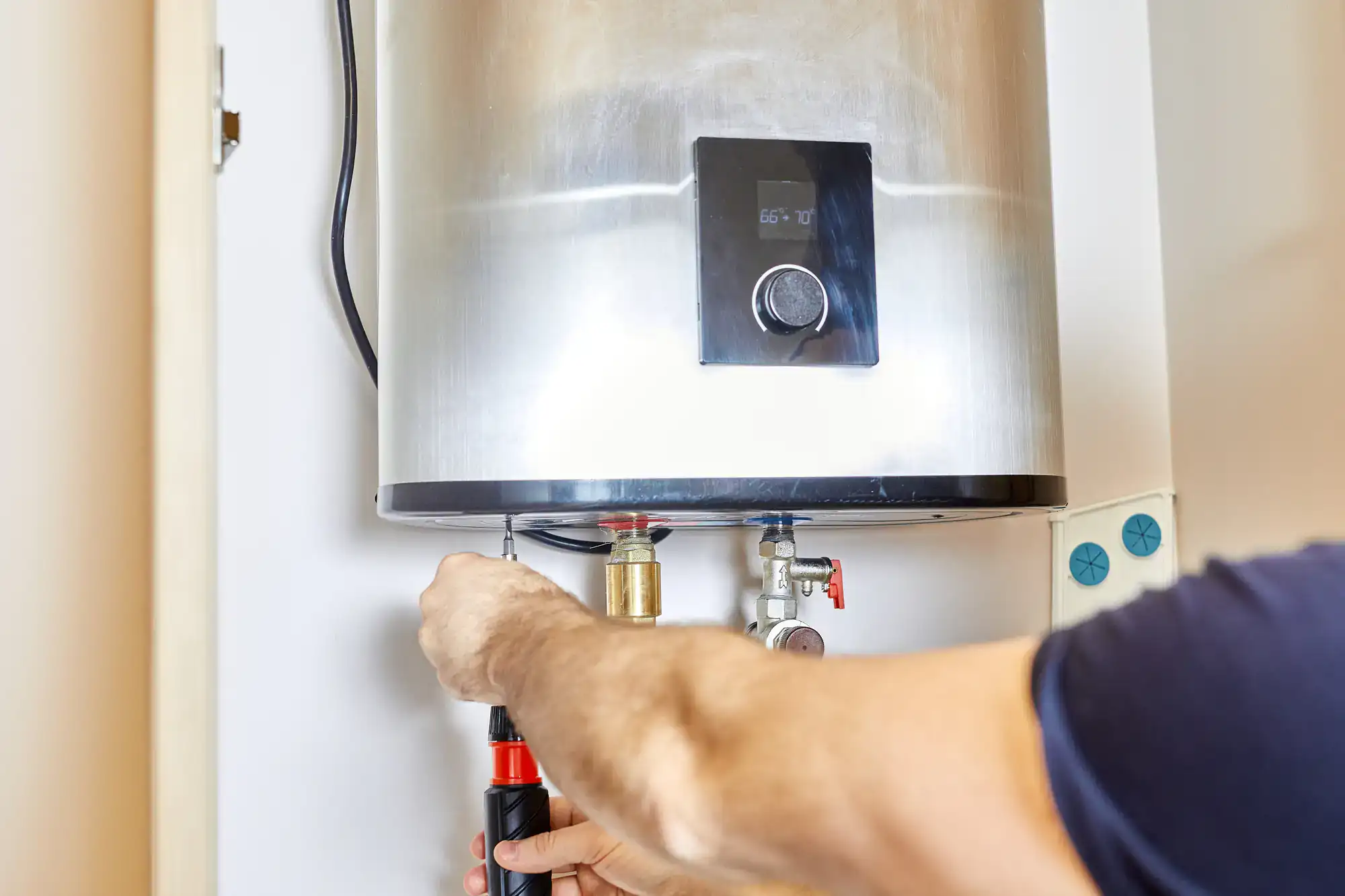
When you call us, the first thing that happens is a real conversation not a voicemail loop. You describe what’s going on, and we work to get a technician to your home the same day in most cases. For after-hours failures, our 24/7 emergency line means you’re not waiting until morning to find out how bad it is.
Once on-site, our technician runs a full diagnostic before any work begins. That means checking the thermostat, heating elements, anode rod condition, pressure relief valve, and the base of the tank for signs of corrosion or sediment accumulation which is especially common in Granite Bay given the area’s hard water. If the unit is repairable, you’ll get a clear quote before anything is touched. If it’s not if the tank is corroded through or the unit is well past its service life you’ll hear that plainly, with an explanation that makes sense, not a sales pitch.
If a replacement is needed, we handle the Placer County permit through Building Services, since Granite Bay is unincorporated and all permit work routes through the county rather than a city building department. That’s an administrative step that many homeowners don’t realize is required and skipping it can create real problems at resale or during a home inspection. We take care of it so you don’t have to.
Ready to get started?
We handle the full range of residential water heater repair in Granite Bay gas and electric tank units, tankless systems, and everything in between. Common repair calls include failed thermostats, burned-out heating elements, corroded anode rods, faulty pressure relief valves, and sediment-related efficiency loss. Each of those has a different fix, a different cost, and a different conversation and you’ll have all of it explained before work starts.
For Granite Bay homeowners specifically, sediment buildup and hard water damage are among the most frequent issues our technicians find on service calls here. Homes built in the 1980s and 1990s which make up the majority of Granite Bay’s housing stock are often on their original or second water heater, meaning the unit may be well into or past its expected 8-to-12-year service life. An honest assessment of whether repair or replacement is the smarter financial move is part of every call.
Tankless water heater repair and installation is also available. Given the size of many homes in Granite Bay particularly in neighborhoods like Douglas Ranch, Wexford, and the estates near the Granite Bay Golf Club tankless systems are a practical fit for high-demand households. If you’re already dealing with a repair call and want to understand whether an upgrade makes sense, that’s a conversation worth having. There’s no pressure involved just the information you need to decide.
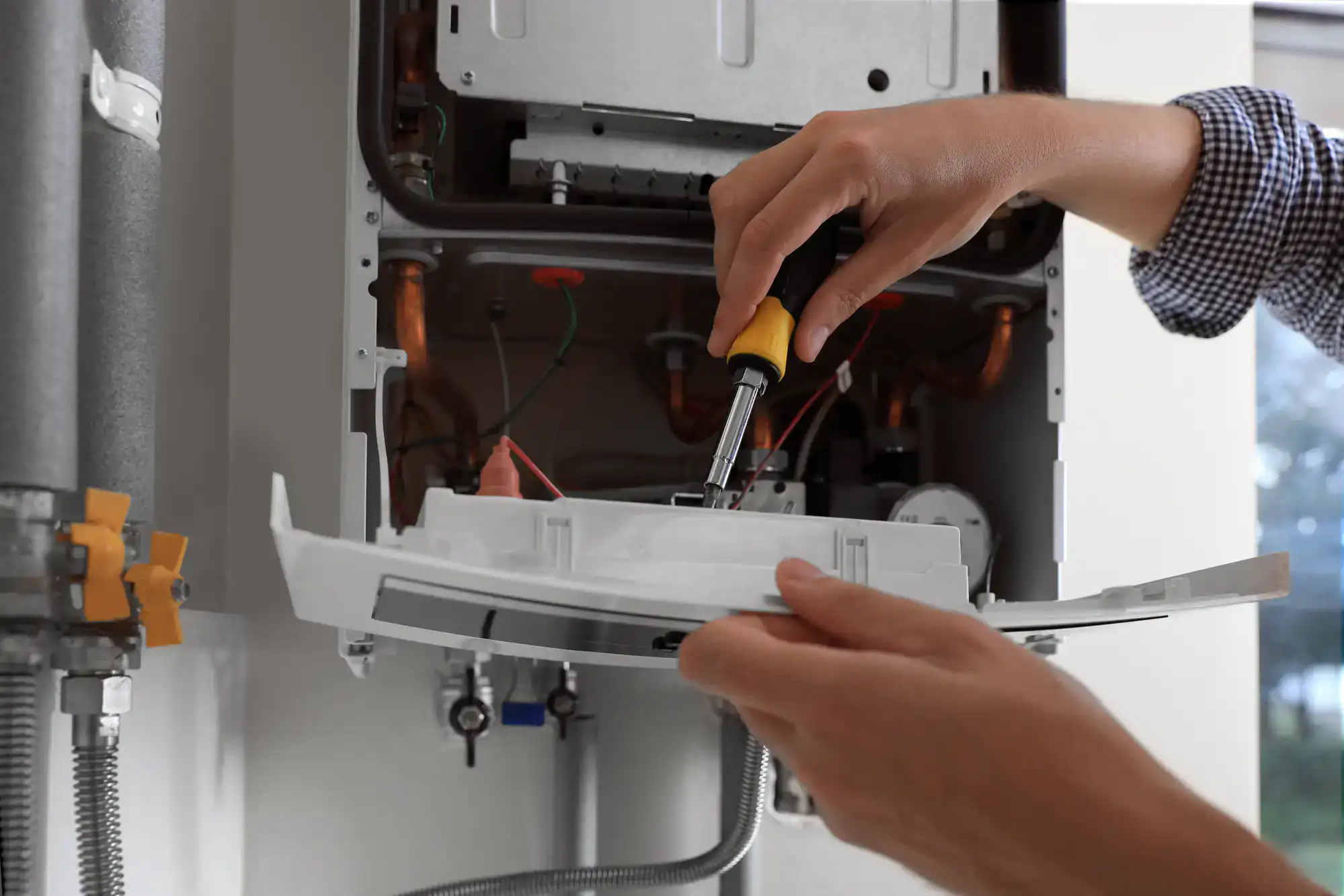
The honest answer is that it depends on a few things: the age of the unit, the nature of the problem, and whether the repair cost makes sense relative to what a replacement would run. A thermostat or heating element replacement on a unit that’s six or seven years old is usually worth doing. The same repair on a 15-year-old tank with visible corrosion and sediment buildup is often throwing money at a problem that’s going to come back.
In Granite Bay, where a significant portion of homes were built in the 1980s and 1990s, it’s not unusual for a service call to reveal a water heater that’s been running on borrowed time. Hard water conditions in the area accelerate internal wear particularly on the anode rod and the tank lining itself. When one of our technicians comes out, we’ll give you a straightforward read on where the unit stands and what the options actually cost, so you can make the call with real information rather than pressure.
Repair costs vary depending on what’s wrong. Minor fixes a thermostat swap, a heating element replacement, or a tank flush to clear sediment typically run somewhere in the $100 to $350 range. More involved repairs, like a pressure relief valve replacement or a gas valve issue, can run higher. Full replacement, including labor and materials, generally falls in the $1,600 to $5,500 range depending on the unit type, capacity, and whether a Placer County permit is required.
The permit piece is worth noting specifically for Granite Bay. Because the community is unincorporated, all replacement work requires a permit through Placer County Building Services rather than a city building department. That’s a real step with a real cost, and any quote you receive should account for it. We include permit handling in the replacement process so there are no surprises at the end and the estimate you receive upfront is the number you can expect to see on the invoice.
That sound is almost always sediment. Over time, minerals from your water supply calcium and magnesium in particular settle at the bottom of the tank and harden into a layer of scale. When the burner heats the water beneath that sediment layer, it creates the rumbling or popping noise you’re hearing. It’s not dangerous on its own, but it’s a sign that the unit is working harder than it should and losing efficiency in the process.
This is especially common in Granite Bay because of the area’s hard water supply. Whether your home is served by one of the eight community water systems in the area or drawing from a private well on a larger lot, the mineral content is high enough that sediment accumulation is a routine issue rather than an exception. In many cases, a professional tank flush can clear the buildup and extend the unit’s life by several years. In others, particularly on older units, the scale has already caused enough internal damage that replacement is the more practical path. A proper diagnostic will tell you which situation you’re in.
Yes. Because Granite Bay is an unincorporated community, it falls under Placer County jurisdiction rather than a city government. That means all water heater replacement work requires a permit through Placer County Building Services, and the installation must comply with California’s Title 24 Building Standards Code. This applies whether you’re replacing a standard tank unit or upgrading to a tankless system.
This is a step that some homeowners and some contractors skip, which creates real problems down the road. Unpermitted water heater work can surface during a home inspection at the point of sale, complicate your homeowner’s insurance claim if something goes wrong, and result in a required correction before a transaction can close. Placer County has active permit records for water heater replacements in Granite Bay, so this isn’t a gray area. We handle the permit process as part of every replacement job, so the work is fully documented and code-compliant from the start.
Most repairs are completed in a single visit, typically within one to two hours depending on the issue. A heating element swap or thermostat replacement is straightforward. A full tank flush takes a bit longer but is still a same-day job in most cases. If parts need to be sourced for a less common repair, there may be a follow-up visit, but that’s the exception rather than the rule.
Replacements generally take two to four hours for a standard tank unit. Tankless installations can run longer depending on the existing setup and whether any venting or gas line modifications are needed. For Granite Bay homeowners specifically, factor in that Placer County permit processing is part of the replacement timeline we initiate that process so it doesn’t slow down the job on your end. The goal is always to have your home’s hot water restored the same day the call is made, and in most cases, that’s exactly what happens.
It can, and in this area, it often does. The Sacramento and Placer County region has hard water with elevated mineral content, and Granite Bay is no exception. That mineral load primarily calcium and magnesium builds up inside your water heater tank over time, coating the heating elements, settling at the bottom of the tank, and corroding the anode rod faster than it would in a soft-water environment. The anode rod is the component that sacrifices itself to protect the tank lining from corrosion, and when it’s depleted faster than expected, the tank itself starts to degrade.
The practical effect is that a water heater in Granite Bay may reach the end of its useful life earlier than the manufacturer’s rated lifespan suggests particularly if it hasn’t had regular maintenance. Annual tank flushing and periodic anode rod inspections are the two most effective things you can do to offset hard water wear. If your water heater hasn’t had either in the last few years, a service call is worth scheduling before a minor issue becomes a full replacement and before a slow internal leak turns into a water damage situation in your home.