
Frozen Pipe Services
Get a free quote for frozen pipe services from your local plumbing team.
We’ll contact you about your frozen pipe services request. Privacy policy
Hear from Our Customers
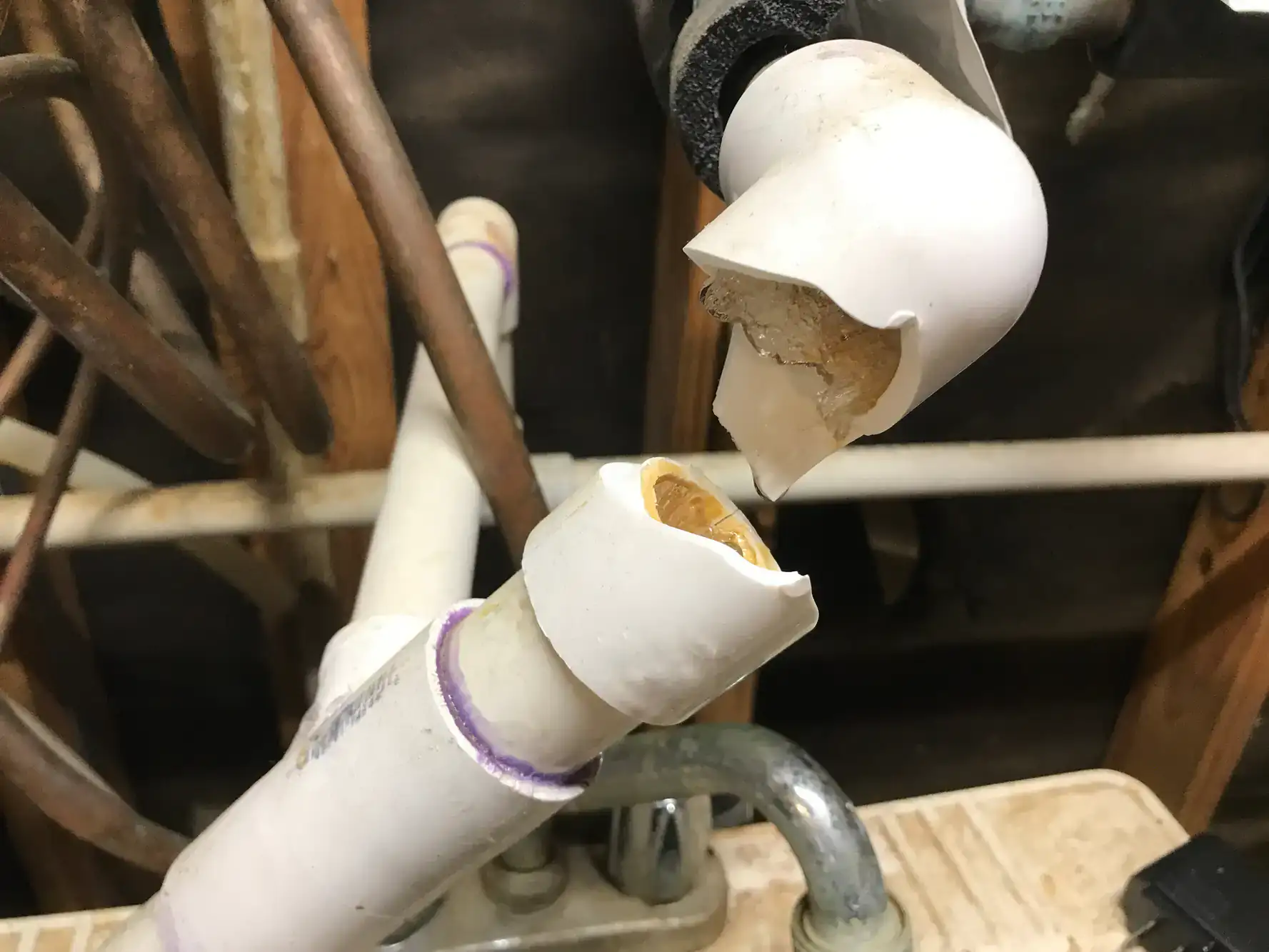
A frozen pipe doesn’t announce itself with a warning. You wake up, turn on the faucet, and nothing comes out. Or worse you hear water running somewhere it shouldn’t be. At that point, every minute counts. One inch of standing water can cause $25,000 in damage to a home, and once a pipe bursts, that water doesn’t wait for a convenient time to stop.
Newcastle sits at roughly 1,400 to 1,500 feet above sea level well above the Sacramento Valley floor, and squarely in the zone where overnight lows regularly push into the upper 20s and low 30s during December, January, and February. The National Weather Service issues frost advisories for this area with lows around 35°F, and on the coldest nights, temperatures drop further. This is just foothill living, and it means your pipes face real freeze risk that a Roseville or Sacramento homeowner simply doesn’t.
What makes Newcastle properties especially vulnerable is the housing stock. Many homes in and around the town center were built in the early 1900s some even earlier with plumbing that was never designed to meet modern insulation standards. Crawl spaces, uninsulated exterior wall runs, outbuildings, and agricultural water lines on larger rural lots all create exposure points that newer suburban homes don’t have. When we show up to a Newcastle property, our goal isn’t just to fix the visible pipe it’s to make sure the rest of the system isn’t quietly waiting to fail too.
We’ve been serving El Dorado, Placer, and Sacramento Counties for over two decades. That’s not a number we throw around lightly it means we’ve worked through a lot of Newcastle winters, on a lot of older homes, in communities exactly like yours.
We hold a California C-36 Plumbing Contractor License, and we carry it because the work requires it not because it looks good on a website. When you’re dealing with a frozen or burst pipe in a Newcastle home that might have 80-year-old galvanized plumbing under the crawl space, you need someone who is licensed, insured, and actually knows what they’re looking at.
Our Google rating sits at 4.7 out of 5 based on 93 reviews from real customers across the tri-county area the same I-80 and SR 193 corridor communities that Newcastle residents commute through every day. Customers consistently call out the same things: we show up on time, we give you a price before we start, and the final bill sometimes comes in under the estimate. In this industry, that last part is rarer than it should be.
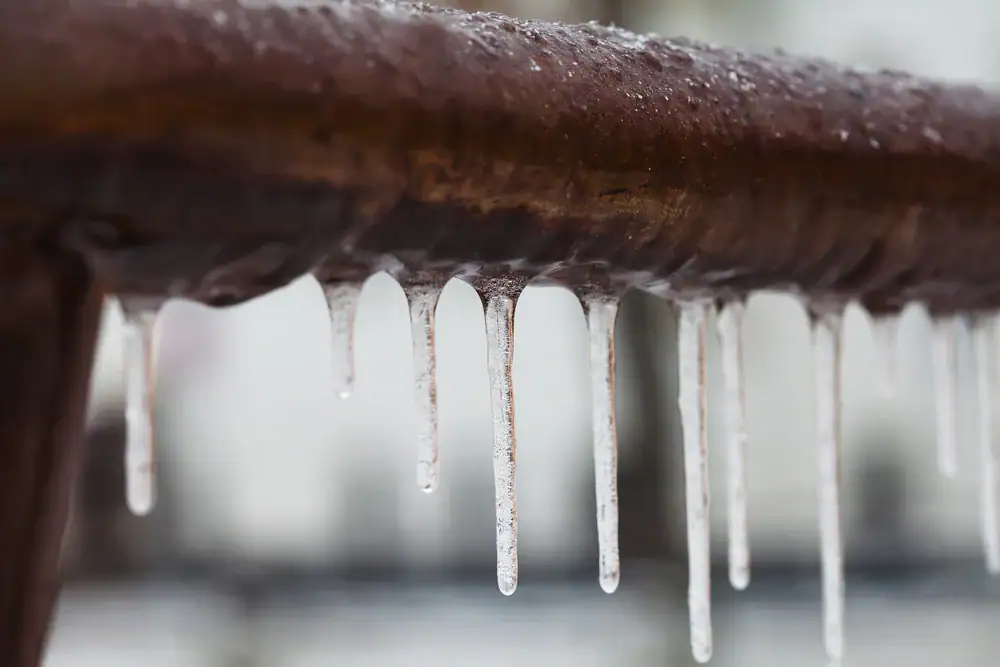
When you call us about a frozen or burst pipe in Newcastle, the first thing we do is ask the right questions where in the house, when you noticed it, whether you’ve already shut off the main water supply. That conversation matters because it helps us arrive prepared, not just present.
Once on-site, we locate the frozen or damaged section, assess the full scope of the problem, and give you a written estimate before touching anything. For Newcastle properties specifically, that assessment often includes checking crawl spaces and any exposed pipe runs that are common in older foothill homes because fixing one section while missing a second vulnerable spot just means you’re calling us again in two weeks.
If the pipe has frozen but not yet burst, we thaw it carefully and insulate the vulnerable section. If it’s already burst, we remove the damaged portion, replace it with the correct material for your system, and pressure-test the repair before we leave. We also extract any standing water that’s accumulated and walk you through what to watch for going forward. Newcastle’s older homes and rural lot configurations mean that prevention advice isn’t generic here it’s specific to what we actually found on your property. Placer County permit requirements are factored in for any work that crosses the threshold requiring one, and we handle that process so you don’t have to.
Ready to get started?
Frozen pipe thawing where the pipe is frozen but hasn’t burst yet typically runs between $350 and $750. Burst pipe repair with cleanup runs $750 to $2,500 depending on the location, access, and how much water has already spread. After-hours emergency calls carry a premium of $200 to $500 on top of those ranges, and service calls start at $175. We publish these numbers because you deserve to know what you’re looking at before you commit to anything.
Every call includes a full system check, not just a look at the obvious problem. For Newcastle homes particularly the older properties near the town center and the rural lots off roads like Rattlesnake Bar Road that means inspecting crawl spaces, checking for secondary freeze points, and identifying any pipe sections that are one cold night away from becoming the next problem. Agricultural water lines and outbuilding connections on larger Placer County properties get checked too, because those are the spots that get overlooked until they fail.
We operate 24 hours a day, seven days a week. That means a real plumber answers the phone at 2 AM on a Sunday in January, which is exactly when Newcastle’s coldest nights tend to happen. If you’re not sure whether your situation is an emergency, call anyway. We’ll tell you honestly what you’re dealing with and what it’s going to take to fix it.
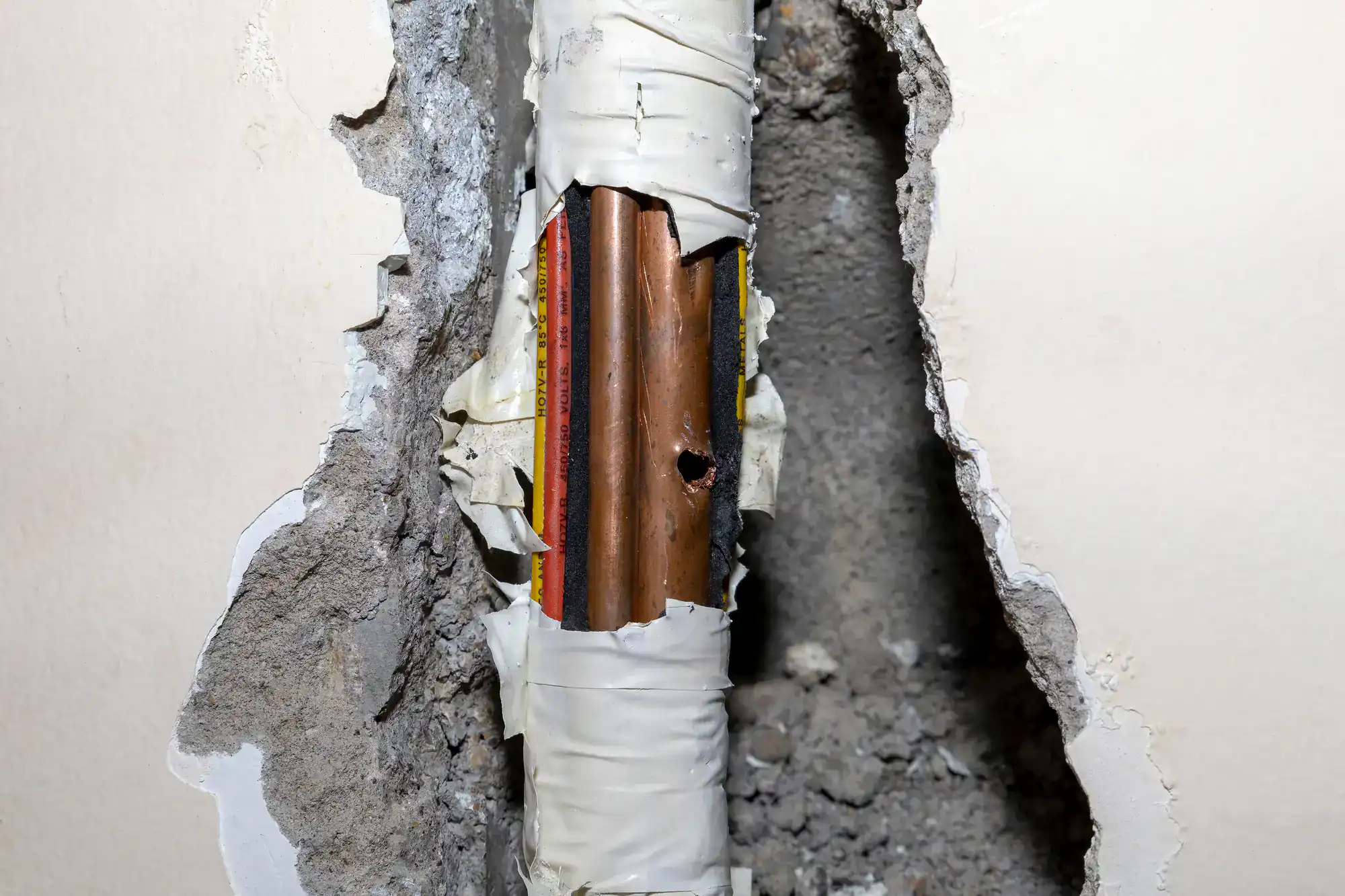
At 20°F, a frozen pipe can burst within two to four hours. Newcastle’s elevation roughly 1,400 to 1,500 feet above sea level means the town regularly sees overnight lows that push well below freezing during cold snaps in December, January, and February. That’s a materially different risk profile than Sacramento or Roseville, which sit on the valley floor at much lower elevations and rarely see sustained sub-freezing temperatures.
The moment you notice no water flow at a fixture after a cold night, treat it as an emergency. Don’t wait to see if it thaws on its own. If the pipe has already frozen, the clock is running and if it bursts while you wait, you’re no longer dealing with a plumbing repair. You’re dealing with water damage to walls, floors, and potentially your foundation. Call us immediately and we’ll help you assess whether you need someone on-site right now or whether there are steps you can take in the meantime to reduce the risk.
For a pipe that’s frozen but hasn’t burst, expect to pay somewhere between $350 and $750. That range covers the thawing process, a full system inspection, and insulation of the vulnerable section so it doesn’t freeze again the next cold night. If the pipe has already burst, repair costs typically run $750 to $2,500 depending on where the break is, how accessible the pipe is, and how much water damage has occurred.
Newcastle’s older housing stock adds a layer of complexity that can affect cost. Homes built in the early 1900s common in the town center and on older rural lots may have galvanized steel pipes or plumbing configurations that require more labor to access or replace than a newer home would. We give you a written estimate before any work begins, and that price doesn’t change without your approval. After-hours emergency calls add $200 to $500 to the base cost, and service calls start at $175.
In most cases, homeowner’s insurance covers the water damage caused by a burst pipe but not the pipe itself or the repair labor. That distinction matters because the pipe repair might cost $1,000 to $2,500, while the resulting water damage to floors, walls, and insulation can easily reach $25,000 or more. Your insurance company is interested in the latter. The faster you get a plumber on-site to stop the flow, the smaller that damage claim becomes.
One important nuance: insurance companies typically require that you take reasonable steps to prevent frozen pipes things like maintaining adequate heat in the home and insulating exposed pipes. If an adjuster determines that the freeze was caused by negligence, your claim could be denied or reduced. For Newcastle homeowners with older properties, crawl spaces, or outbuildings with water lines, documenting your winterization efforts and calling a licensed plumber immediately after a freeze event both work in your favor when the claim is filed.
The earliest sign is reduced water pressure or no flow at a specific fixture especially one on an exterior wall, in a crawl space, or in an outbuilding. If you’re getting water at some fixtures but not others, that’s a strong indicator that a specific section has frozen rather than a broader system issue. Frost or visible bulging on an exposed pipe is a more obvious sign, but by the time you can see that, the pipe is already under serious stress.
Newcastle properties have a few freeze risk factors that are worth knowing about specifically. Homes with crawl spaces that aren’t properly sealed allow cold air to circulate directly around uninsulated pipes. Older homes in the town center often have pipe runs through exterior walls that were never insulated to modern standards. Rural lots with agricultural water lines or outbuilding connections common on Newcastle’s larger parcels have exposure points that most standard plumbing guides don’t even address. If you’re unsure about your property’s specific vulnerabilities, a winterization inspection before the coldest months is a straightforward way to find out before something fails.
You can attempt to thaw a frozen pipe yourself if you know exactly where the freeze is, the pipe is accessible, and you’re using a safe heat source a hair dryer on a low setting, warm towels, or a heating pad. Never use an open flame. The risk with DIY thawing is that if the pipe has already cracked internally, applying heat accelerates the burst. You won’t know there’s a crack until water starts spraying.
For Newcastle homeowners with older homes, the calculation tips toward calling a professional sooner rather than later. A home built in the early 1900s with galvanized pipes and a crawl space is not the same as a 2010 Roseville subdivision. The pipe material, the configuration, and the access points are all different and a mistake in an older system can turn a manageable repair into a much larger one. We can walk you through what you’re seeing over the phone and tell you honestly whether it’s something you can handle or whether you need someone on-site. That call is free.
Yes and this is actually where 24 years of Placer County experience makes a real difference. Newcastle isn’t a Roseville subdivision. The town has homes dating back to the mid-1800s and early 1900s, rural lots with agricultural water lines, crawl spaces that weren’t built to modern insulation standards, and outbuildings with water connections that most plumbers from outside the area don’t think to check. We’ve worked on these properties throughout the foothill communities along the I-80 and SR 193 corridor for over two decades.
Rural properties in the Newcastle area including larger parcels off roads like Rattlesnake Bar Road and the wooded lots that make this community what it is often have plumbing configurations that require a plumber who actually understands what they’re looking at. That means knowing the difference between a galvanized steel system and a copper one, understanding how crawl space ventilation affects freeze risk, and recognizing when a visible repair is covering a deeper problem. If you own an older or rural property in Newcastle and you’ve had a freeze event, call us. We’ll assess the full picture, not just the obvious break.