
Hear from Our Customers
A burst pipe in a Rescue home is not the same as one in a Sacramento suburb. Your lot is larger, your nearest neighbor is farther away, and a pipe that lets go at 3 AM in a crawl space can run for hours before anyone notices. That gap between when it breaks and when you find it is exactly where the damage compounds and where the average water damage claim climbs past $30,000.
The homes along Green Valley Road and Bass Lake Road in Rescue were mostly built between the late 1980s and early 1990s. That puts your copper supply lines and crawl-space plumbing at 30 to 35 years old installed under standards that didn’t anticipate the freeze cycles these foothills can produce. Pipes in exterior walls, unheated garages, and under-slab runs are the ones that fail first when overnight temps drop into the high 20s.
What changes after a proper frozen pipe repair isn’t just the pipe. It’s the water pressure restored, the secondary damage caught before it spreads, and the confidence that the system was tested before we left your property. You get your home back not a temporary patch and a follow-up appointment you have to schedule yourself.
We’ve been working across El Dorado, Sacramento, and Placer Counties for more than two decades. That means we know the foothill freeze patterns that hit Rescue specifically, the aging housing stock in communities like yours, and what it actually takes to reach a rural address on a cold January morning without making you wait half the day.
We hold a C-36 California plumbing license, carry full insurance, and pull permits through El Dorado County’s Planning and Building Department when the scope of work requires it. We’re not a franchise routing calls through a national center we have dedicated local lines and a team that knows this corridor.
Our Google rating sits at 4.7 out of 5 across 93 reviews. Customers mention our technicians by name, note that we showed up when we said we would, and more than once have pointed out that the final bill came in under the original estimate. That’s the kind of track record that means something when you’re calling us from a rural property off Green Valley Road at 6 in the morning.
When you call Murray Plumbing, you reach a real person not a voicemail, not an answering service that takes a message and calls back at business hours. We ask you the right questions up front: where the freeze is likely located, whether the water is still running, and whether there’s visible water damage already spreading. That conversation helps us arrive prepared, not guessing.
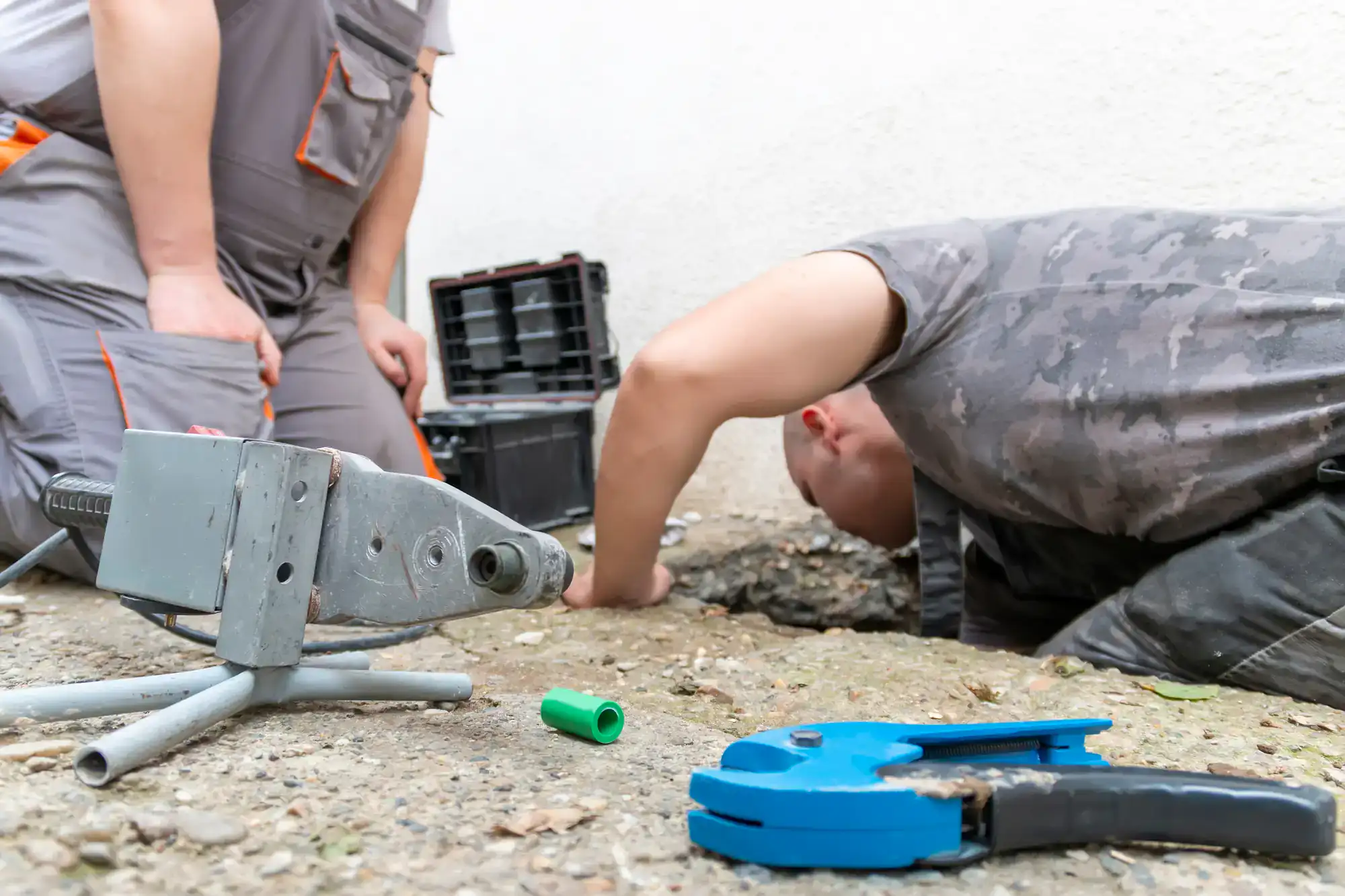
Once we’re on-site, we shut off the water supply to stop any active flow, then locate and assess the frozen or burst section. If the pipe needs to come out, we remove it cleanly, install the replacement, and check the surrounding area for secondary damage water in walls, wet insulation, moisture under flooring. For work that requires an El Dorado County permit, we handle that process. You don’t need to navigate the county building department yourself.
Before we leave, we run the system under pressure and walk you through what we found, what we fixed, and what to watch for going into the next cold snap. Rescue’s winters don’t always announce themselves a warm November can turn into a hard December freeze fast. We’ll tell you exactly what your pipe situation looks like and whether any preventive steps make sense for your specific property before the next cold front comes through.
Ready to get started?
Our frozen and burst pipe repair service isn’t limited to the visible break. We handle the full scope: shutting down the water supply, removing the damaged pipe section, installing new pipe, extracting standing water, and pressure-testing the system before we close out the job. For Rescue properties where large lots, long pipe runs, and older construction are the norm that full-scope approach matters more than it would in a newer suburban tract home.
Pricing is straightforward. Service calls start at $175. Frozen pipe thawing typically runs $350 to $750. Burst pipe repair ranges from $750 to $2,500 depending on the extent of the damage and how much pipe needs to be replaced. If you’re calling after hours, the emergency premium runs $200 to $500 real money, but a fraction of what unaddressed water damage costs when it soaks into the subfloor of a $700,000 home.
One thing worth knowing about homeowners insurance: most policies cover the water damage from a burst pipe, but not the pipe repair itself. The faster you stop the water, the smaller the uninsured portion of the total damage becomes. If you’re dealing with a burst pipe in Rescue and you’re unsure what your policy covers, document everything before cleanup begins and call your insurer after the water is stopped.
Rescue sits at 1,214 feet above sea level high enough that freeze events the Sacramento valley floor avoids can absolutely reach your property. The El Dorado County foothills experience overnight lows in the high 20s to low 30s during cold fronts in December, January, and February. That’s cold enough to freeze pipes in crawl spaces, exterior walls, and unheated garages, especially in homes built in the late 1980s and early 1990s when insulation standards were less rigorous than they are today.
The most common scenario we see in Rescue is a warm fall that extends into November or December homeowners get comfortable, skip winterization, and then a cold front drops temps overnight faster than expected. At 20°F, a frozen pipe can burst within two to four hours. Even in the high 20s, vulnerable pipe runs are at real risk. Rescue is not the Sierra Nevada, but it is not the valley floor either. The freeze risk here is genuine, and it catches homeowners off guard more often than you’d think.
The honest answer is that it depends on what the pipe did froze and held, or froze and burst. If the pipe is frozen but intact, thawing it professionally typically runs $350 to $750. If it has burst and needs a section replaced, repair costs range from $750 to $2,500 depending on how much pipe is involved, where it’s located, and whether water extraction is needed. Service calls start at $175, and after-hours emergency response adds $200 to $500.
What drives cost up isn’t usually the pipe itself it’s the water damage that accumulates while the problem goes unaddressed. For a Rescue home on a large rural lot where a burst pipe can run undetected for hours, the difference between calling immediately and waiting until morning can be thousands of dollars in additional damage. We give you a firm price before any work begins, and our customers have noted more than once that the final bill came in at or below the original estimate.
The first thing to do is shut off your main water supply. In most Rescue homes, the shutoff is either at the meter near the street or at a main valve inside the house know where yours is before an emergency, not during one. Once the water is off, the active damage stops. From there, open a faucet to relieve pressure in the line, and don’t try to thaw a frozen pipe with an open flame that’s how house fires start.
After the water is off, call a licensed plumber. Don’t wait to see if it “thaws on its own” a pipe that has already frozen and cracked may hold temporarily and then fail again under pressure. If there’s visible water on floors, in walls, or pooling in a crawl space, document it with photos before cleanup begins. That documentation protects your homeowners insurance claim. We can typically reach Rescue properties the same day often within hours so you’re not sitting with a shut-off water supply any longer than necessary.
Most standard homeowners insurance policies cover the water damage caused by a sudden, accidental burst pipe things like damaged flooring, drywall, insulation, and personal property. What they typically do not cover is the cost of repairing or replacing the burst pipe itself. That distinction matters when you’re looking at a total bill that includes both the plumbing repair and the restoration work.
The other thing insurance adjusters look at is whether the damage was mitigated promptly. If you delayed calling a plumber and the water ran for an extended period, insurers can push back on the claim on the grounds that the damage wasn’t minimized. For Rescue homeowners where rural lot sizes mean a burst pipe can go unnoticed longer than in a dense neighborhood fast response isn’t just about limiting repair costs. It’s about protecting the claim itself. Call a licensed plumber first, stop the water, document everything, and then contact your insurer. That sequence gives you the strongest position.
The homes most at risk in Rescue are the ones built in the 1985 to 2000 range which covers the majority of the community’s housing stock. Copper supply lines routed through exterior walls, pipes in unheated crawl spaces, and long underground runs from the meter to the house are the most vulnerable. If your home has any of these, and you haven’t had a plumber assess the insulation and routing, a cold snap is the worst time to find out.
A few practical indicators: if your water pressure drops noticeably on a cold morning, that can signal a partial freeze in a supply line. If you hear a gurgling or dripping sound in a wall after temperatures recover, that can mean a pipe cracked during the freeze and is now leaking. Pipes in detached garages, outbuildings, and irrigation lines on larger Rescue properties are also commonly overlooked they’re not in the living space, so they don’t get the same attention. A pre-winter inspection by a licensed plumber is the most straightforward way to know what you’re working with before a freeze event turns into an emergency.
Yes and response time is something we take seriously for Rescue specifically. Because Rescue is an unincorporated community in El Dorado County without city-level emergency services, a burst pipe means you’re calling a private contractor, not a municipal utility with a 24-hour crew nearby. We operate 24/7 and maintain local coverage across the El Dorado Hills, Cameron Park, and Placerville corridor which puts us close to Rescue, not dispatching from the other side of Sacramento.
When you call, you reach a real person who can give you a realistic arrival window based on where we’re coming from and what’s already on the schedule. We’re not going to give you a four-hour window and hope for the best. Green Valley Road and Bass Lake Road are roads we know we’ve been serving this foothill corridor for more than 24 years. If you’re on a large rural lot and dealing with a burst pipe at an odd hour, that familiarity with the area matters more than it might seem when you’re waiting for help to arrive.