
Hear from Our Customers
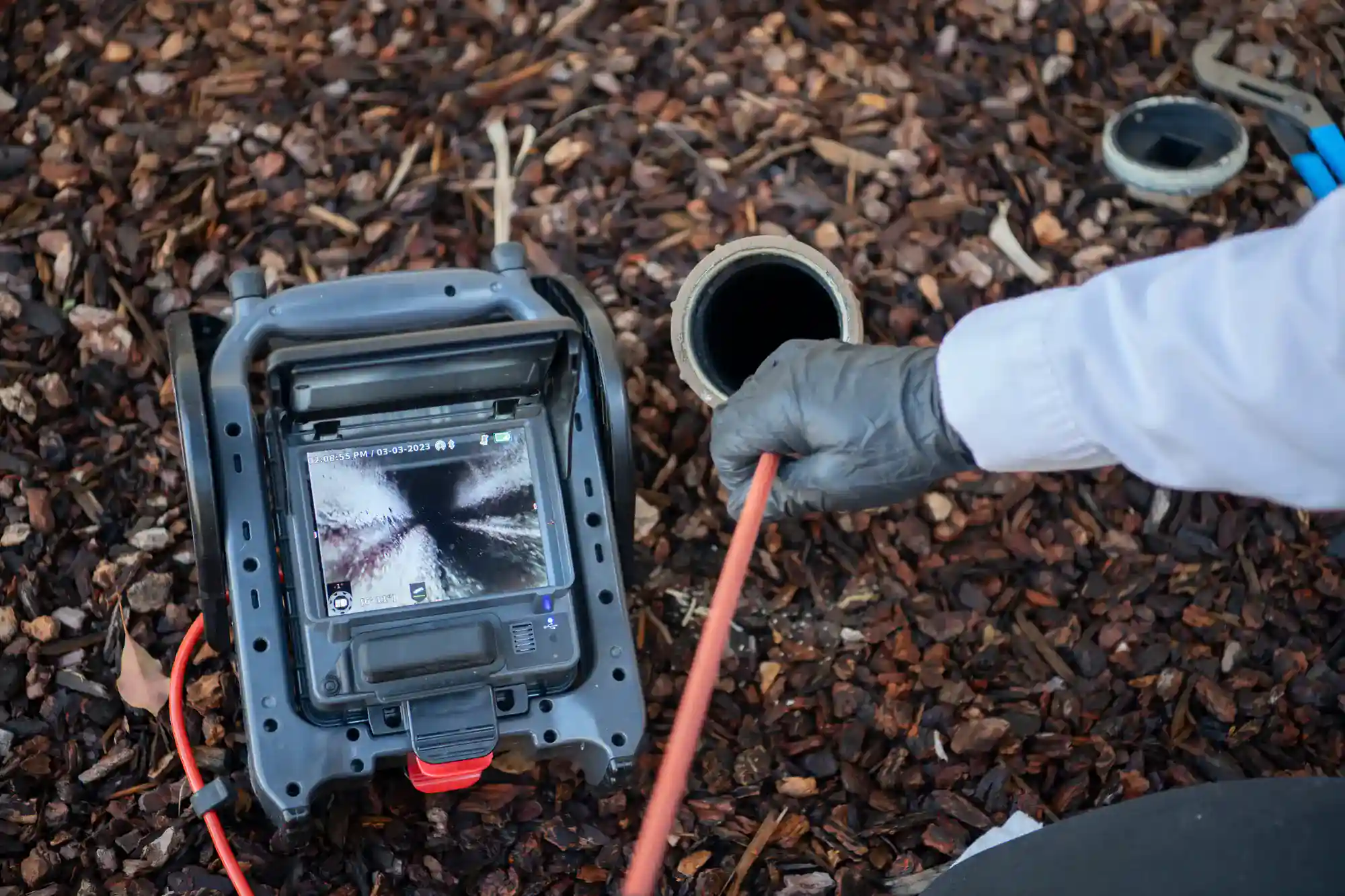
Out here on the Georgetown Divide, you’re not calling the city when something goes wrong underground. It’s your system, your responsibility, and your bill. Most properties in Buckeye are on private septic, which means the lines connecting your home to your tank and everything running out to the leach field are yours to manage. A sewer camera inspection gives you a clear picture of what’s actually happening in those pipes before a slow drain turns into a backed-up system or a soggy patch in the yard becomes an excavation project.
At nearly 3,000 feet, your pipes deal with things that Sacramento Valley homeowners never think about. Freeze-thaw cycles through the winter months shift the ground, stress older pipe joints, and can crack lines that were installed decades ago without anyone knowing. Add in the ponderosa pines and oaks that cover most rural lots in this area root systems that are aggressive, wide-reaching, and relentless and you have a real, ongoing threat to any buried pipe with even a hairline crack. A camera inspection finds those problems while they’re still manageable.
And if you’re buying a rural property near Buckeye, this is the inspection your home inspector skipped. Standard inspections don’t go underground. A sewer line video inspection before closing gives you documented footage, a precise location of any issues, and real leverage whether that’s negotiating repairs, adjusting your offer, or simply knowing what you’re walking into.
We hold California CSLB C-36 Plumbing Contractor License #916322 the required state license for sewer inspection and plumbing work in California. That license is publicly verifiable, and it matters when you’re hiring someone to assess the private infrastructure your household depends on.
This isn’t a Sacramento company that added Buckeye to a service area map. We already have an active presence in Georgetown and Garden Valley both just a few miles from Buckeye on the Georgetown Divide which means the drive is familiar, the terrain is not a surprise, and the conditions specific to rural El Dorado County properties are something we’ve worked with directly. Service calls in the Georgetown area start at $175, with free estimates on major repairs.
With a 4.7-star Google rating across 93 verified reviews, our track record is documented. Customers consistently note that final bills came in at or below the original estimate not as a marketing claim, but as something that shows up repeatedly in real reviews from real people in the Buckeye area and beyond.
The inspection starts with a conversation. Before any equipment goes into the ground, our technician will ask about what you’ve been experiencing slow drains, odors, soggy ground near the leach field area, or simply the fact that you’ve never had the lines looked at and want to know what’s there. That context shapes where the camera goes and what to look for.
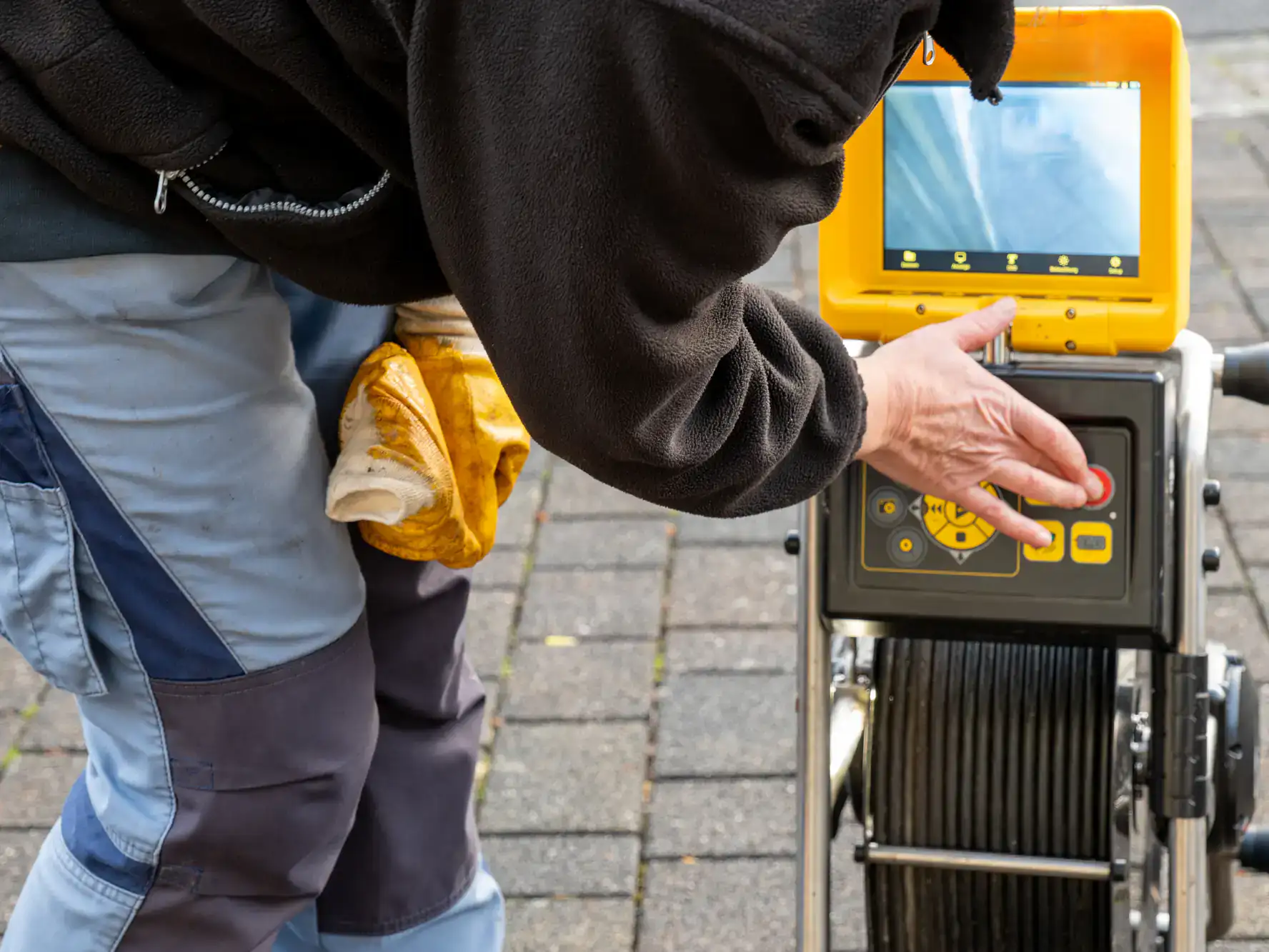
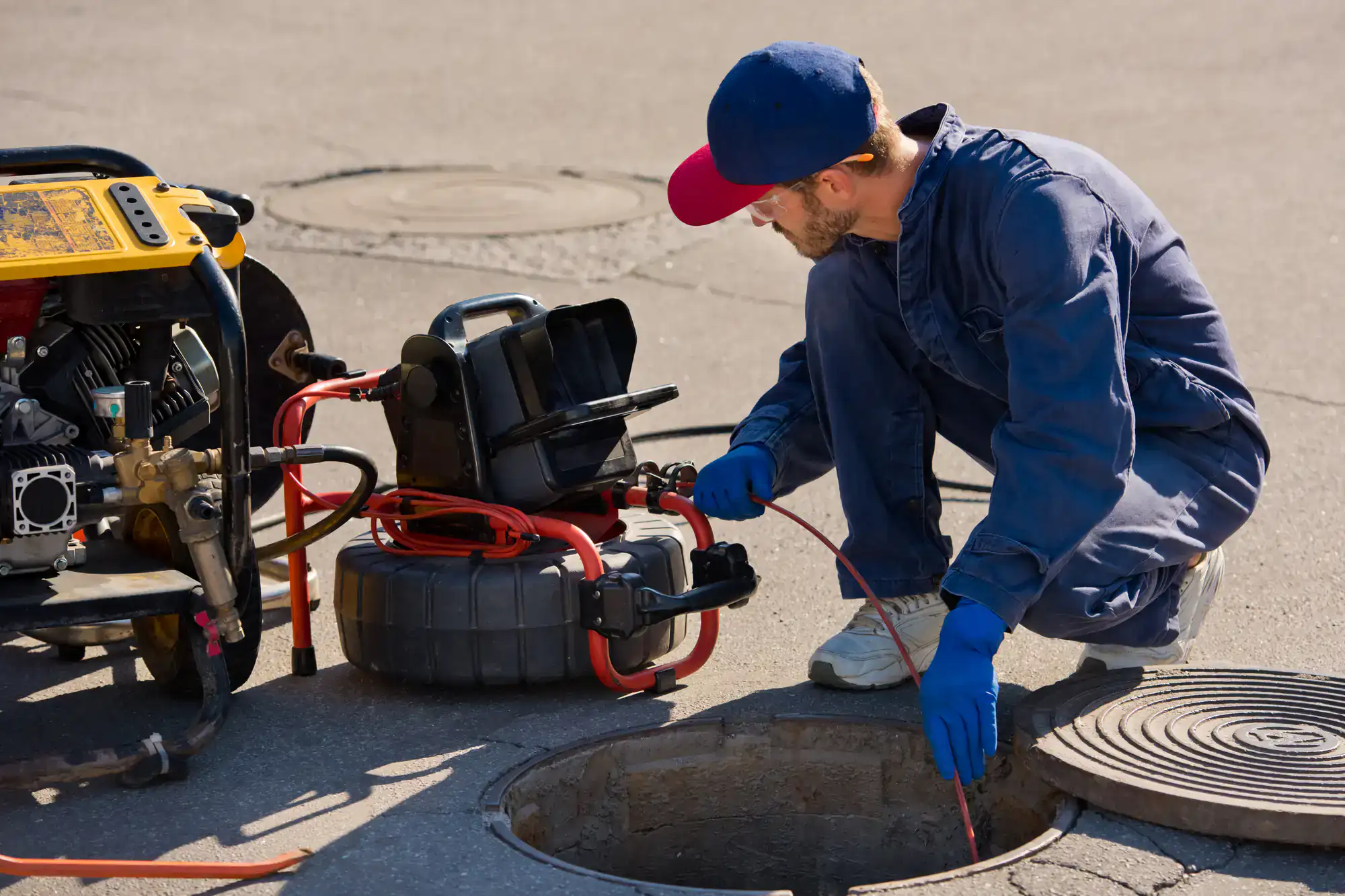
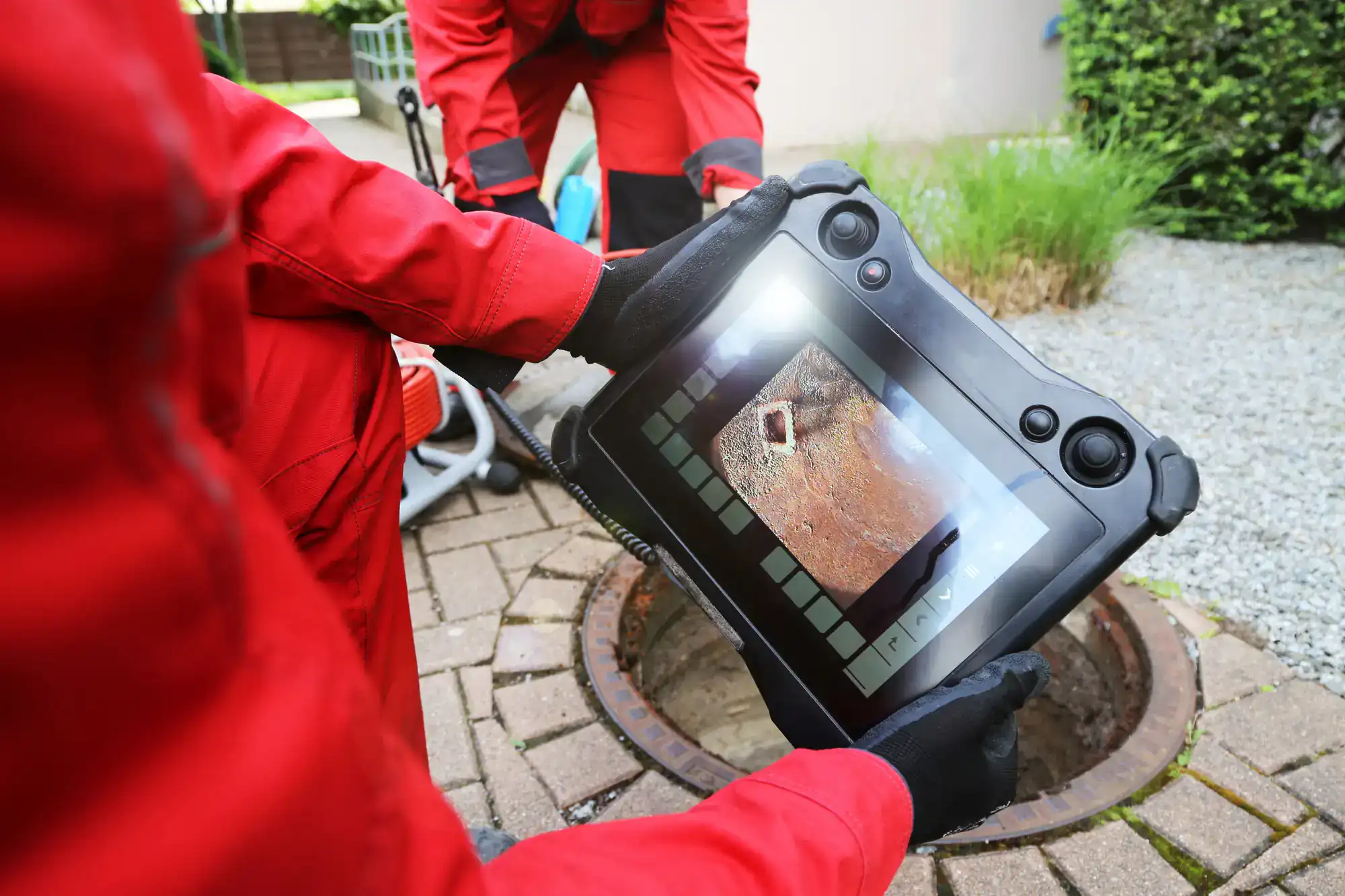
From there, a professional-grade camera gets fed into the line. Our equipment handles pipes from 1.5 to 72 inches in diameter and reaches up to 350 feet more than enough to cover the full run from your home to your septic tank and beyond. The camera is self-leveling with high-powered LED lighting, so the footage is clear even in lines that haven’t seen daylight in decades. You watch in real time while the technician narrates what’s on screen. Root intrusion, a pipe belly, a cracked joint, a blockage if it’s there, you’ll see it yourself. No one has to take anyone’s word for anything.
When a problem is found, a locating transmitter built into the camera marks the exact spot above ground. In the rocky, decomposed granite terrain of the Georgetown Divide, that precision matters more than it does anywhere on the valley floor. Targeted excavation on a confirmed location is a completely different cost conversation than digging until you find something. Once the inspection is done, you have footage, findings, and a clear picture of what if anything needs to happen next.
Ready to get started?
Because most Buckeye properties are on private septic systems rather than any municipal sewer connection, a sewer camera inspection here covers more than just the lateral line running to a city main. We assess the condition of your inlet line from the house to the tank, the outlet line running toward the leach field, and any connecting pipes in between. If there’s root intrusion from the oaks or pines on your lot, a joint that’s shifted from years of freeze-thaw ground movement, or a section of aging clay or cast iron pipe that’s reached the end of its lifespan, the camera will find it.
It’s worth knowing that the City of Placerville’s Sewer Lateral Compliance ordinance which requires a compliance certificate for real estate transactions applies only to the City of Placerville and does not extend to unincorporated Buckeye or the broader Georgetown area. What does apply here is El Dorado County’s Private Sewage Disposal System Ordinance, administered through El Dorado County Environmental Management. If a repair or replacement is needed after the inspection, any permitted work will go through the county and having documented camera footage from the inspection makes that process more straightforward from the start.
Pricing for a sewer camera inspection runs $99 to $300 depending on the system and pipe length well below the national average, and well below what most Sacramento-area competitors charge. The inspection itself doesn’t create a repair obligation. It gives you information. What you do with that information is entirely your call.
Yes and for most properties in Buckeye, that’s exactly what it’s designed to assess. Because the Georgetown Divide is unincorporated El Dorado County, the vast majority of homes here are on private septic systems rather than any municipal sewer connection. A sewer camera inspection covers the lines connecting your home to your septic tank, the outlet lines running toward the leach field, and any connecting pipes in the system. Our cameras handle pipes from 1.5 to 72 inches in diameter and reach up to 350 feet, which is more than enough to cover the full run on most rural residential properties in Buckeye and the surrounding area.
The inspection process is the same regardless of whether you’re on a private septic system or a city sewer lateral. The camera goes in, the technician narrates what’s on screen in real time, and you get a clear picture of what’s actually happening underground. If there’s a blockage, root intrusion, a cracked joint, or a section of pipe that’s deteriorating, you’ll see it directly not through a verbal summary from someone who wants to sell you a repair.
We charge $99 to $300 depending on the complexity of the system and the total pipe length being inspected. That range sits well below the national average and below most Sacramento-area market rates, which typically run $250 to $850 for the same service. Final bills routinely come in at or below the original estimate that’s not a promotional claim, it’s something that shows up consistently in customer reviews from Buckeye and the Georgetown area.
In the context of rural El Dorado County, the cost argument for inspection is especially straightforward. Excavation through the rocky, decomposed granite terrain of the Georgetown Divide is significantly more expensive and labor-intensive than digging in flat valley soil. If something is wrong with your lines and you don’t know where the problem is before work begins, you’re paying for exploratory digging in difficult ground. A camera inspection that pinpoints the exact location of a root intrusion or a cracked joint before any shovel touches the earth is a different financial conversation entirely and at $99 to $300, the math is easy.
The most obvious signs are slow drains throughout the house not just one fixture, but multiple along with gurgling sounds from toilets or drains, sewage odors inside or outside the home, and soggy or unusually green patches of ground near where your septic lines run. Any of those warrant a camera inspection before the problem gets worse.
That said, the absence of obvious symptoms isn’t a clean bill of health. Many properties in the Buckeye area were built in the 1950s through 1980s with original pipe materials clay tile or cast iron that have reached or exceeded their expected lifespan. If you’ve lived on the property for years and never had the lines inspected, or if you bought a rural property without knowing the pipe history, a sewer pipe inspection gives you baseline knowledge you don’t currently have. In a forested environment where oak and pine root systems are actively working toward any moisture source underground, waiting for symptoms to appear before looking is a risk that tends to get more expensive the longer it goes.
A standard home inspection doesn’t cover underground sewer or septic lines. That’s not a criticism of home inspectors it’s just outside the scope of what they do. On a rural acreage property in the Georgetown area, where the pipe history may be completely undocumented, the materials may be original to a mid-20th century installation, and the previous owners may never have had the lines looked at, you’re accepting unknown risk on infrastructure that could cost thousands to repair and that in rocky foothill terrain could cost significantly more than the same repair would on the valley floor.
A sewer line camera inspection before closing gives you real footage, a precise location of any identified issues, and documented findings you can use in the transaction. If something significant turns up, you have options: negotiate a repair credit, ask the seller to address it before closing, adjust your offer, or make an informed decision about whether to proceed. If the lines come back clean, you close with confidence. Either way, you’re not inheriting a surprise.
Root intrusion is one of the most common findings in sewer camera inspections on rural properties throughout the Georgetown Divide, and it’s not hard to understand why. Ponderosa pine, black oak, canyon live oak, and gray pine the dominant tree species on most forested lots in the Buckeye area have extensive, moisture-seeking root systems that extend far beyond what you’d expect based on where the tree is standing. Any pipe with even a hairline crack becomes a target. Roots follow moisture, and a buried sewer or septic line is a consistent moisture source.
What the camera shows in root intrusion cases ranges from early-stage fine root threads that have just entered a joint, to established root masses that are partially or fully blocking flow. Early-stage intrusion can often be cleared and monitored. Advanced intrusion may require pipe repair or lining. The difference between catching it early and dealing with it after a complete blockage is significant both in cost and in disruption to your property. On a forested rural lot in Buckeye, this is not a hypothetical risk. It’s a routine finding.
Most residential sewer camera inspections take between 45 minutes and two hours, depending on the total pipe length, the number of access points, and what the camera finds along the way. A straightforward inspection on a single-run septic inlet line will move faster than a more complex system with multiple lines or hard-to-access cleanout points. Rural properties on the Georgetown Divide sometimes have older cleanout configurations or access points that weren’t installed to current standards, which can add a little time but it doesn’t change what the camera can find once it’s in the line.
Being home during the inspection is genuinely worth your time, not just a formality. The whole point of real-time camera footage is that you see exactly what the technician sees as it happens. If root intrusion is found at a specific joint, or a section of pipe has a belly that’s holding water, watching that on screen while the technician explains it gives you a level of clarity that no written report fully replicates. We offer 24/7 availability, including evenings and weekends, so scheduling around your actual life including the SR 193 commute that most Georgetown Divide residents know well is a realistic option, not just a talking point.