Home » Blog » When Is It Time for a Water Heater Replacement in El Dorado County, CA?
Rusty water, strange noises, and inconsistent temperatures signal it's time to evaluate your water heater. Discover when replacement makes more financial sense than another repair.
Share:
Summary:
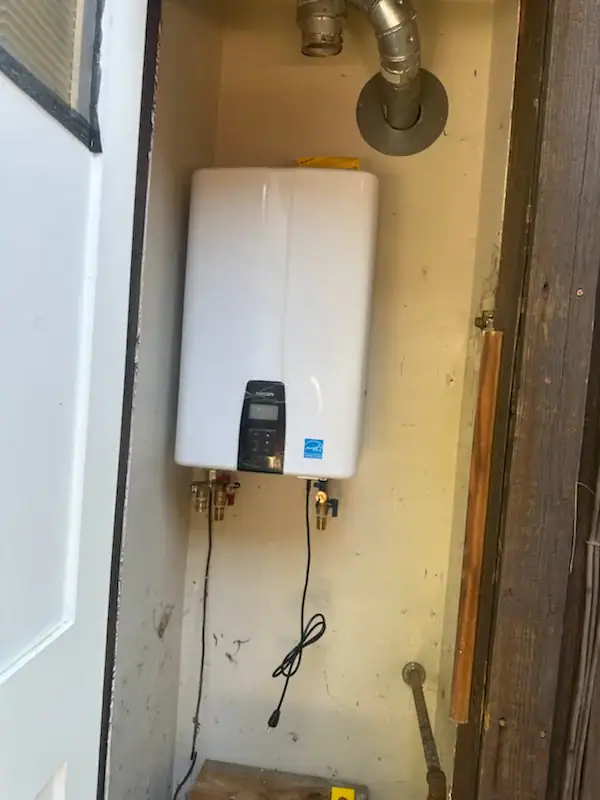
The typical water heater lasts between 8 and 12 years under normal conditions. Tankless models can push 20 years with proper care, but traditional tank units rarely make it past 12 even with maintenance.
Your specific lifespan depends on several factors. Installation quality matters—a unit installed incorrectly wears out faster. Water quality plays a huge role, and El Dorado County’s hard water creates mineral buildup that damages tanks from the inside. How often you use hot water affects longevity too, as does whether you’ve kept up with annual flushing and anode rod replacement.
If you don’t know how old your water heater is, check the serial number on the manufacturer’s sticker. The first letter typically corresponds to the month (A for January, B for February, and so on), while the next two digits indicate the year of manufacture. A serial number starting with “H08” means your unit was built in August 2008—making it well past its expected lifespan.
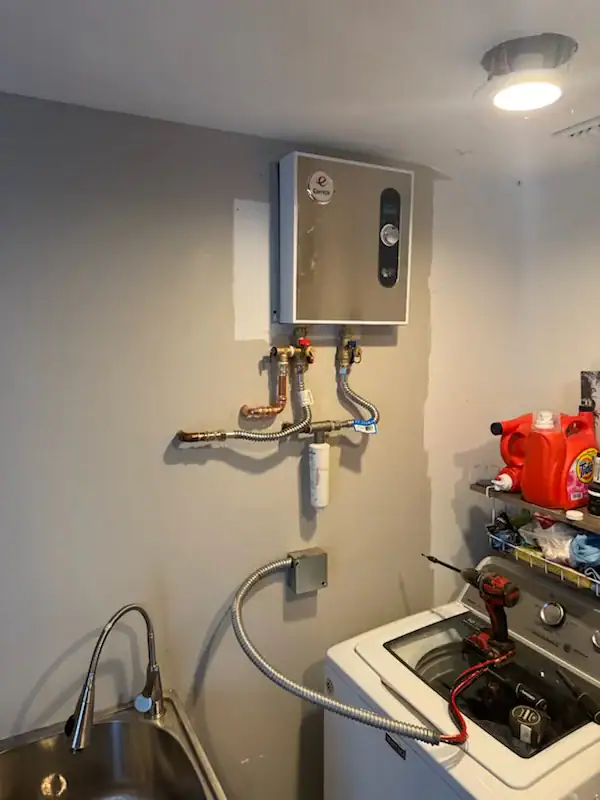
Your water heater communicates problems through specific symptoms that get worse over time. Rusty or discolored water coming from hot taps means corrosion is eating away at the inside of your tank. Once rust starts, it doesn’t stop—it spreads until the tank develops a hole and starts leaking. You can’t repair internal corrosion. Replacement is your only option.
Strange noises like rumbling, popping, or banging indicate sediment buildup at the bottom of your tank. El Dorado County’s mineral-rich water leaves deposits that harden over time. These crusty layers force your heating element to work harder, reducing efficiency and eventually causing component failure. Flushing helps if you catch it early, but thick sediment layers often signal a unit that’s been neglected too long.
Inconsistent water temperature tells you heating elements or thermostats are failing. Maybe your morning shower starts hot but turns lukewarm halfway through. Or you can’t get water as hot as you used to, no matter how high you turn the temperature dial. These aren’t problems that improve on their own.
Leaks around the base of your water heater mean the tank itself is compromised. Sometimes it’s just a loose connection you can tighten, but more often it’s the tank expanding and contracting from years of heating cycles. Those stress fractures only get worse. Once your tank is leaking, replacement needs to happen quickly before you’re dealing with water damage to your floors, walls, or belongings stored nearby.
Rising energy bills without increased usage suggest your water heater is losing efficiency. As components wear out, your system runs longer and works harder to heat the same amount of water. You’re paying more each month for worse performance—a clear sign it’s time to consider a new unit that will actually save you money on utilities.
Hard water affects nearly every home in El Dorado County. High concentrations of calcium and magnesium dissolve into the water as it flows through mineral-rich geological formations. That’s great for the landscape, but terrible for your water heater.
Mineral deposits settle at the bottom of your tank every time the water heats up. Over months and years, these deposits form a thick, crusty layer that insulates the heating element from the water. Your system has to run longer to heat water, burning more energy and wearing out components faster. The sediment also traps heat against the bottom of the tank, causing localized overheating that weakens the metal and accelerates corrosion.
Your anode rod—a sacrificial component designed to corrode instead of your tank—gets depleted faster in hard water. Once it’s gone, corrosion attacks the tank itself. Most manufacturers recommend replacing anode rods every 3-5 years, but homeowners rarely do this maintenance. In El Dorado County’s hard water, a neglected anode rod means your tank might start rusting after just 6-7 years instead of lasting the full decade.
Hard water also affects efficiency in ways you notice immediately. Mineral buildup on heating elements acts like insulation, preventing them from transferring heat effectively to the water. Your recovery time—how long it takes to reheat a full tank after heavy use—gets longer and longer. What used to provide enough hot water for back-to-back showers now runs out halfway through the second person’s turn.
The combination of sediment buildup, accelerated corrosion, and reduced efficiency means water heaters in El Dorado County typically last 8-10 years instead of the 10-12 you might get in areas with softer water. If your unit is approaching that 8-year mark and showing any warning signs, replacement makes more sense than pouring money into repairs on a system that’s already on borrowed time.
Want live answers?
Connect with a Murray Plumbing expert for fast, friendly support.
Not every water heater problem requires a full replacement. Sometimes a repair gets you several more years of reliable service. The key is knowing when you’re making a smart investment versus throwing money at a dying system.
Age is the biggest factor in this decision. If your water heater is under 7 years old and needs a repair, fix it. You’re likely to get several more good years from the unit. If it’s over 10 years old, replacement almost always makes more financial sense than repair—even if the repair seems minor. Units in that age range are living on borrowed time, and one repair often leads to another within months.
The 8-9 year range is where it gets tricky. This is when you need to look at the specific problem and the repair cost. A simple thermostat replacement on an 8-year-old unit? Worth fixing. A failed heating element plus a leaking pressure relief valve plus sediment problems? That’s your water heater telling you it’s done.

Here’s a useful guideline: never spend more than two-thirds of a replacement cost on repairing your existing water heater. If a new unit costs $1,500 installed, don’t spend more than $1,000 on repairs. This rule helps you avoid the trap of incremental spending that adds up to more than replacement would have cost.
Let’s say your water heater needs a $400 repair. That seems reasonable until you factor in that you spent $350 on a different repair eight months ago. Now you’re at $750 total, and the unit is still old with other components likely to fail soon. You’ve invested half the cost of a new water heater into an aging system that’s going to need replacement within a year or two anyway.
Multiple repairs in a short timeframe signal a unit that’s reaching the end of its useful life. When one component fails, others are usually close behind. They’ve all been operating under the same conditions for the same amount of time, experiencing the same wear and tear. Fixing one problem doesn’t stop the others from developing.
Consider the total cost of ownership too. An older, inefficient water heater costs you money every month through higher energy bills. A new, efficient model might cost $1,800 upfront but save you $150-200 annually on utilities. Over its lifespan, that new unit actually costs less than keeping your old one running, even without factoring in repair expenses.
Repair makes sense when you have a relatively young unit with an isolated problem. Replacement makes sense when you’re dealing with an older system, multiple issues, or repair costs that approach half the price of a new unit. The decision becomes even clearer when you factor in the improved efficiency, reliability, and warranty coverage that comes with a new water heater.
Delaying water heater replacement might seem like you’re saving money, but it usually costs more in the long run. The most obvious risk is a complete failure at the worst possible time—usually during a cold snap when you need hot water most and plumbers are busiest. Emergency replacements limit your options. You might have to take whatever unit is in stock instead of choosing the best model for your needs and budget.
Water damage is the bigger financial risk. A failing tank doesn’t just stop producing hot water—it can rupture and flood your home with 40-80 gallons of water. That water goes everywhere: under flooring, into walls, soaking drywall and insulation. What started as a $1,500 water heater replacement becomes a $5,000-15,000 restoration project involving flooring replacement, mold remediation, and repairs to water-damaged structures.
Your homeowner’s insurance might not cover all the damage either. Many policies consider gradual deterioration a maintenance issue rather than a covered loss. If an adjuster determines you ignored obvious warning signs and failed to replace a water heater that was clearly at the end of its life, they can deny your claim. You’re stuck paying for all the damage out of pocket.
Energy waste adds up too. That inefficient, struggling water heater is costing you an extra $15-30 per month in utility bills compared to a new, efficient model. Over a year, that’s $180-360 wasted on higher energy costs. Over two years of limping along with an old unit, you’ve spent $360-720 extra on utilities alone—money that could have gone toward a new water heater.
Quality of life matters too, even if it’s harder to quantify. Unreliable hot water disrupts your daily routine. Cold showers before work. Waiting 30 minutes between showers so the tank can recover. Running out of hot water halfway through doing dishes. These frustrations compound over time, affecting your comfort and convenience in your own home.
The smart move is replacing your water heater when you notice warning signs and the unit is approaching 10 years old. You get to choose your timeline, shop for the best model and price, and avoid the stress and expense of an emergency situation. Planned replacements always cost less and cause less disruption than emergency ones.
Your water heater’s age and condition tell you most of what you need to know about replacement timing. Units over 10 years old showing warning signs like rusty water, strange noises, leaks, or inconsistent temperatures are telling you it’s time. El Dorado County’s hard water accelerates wear, often shortening that lifespan to 8-9 years for systems without regular maintenance.
The repair versus replace decision comes down to cost-effectiveness. Follow the two-thirds rule: don’t spend more than two-thirds of a replacement cost on repairs. Factor in your unit’s age, the frequency of recent repairs, and the long-term savings from a more efficient new system. Waiting too long risks emergency replacement, water damage, and higher costs overall.
If you’re noticing warning signs or your water heater is approaching that 8-10 year mark, we can assess your situation honestly and help you make the right decision. Sometimes a repair buys you a few more years. Sometimes replacement is the smarter investment. Either way, you’ll get transparent information and upfront pricing so you can decide what works best for your home and budget.
Article details:
Share:
Continue learning: