
Hear from Our Customers
Dutch Flat sits on a ridge above the North Fork of the American River, inside a region the USGS identifies as part of the Foothills Fault System a major zone of faulting that runs the length of the western Sierra Nevada. Placer County logs roughly 451 seismic events per year. Most go unfelt. Some don’t. When one hits hard enough to move your gas meter, an automatic seismic shut-off valve closes the line before gas can migrate into your home.
For the pre-1900 wood-frame homes that make up a significant portion of Dutch Flat’s housing stock, that matters more than it does almost anywhere else. Older gas infrastructure in historic structures wasn’t designed with seismic movement in mind. A valve doesn’t just protect you from fire it protects a home that can’t be rebuilt the same way twice.
There’s also the winter factor. At over 3,100 feet elevation, losing heat in January isn’t an inconvenience it can become an emergency fast. Knowing your gas system has automatic protection, and knowing exactly what to do if the valve trips, puts you in control of the situation before it ever happens. That peace of mind is the real outcome here.
We founded Murray Plumbing in 2009 and hold California C-36 License #916322 the specific classification required by state law to perform gas line work and seismic valve installations. You can verify that at cslb.ca.gov in about 30 seconds. That’s not a credential buried in fine print. It’s the baseline that separates a legitimate installation from one that won’t hold up when your insurance carrier or a future buyer asks for documentation.
We serve the Sierra Nevada foothills corridor, including Dutch Flat and other Placer County communities, and have built a 4.7-star Google rating across 93 reviews by doing straightforward work at a fair price. Customers consistently mention that our technicians showed up when we said they would, explained the job clearly, and didn’t pad the invoice. In a remote community like Dutch Flat where most contractors require a deliberate trip up I-80 that kind of reliability isn’t common. It’s the whole reason people call us back.
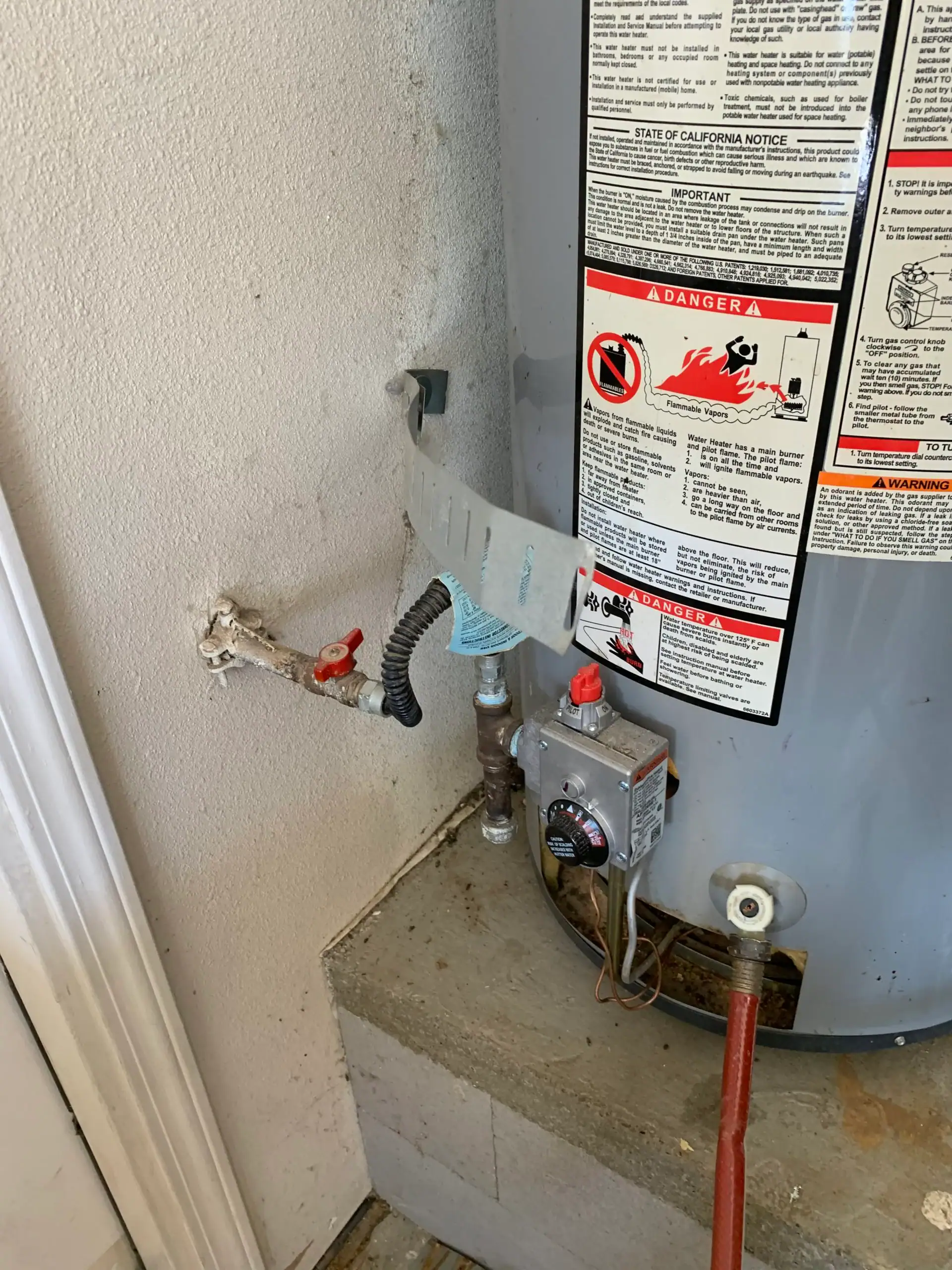
It starts with a free pre-installation assessment. Before any work is scheduled, one of our licensed technicians reviews your gas meter location, pipe configuration, and access conditions. For Dutch Flat’s older homes many of which have gas systems that were retrofitted into structures built long before natural gas existed this step matters. It’s how you get an accurate price upfront instead of a surprise at the end.
Once the scope is confirmed, we pull the required building permit through the Placer County Community Development Resource Agency (CDRA), which administers permits for unincorporated Placer County. That permit isn’t optional, and it isn’t an upsell it’s what creates a legal record of the installation on file with the county. A permitted job protects you in an insurance claim, satisfies a buyer’s inspector, and documents that the valve was installed to code by a licensed contractor.
Installation typically takes a few hours. A DSA-certified valve is fitted to your gas meter the California Division of the State Architect certification is what makes the valve acceptable for permit compliance and insurance documentation. After installation, our technician walks you through the reset protocol: what the valve looks like when it’s tripped, why you should not reset it yourself after a seismic event, and how to reach us at any hour if you need a licensed inspection before service is restored. The county inspection follows, and you get documentation of the completed, permitted work.
Ready to get started?
Every earthquake valve installation through our company includes the DSA-certified valve itself, labor, permit fees, and the Placer County inspection all within the $400–$650 all-in range for most standard residential installations. That’s the number before you call, not a starting point that climbs once someone’s on-site. If your meter configuration or access conditions affect the price, you’ll know that during the free assessment, not after the work begins.
The valve we install is seismic-grade and DSA-certified, which means it meets California’s Division of the State Architect standards for permit compliance. Hardware store valves and online purchases don’t meet this standard. They won’t satisfy a Placer County permit, they won’t hold up in an insurance claim, and they won’t protect you in a real estate transaction. For Dutch Flat properties many of which sit inside a National Register Historic District and carry significant assessed value that documentation gap is a real financial exposure.
We also provide 24/7 emergency availability, which carries specific weight in a community accessible only via the Dutch Flat exit off I-80. If an earthquake trips your valve on a February night and you’re without heat at elevation, you need someone who picks up the phone. That’s built into our service, not a premium add-on. You also receive a written workmanship warranty and a post-installation walkthrough so you understand the reset protocol before you ever need to use it.
Dutch Flat sits within the Foothills Fault System, a major structural zone the USGS identifies as the dominant geologic feature of the western Sierra Nevada. Placer County averages around 451 seismic events per year. Most are small. But the ones that aren’t can move gas lines, shift meter connections, and create leak conditions inside walls and under floors before anyone smells anything.
For Dutch Flat specifically, the case is stronger than it is for most foothill communities. A meaningful portion of the housing stock here dates to before 1900 wood-frame structures with gas systems that were retrofitted decades after the homes were built. Older pipe connections and aging infrastructure are more vulnerable to seismic movement than modern construction. Add the fact that these homes are irreplaceable historic structures, and the math on a $400–$650 valve installation becomes straightforward. It’s not a requirement in most cases, but it’s one of the lowest-cost, highest-documentation safety upgrades available to a Dutch Flat homeowner.
For most standard residential installations in the Dutch Flat area, the all-in cost through our company runs $400–$650. That includes the DSA-certified valve, labor, and Placer County permit fees. There are no separate line items added at the end for permit processing or inspection scheduling those are part of the job.
If your meter has an unusual configuration, limited access, or other site-specific factors, that will come up during the free pre-installation assessment before any work is scheduled. The assessment exists specifically so you know the real number before you commit. Customers across the Sierra foothills region have consistently noted that final invoices came in at or below the original estimate.
Yes we pull permits on every installation as standard practice, not as an optional add-on. In unincorporated Placer County, including Dutch Flat, building permits for earthquake valve installations are issued through the Placer County Community Development Resource Agency (CDRA). We handle that process from start to finish, including scheduling the county inspection after installation.
That permit record matters more than most homeowners realize until they need it. If you file an insurance claim after a seismic event, your carrier will ask how the valve was installed and whether it was permitted. If you sell your Dutch Flat home especially a historic property inside the National Register Historic District a buyer’s inspector will flag the absence of documentation. A permitted installation with a county inspection on file answers both of those questions cleanly. Contractors who offer to skip the permit to lower the price are creating a liability, not a bargain.
At over 3,100 feet elevation, losing gas service in winter isn’t just an inconvenience it can become a genuine safety issue fast, especially in older homes without backup heating. If your seismic valve trips, the most important thing to know is this: do not attempt to reset it yourself. The valve trips when it detects seismic movement above a set threshold, and resetting it before a licensed plumber inspects your gas lines for damage means potentially introducing gas into a compromised system.
The correct sequence is to leave the valve in its tripped position, contact your gas utility (PG&E serves this area) to report the event, and call a licensed plumber to inspect the lines before service is restored. We offer 24/7 emergency availability specifically because situations like this don’t happen on weekday afternoons. Every installation includes a post-installation walkthrough that covers exactly this scenario what the valve looks like when tripped, what not to do, and who to call. You’ll know the protocol before you ever need it.
Most California homeowner insurance carriers recognize DSA-certified seismic valve installations, and some offer premium reductions in the range of 5–15% for documented seismic safety upgrades. The key word is documented. A valve that was installed without a permit, or one that isn’t DSA-certified, may not satisfy your carrier’s requirements which means it may not qualify for a discount or support a claim.
For Dutch Flat homeowners, the insurance angle is particularly relevant right now. California’s homeowner insurance market has tightened significantly, and historic properties in areas with wildfire exposure Dutch Flat is surrounded by Tahoe National Forest are facing heightened scrutiny at renewal. A permitted, DSA-certified valve installation creates a paper trail: the permit record, the county inspection, and the written documentation of installation by a licensed C-36 contractor. That documentation is what your carrier actually needs. We provide all of it as part of the standard installation.
No. PG&E responds to gas leaks and emergencies, but they do not install seismic shut-off valves. This is documented on their website, and if you call them about it, they’ll direct you to a licensed plumber. It’s one of the most common reasons Dutch Flat homeowners delay getting this done they assume the utility will handle it at some point, or that it’s part of a scheduled upgrade program. It isn’t, and it won’t be.
The installation has to be done by a licensed C-36 plumbing contractor using a DSA-certified valve, with a permit pulled through Placer County CDRA. PG&E’s role comes after installation they may need to be notified depending on your meter configuration, and they’re the ones you contact if the valve trips and you need to report a potential seismic event before a plumber inspects the lines. But the installation itself is entirely outside their scope. We hold C-36 License #916322 and handle the full process, including the permit and county inspection.
Other Services we provide in Dutch Flat