
Placerville
Open 24/7- 4330 Panorama Dr, Unit 36
Placerville, CA 95667 - (530) 499-2223
- Open 24 hours, 7 days a week
Earthquake Valve Installation
Get a free quote for earthquake valve installation from your local plumbing team.
We’ll contact you about your earthquake valve installation request. Privacy policy
Hear from Our Customers

The 1994 Northridge earthquake didn’t destroy homes with known gas problems it destroyed ordinary homes where gas lines broke under movement no one expected. Fruitridge Pocket sits on Sacramento Valley alluvium, low-elevation, flat soil that can amplify ground shaking and put real stress on the gas lines running through walls that were framed in the 1950s. That’s geology.
When a seismic valve is installed correctly, it triggers automatically the moment it detects significant ground movement cutting off your gas supply before a broken line can fill a room or ignite. You don’t have to be home. You don’t have to react fast enough. The valve does it for you.
What changes after installation is simple: you stop carrying that risk. Your insurer has documentation. Your home has a legal permit on file with Sacramento County. And if you’re ever in the middle of an escrow, you’re not scrambling to get it done in 72 hours. You already took care of it.
We are an owner-operated plumbing company that has been serving the Sacramento region since 2009. Ryan Murray holds California C-36 License #916322 the specific classification required by state law to perform gas line work and seismic valve installation. You can verify that at cslb.ca.gov before you ever pick up the phone.
This isn’t a franchise, a call center, or a contractor who shows up under a different name than who you called. When you hire Murray Plumbing, you know exactly who is responsible for the work. That matters in a community like Fruitridge Pocket, where residents have seen their share of contractors who cut corners, skip permits, and disappear when something goes wrong.
We’ve worked throughout unincorporated Sacramento County, and we know the county building department’s permit process not a city’s, the county’s. For Fruitridge Pocket homeowners, that distinction is real, and we handle it start to finish.
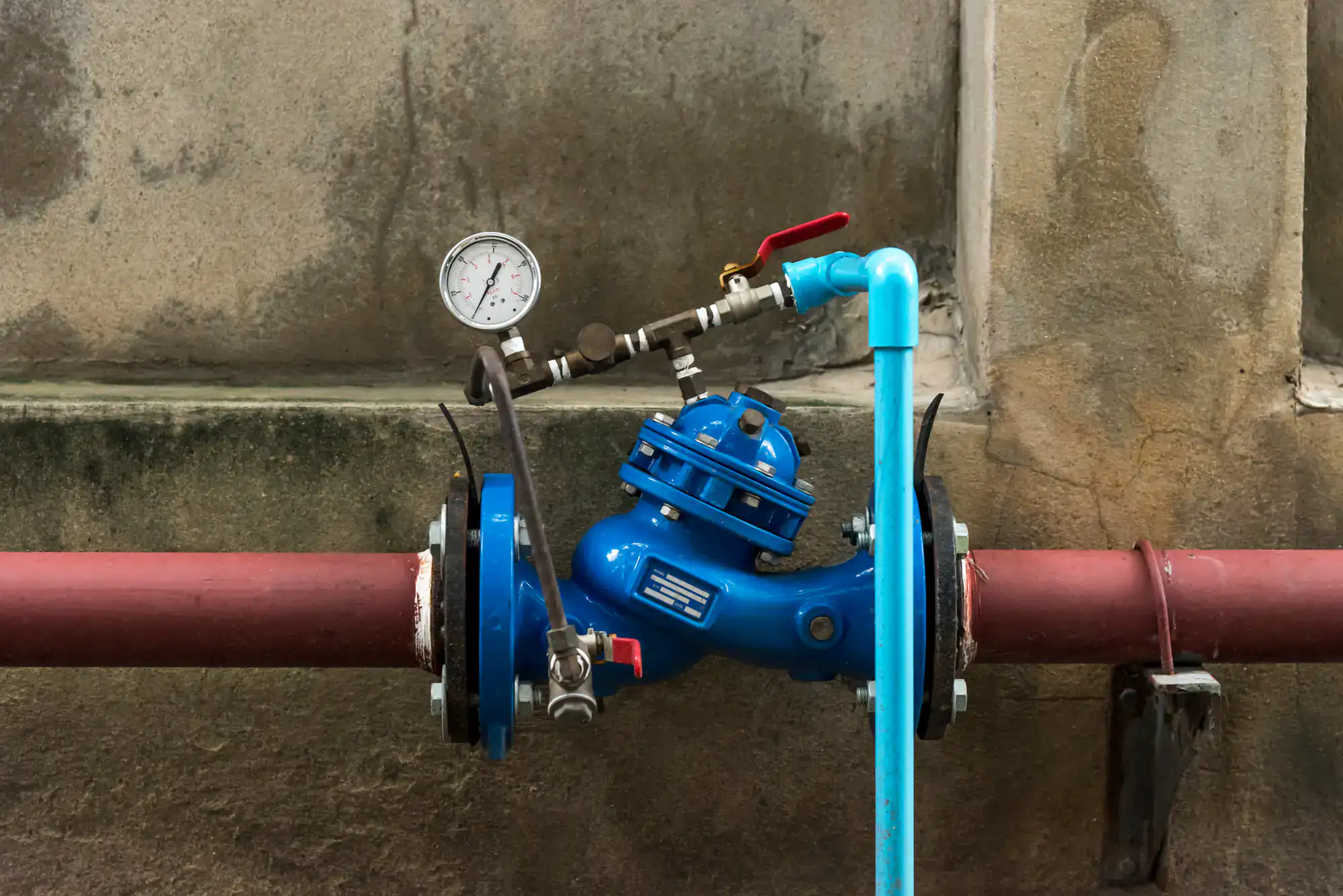
It starts with a free assessment. We come out, evaluate your gas meter location, check your existing line configuration, and give you a firm price before any work begins. For most homes in Fruitridge Pocket post-war cottages and ranch-style builds with standard meter setups that number lands between $400 and $650, all in. That covers the valve, labor, permit fees, and written documentation. What we quote is what you pay.
Once you’re ready to move forward, we pull the permit through Sacramento County Building Inspection and Permits. Because Fruitridge Pocket is unincorporated county territory not a city that process goes through the county building department, and we handle every step of it. We only install DSA-certified valves, which is the California standard required for permit approval and insurance documentation. No gray-market hardware, no skipped steps.
After installation, we walk you through exactly what to do if the valve trips including why you should not reset it yourself until a licensed plumber confirms your lines are undamaged. In a neighborhood this dense, with homes this close together, that walkthrough isn’t optional. It’s part of the job.
Ready to get started?
Every installation we perform includes a DSA-certified seismic shut-off valve the California Division of the State Architect standard that your Sacramento County permit requires and your insurer will ask for. These valves are calibrated to trigger at approximately 0.2g of horizontal ground acceleration, which means they won’t trip from a passing truck on Stockton Boulevard or a door slamming down the hall. They respond to the kind of ground movement that actually damages gas lines.
The permit is not optional, and we don’t treat it that way. A permitted installation creates a legal record that protects you when you sell, satisfies your insurance company’s documentation requirements, and confirms the work was inspected by the county. An unpermitted valve or one installed by someone without a C-36 license won’t pass that inspection and won’t hold up when it matters most.
For landlords who own rental properties in Fruitridge Pocket, Sacramento County’s Earthquake Brace + Bolt program has expanded to include non-owner-occupied properties, which may open up additional funding options for seismic safety upgrades. We’re familiar with that process and can speak to it during your assessment. Whether you own one home near Tahoe Park or several units along the Fruitridge Road corridor, the installation is the same standard DSA-certified, permitted, and documented.
It’s a fair question, and the honest answer is yes it’s a real factor worth understanding. Fruitridge Pocket sits at about 33 feet of elevation on the flat Sacramento Valley floor, which is composed of alluvial sediment deposited over centuries by the Sacramento and American Rivers. This type of soil has elevated liquefaction susceptibility, meaning that during significant ground shaking, it can temporarily lose its load-bearing stability and shift in ways that put direct stress on underground and in-wall gas piping.
This doesn’t mean a quake will definitely rupture your lines it means the geological conditions here increase the potential for gas line stress compared to homes built on bedrock in the foothills. The Northridge earthquake produced over 14,000 gas leaks across the Los Angeles basin, most of them in homes with no prior gas issues. For Fruitridge Pocket homeowners, a DSA-certified seismic shut-off valve is the most practical response to that documented risk.
For most homes in Fruitridge Pocket, the all-in cost runs between $400 and $650. That includes the DSA-certified valve itself, labor, permit fees, and written documentation of the installation. The exact number depends on your meter location and the current configuration of your gas line which is why we do a free assessment before quoting anything. You’ll have a firm number in hand before any work starts.
What affects cost most is accessibility. If your gas meter is in a straightforward location with standard piping, you’re typically at the lower end of that range. More complex configurations older homes with non-standard line runs, meters in tight or obstructed locations can push toward the higher end. Either way, the quote you get is the price you pay. Our customers in Fruitridge Pocket consistently report that their final invoice came in at or below the original estimate, and that’s not an accident it’s how we quote.
Yes, and it matters more than most people realize. Because Fruitridge Pocket is unincorporated Sacramento County not a city the permit process goes through Sacramento County Building Inspection and Permits, not a city building department. That’s a distinction that catches some homeowners off guard when they’re trying to figure out where to file or who to call.
The permit creates a legal record of the installation. That record is what your insurance company asks for when they want documentation of a seismic safety upgrade. It’s also what gets disclosed in a real estate transaction and if you’re selling a home in this market, an unpermitted modification on a gas line is the kind of thing that surfaces during escrow and creates real problems. We pull the permit, coordinate with the county, and schedule the inspection as standard practice. You don’t have to manage any of that.
DSA-certified seismic valves are calibrated to trigger at approximately 0.2g of horizontal ground acceleration. To put that in practical terms heavy trucks on Stockton Boulevard, construction equipment nearby, a door slamming, even a minor tremor that you barely feel none of that comes close to the threshold that trips the valve.
The 0.2g calibration is specifically designed to filter out everyday vibration and respond only to the kind of ground movement that poses a real threat to gas line integrity. It’s the result of standardized testing that DSA certification requires. A valve that trips at the wrong time is worse than useless it cuts your gas when nothing is wrong and creates the kind of frustrating experience that makes people distrust the technology. DSA-certified valves don’t behave that way, which is exactly why California requires that standard for permitted installations.
You can physically reset most seismic valves yourself, but you shouldn’t not until a licensed plumber has confirmed your gas lines are undamaged. Here’s why: the valve tripped because it detected ground movement significant enough to be a risk. That same movement may have stressed, cracked, or shifted a gas line somewhere in your home that isn’t visible from the outside. Resetting the valve before that’s been ruled out means restoring gas flow to a potentially compromised system.
The correct sequence is to leave the valve in the tripped position, ventilate the space, avoid open flames or switches, and call a licensed plumber for an inspection before resetting. In a neighborhood as densely built as Fruitridge Pocket where homes sit close together on small lots a gas event that starts at one meter can affect neighboring structures quickly. The post-trip protocol isn’t overcautious. It’s the right call, and we walk every customer through it after installation so they’re not guessing in the moment.
PG&E does not install earthquake shut-off valves. If you call them about it, they’ll refer you to a licensed plumbing contractor specifically someone holding a California C-36 license, which is the classification that covers gas line work. This is a common source of confusion for homeowners who assume their utility handles this, and it’s one of the reasons people delay getting it done.
The C-36 license requirement exists because installing a seismic valve involves working on your home’s gas line, which requires both the technical knowledge and the legal authorization to do that work safely and in compliance with California code. We hold C-36 License #916322 you can confirm that at cslb.ca.gov. For Fruitridge Pocket homeowners, that means the permit process goes through Sacramento County, the valve installed meets DSA certification standards, and the work is done by someone legally qualified and accountable for the outcome.
Other Services we provide in Fruitridge Pocket
Our Locations
From the foothills to the valley, Murray Plumbing has a licensed team close by. Find the office nearest you — we’re open 24 hours a day, 7 days a week.