
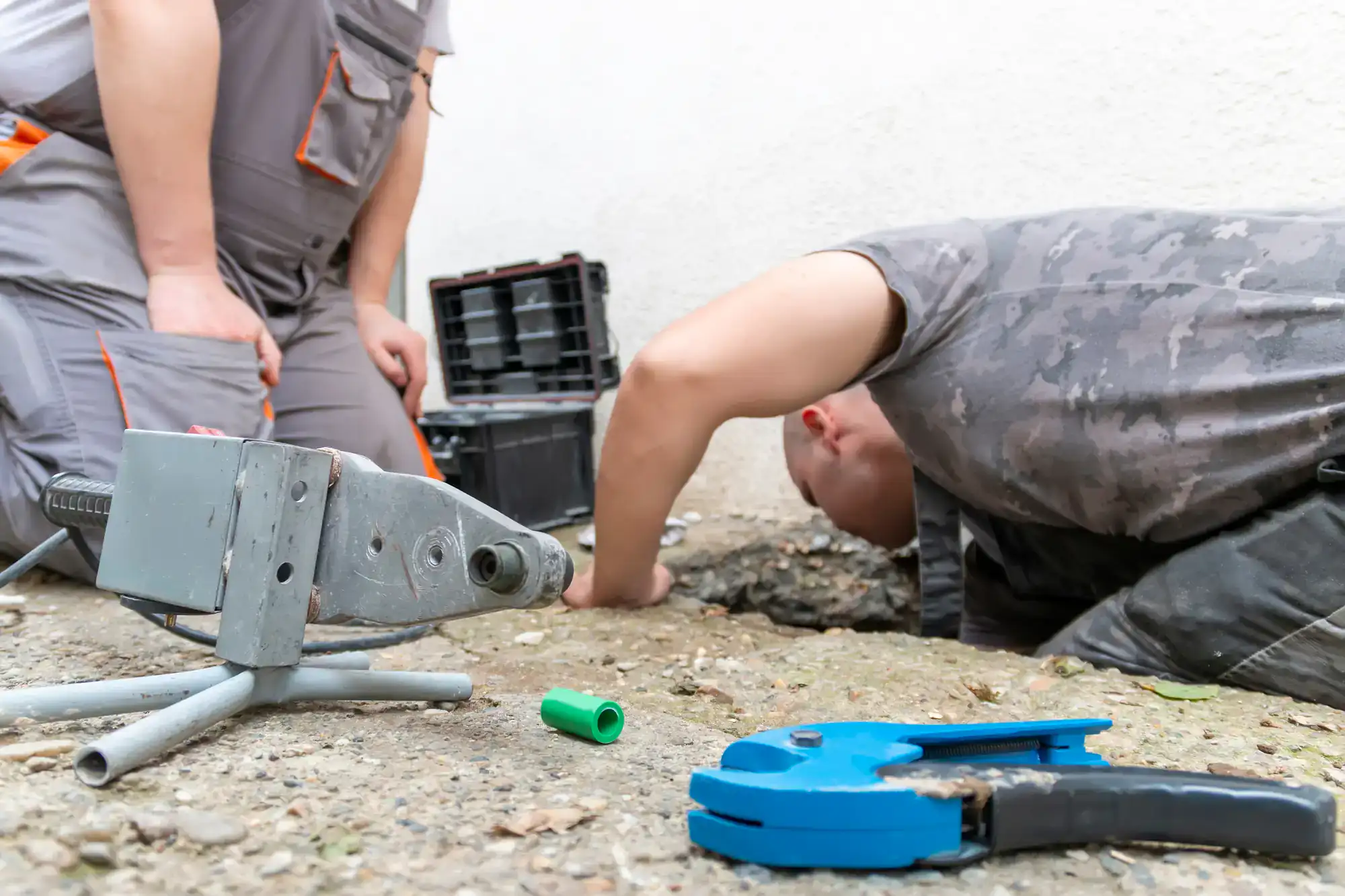
Frozen Pipe Services
Get a free quote for frozen pipe services from your local plumbing team.
We’ll contact you about your frozen pipe services request. Privacy policy
Hear from Our Customers
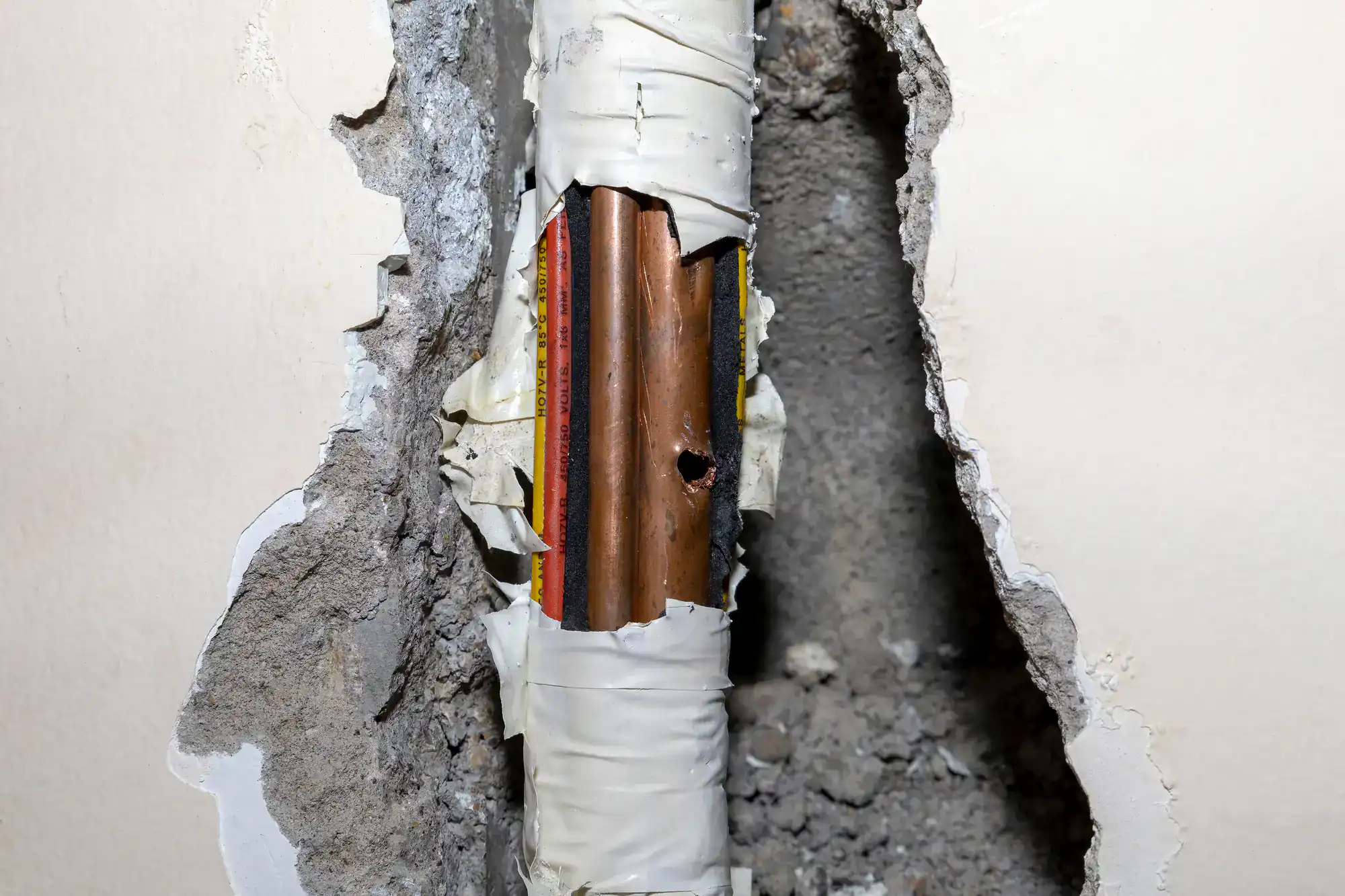
Campus Commons was built in the 1970s, and the plumbing in most of these townhomes and condos has been running for over 50 years. That original copper and galvanized pipe has gone through decades of Sacramento’s seasonal temperature swings and when a cold snap hits overnight along the American River corridor, those aging lines don’t have the same tolerance they once did. A freeze event that a newer home might shrug off can split a joint or crack a section in a 1970s-era wall without much warning.
What makes Campus Commons different from a typical Sacramento suburb is the shared-wall reality. Water from a burst pipe doesn’t stop at your property line it travels through insulation, into adjacent units, and potentially into HOA common areas before you’ve even had your first cup of coffee. The faster a licensed plumber gets there, the smaller that problem stays.
After we handle a frozen pipe repair in Campus Commons, you’re not just getting a fixed pipe. You’re getting a fully tested system, a clear record of what was done for your HOA or insurance company, and honest guidance on what to do before the next cold snap so you’re not making this call again.
We’ve been working in Sacramento County for over 24 years. That means our technicians have been inside 1970s-era homes like the ones throughout Campus Commons, the Villages, and the Nepenthe Association long enough to know what’s behind those walls before we open them. We’re not guessing we’ve seen this infrastructure hundreds of times.
The reviews back that up. A 4.7 out of 5 on Google, built on 93 real customer reviews from people across the Sacramento area, consistently points to the same things: on time, professional, and the final bill was fair sometimes even less than the estimate. That’s not a common thing to hear about emergency plumbing work, and it matters when you’re already dealing with a stressful situation.
When you call us, a real person picks up. Not a call center. Not a voicemail. Someone who can actually get a technician to Fair Oaks Boulevard or Howe Avenue and give you a straight answer about what it’s going to cost.
When you call us about a frozen pipe in Campus Commons, the first thing that happens is a real conversation not a hold queue. You’ll describe what you’re seeing, and a technician will be dispatched with a realistic arrival window. In a neighborhood like Campus Commons, where the streets off Howe Avenue and Fair Oaks Boulevard are straightforward to navigate, response times are typically fast.
Once on site, our technician assesses the full situation before any work begins. In a 1970s-era townhome, that means checking not just the obvious problem area but also the surrounding pipe runs because aging infrastructure can have secondary weak points that a freeze event stresses without immediately bursting. You’ll get a written estimate before anything is touched. If you approve it, work begins. If the scope changes once the wall is open, you hear about it before the price changes.
The repair itself covers the damaged section thawing if it hasn’t burst, or cutting out and replacing the compromised pipe if it has. After the repair, the system is pressure-tested before our technician leaves. Because Campus Commons homes fall under Sacramento City jurisdiction, any work that requires a permit is handled correctly, and our C-36 license covers everything that needs to be done legally and documented properly for your HOA or insurance file.
Ready to get started?
Our frozen pipe repair service in Campus Commons isn’t a one-trick call where someone thaws the line and leaves. The visit covers the full scope: locating the freeze point, thawing or replacing the damaged section, extracting any standing water, and running a full system test before the job is closed out. You also get prevention guidance specific to your unit’s layout because a 1970s townhome with pipes running along an exterior wall near an unheated garage has different vulnerabilities than a newer build.
For Campus Commons condo owners dealing with HOA obligations, we provide clear documentation of the work performed and the damage scope. That paperwork matters when you’re filing an insurance claim or communicating with your Village HOA board about what happened and what was repaired. It’s the kind of detail that saves a lot of headaches later.
Pricing is straightforward. A standard service call runs $175. Thawing a frozen pipe that hasn’t burst typically falls between $350 and $750. If the pipe has already burst and needs repair or section replacement, expect $750 to $2,500 depending on access and pipe condition. Emergency after-hours calls carry an additional $200 to $500 premium. Every number is given to you upfront and the final invoice reflects exactly what was agreed on, sometimes less.
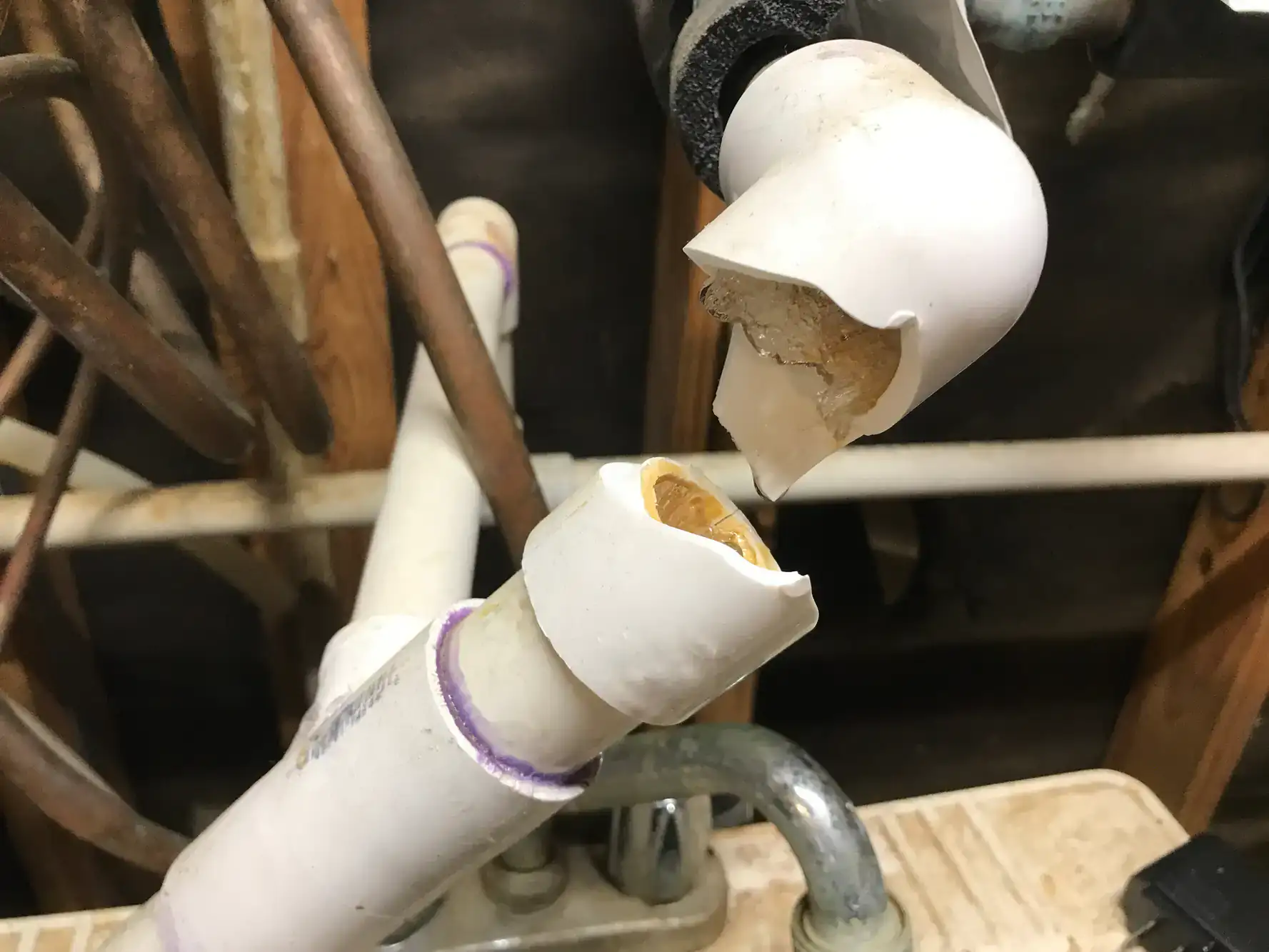
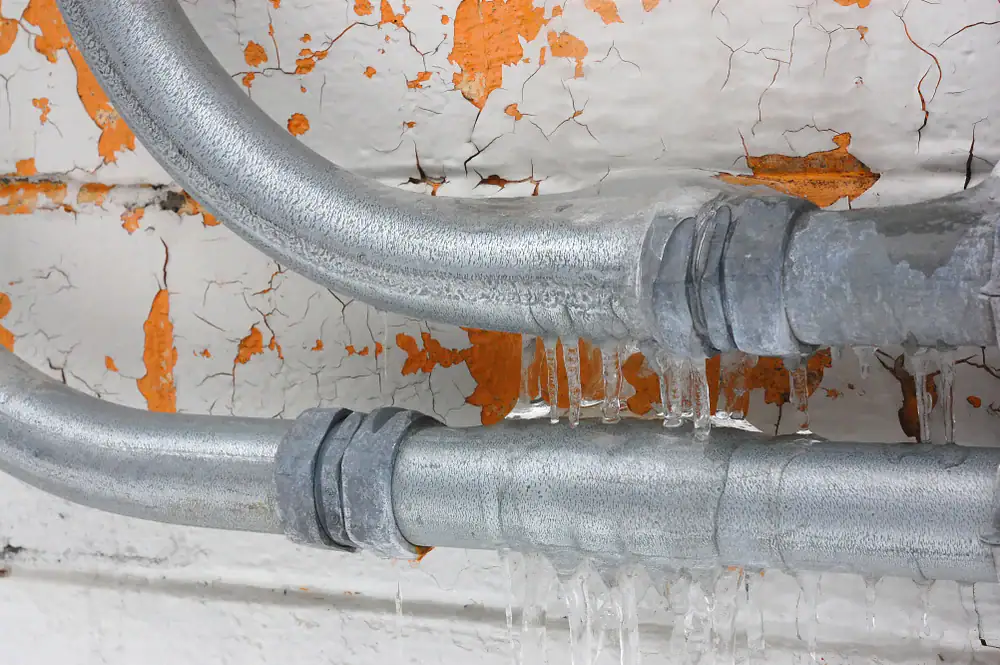
It’s a fair question Sacramento isn’t Tahoe, and most winters here feel more like extended fall than anything severe. But the valley floor does drop below freezing overnight, and in a 1970s-era Campus Commons townhome with original pipe insulation and lines running along exterior walls or through unheated garages, that’s enough to cause a freeze. The average December low in Sacramento sits around 41°F, but cold snaps push overnight temps well below 32°F several times each winter.
The specific risk in Campus Commons is the surprise freeze a rapid overnight drop following a warm spell in December or January when residents haven’t winterized because the past few weeks felt fine. That’s exactly when frozen pipe calls spike. The units closest to the American River Parkway edge of the community also tend to run slightly colder overnight due to the moisture and fog the river corridor generates. If your pipes haven’t been insulated since the home was built, they’re more vulnerable than you might expect.
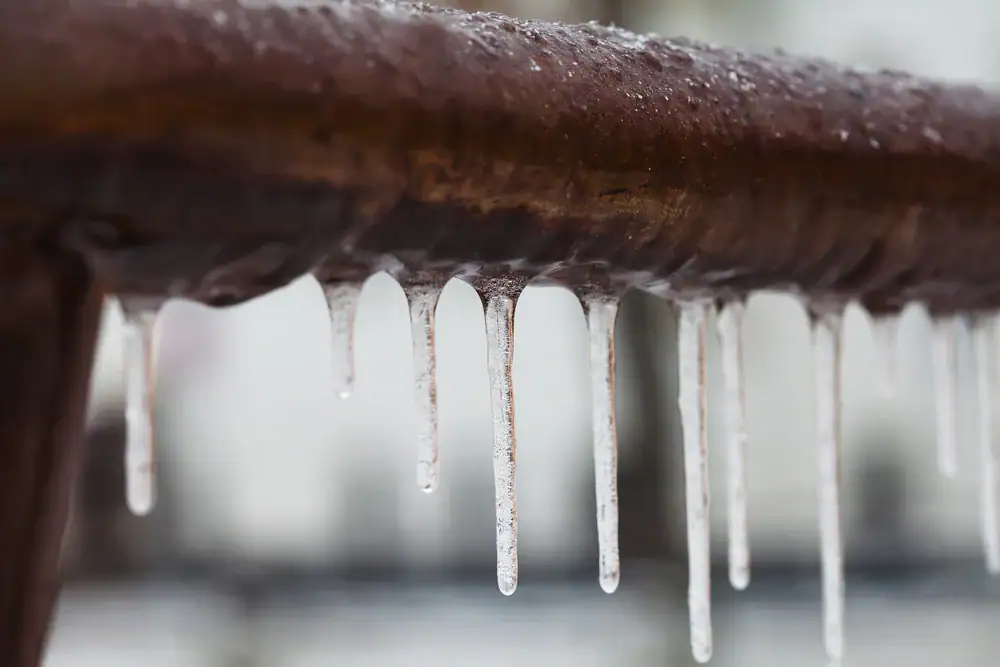
Once a pipe drops to around 20°F, it can burst within two to four hours. That window is shorter than most people assume, and in a Campus Commons townhome where plumbing runs through shared walls, the consequences of waiting are compounded. Water from a burst pipe in your unit doesn’t just stay in your unit it can travel through the insulation and into adjacent walls, affecting your neighbors and potentially reaching HOA common areas before the damage is visible to you.
The safest call is the one you make before you’re sure it’s burst. If you’ve lost water pressure, if a section of wall feels unusually cold, or if you can hear a faint hissing or dripping inside a wall, those are signs the pipe is already stressed. We can assess the situation, relieve pressure safely, and either thaw the line or get ahead of a burst before the water has a chance to spread. Waiting to see if it resolves on its own is the most expensive decision you can make.
This depends on where the pipe is located and what your specific HOA’s CC&Rs say. In Campus Commons whether you’re in one of the six Villages or the Nepenthe Association each HOA has its own governing documents that define the boundary between individual owner responsibility and association responsibility. Generally, pipes that serve only your unit and run within your unit’s boundaries are your responsibility. Pipes that serve multiple units or run through common walls may fall to the HOA, depending on how the documents are written.
The practical advice here is to call a licensed plumber immediately regardless of who’s ultimately responsible. Stopping the water is the first priority the liability question gets sorted out after. We document the damage scope and the repair clearly, which gives you exactly what you need for both your insurance company and any HOA communication that follows. A well-documented repair record can be the difference between a straightforward claim and a prolonged dispute with your association.
The honest answer is that it depends on what the pipe looks like once the wall is open, and in a 1970s-era Campus Commons home, that’s not always predictable. Our standard service call is $175. If the pipe is frozen but hasn’t burst, thawing it typically runs $350 to $750. If it has burst and needs a section replaced, the range is $750 to $2,500 depending on pipe access, the length of the damaged section, and the condition of the surrounding infrastructure. Emergency after-hours calls carry an additional $200 to $500 premium.
What you won’t get from us is a lowball number over the phone that doubles by the time the job is done. You get a written estimate before work starts, and the final invoice reflects what was agreed on. In some cases, the final cost has come in below the original estimate which is uncommon in emergency plumbing work and worth noting. For context, the average insurance claim for water damage from a burst pipe exceeds $30,000. The cost of the repair is a fraction of what unaddressed damage costs in a shared-wall community.
Yes, and a few simple steps can meaningfully limit the damage. First, locate your main water shutoff and turn it off if you believe the pipe has already burst or is about to. In most Campus Commons townhomes, the shutoff is near the water meter often in a utility closet, near the garage, or at the exterior of the unit. Turning off the water stops the flow and buys time. If you’re not sure where it is, finding it before you ever have a plumbing emergency is genuinely worth doing.
Second, if you suspect a pipe is frozen but hasn’t burst, you can apply gentle heat to the exposed section using a hair dryer or a heating pad never an open flame. Keep any nearby faucets open so water and steam can escape as the ice thaws. Do not crank the heat and walk away. And if the frozen section is inside a wall where you can’t reach it, leave it alone and let the plumber handle it. Attempting to thaw a pipe you can’t see or access can cause more damage than the freeze itself.
Most standard homeowners and condo insurance policies in California do cover sudden and accidental water damage from a burst pipe including the cost of the pipe repair itself and the resulting water damage to walls, floors, and personal property. The key word is “sudden.” If an adjuster determines that the pipe failed due to long-term neglect or that the home was left unheated in freezing conditions, coverage can be denied or reduced.
For Campus Commons condo owners specifically, there’s an added layer: your HOA’s master policy may cover damage to shared walls or common areas, but it typically does not cover what’s inside your unit. You’re responsible for your own interior, and your individual condo policy is what covers that. The cleanest path through an insurance claim is a licensed plumber who documents everything the cause, the scope, and the repair in writing. That documentation is what we provide as a standard part of every frozen pipe repair job in Campus Commons, and it’s what gives your claim the best chance of being processed without pushback.