
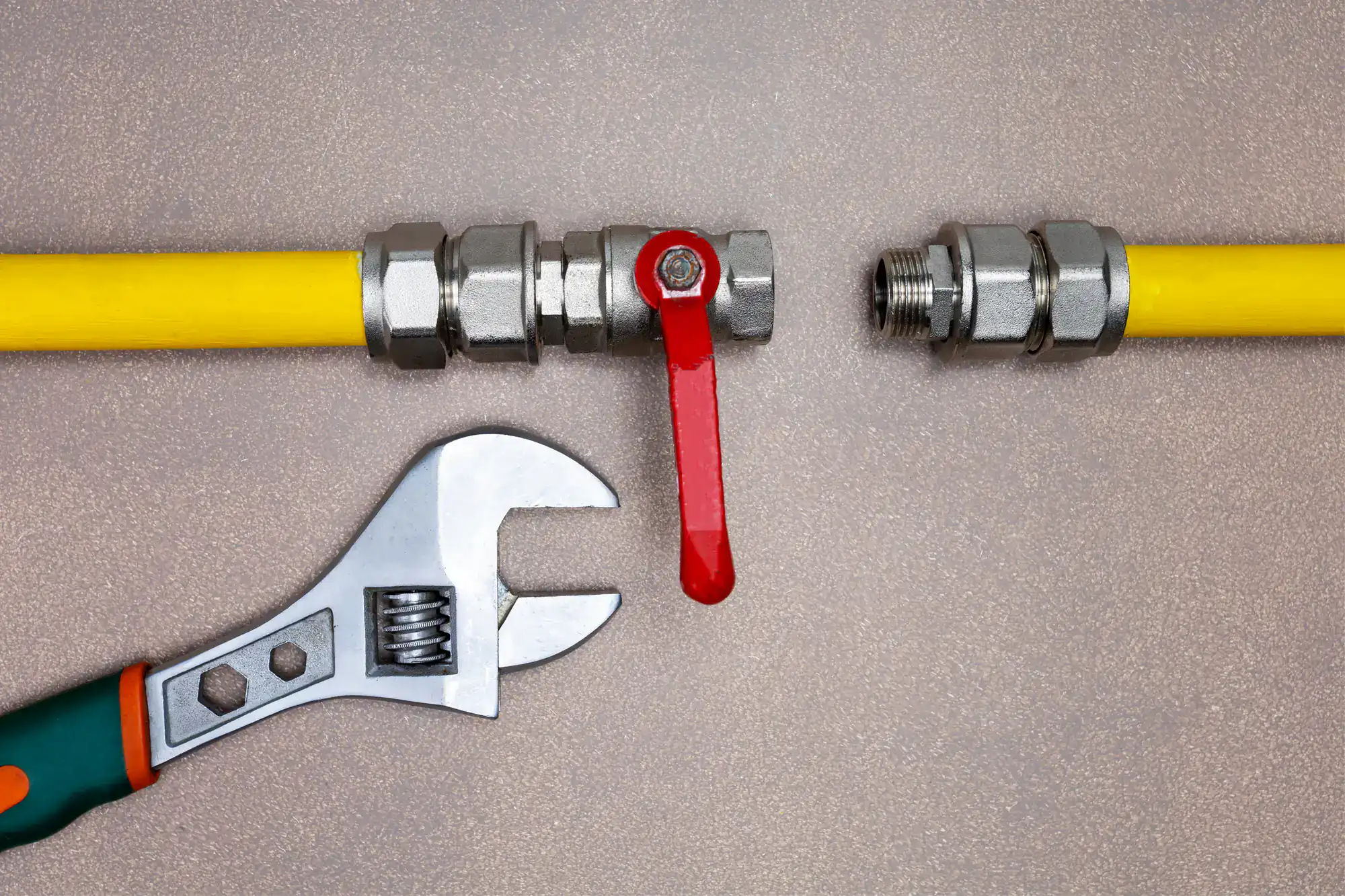
Gas Line Repair
Get a free quote for gas line repair from your local plumbing team.
We’ll contact you about your gas line repair request. Privacy policy
Hear from Our Customers
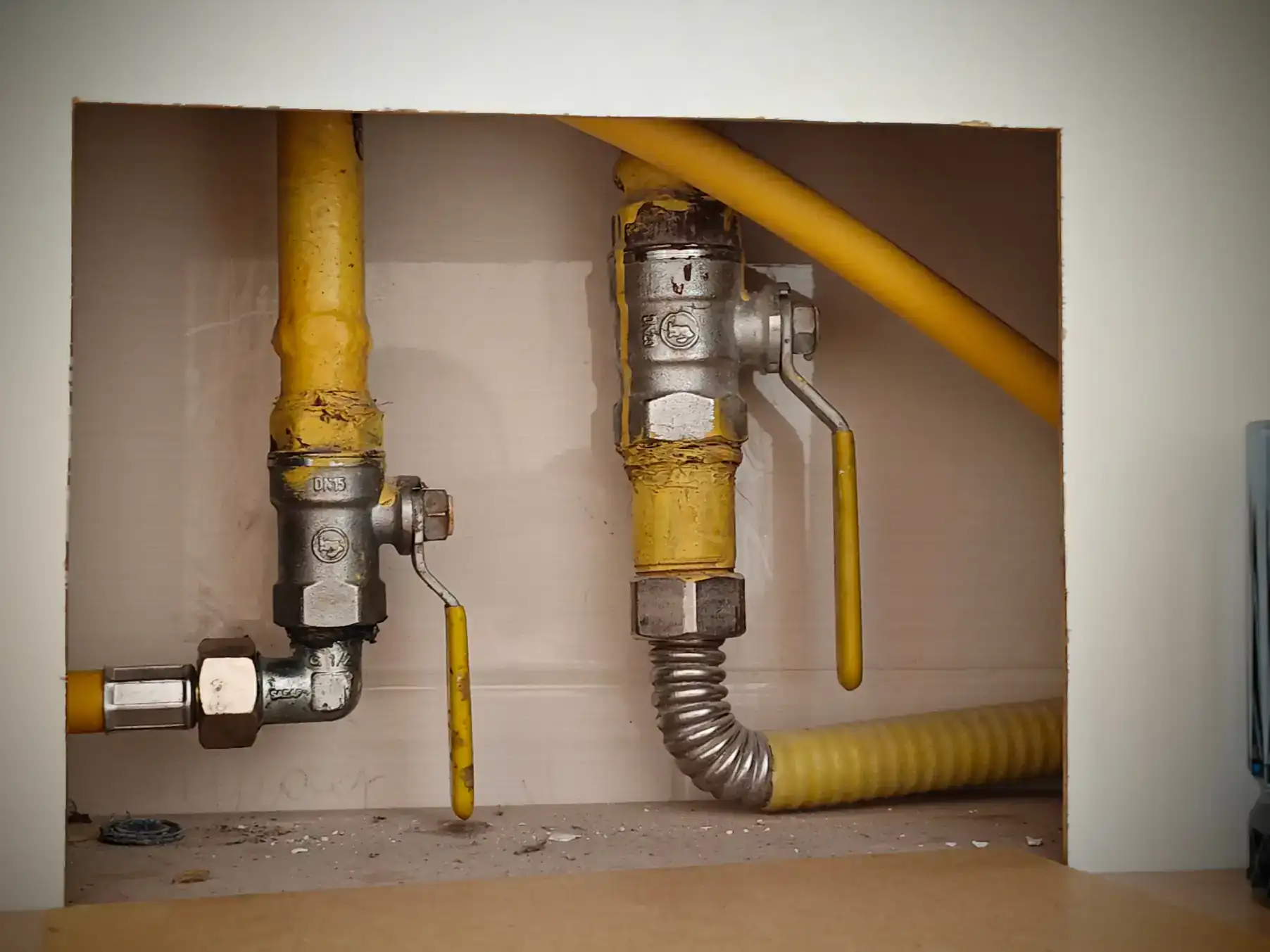
Auburn is not a new suburb. A significant portion of the homes here were built before 1970, and some of the oldest in Old Town Auburn predate modern gas safety standards entirely. If your home falls into that category, the gas piping inside your walls and under your floors has been working for decades and steel lines that old corrode from the inside out. By the time you smell something, the problem has usually been building for a while.
What changes after a proper gas line repair is simple: you stop wondering. No more faint smell near the stove that you can’t quite place. No more furnace that hesitates before igniting. Your appliances run the way they’re supposed to, and your home is no longer carrying a risk you can’t see.
Auburn’s foothill climate adds a layer most valley contractors don’t think about. With nearly 20 freeze days per year and summer highs regularly pushing into the 90s, your gas piping goes through real thermal stress every single year. That kind of seasonal movement loosens fittings and accelerates corrosion especially in crawl spaces and exterior runs that aren’t insulated. Getting ahead of it isn’t overcautious. It’s just smart ownership in this climate.
We’ve been serving Auburn and Placer County for over 24 years. That includes the Gold Rush-era homes in Old Town Auburn, the mid-century ranches in established neighborhoods, and everything in between. This isn’t a franchise operation running calls from a Sacramento dispatch center. Our technicians have worked in Auburn’s foothill homes long enough to understand what aging infrastructure actually looks like here.
Our 4.7/5 Google rating from 93 real local reviews reflects what Auburn customers consistently experience: someone showed up on time, explained the problem clearly, gave a fair price upfront, and got the job done. Several customers have noted their final invoice came in lower than the original estimate which is rare enough in this industry that it’s worth saying out loud.
Every gas line job we complete includes pulling the necessary permits and scheduling the required inspection. That matters in Auburn, where wildfire risk zone designations are making insurance companies look more closely at whether work on your home was done to code.

When you call, the first thing that happens is a real conversation not a voicemail loop. You describe what you’re noticing, whether that’s a smell, a pressure issue, an appliance that’s not performing right, or a finding from a home inspection. From there, one of our technicians comes out and does a proper assessment, using leak detection equipment that can locate problems behind walls and under slabs not just at visible connections.
Once the issue is identified, you get a written estimate before anything is touched. The price you see is the price you pay. If the job ends up being simpler than expected, you pay less. That’s our policy, and it doesn’t change.
For any repair or replacement work that meets California’s threshold anything over $500 in combined labor and materials a permit is required under state law, and we handle that process for you. In Placer County, that means coordinating with the appropriate building department and scheduling the post-repair inspection before gas is restored. In Auburn’s WUI-designated areas, that documentation also protects your standing with your insurance carrier. After inspection clears, your gas is back on and the job is closed out properly.
Ready to get started?
PG&E is responsible for the gas main up to your meter. Everything past that point the lines running through your walls, under your slab, and to every appliance in your home is your responsibility. In May 2025, PG&E replaced 635 feet of aging gas main along Highway 49 in Auburn. If the utility is upgrading its infrastructure on that corridor, the residential piping inside homes on the same street deserves a second look too.
We handle the full scope of residential gas line work in Auburn: leak detection, gas line repair, full gas line replacement, and new appliance connections for water heaters, furnaces, stoves, dryers, outdoor fire pits, and BBQ grills. For Auburn homeowners who take power outages seriously and have installed whole-home generators, gas connection work for those units is included as well.
For homes in North Auburn or the older neighborhoods closer to Old Town, full gas line replacement is sometimes the more practical call especially when steel piping has reached the end of its service life and repairs would be recurring. A proper assessment will tell you which direction makes more sense for your specific home, and you’ll have that information before any decision is made.
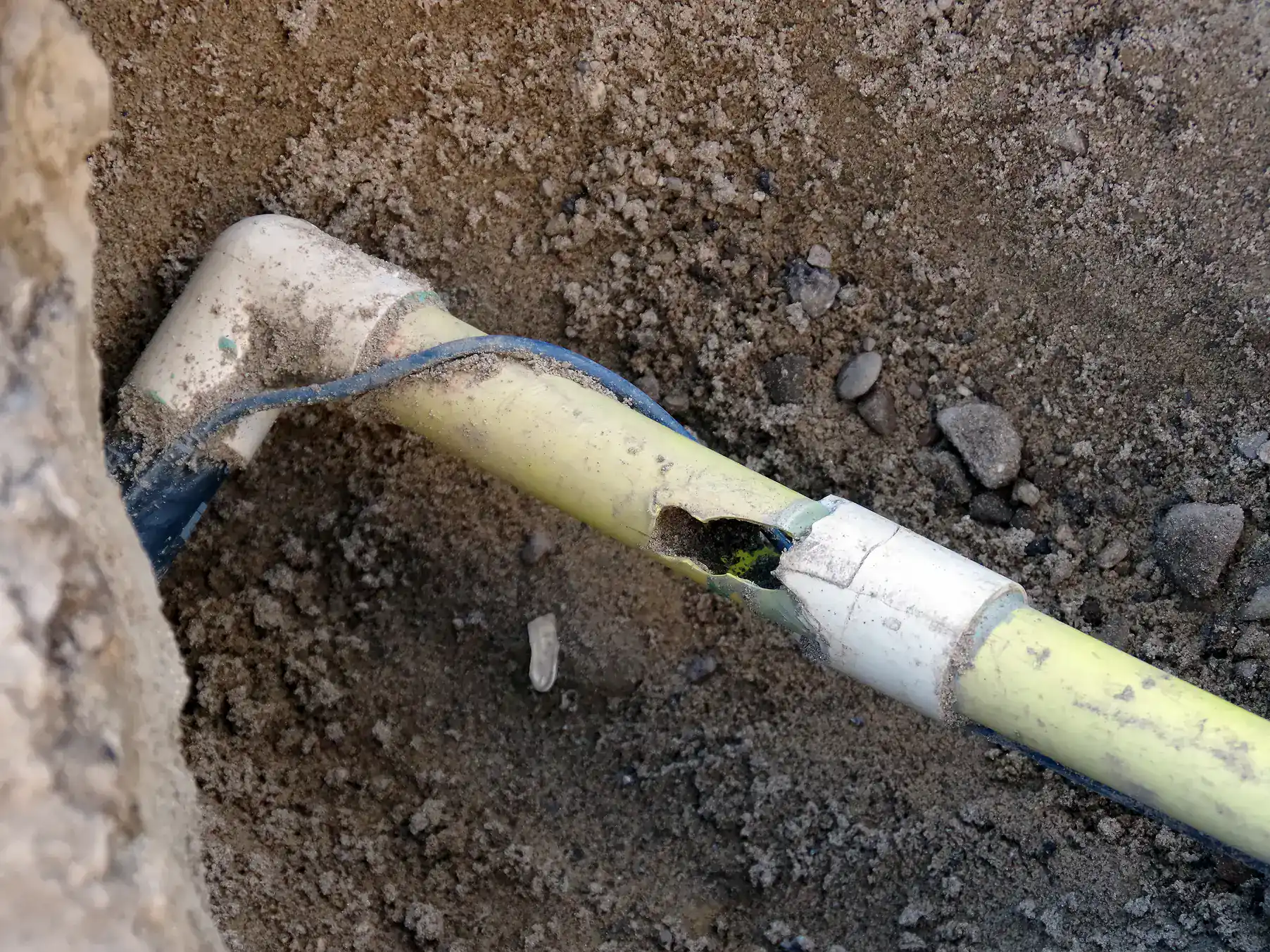
If you smell gas inside your home, leave immediately and call PG&E at 1-800-743-5000 from outside or from a neighbor’s phone. Do not flip light switches, use your phone inside the house, or try to locate the source yourself. PG&E will respond to shut off the supply at the meter and confirm the area is safe.
Once PG&E has cleared the scene, that’s when you call a licensed plumber. PG&E’s responsibility ends at your meter the piping inside your home is yours, and they won’t repair it. We can respond to Auburn addresses the same day in most cases, assess the damaged or failed section, and give you a written estimate before any repair work begins. In a community where six homes were evacuated following a gas leak in North Auburn, this isn’t a theoretical risk it’s something that happens here.
Most residential gas line repairs in Auburn fall somewhere between $260 and $820, depending on where the leak is, how accessible the line is, and whether the fix is a localized repair or a section replacement. Jobs that require opening walls, working under a slab, or replacing a longer run of pipe will sit toward the higher end of that range.
The honest answer is that cost varies enough that a phone quote without seeing the job isn’t worth much. What we can tell you upfront is the exact price before any work starts in writing. For Auburn homeowners in older homes, particularly those built before 1970 where original steel piping is still in place, it’s worth knowing that a full gas line replacement averages around $598 nationally, and in some cases is a better long-term investment than repeated repairs on a line that’s past its service life.
Yes, in most cases. California state law requires a C-36 CSLB-licensed contractor for any gas line work where combined labor and materials exceed $500. Beyond licensing, a permit is required for gas line replacement and most significant repair work, and the job must pass a utility or city inspection before gas service is restored.
For properties within Auburn’s incorporated city limits, permits go through the City of Auburn. For homes in unincorporated North Auburn, permitting is handled through Placer County Building Services, which offers an online e-Permits portal. We manage the permit application and inspection scheduling as part of the job you don’t have to navigate that process yourself. In Auburn’s wildfire risk zones, having permitted and inspected gas work on record also matters at insurance renewal time, where carriers are increasingly scrutinizing whether prior work on the property was done to code.
The most common warning signs are a sulfur or rotten egg smell near appliances or in certain rooms, a hissing sound near a gas line or connection, appliances that take longer than usual to ignite, or a gas bill that’s higher than it should be without a clear explanation. Any one of those is worth taking seriously.
For Auburn homes built before 1970 which make up a substantial portion of the city’s housing stock the more relevant question is whether the original steel gas piping is still in place. Steel lines corrode from the inside out over decades, and the deterioration isn’t always visible until a fitting fails or a section develops a pinhole leak. If your home hasn’t had a gas line inspection in the last several years, and especially if you’re in an older neighborhood like Old Town Auburn or a mid-century area that hasn’t been significantly remodeled, a professional assessment is a reasonable thing to schedule. It’s not an expensive call, and it tells you exactly where you stand.
Yes. New appliance connections are a standard part of what we handle for Auburn homeowners water heaters, furnaces, gas stoves, dryers, outdoor grills, fire pits, and whole-home generators. Auburn’s outdoor recreation culture means fire pits and outdoor kitchen setups are common, and those connections need to be run correctly and inspected before use.
For any new connection that requires running a new gas line or extending an existing one, the same permit and inspection requirements apply as they do for repair work. The process is straightforward: we assess the connection point, confirm your existing line has adequate capacity for the new appliance, run the line if needed, and schedule the inspection. You don’t end up with a new appliance that’s technically connected but not code-compliant which matters both for safety and for your homeowner’s insurance coverage in Placer County.
In California, any contractor performing gas line work where combined labor and materials exceed $500 is legally required to hold a C-36 CSLB Plumbing Contractor license. That license is verifiable you can look up any contractor’s license number at cslb.ca.gov in about 30 seconds. An unlicensed operator can’t legally pull a permit, which means the work won’t be inspected, and you’ll have no documentation that it was done to code.
For Auburn homeowners, that gap in documentation creates real downstream problems. If you file a homeowner’s insurance claim and an adjuster finds unpermitted gas work on the property, coverage can be denied. If you sell the home, unpermitted work can surface during escrow and delay or kill the transaction. And in Auburn’s WUI-designated fire risk zones, where insurers are already tightening standards, the last thing you want is a liability tied to work that was never inspected. We hold the required C-36 license, pull permits on every qualifying job, and close out each project with a passed inspection so your home’s record stays clean.