
Sewer Camera Inspection
Get a free quote for sewer camera inspection from your local plumbing team.
We’ll contact you about your sewer camera inspection request. Privacy policy
Hear from Our Customers
Most Penryn homes were built in an era when clay laterals were standard. Those pipes are now 50, 60, sometimes 70-plus years old—and they don’t give much warning before they fail. A sewer camera inspection gives you a clear, real-time picture of what’s actually going on underground, so you’re making decisions based on facts, not guesses.
If your Penryn property sits on acreage along English Colony Road or out toward Sisley Road, your lateral run is likely longer than a typical suburban lot. More pipe means more exposure—more joints that can shift, more surface area for roots to probe, more ground for seasonal soil movement to stress over decades of wet winters and dry summers. Our camera reaches up to 350 feet, which matters when your line runs under a mature orchard or a gravel driveway before it ever reaches the street.
The inspection itself doesn’t disturb anything. No digging, no guessing, no tearing up the yard you’ve spent years maintaining. You watch the footage live, we narrate what we see, and you leave the appointment knowing exactly what your pipes look like—and exactly what, if anything, needs to happen next.
We hold a California CSLB C-36 Plumbing Contractor license—the state-required classification for sewer inspection and repair work in California. In unincorporated Placer County, where permits for plumbing work run through the county’s building services division rather than a city office, working with a properly licensed contractor isn’t optional. It’s the baseline.
What actually sets us apart isn’t the license—it’s what we do with it. Our pricing starts at $99 and is stated upfront, not after the camera is already in your pipe. Our policy on upselling is explicit: if there’s nothing wrong, we’ll tell you that. Customers consistently note that final invoices come in at or below the original estimate, which is not something most plumbing companies can say and back up with reviews.
We serve Penryn and the surrounding foothill communities and understand the specific conditions that create sewer problems here—older pipe materials, long lateral runs on large lots, mature tree root systems, and the seasonal rainfall patterns that stress underground infrastructure year after year. When you call, you’re not explaining your situation to someone who’s never been to the foothills.
It starts with a call. You describe what you’re dealing with—slow drains, a recurring backup, a pre-purchase inspection on an older property, or just a pipe system you’ve never had looked at in 20 years of ownership. We give you a straightforward price before anything is scheduled, so there’s no ambiguity going in.
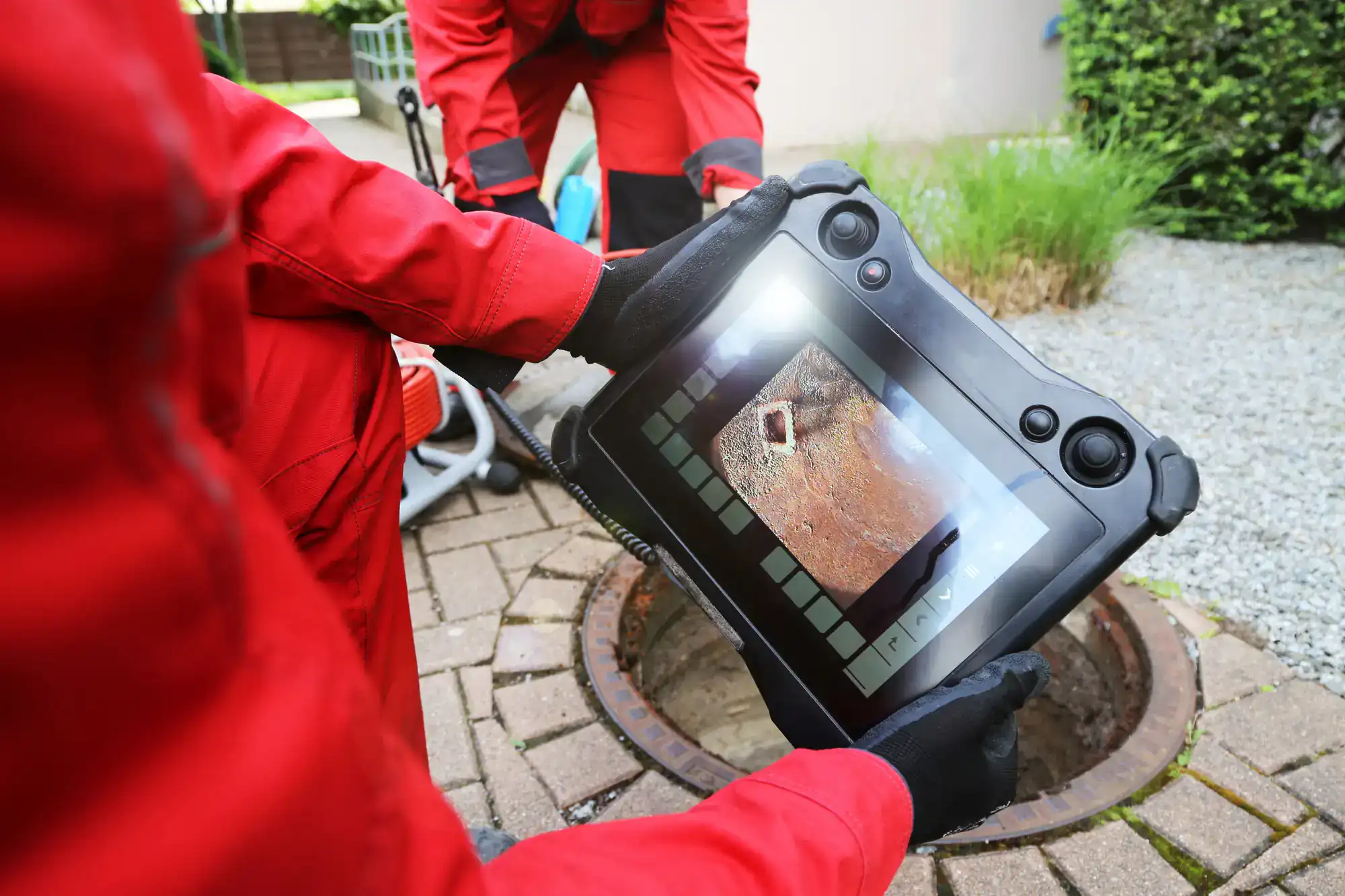
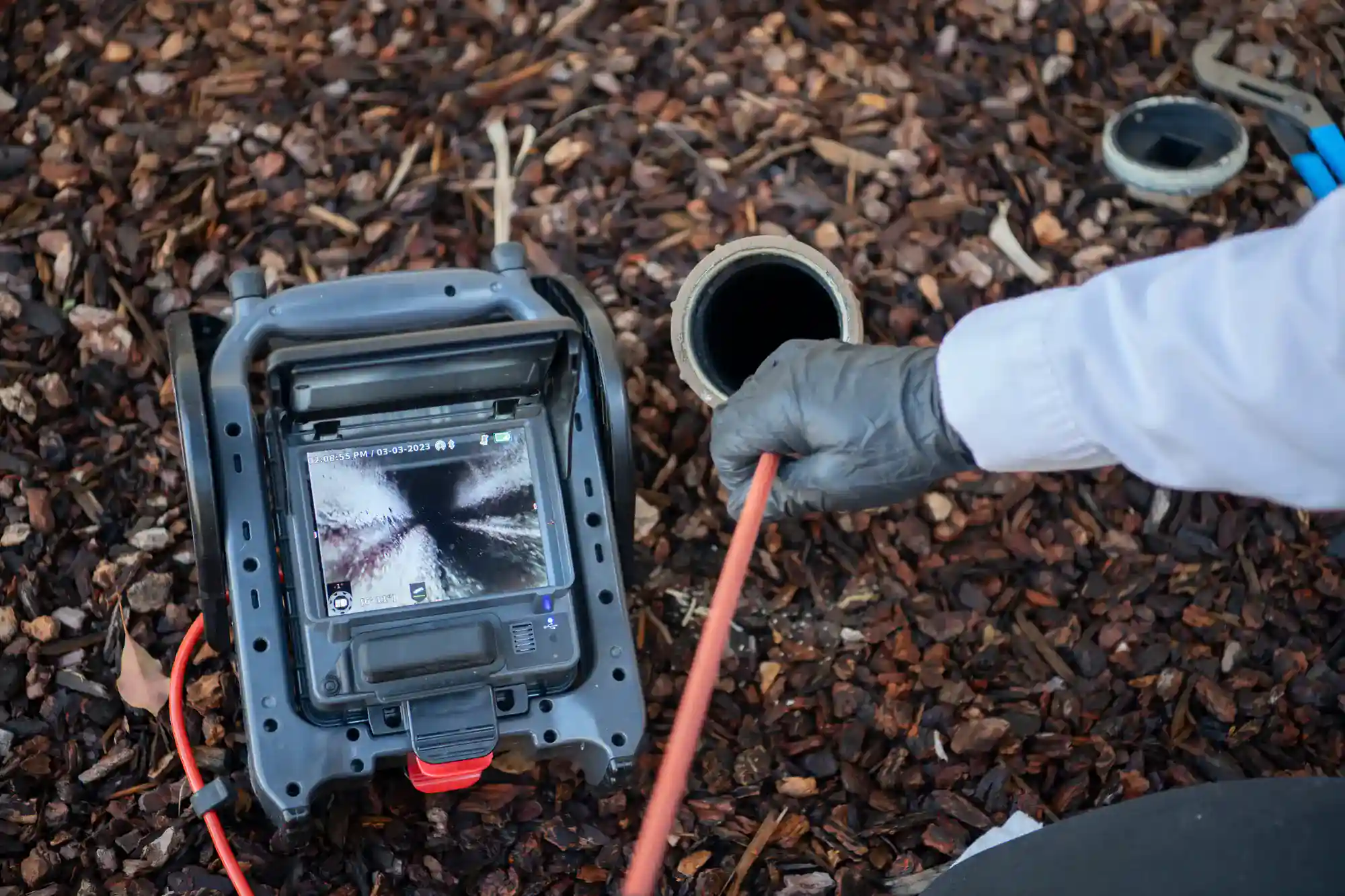
On the day of the inspection, our technician accesses your line through an existing cleanout or access point. The camera goes in—self-leveling, LED-lit, and capable of traveling the full length of even a long rural lateral. As it moves through the pipe, you watch the footage in real time. We narrate what we’re seeing: root intrusion, a cracked joint, a pipe belly where waste is pooling, or a clean line that’s holding up fine. Nothing is summarized after the fact. You see it as it happens.
If a problem is found, a locating transmitter marks the exact spot above ground. That means any repair work—if it’s needed—is targeted and precise, not exploratory. For Penryn homeowners with irrigated orchards, established landscaping, or long gravel driveways, that matters. Because in unincorporated Placer County, where your property is your responsibility from the house to the connection point, knowing exactly where a problem is before a shovel goes in the ground is the difference between a manageable repair and a much larger one.
Ready to get started?
The sewer camera inspection we perform in Penryn isn’t a drive-by diagnostic. Our equipment inspects pipe diameters from 1.5 to 72 inches, navigates up to 350 feet of line, and uses a locating transmitter to mark any problem area above ground without breaking surface. That combination of reach and precision is specifically relevant in a community where acreage properties have longer laterals than anything you’d find in a standard Roseville subdivision.
What you’re looking for in a Penryn home depends on the property. In older homes—particularly those built in the 1940s through 1970s along the rural corridors of unincorporated Placer County—clay pipe is the most common original material, and it’s well past its expected service life. Root intrusion from stone fruit trees, mature oaks, and established ornamental plantings is among the most common findings. Pipe belly—where ground settlement has created a low spot that holds waste—is another frequent issue in foothill properties where soil shifts seasonally.
For buyers purchasing an older Penryn property, a pre-purchase sewer scope is one of the most practical things you can do before closing. A standard home inspection doesn’t go underground. On a property selling above $750,000 with a 60-year-old clay lateral, a $99–$300 inspection is a straightforward way to avoid inheriting a $6,000–$10,000 repair with no warning. Whether you’re buying, selling, or just overdue for a look at a pipe system you’ve never had inspected, the information you get from a sewer line camera inspection in Penryn is worth having.

Our sewer camera inspection pricing starts at $99 and typically ranges up to $300 depending on the property and scope of the inspection. That’s well below the Sacramento-area market range of $250–$850 and the national average of around $685. The price is given upfront before anything is scheduled—not after the technician is already on site.
For Penryn properties on acreage with longer lateral runs, the inspection scope may be more involved than a standard suburban job, but our pricing structure stays transparent either way. There are no fees added after the fact for footage review, locating services, or the written summary of findings. What you’re quoted is what you pay—and in most cases, customers report the final invoice comes in at or below the original estimate.
Yes, and it’s one of the most common findings on Penryn properties. Tree roots follow moisture, and older sewer laterals—particularly clay pipes with imperfect joints—are a consistent moisture source underground. Stone fruit trees, mature oaks, and established ornamental plantings all have root systems capable of probing and widening small cracks in aging pipe over time. Once roots are inside the pipe, they don’t stop growing.
The problem is that root intrusion is invisible until it causes a backup or a slow drain you can’t clear with a snake. By the time you notice the symptom, the roots may have been growing inside the pipe for years. A sewer pipe inspection with a camera catches root intrusion at an early stage—when it can often be addressed with targeted hydro jetting rather than a full pipe replacement. Catching it early is almost always cheaper than waiting for it to force the issue.
More urgent than most homeowners realize. Clay sewer laterals, which were the standard material used in mid-century construction throughout the Penryn area and the broader Placer County foothills, have an expected service life of roughly 50 years. A home built in 1955 has pipe that is now 70 years old—well past that threshold. Cast iron drain pipe beneath the structure itself typically lasts 50–75 years, putting it in the same range.
That doesn’t mean the pipes have failed. It means they’re in the window where joint failure, root intrusion, pipe belly, and structural cracking become active risks rather than distant ones. The only way to know where your specific pipe stands is to put a camera in it. If everything looks solid, you have peace of mind and a baseline record of your pipe condition. If there’s a developing problem, you find it before it becomes an emergency backup on a weekend night—which is when these things tend to happen.
No. The inspection itself is entirely non-invasive. The camera enters through an existing cleanout or access point—nothing is opened, excavated, or disturbed during the diagnostic. For Penryn homeowners with irrigated orchards, mature landscaping, or gravel driveways you’d rather not see torn up, that’s an important distinction.
If the inspection does find a problem, a locating transmitter marks the exact location of the issue above ground. That means any repair work is targeted—the excavation goes to the specific spot where it’s needed, not across a wide search area. In cases where trenchless sewer repair is an option, the pipe can sometimes be rehabilitated without any significant excavation at all. The camera inspection is what makes all of that precision possible. You don’t dig first and find out what’s wrong later—you know exactly what’s wrong and where before a single shovel goes in the ground.
Yes, and it’s one of the more straightforward decisions in the pre-purchase process. Standard home inspections don’t include underground sewer lines—your inspector walks the structure, checks the visible systems, and moves on. What’s happening in the lateral running from the house to the connection point is entirely outside the scope of that inspection, regardless of how thorough the inspector is.
For a buyer purchasing a mid-century farmhouse or a 1960s ranch property in Penryn, that underground lateral is one of the most significant unknowns in the transaction. Properties here regularly sell above $750,000. A sewer line camera inspection costs $99–$300. If the camera finds a cracked lateral, a pipe belly, or significant root intrusion, you have real information to bring back to the negotiating table—or to use as a reason to walk away before closing. If the pipe looks clean, you close with confidence. Either way, the inspection pays for itself in what it tells you.
It accelerates them. The Sierra Nevada foothills receive significantly more rainfall than the Sacramento Valley floor, and Penryn’s wet season—typically running from November through March—puts real stress on underground pipe infrastructure. Saturated soil expands and shifts, which stresses older pipe joints that have already been weakened by decades of the same cycle. At the same time, wet conditions accelerate root growth toward any available moisture source, including cracked sewer laterals.
The pattern that shows up frequently in foothill communities like Penryn is a homeowner who deals with a slow drain or a partial backup during a heavy rain event, clears it with a snake or a drain cleaner, and assumes the problem is solved. It often isn’t. What the seasonal rain revealed is a developing condition—root intrusion, a partially collapsed joint, a pipe belly—that will come back the next time the soil saturates. A sewer blockage inspection after a wet-season event gives you a definitive answer on whether you cleared a symptom or actually resolved the underlying issue. In Penryn, with older pipe systems and mature tree canopy throughout the community, that distinction matters.