
Hear from Our Customers
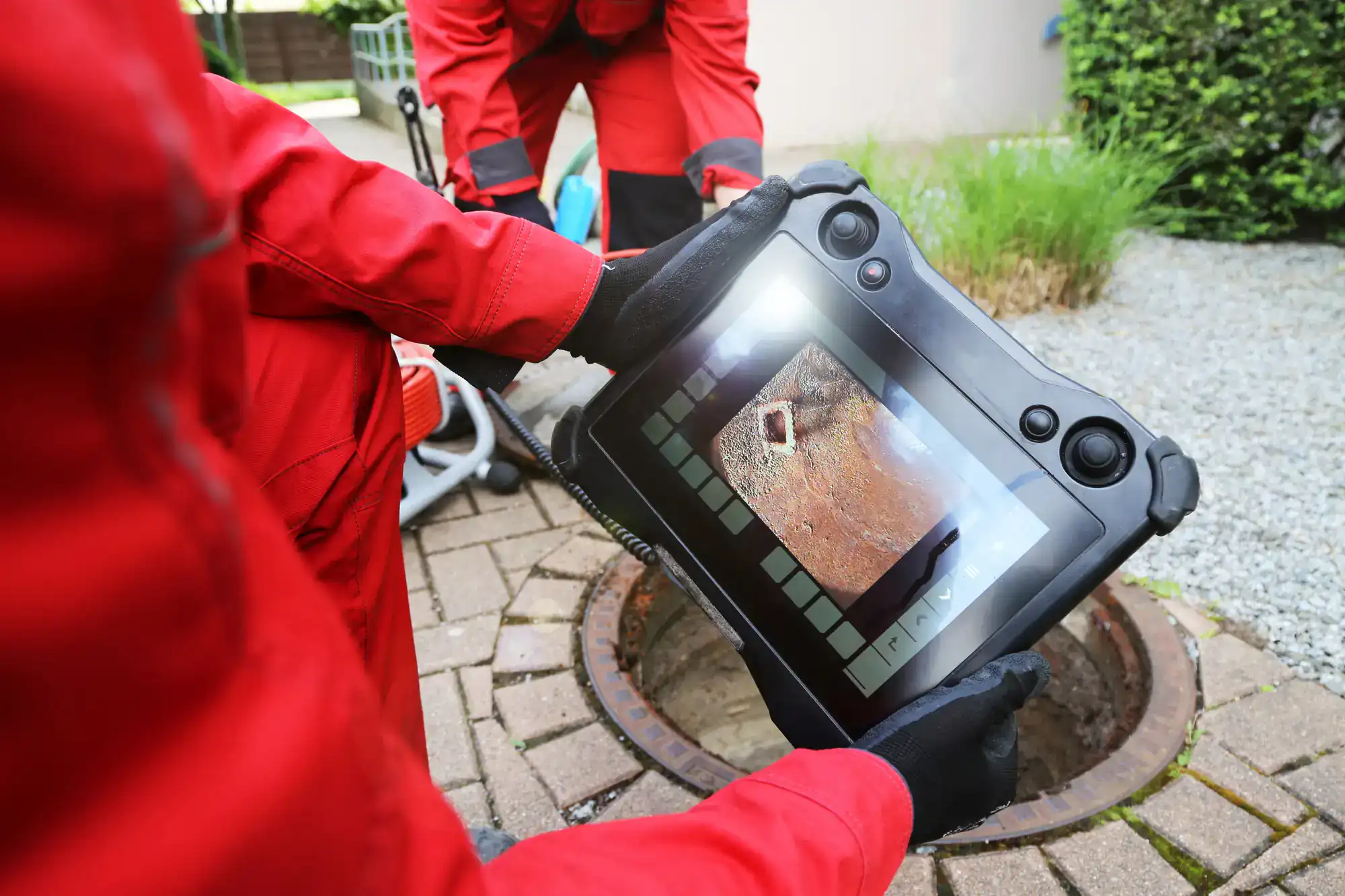
Most sewer problems in Richmond Grove don’t announce themselves. You might notice a slow drain here, a gurgling toilet there and then one day, a backup that turns into a four-figure emergency. The issue is that the original clay and cast iron pipes under most Richmond Grove homes are anywhere from 85 to over 100 years old. That’s well past the 50-to-75-year functional lifespan those materials were built for. A sewer line camera inspection doesn’t just find problems it tells you exactly what you’re dealing with before it becomes a disaster.
Richmond Grove’s mature canopy of oak, cottonwood, and maple trees is one of the things that makes this neighborhood worth living in. Underground, though, those same root systems have spent decades searching for moisture and aging clay pipes with even the smallest joint separation are exactly what they find. Root intrusion is one of the most common findings on camera inspections in older Sacramento neighborhoods, and Richmond Grove is no exception.
If you own a duplex, triplex, or multi-unit Craftsman on the rental side of things which describes a lot of properties here a sewer failure doesn’t just affect your household. It affects every tenant in the building at once. A $99–$300 inspection is cheap insurance against that scenario. And if the pipes are in good shape, you’ll know that too.
We serve Sacramento County with a straightforward approach: tell you what’s wrong, show you the footage, and let you decide what to do next. No pressure, no manufactured urgency, no repair recommendations that don’t match what the camera actually found. Customers consistently report that their final bill came in at or below the original estimate and that’s not an accident. It’s how we run the business.
Richmond Grove sits right in the heart of Sacramento’s oldest residential infrastructure, and we know what that means in practice. We’re familiar with the pipe materials common to pre-war construction in this neighborhood, the way Sacramento’s clay soil cycles through wet and dry seasons and stresses aging pipe joints over time, and the specific challenges that come with inspecting laterals under dense urban lots near the 16th Street corridor.
We hold a California CSLB C-36 Plumbing Contractor license the license required by state law to perform and document sewer lateral inspections. Our 4.7/5 Google rating is backed by 93 verified reviews, and we’re available 24/7 for situations that don’t wait for business hours.
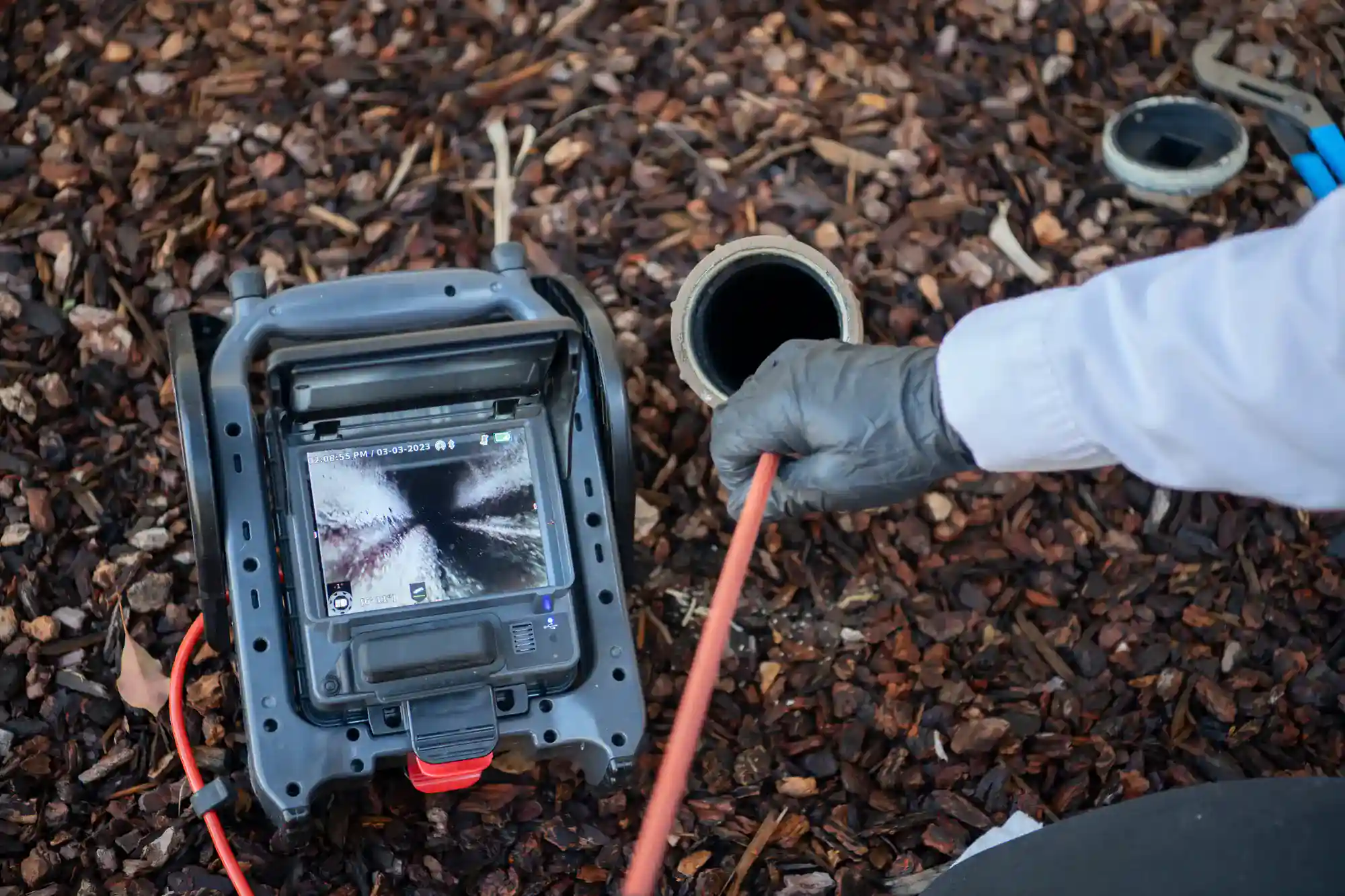
The inspection starts at your cleanout access point no excavation, no tearing up your yard, no disturbing the mature trees or historic streetscape that define Richmond Grove. A high-resolution camera is fed directly into the sewer line, and as it travels through the pipe, our technician narrates what the footage shows in real time. You’re watching the same screen we are. If there’s root intrusion, a pipe belly, cracking, or buildup, you see it firsthand not in a written report handed to you after the fact.
Our equipment inspects pipe diameters from 1.5 to 72 inches and reaches up to 350 feet enough to cover the full lateral run from your building cleanout, under the sidewalk, and to the municipal connection at the street. That last stretch, near the sidewalk trees, is often where root intrusion is most advanced on Richmond Grove properties. Budget equipment that maxes out at 75 or 100 feet won’t reach it.
Once the inspection is complete, you get a clear picture of what’s there, what’s not urgent, and what needs attention. If repairs are needed, trenchless methods are available which matters in a neighborhood where open-cut excavation could disturb historic building exteriors, root systems, and protected streetscapes. For buyers closing on a Richmond Grove investment property, the inspection also produces documentation that meets Sacramento city compliance requirements.

Ready to get started?
Our sewer camera inspection covers the full lateral line not just the first accessible section. The camera reaches up to 350 feet, handles pipe diameters from 1.5 to 72 inches, and uses LED lighting and self-leveling technology to produce clear footage even in older, irregular pipe runs. A locating transmitter marks problem areas above ground so our technician can pinpoint exactly where an issue is without any guesswork or unnecessary digging.
Pricing runs $99–$300, and you’ll know the estimate before anyone shows up. That range puts us well below the Sacramento market average of $250–$850 and significantly below the national average of $685. For Richmond Grove property investors managing multiple units in the 95814 and 95818 zip codes, that pricing structure makes it practical to inspect regularly not just when something’s already gone wrong.
The inspection is valid for Sacramento city documentation and real estate transactions, which is relevant for the active investment property market in Richmond Grove. Whether you’re buying a 1920s Craftsman bungalow near Southside Park, managing a triplex near the 16th Street light-rail station, or just dealing with a recurring slow drain that keeps coming back after snaking, the process is the same: you get real footage, a straight assessment, and a clear path forward with no obligation to approve anything on the spot.

Our sewer camera inspections in Richmond Grove are priced between $99 and $300, with a free estimate provided before scheduling. That range is well below the Sacramento market average, which typically runs $250–$850 depending on the provider and scope of the job.
The reason pricing varies within that range comes down to the specifics of the property lateral length, access point location, and whether additional footage review is needed. For the pre-war housing stock common throughout Richmond Grove, longer lateral runs are typical, and our full 350-foot camera reach ensures the entire line gets covered. You’ll know what the inspection costs before the technician arrives, and the final invoice consistently comes in at or below that estimate.
A standard home inspection doesn’t include underground sewer lines. Your inspector can assess the roof, the structure, the electrical panel but the lateral running from the building to the street stays invisible unless you commission a separate sewer scope. For a Richmond Grove duplex or triplex built in the 1910s or 1920s, that lateral could be carrying 100-plus years of wear, root intrusion, and joint separation that no surface inspection would catch.
With roughly 80% of Richmond Grove residents renting, investment properties here change hands regularly and a sewer failure in a multi-unit building means displaced tenants, emergency repair costs, and potential habitability issues all at once. A pre-purchase sewer pipe inspection gives you documented evidence of the pipe’s actual condition before you close, not after. We provide inspection documentation that meets Sacramento city compliance requirements, which is useful for both real estate transactions and city records.
Yes and in Richmond Grove specifically, it’s one of the most common findings on camera inspections. The neighborhood’s mature oak, cottonwood, and maple trees are a defining part of its character, but those same root systems have spent decades expanding underground. Cottonwood roots are among the most invasive of any urban tree species. Oak roots can extend two to three times the width of the tree’s canopy. Both actively seek moisture, and a clay pipe with even a hairline crack or slightly separated joint is exactly the kind of entry point they exploit.
Once roots get inside a pipe, they don’t stop. They expand, trap debris, and eventually cause partial or complete blockages. In a neighborhood where many of the pipes and the trees are both over 80 years old, root intrusion isn’t a theoretical risk it’s a near-certainty in any lateral that hasn’t been recently inspected or replaced. A sewer line camera inspection shows you exactly how far any intrusion has progressed, so you can address it before it becomes a full backup.
Not necessarily. What the camera finds determines what kind of repair, if any, is actually needed and many issues can be resolved without digging. Root intrusion, for example, is often addressed through hydro jetting or mechanical cutting before it reaches the point of requiring pipe replacement. Minor cracks or buildup may only need monitoring or cleaning.
When a pipe does need repair or replacement, trenchless methods are available and in Richmond Grove, they’re often the most practical choice. The neighborhood is in the process of historic district designation, and many properties have mature trees, historic facades, and shared urban lots where open-cut excavation would cause significant disruption. Trenchless sewer repair accesses the pipe from existing entry points, repairs or replaces the line underground, and leaves the surface largely undisturbed. We’ll walk you through what the footage shows and what your actual options are no pressure to approve anything on the spot.
For properties in Richmond Grove, every three to five years is a reasonable baseline but the specific conditions of your building and its pipe age should guide the actual schedule. If the property has original clay or cast iron pipes from the 1920s or 1930s and hasn’t been inspected recently, starting with one inspection now makes sense regardless of where you are in that cycle. You’re working with pipes that are already well past their expected lifespan, and the only way to know their current condition is to look.
Sacramento’s wet season roughly November through March puts additional stress on aging pipe joints as clay soil expands and contracts with moisture. Spring is also when root systems are most active after winter rainfall, making it a high-risk period for first-time blockages in older laterals. Scheduling an inspection in late fall before the wet season, or in early spring after it, tends to catch problems at a stage where they’re still manageable. For landlords managing multiple units near the 16th Street corridor, building that into a regular maintenance schedule is a straightforward way to stay ahead of emergency repair costs.
Yes we serve Sacramento County, which includes Richmond Grove and the surrounding neighborhoods like Southside Park, Boulevard Park, Curtis Park, and Alhambra Triangle. Scheduling is available for standard inspections, and 24/7 emergency response is available for situations that can’t wait.
For Richmond Grove property owners managing tenant-occupied buildings, that availability matters more than it might in a single-family suburban context. A sewer backup in a triplex at 10 PM on a Saturday affects multiple households at once, and a company that only operates during business hours isn’t a realistic option for that scenario. Our response times and on-time arrivals are consistently cited in customer reviews not as a talking point, but as something customers specifically mention because it stood out. If you’re dealing with a recurring issue or just want to know what’s actually going on with a 100-year-old lateral before it becomes an emergency, getting on the schedule is the right first step.