
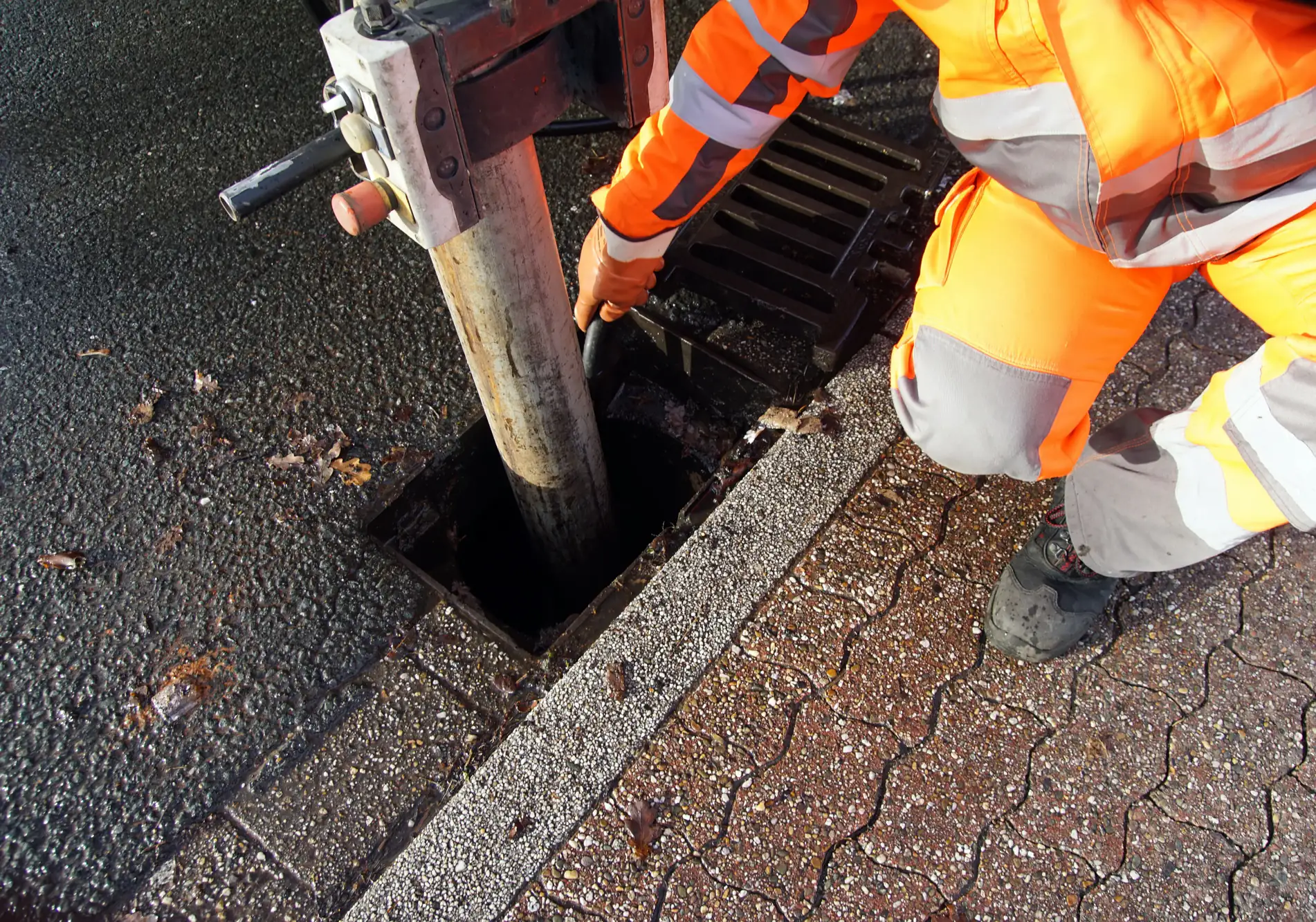
Sewer Cleaning
Get a free quote for sewer cleaning from your local plumbing team.
We’ll contact you about your sewer cleaning request. Privacy policy
Hear from Our Customers

Slow drains and gurgling toilets are annoying. Sewage backing up into your home during a January rainstorm is a different category of problem entirely. Sacramento is one of only two cities in California still running a combined sewer system a design from 1914 where stormwater and sewage share the same pipes. When that system gets stressed during a heavy storm and your private lateral is already partially blocked, the result shows up in your lowest drains, not on the city’s radar.
Once your sewer line is properly cleaned and inspected, you stop playing defense every time an atmospheric river rolls through. Drains move the way they’re supposed to. You’re not standing in the shower wondering if it’ll back up again. For homeowners in neighborhoods like Curtis Park, Oak Park, or Land Park where the housing stock runs well into the 1920s and 1930s that clarity also means knowing exactly what’s in your pipes and whether it needs attention before it becomes an emergency.
The difference between a $300 cleaning and a $10,000 excavation is usually just time. Catching buildup, root intrusion, or a pipe belly early keeps the cost manageable and the decision yours, not the sewer’s.
We’ve been serving Sacramento, El Dorado, and Placer County for over 24 years. That’s not a tagline it’s a track record. When you’ve been working in the same region for that long, you stop being surprised by what the camera finds under a 1940s bungalow in Elmhurst or a Craftsman in Boulevard Park. We’ve seen it, cleared it, and fixed it before.
Our 4.7 out of 5 Google rating across 93 reviews didn’t come from a marketing push. It came from customers who called with a real problem and got a real answer on time, at the price quoted, with a follow-up call afterward to make sure everything held. That last part isn’t standard in this industry. We do it anyway.
Licensed under California’s C-36 Plumbing Contractor credential, we handle every permit and compliance requirement that comes with sewer work in Sacramento County so you don’t have to figure that part out yourself.
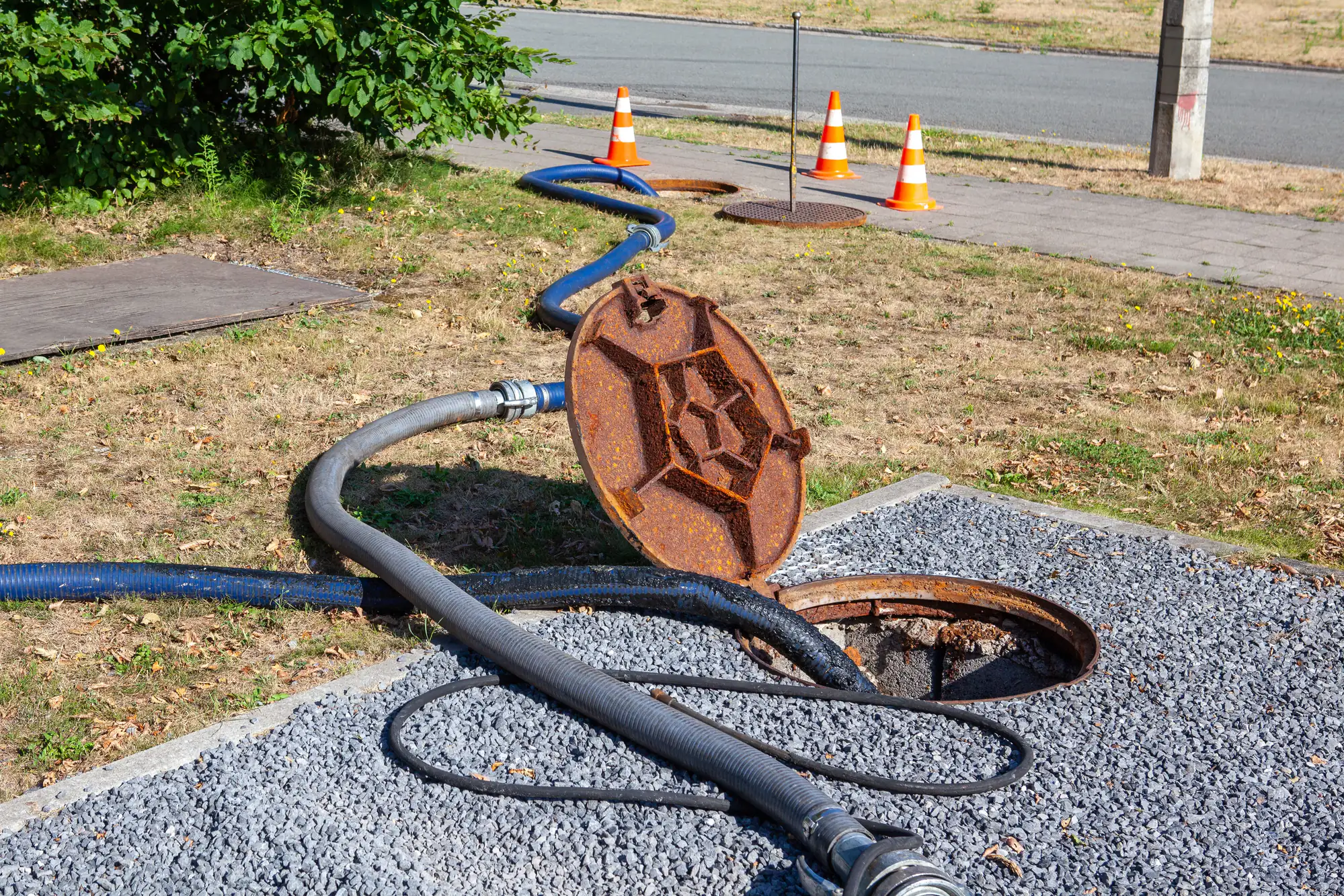
It starts with a camera. Before any cleaning recommendation is made, a video inspection goes into the line so you can see exactly what’s there root intrusion, scale buildup, a pipe belly from Sacramento’s clay soil shifting over a dry season, or nothing serious at all. That footage is the basis for every decision that follows. You’re not taking anyone’s word for it.
If cleaning is the right call, the line gets cleared using the method that matches what the camera found. Mechanical snaking handles most standard blockages. Heavier buildup especially in older clay or cast iron laterals common throughout Sacramento’s historic neighborhoods may call for hydro jetting, which uses high-pressure water to cut through grease, mineral scale, and root debris without damaging the pipe wall. We match the approach to the actual condition, not default to whatever costs more.
After the work is done, the camera goes back in to confirm the line is clear. Then we follow up not because it’s required, but because a call back to confirm everything is still flowing is how we’ve operated for 24 years. Sacramento’s rainy season doesn’t wait, and neither should a question about whether the job held.
Ready to get started?
Sacramento’s sewer conditions aren’t generic, and the service shouldn’t be either. The combination of aging pipe materials, clay soil that expands and contracts every season, and one of the densest urban tree canopies in the country creates a specific set of problems that show up repeatedly in Sacramento laterals root intrusion from oak, sycamore, and Chinese elm; pipe belly from ground shifting; and scale buildup accelerated by California’s low-flow fixture requirements, which reduce the hydraulic flushing force that used to keep pipes cleaner between service calls.
Every sewer cleaning we perform includes a camera inspection before and after the work, so the diagnosis is based on what’s actually in your pipe not an assumption. Pricing is quoted upfront before anything is touched. Multiple customers have noted their final invoice came in at or below the original estimate, which is worth paying attention to in a market where the opposite is the norm.
For homeowners in Sacramento County dealing with recurring slow drains, post-storm backups, or a home built before 1970, a main sewer line cleaning is also the right moment to get a clear picture of what the lateral looks like structurally whether the pipe is sound, whether root intrusion is early-stage or advanced, and whether cleaning is enough or whether a longer-term repair conversation makes sense. You leave with real information, not a sales pitch.

Sacramento has a unique combination that makes sewer line problems more common here than in newer suburban cities. Over 40 percent of the city’s housing stock was built before 1970, and many of those homes especially in neighborhoods like Curtis Park, Oak Park, and Boulevard Park still have their original clay tile or cast iron laterals. Clay tile joints aren’t sealed, which means tree roots from Sacramento’s famous urban canopy find their way in over time. Oak, sycamore, liquidambar, and Chinese elm are all common here, and all of them have aggressive root systems that seek moisture from the smallest gap in a pipe joint.
Cast iron, on the other hand, corrodes from the inside out. As the metal oxidizes, it creates a rough interior surface that catches grease, debris, and mineral deposits narrowing the pipe gradually until flow slows to a trickle. In both cases, the fix starts with a camera inspection to see exactly what you’re dealing with. Root intrusion caught early can often be cleared and managed. Left alone, it can damage the pipe structurally and turn a cleaning job into a repair or replacement conversation.
For a standard residential sewer line cleaning in Sacramento, most homeowners are looking at somewhere in the $150 to $500 range depending on the method used, the length of the lateral, and what the camera finds. Mechanical snaking is on the lower end. Hydro jetting which is often the right call for older clay or cast iron pipes with heavy buildup or root debris runs higher. If the inspection reveals a structural issue like a pipe belly or an offset joint caused by Sacramento’s clay soil shifting, that’s a separate conversation with its own cost range.
What matters most is that the price is given to you before work starts, not after. We quote upfront, and customers have consistently reported that final invoices came in at or below that number. In a market where bait-and-switch pricing is a documented pattern, that track record is worth factoring into your decision. Trenchless repair for root-damaged pipe in Sacramento typically runs $90 to $250 per linear foot which is exactly why catching problems early with a cleaning and inspection is the more cost-effective path.
This is one of the most common questions from Sacramento homeowners, and the answer usually comes down to two things working against each other at the same time. Sacramento is one of only two cities in California still operating a combined sewer system meaning stormwater and sewage share the same underground pipes in older neighborhoods like downtown, East Sacramento, and Land Park. During a heavy atmospheric river event, that system gets pushed to capacity fast. When the public system is stressed and your private lateral has any kind of partial blockage, the water has nowhere to go except back into your home through the lowest drains.
The fix isn’t on the city’s end they manage the public main, but your private lateral from the house to the street is your responsibility. Sacramento County’s sandbag season starts November 1 for a reason. Getting your lateral cleaned and inspected before the rainy season begins is the most direct way to reduce your exposure during the storms that follow. A partially blocked line that drains slowly in September can become a sewage backup by December.
For most Sacramento households, every 18 to 24 months is a reasonable maintenance interval. That said, a few local factors push some homes to need more frequent attention. If your property has mature trees nearby especially oak, sycamore, or liquidambar, which are everywhere in Sacramento’s older residential neighborhoods root intrusion can progress faster than that window suggests. Homes built before 1950 with original clay laterals are also more vulnerable to buildup between cleanings because the pipe interior isn’t as smooth as modern PVC.
If you’ve had a backup before, or if your drains run slowly after heavy rain, that’s a signal your interval should be shorter. Sacramento’s clay soil also shifts seasonally expanding in winter rains and contracting in the dry summer heat which can gradually create low spots in your lateral where waste pools instead of flowing. A camera inspection every couple of years gives you a real picture of how your specific pipe is holding up, so you’re making decisions based on what’s actually happening underground rather than guessing.
Store-bought chemical drain cleaners can temporarily clear a minor clog close to the drain opening, but they don’t reach the main sewer lateral which is where the real problems live in most Sacramento homes. More importantly, chemical cleaners can accelerate corrosion in older cast iron pipes, which are common in Sacramento’s pre-1960 housing stock. If your home has original iron or clay pipe, repeatedly using caustic chemicals is a way to create a bigger problem than the one you started with.
The other issue is that chemical cleaners give you no information about what’s actually in the pipe. If the slow drain is caused by root intrusion, a pipe belly from soil movement, or scale buildup on corroded iron none of which a chemical cleaner can address you’ll get a few days of improvement followed by the same problem. A professional sewer cleaning with a camera inspection tells you what you’re dealing with so the solution matches the actual cause. In Sacramento’s older neighborhoods especially, that diagnostic step is what separates a one-time fix from a recurring expense.
Yes. We hold a California C-36 Plumbing Contractor License issued by the Contractors State License Board, which is the legal requirement for any plumbing project valued at $500 or more in California. You can verify any contractor’s license status directly through the CSLB’s online lookup tool before you hire and it’s worth doing, because unlicensed work in Sacramento can result in permit violations, failed inspections, and liability that falls on the homeowner when it comes time to sell.
For sewer work specifically, Sacramento County and the 2025 California Plumbing Code require permits for significant sewer line repairs or replacements. We handle that process as part of the job pulling the permit, scheduling any required inspections, and making sure the work is documented correctly. We’ve been operating under proper licensure in Sacramento, El Dorado, and Placer County for over 24 years, so the compliance side of the job is handled without you having to track it down yourself.