
Hear from Our Customers
Sacramento’s water supply measures up to 15.2 grains per gallon well into the “extremely hard” range by national standards. That level of mineral content doesn’t just spot your dishes and clog your showerheads. It quietly eats away at the inside of a tank water heater, cutting years off its life and forcing it to burn more energy just to keep up. Switching to a tankless system doesn’t eliminate hard water, but it does change how you deal with it a tankless unit’s heat exchanger is far easier to flush and descale annually than replacing a tank that’s already corroded from the inside out.
Beyond the hard water angle, there’s the energy piece. Sacramento summers regularly push past 100°F, and your utility bill already takes a hit from running air conditioning for months at a time. A traditional tank heater runs standby heat loss all day whether you’re using hot water or not. Field data shows that switching from a conventional storage heater to a tankless unit cuts water heating energy use by around 37%. That’s real money back in your pocket during the months when Sacramento’s heat is already working against you.
And for households in older Sacramento neighborhoods Midtown, Land Park, East Sacramento, Curtis Park where the housing stock dates back decades, the bigger win is often just reliability. An aging tank in a pre-war home that’s already dealing with aging pipes and undersized gas lines is a failure waiting to happen. A properly installed tankless system removes that risk and gives you hot water that actually keeps up with your household’s demand.
Ryan Murray started this company in 2009 with a contractor’s license, a background in construction, and a straightforward approach to plumbing: show up on time, give an honest price, and do the job right. That’s still the model. We’ve been serving Sacramento County homeowners for over 15 years, and our 4.7/5 Google rating across 93 reviews isn’t a marketing number it’s a track record built one job at a time.
Sacramento isn’t a new market for us. From Natomas townhomes to Midtown Victorians to mid-century ranches in the Pocket, we’ve worked across the city’s full range of housing stock. That matters for tankless installation specifically, because a 1940s bungalow in North Sacramento has very different infrastructure than a newer build near the American River Parkway and the approach has to match the home.
When you call us, you’re not routed through a call center or handed off to a rotating crew. You get a licensed technician who knows Sacramento’s permit requirements, understands what the county inspector is looking for, and gives you a real number before any work starts.
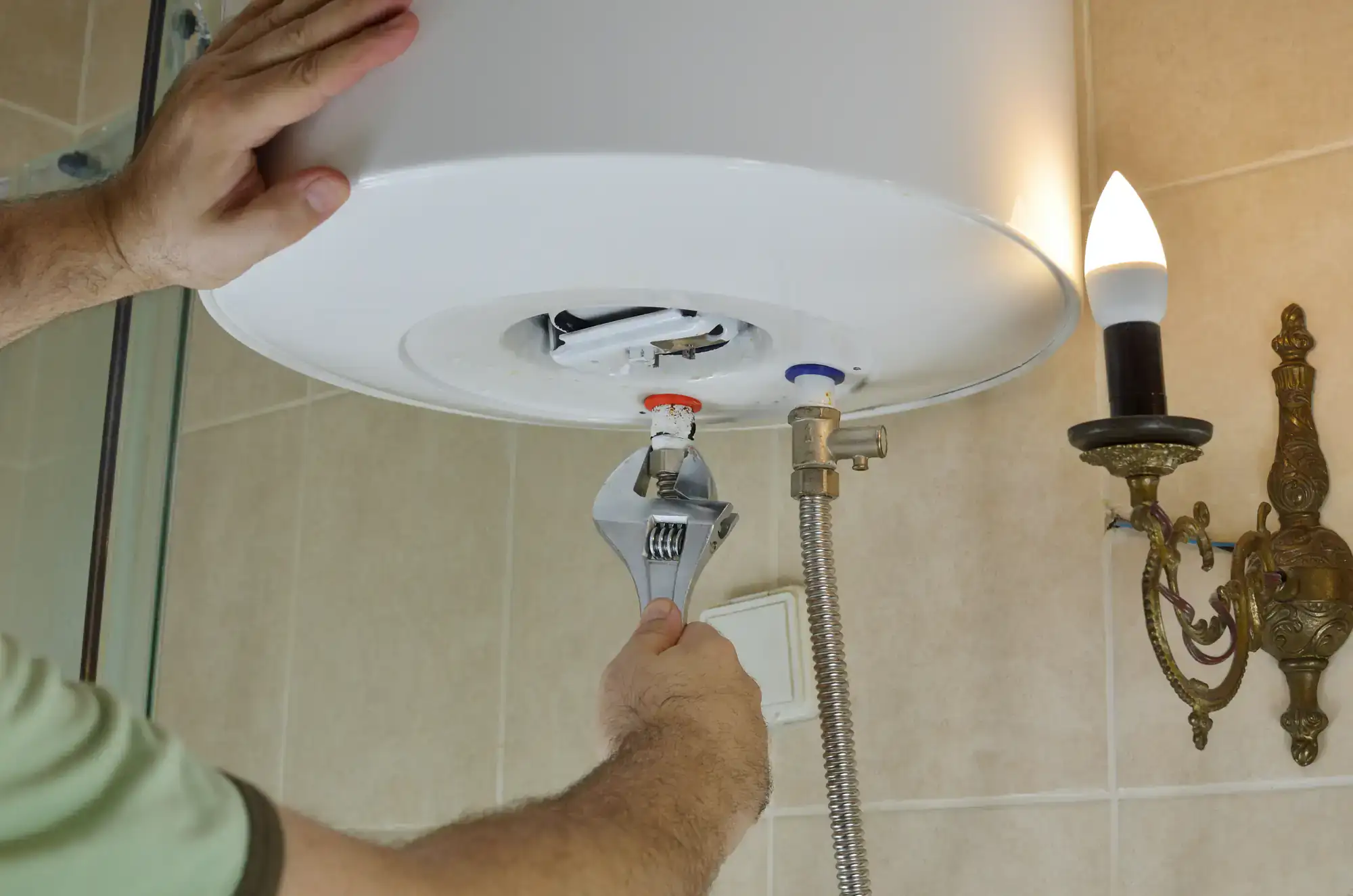
It starts with a call. You describe the situation whether your tank just failed at 6 AM or you’ve been planning this upgrade for months and we’ll get someone to your home, often the same day. Before anything is recommended or quoted, a licensed technician assesses your existing setup: gas line size, venting configuration, current water pressure, and the age of your home’s plumbing infrastructure. In Sacramento’s older neighborhoods, this step matters more than most contractors will tell you. Many pre-war and mid-century homes in areas like Boulevard Park or College/Glen have gas lines that were never sized for the higher BTU demand of a modern tankless unit. If yours needs an upgrade, you’ll know the full cost before the job starts not after.
Once the assessment is done and you’ve approved the scope, the installation moves forward. We pull the required Sacramento County permit this is non-negotiable under California Plumbing Code, and skipping it puts your homeowner’s insurance at risk. The installation itself covers the unit, all necessary venting modifications, gas line work, and seismic bracing as required by California code. After the work is complete, we schedule and manage the county inspection. You don’t touch a form or make a call to the building department.
When the inspector signs off, you have a fully permitted, code-compliant tankless water heater installation in Sacramento with documentation that protects you if you ever sell the home or file an insurance claim.
Ready to get started?
Every tankless water heater installation we perform in Sacramento covers the full scope of the job: pre-installation assessment, unit sizing based on your household’s actual peak demand, gas line evaluation and modification where needed, proper venting installation, seismic bracing per California code, and complete permit management from application through final inspection. Sacramento County requires all of this to be done correctly, and we handle every piece of it so you don’t have to coordinate between a plumber, a permit office, and a building inspector.
Sizing is something a lot of Sacramento homeowners don’t think about until they’re already disappointed. A gas tankless unit can deliver 5 to 10-plus gallons per minute enough to run two showers and the dishwasher at the same time but only if it’s sized right for your home. Undersized units are one of the most common complaints in this market, and they almost always trace back to a contractor who skipped the assessment and just swapped units. We size every installation to the home, not the other way around.
For Sacramento homeowners who qualify, we can also walk you through current SMUD rebate eligibility and federal energy efficiency tax credits under the Inflation Reduction Act. SMUD Sacramento’s publicly owned utility has been one of the more aggressive utilities in California when it comes to electrification incentives, and a qualifying high-efficiency unit can offset a meaningful portion of the installation cost. Ask about current availability when you call.
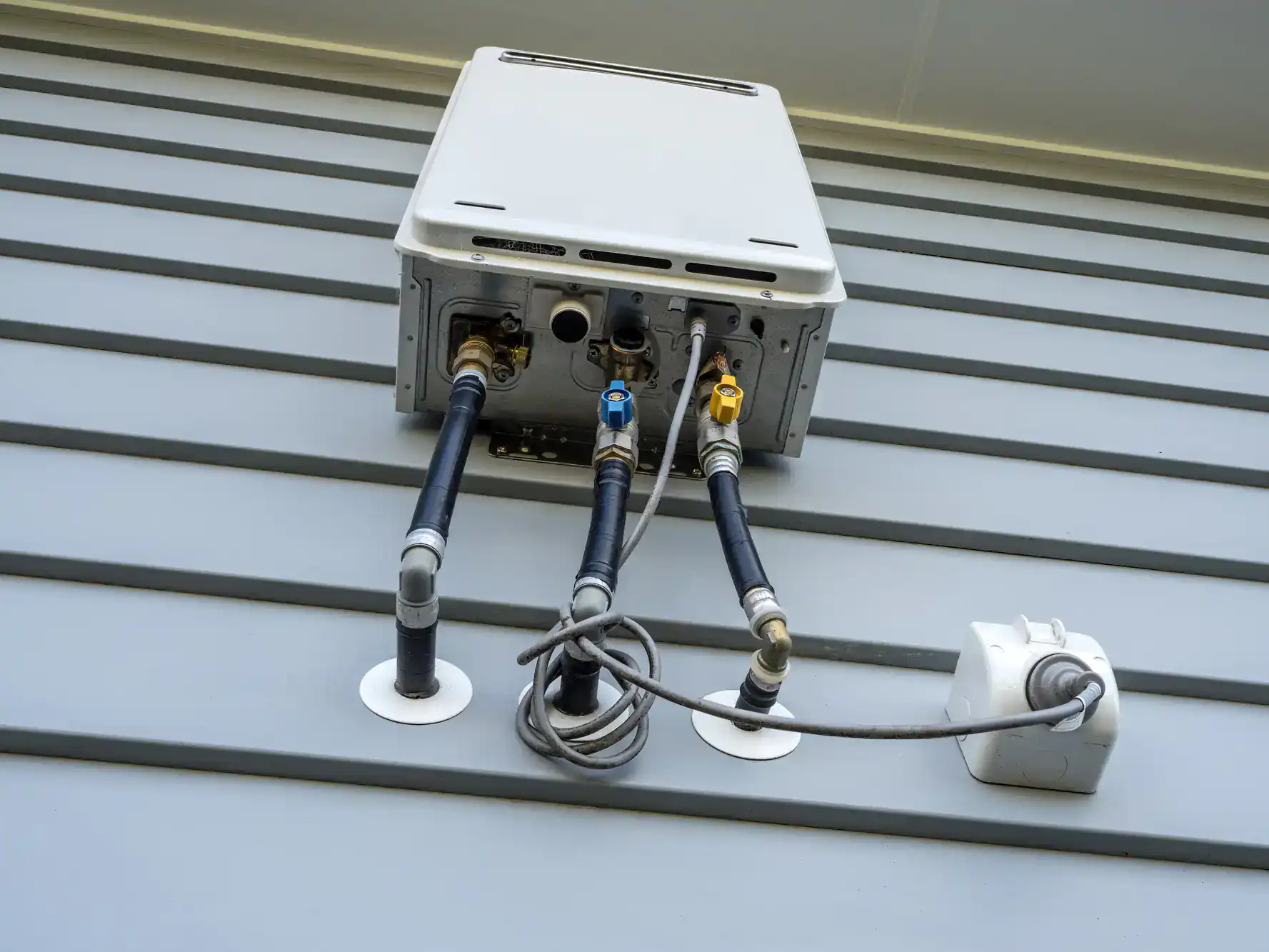
Yes, and it’s worth understanding why before you make a decision. Sacramento’s municipal water supply measures up to 15.2 grains per gallon of hardness that’s in the “extremely hard” category by national plumbing standards. The minerals in that water, primarily calcium and magnesium, accumulate inside a tankless unit’s heat exchanger over time. If that buildup isn’t addressed, it reduces flow rates, forces the unit to work harder, and can cause premature failure sometimes voiding the manufacturer’s warranty in the process.
The good news is that a tankless system is significantly easier to maintain in hard water conditions than a traditional tank. An annual descaling flush where a technician runs a vinegar or descaling solution through the heat exchanger keeps the unit performing at full efficiency. We recommend this service every 12 months for Sacramento homes given the local water conditions. It’s a straightforward maintenance step that protects a 20-plus year investment and keeps your energy savings on track.
Most tankless water heater installations in Sacramento fall somewhere between $1,400 and $3,900, with the national average landing around $2,600. The range exists because every home is different. A newer Natomas townhome with modern gas lines and accessible venting is a simpler job than a 1950s ranch in North Sacramento that needs a gas line upgrade and new venting runs. Those infrastructure upgrades when needed typically add $1,500 to $2,500 to the total.
We give you the full number before the job starts. The pre-installation assessment identifies everything gas line sizing, venting condition, permit fees so the quote you receive is the actual cost. Some of our Sacramento customers have reported the final bill came in under the original estimate. What you won’t get is a low quote that balloons once the technician is already in your home. Sacramento’s plumbing market has enough of that already.
Yes, every time. Sacramento County requires a permit for all water heater installations under California Plumbing Code, and that includes tankless replacements and new installations. The permit triggers a post-installation inspection to verify that the unit was installed to California code including proper venting clearances, seismic bracing, gas line sizing, and Title 24 energy efficiency compliance. These aren’t optional checkboxes. They’re the legal requirements that protect you as a homeowner.
The reason this matters beyond legal compliance is insurance. If a water heater installed without a permit causes damage a gas leak, water damage, a fire your homeowner’s insurance carrier can deny the claim on the basis of unpermitted work. That’s a serious financial exposure. We pull the permit, schedule the inspection, and ensure the installation passes the first time. You don’t interact with Sacramento County’s building department at all that’s handled for you as part of the job.
It depends on the age and configuration of your home, and it’s one of the most important things to check before committing to an installation. Gas tankless water heaters typically require a 3/4-inch gas line at minimum, and many older Sacramento homes particularly those built before the 1970s in neighborhoods like Midtown, Del Paso Heights, or South Sacramento were originally plumbed with 1/2-inch lines that weren’t designed for the higher BTU demand of a modern tankless unit. Running the unit on an undersized gas line causes performance problems and can create safety issues.
A pre-installation assessment will tell you exactly what your home needs. If an upgrade is required, the cost is factored into your quote upfront typically in the $1,500 to $2,500 range depending on the length of the run and the complexity of the work. If your existing gas line is already adequate, you’ll be told that too. The assessment isn’t a sales pitch it’s how we make sure the installation actually works the way it’s supposed to once it’s done.
A properly maintained tankless water heater typically lasts 20 years or more. A traditional tank water heater averages 8 to 12 years under normal conditions and in Sacramento, where the water hardness accelerates mineral buildup inside the tank, that lifespan often runs shorter. That means most Sacramento homeowners who stick with tank heaters will replace their unit two or three times over the same period a single tankless system would cover.
The math on this is straightforward. The upfront cost of a tankless installation is higher than a basic tank replacement, but when you factor in the longer lifespan, the energy savings from eliminating standby heat loss, and the reduced maintenance costs over time, the total cost of ownership generally favors tankless especially in a market like Sacramento where hard water is already shortening the useful life of conventional equipment. A tankless system is a long-term investment in your home’s infrastructure, not just a water heater swap.
In most cases, yes. We resolve the majority of water heater calls including full tankless installations the same day you reach out. When a tank fails overnight and your household wakes up without hot water, waiting three days for the next available appointment isn’t a real option. Our service model is built around that reality, and same-day availability is one of the most consistent things customers mention in reviews.
For planned upgrades homeowners who’ve been thinking about going tankless and are ready to move forward scheduling is typically just as fast. We serve Sacramento County as a primary service area, which means our team is already in the city regularly and can usually accommodate new appointments quickly. Whether you’re dealing with an emergency in East Sacramento or a planned upgrade in the Pocket, the process starts with a call. You’ll get a real arrival window, not a vague “sometime this week” answer.