
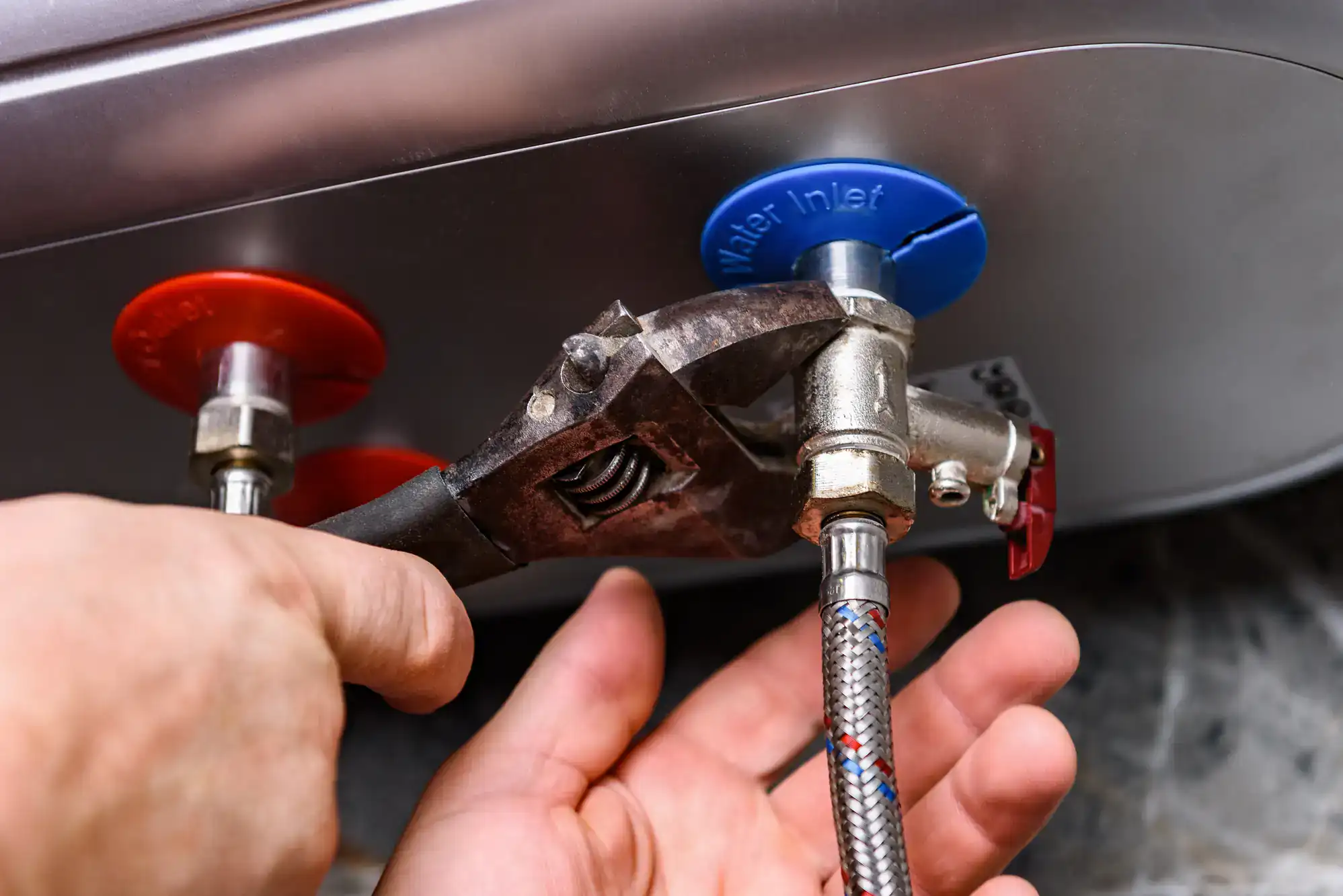
Water Heater Repair
Get a free quote for water heater repair from your local plumbing team.
We’ll contact you about your water heater repair request. Privacy policy
Hear from Our Customers
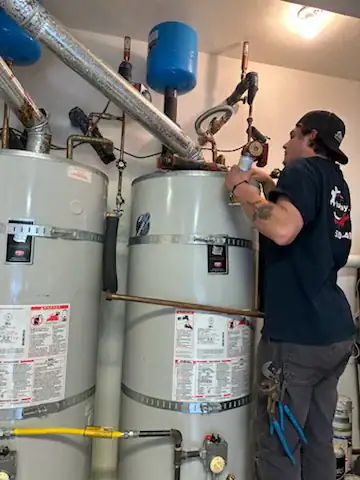
When your water heater fails in a 1970s Campus Commons townhome or condo, the problem usually isn’t just age it’s decades of hard water doing quiet damage from the inside out. Sacramento’s municipal water supply runs around 141 parts per million, which is classified as hard. That means calcium and magnesium have been building up inside your tank for years, coating the heating elements, grinding down efficiency, and accelerating wear on a system that was already built before most smartphones existed.
Getting that fixed properly diagnosed, properly repaired or replaced means hot water that actually works the way it should. No more lukewarm showers. No more waiting twenty minutes for the tank to recover. No more that low rumbling noise that gets louder every week and never quite goes away.
For Campus Commons residents specifically, there’s another layer to this. You’re in an HOA-governed community, which means any plumbing work that gets done needs to be done right, documented correctly, and handled by someone who treats your home like a professional should. A repair that’s rushed or unpermitted doesn’t just create problems now it creates problems when you sell. Getting it handled the right way the first time protects your home, your HOA standing, and your investment.
We’ve been doing this long enough to know that most people calling about a water heater aren’t in the mood for a sales pitch. They want someone who shows up on time, tells them what’s actually wrong, gives them a real number, and fixes it. That’s the standard we hold every technician to, and it’s why our reviews consistently mention the same things: punctual, professional, no surprises on the bill.
We serve the Sacramento region, including Campus Commons and the surrounding 95825 corridor from the American River Parkway side of the neighborhood all the way out toward Arden-Arcade and East Sacramento. We know the housing stock here. We know what 1970s-era plumbing looks like and what it needs. And we know how to work in HOA communities without creating headaches for you or your neighbors.
Our technicians are licensed, and every water heater replacement we perform in Sacramento County is pulled with the proper permit under California Plumbing Code Section 502.1. No shortcuts, no liability left on your doorstep.
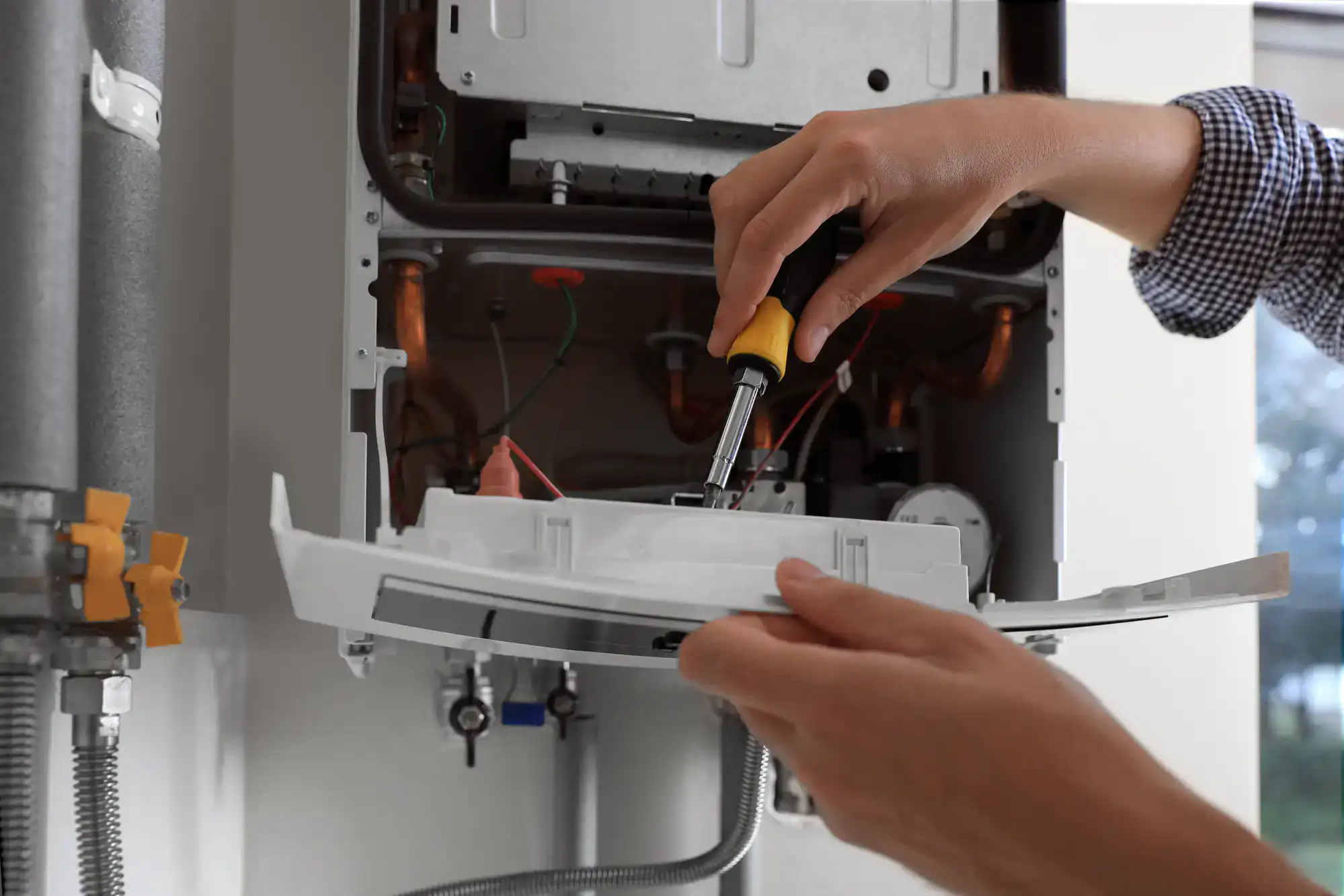
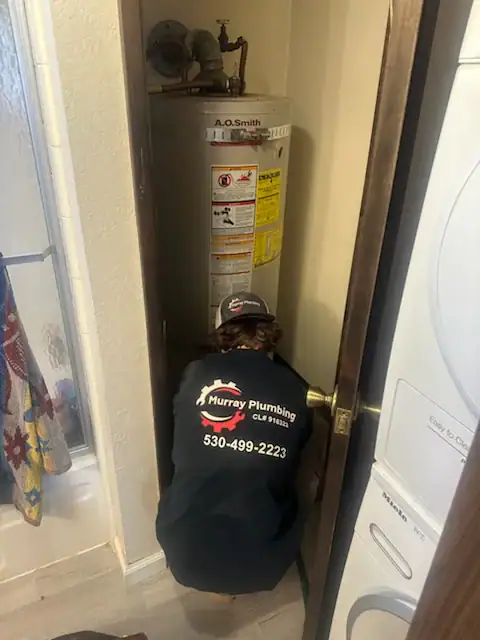
When you call Murray Plumbing, you’re not getting a call center that schedules you three days out. We can get a water heater technician to your Campus Commons home the same day in most cases, and around the clock for emergencies. The first thing that happens on-site is a full diagnostic not a guess, not a quick glance and a quote for a full replacement. We look at the actual unit, check the heating elements, thermostat, anode rod, connections, and tank condition before we tell you anything.
From there, you get a straight answer: here’s what’s wrong, here’s what it costs to fix it, and here’s whether it’s worth fixing given the age and condition of the unit. If your water heater is a 1970s-era tank that’s been running on Sacramento hard water for fifteen years, we’ll tell you honestly that replacement is the smarter move and we’ll walk you through your options, including tankless and energy-efficient systems we’re certified to install.
In Sacramento County, water heater replacements require a permit under state plumbing code. We handle that paperwork as part of the job. By the time we leave, the work is done, documented, and compliant which matters in an HOA community where unpermitted work can become your problem at the worst possible time.
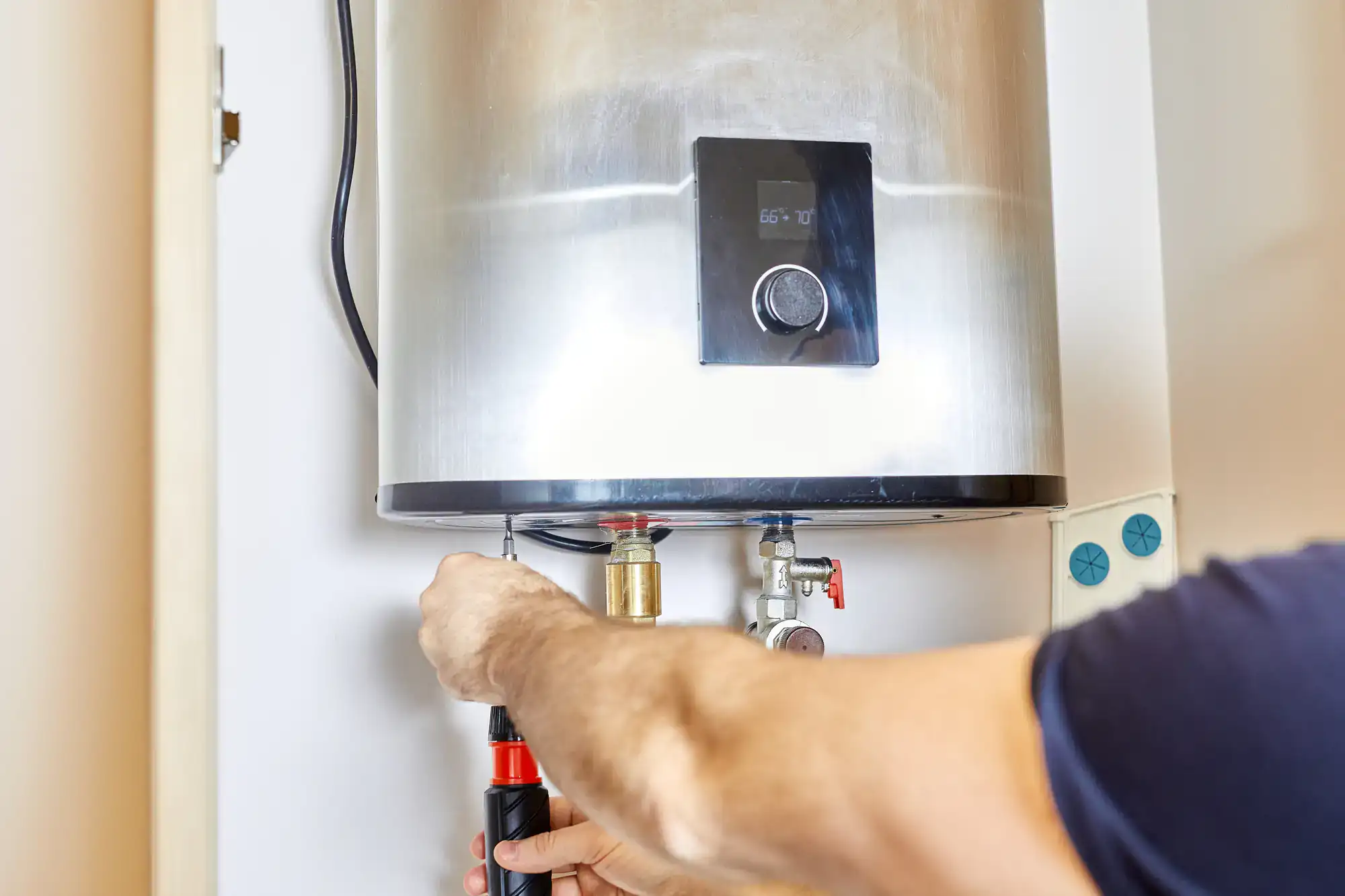
Ready to get started?
Whether you’re dealing with no hot water, a leaking tank, discolored water, or a unit that sounds like it’s full of gravel, we handle the full range of residential water heater repair in Campus Commons. Common repairs thermostat replacement, heating element repair, anode rod service, sediment flush typically run between $100 and $350. More involved repairs can reach $600 or more depending on the issue. If replacement is the right call, we’ll give you a clear installed cost before any work begins, not after.
For Campus Commons homeowners considering a tankless upgrade, we hold a Certified Installer designation for tankless and energy-efficient water heater systems. Given the neighborhood’s 1970s housing stock and the active renovation cycle happening throughout the community, this is a conversation worth having especially with federal tax incentives currently available for qualifying energy-efficient upgrades. A tankless system installed correctly can last 20-plus years and eliminate the hard water sediment problem that shortens tank heater lifespans in Sacramento.
We also carry $300,000 in commercial liability insurance and operate under a licensed Responsible Master Plumber. In an HOA-governed neighborhood like Campus Commons, that’s not just a credential it’s protection for you if anything ever goes sideways. Every job is covered, documented, and done to code.
Yes and this is one of the most important things to get right before any work starts. Under California Plumbing Code Section 502.1, a permit is required for all water heater replacements in Sacramento County, which includes Campus Commons. This isn’t optional, and it’s not something a licensed plumber should be skipping to save time or cut costs.
The reason it matters beyond just following the rules: unpermitted work creates real problems when you sell your home. In an HOA-governed community like Campus Commons, where properties change hands and documentation gets scrutinized, a water heater replacement that was never inspected or permitted can come up during escrow and complicate or delay your sale. We pull the required permit as a standard part of every replacement job it’s included, not an add-on. By the time we leave, the work has been done to code and is ready for inspection.
For most common repairs a failed thermostat, a burned-out heating element, a worn anode rod, or a sediment flush you’re typically looking at somewhere between $100 and $350. More complex repairs, like a pressure relief valve replacement or a gas valve issue, can push closer to $500 to $600. Full tank replacement with installation in Sacramento County generally runs between $1,600 and $3,500 depending on the unit and the complexity of the job.
What matters more than the exact number is knowing it before the work starts. We give you a clear quote after the diagnostic not a ballpark over the phone and a different number on the invoice. Some customers have actually paid less than the original estimate once the job was complete. In a neighborhood where HOA living means budgeting carefully and expecting professional-grade service, that kind of pricing consistency isn’t a bonus it’s what you should expect from any plumber you hire.
It shortens it sometimes significantly. Sacramento’s municipal water supply measures around 141 parts per million, which puts it in the hard water category. Over time, that hardness deposits calcium and magnesium scale inside your water heater tank, coating the heating elements and reducing their efficiency. The tank has to work harder to heat the same amount of water, which increases energy costs and puts more stress on the components.
In Campus Commons specifically, where most homes were built in the 1970s, you’re often dealing with water heaters that have been exposed to Sacramento hard water for years or even decades. That buildup accelerates corrosion, reduces the effective lifespan of the unit, and is one of the main reasons tanks in this area fail earlier than the manufacturer’s stated lifespan. A proper diagnostic will check for sediment accumulation and tell you whether a flush can buy more time or whether the damage has already progressed too far. Either way, you’ll know exactly where you stand.
It can, depending on what’s involved. For repairs that are entirely inside your unit replacing a thermostat, swapping a heating element, flushing the tank the HOA typically isn’t involved at all. But if the work touches shared walls, common area plumbing, or exterior connections, you may need to notify your HOA before work begins or follow specific protocols around contractor access and documentation.
This is one of the reasons it matters who you hire. A plumber who isn’t familiar with HOA-governed communities might start work without thinking through those considerations, which can create friction with your board or your neighbors. Our technicians work in condo and townhome communities regularly and understand what professional conduct looks like in that environment showing up on time, keeping the work area clean, communicating clearly, and making sure nothing gets left undocumented. If you’re not sure what your specific HOA requires before a repair, it’s worth a quick check with your board before scheduling.
The honest answer depends on two things: how old the unit is and what the repair costs relative to replacement. The general rule of thumb in the plumbing industry is that if the repair exceeds 50% of the replacement cost and the unit is more than eight years old, replacement is usually the smarter long-term investment. A standard tank water heater lasts eight to twelve years under normal conditions and in a Sacramento hard water environment, that lifespan can be shorter.
In Campus Commons, where the housing stock dates to the 1970s, many homeowners are dealing with water heaters that have already been replaced once or twice. If the unit you have is ten or more years old and showing signs of corrosion, sediment buildup, or recurring issues, the repair bill you pay today might just delay an inevitable replacement by a year or two. A thorough diagnostic will tell you the actual condition of the unit not just what’s visibly broken and give you enough information to make that call with confidence rather than guessing.
There are a few things that tend to show up before a full failure, and catching them early usually means the difference between a repair and an emergency replacement. Discolored or rusty water coming from the hot tap is one of the clearest warning signs it typically means the inside of the tank has started to corrode. A rumbling or popping noise when the unit is heating is usually sediment buildup, which is especially common in Sacramento given the area’s hard water.
Inconsistent hot water where the temperature fluctuates or the tank takes much longer than it used to recover often points to a failing heating element or thermostat. And if you’re seeing any moisture or pooling around the base of the unit, that’s not a small issue. In roughly 95% of cases where a water heater is actively leaking, the tank itself has failed internally and replacement is the only real fix. If you’re noticing any of these signs in your Campus Commons home, it’s worth getting a technician out before the unit fails completely a controlled repair or replacement is always less disruptive than an emergency call at midnight.