
Hear from Our Customers
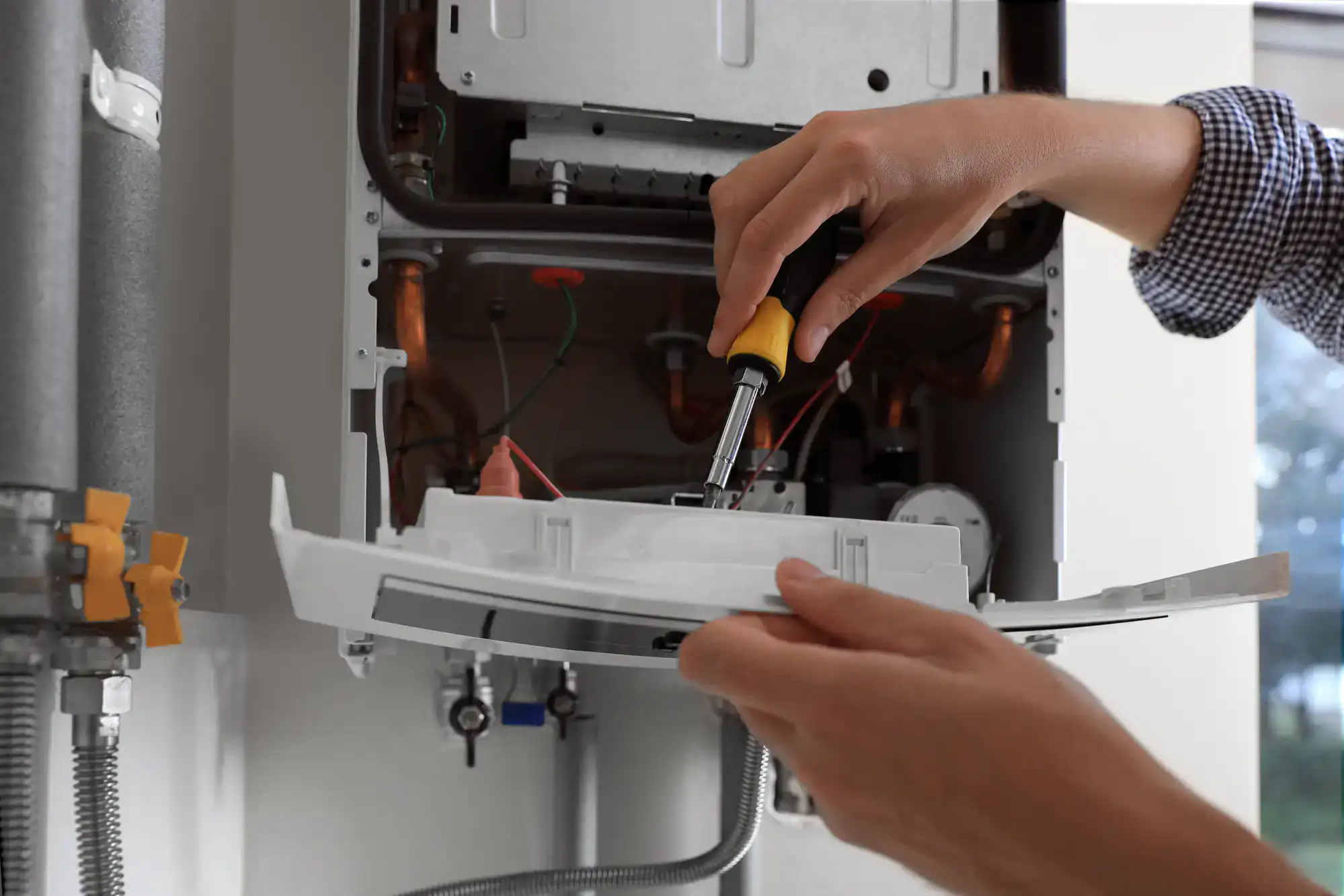
Hot water is one of those things you don’t think about until it’s gone. Then it’s all you think about. Whether you woke up to a cold shower, noticed water pooling near the base of your unit, or your water just isn’t getting as hot as it used to you need someone who can diagnose it quickly and give you a straight answer on what it’s going to take to fix it.
For homeowners in Clay, the stakes are a little different than they are in a dense suburb. A lot of properties out here rely on domestic well water, and that mineral-rich supply is harder on water heater components than treated city water. Sediment builds up faster. Anode rods wear out sooner. What might last 12 years in Elk Grove might start showing problems at 9 or 10 years on a well-water property off Ione Road. Knowing that going in changes how we approach the repair-versus-replace conversation.
Sacramento County also requires a permit for any water heater replacement in unincorporated areas like Clay and that permit needs to pass inspection. Working with a licensed plumber isn’t just the smart move, it’s the only move that keeps your home protected, your warranty intact, and your future home sale clean. We handle all of that. You get your hot water back, the work is done to code, and there are no surprises when the invoice arrives.
We serve the Sacramento County region, including the rural and semi-rural communities in the southeastern corridor Clay, Herald, Wilton, and the surrounding areas along Highway 16 and Sloughhouse Road. These aren’t just service area checkboxes. The conditions out here are different from what you deal with in the city, and our work reflects that.
We hold a 4.7 out of 5 star Google rating based on 93 verified reviews. That track record was built on showing up when we said we would, explaining what was found before touching anything, and delivering a final invoice that matched or came in under the original quote. In a service industry where surprise charges are practically a tradition, that’s not a small thing.
If you’re on well water in Clay, in an older home, or just haven’t had your unit looked at in years, we can give you an honest assessment of where things stand not a sales pitch.
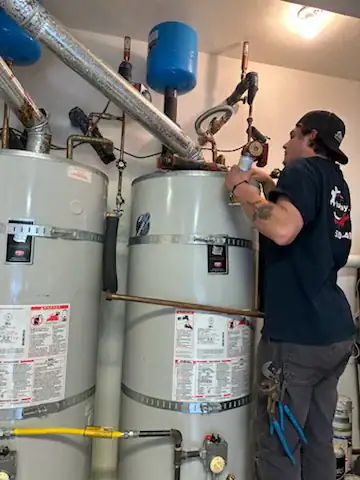
It starts with a call. You describe what’s happening no hot water, a strange noise, a visible leak, inconsistent temperatures and we’ll help you understand whether this is a same-day repair situation or something that needs a technician on-site immediately. If it’s an emergency, our 24/7 availability means you’re not waiting until Monday morning.
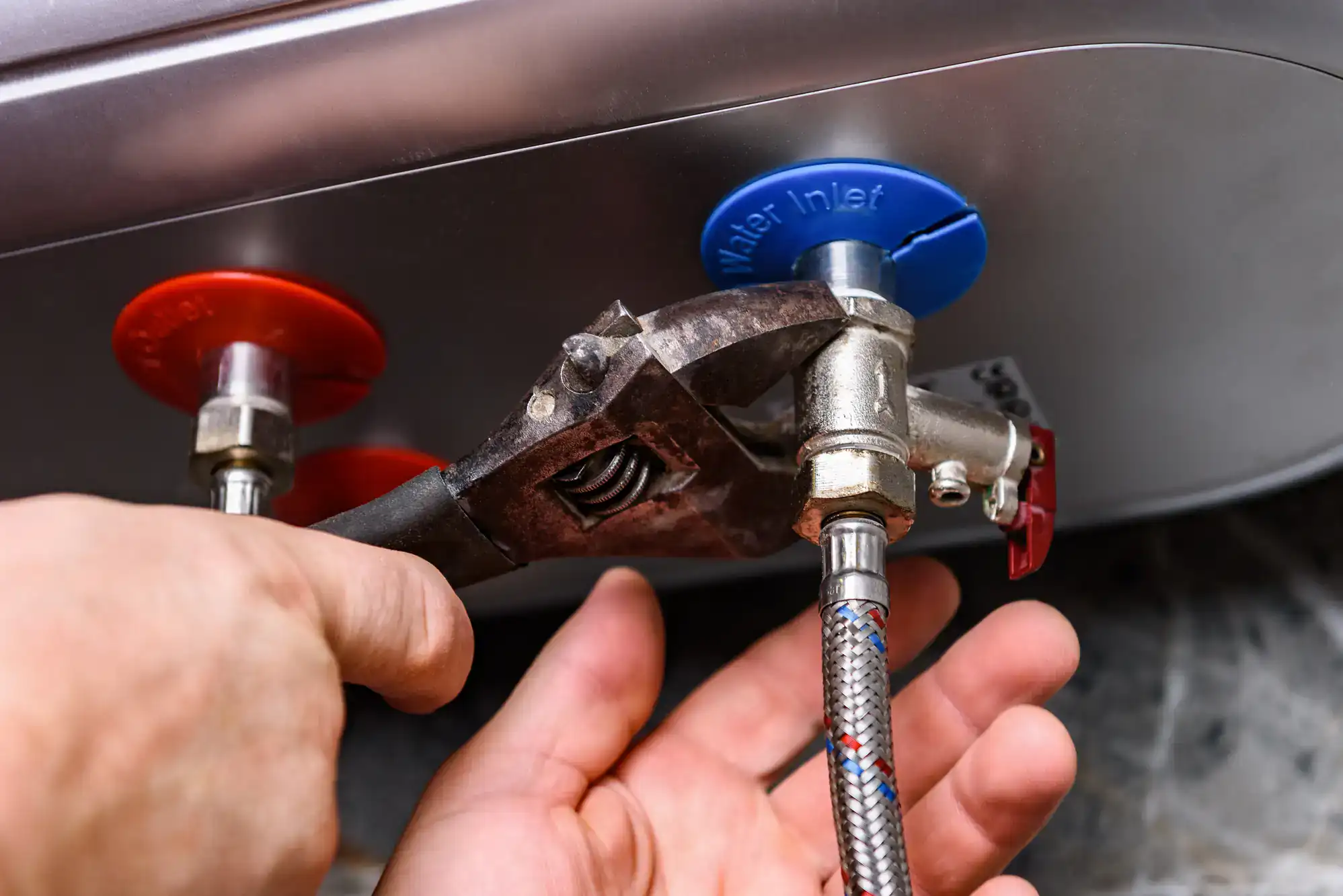
When our technician arrives, the first step is a full diagnosis. That means checking the heating element or burner, the thermostat, the anode rod, the pressure relief valve, and the condition of the tank itself. For Clay properties on well water, sediment accumulation inside the tank is one of the first things we assess it’s one of the most common causes of reduced efficiency and premature failure in this area, and it’s often overlooked by technicians who aren’t familiar with rural Sacramento County water conditions.
Once the diagnosis is complete, you get a clear explanation of what was found and what your options are. If it’s a repair, you’ll know exactly what’s being replaced and what it costs before any work begins. If replacement is the better call which is almost always the case when a tank is actively leaking, since that typically means internal corrosion that’s explained plainly too. Because Clay is in unincorporated Sacramento County, any replacement requires a county permit under California Plumbing Code Section 502.1, and we handle that process from start to inspection sign-off, including required earthquake strapping per California’s seismic code.
Ready to get started?
We handle the full range of water heater work troubleshooting and diagnosis, repair of tank-style units, full replacement, and installation of tankless and energy-efficient systems. For Clay homeowners weighing whether to repair an aging unit or upgrade to a tankless system that can last 20 or more years, there’s a real conversation to be had about long-term cost, especially on properties with mineral-rich well water where tank units tend to wear faster than the manufacturer’s estimated lifespan.
Common repairs include thermostat replacement, heating element replacement, anode rod service, pressure relief valve replacement, and sediment flushing. These are the kinds of issues that show up gradually slightly cooler water, longer recovery times, a faint rumbling sound from the tank and are worth addressing before they become a full failure. Annual maintenance, including a tank flush and anode rod check, is a straightforward service that extends the life of the unit and matters more on well water than it does in a city-supply home.
For any replacement in Clay’s 95638 ZIP code, Sacramento County requires a permit and post-installation inspection. That includes proper earthquake strapping, compliant flue venting for gas units, and correct placement per California Plumbing Code. We’re fully licensed to pull those permits, complete the work to current code, and see the inspection through so you’re not left managing county paperwork on top of everything else.
Yes and this is one of the most important things to understand before any work begins. Clay is an unincorporated community in Sacramento County, which means there’s no local city hall managing permits. All building and plumbing permits go through Sacramento County directly, and under California Plumbing Code Section 502.1, a permit is required for any water heater replacement. After the work is completed, a county inspection is required to confirm the installation meets current code.
This matters more than most homeowners realize. Unpermitted water heater work can void your manufacturer’s warranty, create liability if something goes wrong, and cause real problems when you go to sell your home title companies and home inspectors will flag it. Working with us means the permit is pulled correctly, the work passes inspection, and your home’s record stays clean. It’s not extra paperwork it’s protection.
It shortens both. Well water in the Clay and Herald corridor of Sacramento County tends to carry higher mineral content calcium, magnesium, and sediment than treated municipal supply. Inside a tank water heater, those minerals accumulate at the bottom of the tank over time, forming a layer of sediment that forces the heating element or burner to work harder, reduces efficiency, and accelerates wear on the tank lining. You’ll often notice it first as a rumbling or popping sound when the unit is heating.
Beyond sediment, mineral-rich water depletes anode rods faster than the manufacturer’s expected replacement schedule. The anode rod is what protects the tank from internal corrosion when it’s gone, the tank corrodes, and once that starts, the unit typically can’t be repaired. For Clay homeowners on well water, annual maintenance including a sediment flush and anode rod inspection isn’t optional upkeep. It’s what keeps a $1,500 investment from becoming a $3,000 emergency.
The honest answer is that it depends on what’s actually wrong and that’s exactly what a proper diagnosis is for. Most water heater problems are repairable: a failed thermostat, a burned-out heating element, a worn anode rod, a faulty pressure relief valve. These are component failures, not structural ones, and replacing the part is usually straightforward and cost-effective if the tank itself is in good shape.
The situation changes when the tank is leaking. In roughly 95% of leaking water heater cases, the leak is caused by internal corrosion meaning the tank wall has been compromised from the inside out. That’s not repairable. A technician who tells you a leaking tank can be patched is either mistaken or not being straight with you. For older units especially those that have been on mineral-rich well water for 10 or more years without regular maintenance replacement is often the more economical long-term decision even if the current problem is technically fixable. We’ll tell you which situation you’re actually in before any work starts.
For most common repairs thermostat replacement, heating element swap, anode rod service, pressure relief valve replacement you’re generally looking at somewhere in the $100 to $350 range depending on the part and the complexity of the job. Those are national benchmarks, and real costs vary based on the unit’s make, age, and what’s actually needed once the technician is on-site.
Full replacement costs more. A standard tank water heater installed in Sacramento County typically runs between $1,600 and $3,500 depending on the unit size, fuel type, and whether the installation requires any upgrades to meet current California code things like updated earthquake strapping, gas line adjustments, or flue venting modifications. Tankless systems run higher, often $2,500 to $5,500 installed, but carry a significantly longer lifespan. What we commit to is that the price you’re quoted before work begins is the price on the invoice when it’s done and in documented cases, the final cost has come in below the original estimate.
They can, and it’s worth understanding why. Clay experiences the classic Sacramento Valley climate pattern hot, dry summers and mild winters that occasionally dip into genuine freezing temperatures. When groundwater temperatures drop in winter, your water heater has to work harder and longer to bring incoming cold water up to the set output temperature. That added strain exposes weaknesses in units that were managing fine during warmer months. It’s one of the most common reasons water heaters fail in January and February rather than during peak summer demand.
For Clay properties with longer pipe runs which is common on larger rural lots the risk of freeze-related stress on supply line connections and pressure relief valves is also higher than in tightly clustered suburban neighborhoods. If your unit is older and you’ve noticed it struggling to keep up during colder stretches, that’s worth having looked at before it becomes a cold-morning emergency. We offer 24/7 emergency service, so if it does fail in the middle of winter, you’re not waiting days for a response.
For a lot of Clay homeowners, it makes more sense than it might in a city setting but the well water situation is something you have to factor in honestly. Tankless units heat water on demand rather than storing it in a tank, which eliminates standby heat loss and can meaningfully reduce energy costs over time. They also last significantly longer than tank units 20 years or more with proper maintenance, compared to 8 to 12 years for a standard tank.
The catch on well water is that mineral buildup can affect a tankless unit’s heat exchanger if it isn’t maintained. Annual descaling is recommended on hard or mineral-rich water supplies, and in some cases a water softener or pre-filter makes sense as part of the installation. None of that makes a tankless system a bad choice it just means the installation should be done by someone who understands the local water conditions and sets the system up correctly from the start. We install tankless systems throughout the Sacramento County region, handle the required county permit, and can walk you through whether it’s the right fit for your property and your water supply before you commit to anything.