
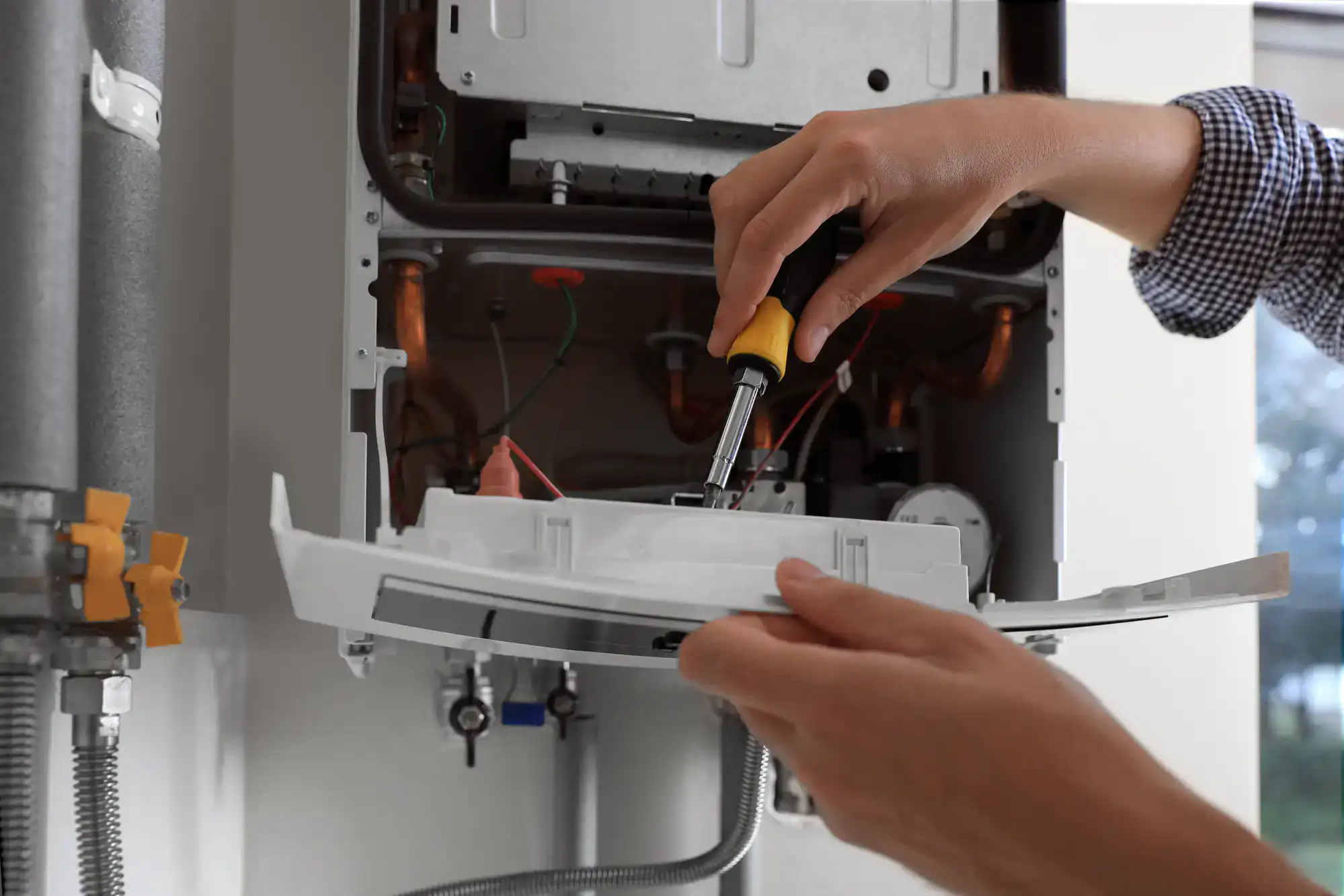
Water Heater Repair
Get a free quote for water heater repair from your local plumbing team.
We’ll contact you about your water heater repair request. Privacy policy
Hear from Our Customers
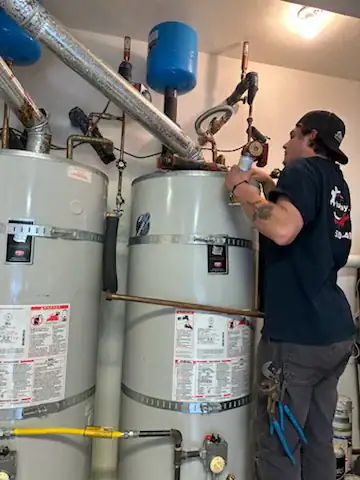
A water heater failure hits harder than most people expect. It’s not just an inconvenience it’s a disrupted morning routine, a household running on cold showers, and a repair decision you’re suddenly forced to make without much time to think it through. Getting it fixed fast, and fixed right, changes all of that.
A lot of Folsom’s established neighborhoods Empire Ranch Village, Willow Creek Estates, Serrano Village were built in the late 1990s and early 2000s. If your home was built around 2001 and still has its original water heater, that unit is now pushing 23 or 24 years old. The average tank water heater lasts 8 to 12 years. That gap matters, and it’s why so many Folsom homeowners are suddenly facing a repair-or-replace decision they didn’t see coming.
Folsom’s water supply comes from the San Juan Water District, which draws treated surface water from Folsom Lake and the American River. It’s classified as soft water around 28 parts per million on average which means extreme hard-water scaling isn’t the main concern here. But years of seasonal runoff and Sierra Nevada snowmelt can still introduce suspended particles that settle in your tank over time, quietly reducing efficiency and shortening the unit’s life. A proper diagnosis catches that. A parts-swap guess doesn’t.
We’ve built our reputation on something that sounds simple but is surprisingly rare in this industry: telling you what the job costs before starting it, and then honoring that number when the work is done. More than a few customers have noted their final bill came in below the original estimate. That’s not an accident it’s how we operate.
With a 4.7 out of 5 Google rating backed by 93 verified reviews, the track record is there. Customers consistently mention punctuality, clear communication, and technicians who actually explain what they found and why they’re recommending what they’re recommending. No pressure, no upsell, no vague answers.
Whether you’re in a newer home in the Folsom Ranch development south of US-50 or an established neighborhood near the Empire Ranch Golf Club, our technicians show up on time, assess the situation honestly, and give you a straight answer on whether a repair makes sense or whether the unit has genuinely run its course.
It starts with a call. You describe what’s happening no hot water, a leak, strange noises, discolored water and we’ll get a technician out to you, often the same day. There’s no diagnostic fee stacked on top of the repair quote. You get one honest number before any work begins.
Once on-site, our technician runs a full assessment: heating elements, thermostat calibration, anode rod condition, pressure relief valve, tank integrity, and gas or electrical connections depending on your unit type. The goal is finding the actual cause, not just the most visible symptom. A water heater producing lukewarm water might have a failing element or it might have sediment buildup, a calibration issue, or an undersized recovery capacity for your household’s demand. The diagnosis covers all of it.
If your unit needs a replacement, the process includes pulling the required permit through the City of Folsom’s ePermit system because water heater changeouts in Folsom require a permit under the city’s Building Safety Division guidelines. That’s not a formality. It protects you from a disclosure issue if you ever sell your home, and it ensures the work meets Folsom Plumbing Code, California Plumbing Code, and CALGreen energy standards. We handle all of it so you don’t have to.
Ready to get started?
We handle the full range of residential water heater repair in Folsom tank and tankless, gas and electric, standard replacements and emergency calls. If your unit is repairable, we’ll repair it. If it’s genuinely at end of life, we’ll tell you that clearly and walk you through your replacement options, including energy-efficient and tankless systems that qualify for federal tax credits under the Inflation Reduction Act and comply with California’s Title 24 energy standards.
We hold a Certified Installer designation for advanced water heater systems, including tankless models. That means factory-level training on the equipment not just general plumbing knowledge applied to an unfamiliar unit. For Folsom homeowners in newer construction areas like Broadstone Estates or Enclave at Folsom Ranch who already have a tankless system installed, that certification matters when something goes wrong and the repair needs to be done correctly the first time.
Common repairs include heating element replacement, thermostat adjustment, anode rod service, pressure relief valve replacement, sediment flushing, and gas line inspection on applicable units. For water heaters showing signs of tank corrosion, significant age, or recurring failure, we provide a clear repair-versus-replace breakdown with real numbers so you can make the decision that actually makes sense for your home and budget.
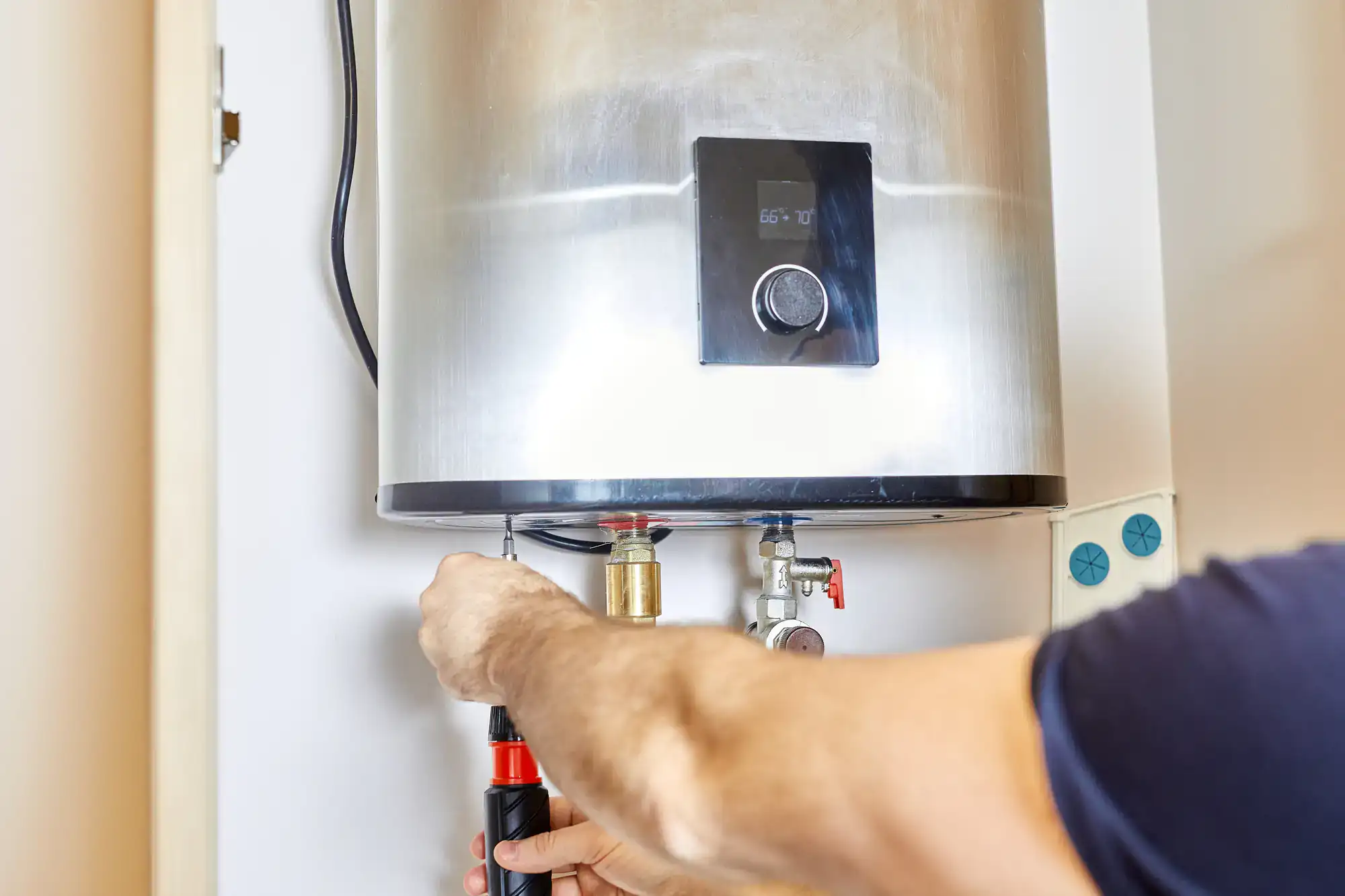
Yes the City of Folsom explicitly requires permits for water heater changeouts and replacements. This is processed through the city’s ePermit Center using the eTRAKiT online portal, and the work must comply with the Folsom Plumbing Code (Chapter 14.12), California Plumbing Code, and CALGreen energy standards. It’s not optional, and it’s not a technicality you can skip.
The reason it matters beyond code compliance is resale. Unpermitted work in California is a disclosure obligation when you sell your home. If a buyer’s inspector finds an unpermitted water heater installation, it becomes a negotiation issue or worse, a deal-breaker. We handle the permit process as part of every replacement job in Folsom, so the paperwork is in order from day one and you’re fully protected.
Repair costs vary depending on what’s actually wrong with the unit. Smaller fixes a thermostat replacement, a heating element swap, an anode rod service typically fall in the $100 to $350 range. More involved repairs can run higher, and a full replacement with installation generally lands between $1,600 and $5,500 depending on the unit type, size, and whether you’re staying with a tank system or upgrading to tankless.
What matters more than the range is getting a clear number before any work starts. We provide upfront pricing before the job begins, and the quote you receive is the price you pay no diagnostic fees added on top, no surprise line items mid-job. In Folsom, where homeowners are accustomed to professional-grade service and clear communication, that pricing approach isn’t a bonus it’s the baseline expectation we consistently meet.
The honest answer depends on the unit’s age, the nature of the problem, and the cost comparison between fixing what’s wrong now versus what’s likely to go wrong next. A water heater that’s 8 to 10 years old with a failed heating element is usually worth repairing. A unit that’s 20-plus years old which is common in Empire Ranch Village and Willow Creek Estates homes built in the early 2000s is typically past the point where a repair makes financial sense, especially if it’s the second or third issue you’ve dealt with in the past few years.
Tank corrosion is a hard line. If your tank is rusting internally, no repair addresses the underlying problem replacement is the only real option. For everything else, a good technician gives you the repair cost, the likely remaining lifespan of the unit, and the replacement cost side by side, and lets you decide. That’s exactly how we approach the conversation.
Folsom is served by the San Juan Water District, which supplies treated surface water drawn from Folsom Lake and the American River watershed. That supply is classified as soft water averaging around 28 parts per million which is meaningfully different from communities relying on groundwater with higher mineral content. Hard water accelerates sediment buildup and anode rod corrosion, so Folsom homeowners generally don’t face that problem at the same rate as residents in parts of Roseville or Sacramento proper.
That said, soft water isn’t zero-maintenance. Seasonal turbidity from Sierra Nevada snowmelt and winter storm runoff can introduce suspended particles into the water supply, and those particles accumulate in tanks over years of use. A water heater that hasn’t been flushed in several years can still develop sediment-related efficiency issues even in a soft-water environment. Annual or biennial maintenance flushing the tank, checking the anode rod, testing the pressure relief valve keeps the system running efficiently and extends its useful life regardless of water hardness.
The most common signs are inconsistent hot water output, water that takes much longer than usual to heat up, discolored or rust-tinted water coming from hot taps, a unit making popping or rumbling noises during heating cycles, visible moisture or pooling water around the base of the tank, and a pressure relief valve that’s dripping or releasing. Any one of these is worth a professional look more than one happening at the same time usually means the unit is working harder than it should to compensate for a developing problem.
Popping and rumbling noises during heating cycles are often a sign of sediment buildup on the heating element the element is literally boiling water trapped beneath a layer of mineral deposits. It’s a fixable problem if caught early, but it accelerates wear on the element and the tank itself if left alone. In Folsom homes where the water heater has been in service for 15 or more years, these sounds are often the first sign that the unit is approaching the end of its reliable service life.
Yes we offer 24/7 emergency water heater repair service in Folsom, CA. Water heater failures don’t follow business hours, and in a city where most households run on demanding professional schedules early morning commutes on US-50 to Intel or Micron, remote workdays that depend on a functioning home waiting until the next available weekday appointment isn’t a realistic option for most people.
Emergency calls follow the same process as standard service: a technician is dispatched, a full diagnostic is run, and you get an upfront price before any work begins. The urgency of the situation doesn’t change the pricing approach. If the failure involves a significant leak or water damage risk, the technician will also assess whether the shutoff has been handled correctly and whether any secondary damage needs to be addressed before the new unit is installed. Fast response matters but so does making sure the job is done completely, not just quickly.