
Hear from Our Customers
No hot water is never a minor inconvenience especially when it’s January, the temperature outside is dropping into the 30s, and the next plumber you find on Google is telling you they can’t come until Thursday. When the repair gets done right, and done today, you get your mornings back. Showers work. Dishes get clean. The low hum of a healthy water heater in the background is something you don’t notice until it’s gone.
Here in North Auburn, there’s a layer to this that most plumbers don’t talk about. The Placer County Water Agency supplies water that carries roughly 310 parts per million in dissolved minerals a direct result of the Sierra Nevada’s granite bedrock running through the foothills. That mineral load quietly builds up inside your tank over time. It coats heating elements, eats through anode rods faster than the manufacturer ever planned for, and settles as sediment at the bottom of your tank. The popping or rumbling noise you’ve been hearing? That’s usually sediment. It’s not harmless.
What you get out of a proper repair here isn’t just a unit that’s back online it’s a unit that’s been assessed with the local water chemistry in mind. That means the diagnosis actually fits your situation, the fix addresses the real cause, and the advice you get about maintenance is calibrated to what your tank is actually dealing with in this specific part of Placer County. That’s the difference between a patch job and a real solution.
Murray Plumbing is a family-owned plumbing company with a 4.7 out of 5 rating on Google across 93 verified reviews. That rating didn’t come from a marketing campaign it came from showing up on time, quoting a fair number, and sticking to it. Our customers have noted more than once that their final bill came in at or below the original estimate. In a foothill community like North Auburn, where most households are running on a working-to-middle-class budget, that kind of pricing consistency isn’t a small thing.
We serve Placer County homeowners, including the unincorporated communities north of Auburn along Highway 49, and we understand what that means practically permits go through the Placer County CDRA, not a city building department, and the water coming out of your tap from PCWA behaves differently than what you’d find in a Sacramento Valley suburb. That local context shapes every diagnosis, every recommendation, and every job we do.
When you call, you talk to a real person. Not a voicemail, not a callback queue a person who can get a technician scheduled, including same-day in most cases. We run 24/7, which matters most in the months when North Auburn’s cold groundwater temperatures push aging units past their limit and failures tend to cluster November through February especially.
When our technician arrives, the first thing that happens is a thorough inspection not a quick glance followed by a sales pitch. Heating elements, thermostat calibration, anode rod condition, sediment levels, pressure relief valve function, gas connections if applicable, and overall tank integrity all get checked. In North Auburn specifically, sediment buildup from the area’s hard water supply is one of the most common underlying causes of reduced performance and premature failure, so that gets particular attention. You’ll get a clear explanation of what was found before any work begins, and a quoted price you can hold us to.
If the repair makes sense, it gets done. If the unit is genuinely past the point where repair is a good investment say, a 14-year-old tank with a corroded lining in a hard-water environment you’ll be told that plainly, with a comparison of repair cost versus replacement cost, and you make the call. Because North Auburn is unincorporated Placer County, any replacement also requires a permit through the County’s Community Development Resource Agency, and we handle that process correctly every time seismic strapping included, per California law.
Ready to get started?
We handle the full range of residential water heater repair in North Auburn tank units, tankless systems, gas, electric, and heat pump water heaters. Whether your unit has stopped producing hot water entirely, is delivering lukewarm results, is making noise, is leaking around the base, or is showing discolored water from the tap, our diagnostic process starts from scratch every time. Symptoms can have multiple causes, and the wrong assumption leads to a repair that doesn’t hold.
For North Auburn homeowners with tank units, the most common repair needs tie directly back to the local water supply. Sediment flushing, heating element replacement, thermostat calibration, anode rod service, and pressure relief valve replacement are all standard and all more frequently needed here than in softer-water communities. Tankless water heater repair in North Auburn also carries a local wrinkle: mineral scale buildup inside the heat exchanger is an accelerated concern given PCWA’s water chemistry, and descaling is often part of restoring full performance on units that have gone without maintenance.
Affordable water heater repair in North Auburn doesn’t mean cutting corners it means honest diagnosis, fair pricing, and not replacing things that don’t need replacing. Every job comes with upfront pricing before work begins, and the quote you receive is the number on your invoice. No diagnostic fees layered on after the fact, no mid-job surprises without your approval. That’s the standard on every call, whether you’re off Bell Road, near the Auburn-Folsom Road corridor, or further out on a semi-rural property toward Dry Creek Road.
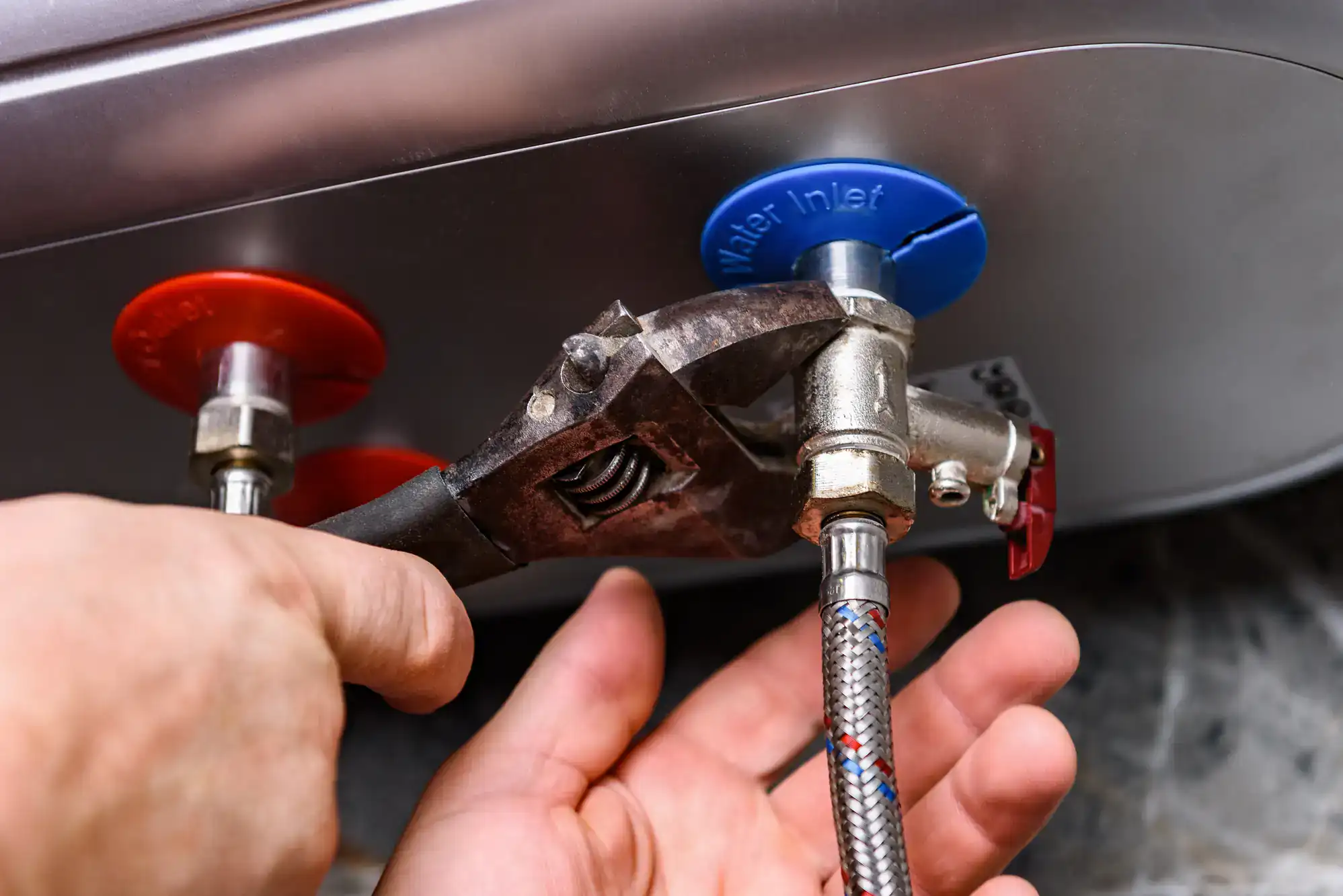
Yes, and it’s not a small difference. The Placer County Water Agency supplies water to North Auburn that carries approximately 310 parts per million in total dissolved solids a level classified as moderately hard to hard. That mineral content doesn’t just affect the taste of your water or leave spots on your dishes. Inside a water heater tank, it accumulates as sediment at the bottom, builds scale on electric heating elements, and accelerates the corrosion of the anode rod which is the sacrificial component designed to protect the tank lining from rust.
The standard lifespan for a tank water heater is 8 to 12 years under normal conditions. In a hard-water environment like North Auburn’s, units that haven’t been maintained no sediment flushes, no anode rod checks often start showing serious performance problems well before that window closes. Regular maintenance, specifically annual or biennial flushing and anode rod inspection, can meaningfully extend the life of your unit. If your water heater is already showing symptoms, it’s worth having a technician assess whether the damage is repairable or whether the mineral wear has progressed too far.
The signs that show up most often are inconsistent hot water where the water gets warm but never quite hot, or runs out faster than it used to unusual noises coming from the tank, water that looks rust-colored or has a sulfur smell, and visible moisture or pooling around the base of the unit. Each of these points to something specific. Rumbling or popping sounds are almost always sediment buildup at the bottom of the tank being disturbed as the water heats. Rusty water typically signals either a corroded anode rod or early tank corrosion. Water around the base can mean a failing pressure relief valve or a crack in the tank itself.
In North Auburn, sediment-related symptoms show up more frequently than in softer-water areas because of the mineral load in the local water supply. If your unit is making noise and you haven’t had it flushed in a few years, that’s usually the first place to look. A technician can tell you quickly whether a flush and element check will resolve the issue or whether the damage has progressed to the point where repair is no longer the right answer.
Yes. Because North Auburn is an unincorporated community in Placer County not an incorporated city permits for water heater replacement are issued through the Placer County Community Development Resource Agency, located in Auburn. This is different from how it works in neighboring incorporated cities like Roseville or Folsom, where permits go through the city’s own building department. The distinction matters because some plumbers who primarily work in incorporated cities aren’t familiar with the Placer County CDRA process, which can lead to unpermitted work that creates problems later.
California also requires that all water heater installations include proper seismic strapping a requirement that is strictly enforced in Placer County. The strapping prevents the unit from tipping or shifting during an earthquake, and it’s not optional. Beyond strapping, the work must meet California Mechanical Code requirements for venting on gas units and proper pressure relief valve installation with correct discharge piping. We handle all of this as a standard part of every replacement job, so the permit process and code compliance aren’t something you have to manage or worry about separately.
Repair costs vary depending on what’s actually wrong with the unit. For common repairs a failed heating element, a thermostat replacement, an anode rod swap, or a pressure relief valve you’re typically looking at somewhere in the range of $150 to $500 depending on parts and labor. More involved repairs or work on tankless systems can run higher. A full tank water heater replacement, installed and permitted, generally falls in the $1,600 to $3,500 range for standard residential units, though high-efficiency or tankless installations can run more.
What matters most in North Auburn’s moderate-income market isn’t just the number it’s whether the number you’re given before the job is the number on your invoice when it’s done. We quote the job before work starts and hold to that quote. No diagnostic fees added after the fact, no mid-job additions without your explicit sign-off. If the repair turns out to be simpler than expected, the final cost reflects that. The goal is that you never feel like you’re managing a moving target while someone is already working on your water heater.
The honest answer depends on the age of the unit, the nature of the problem, and the local conditions it’s been operating in. A water heater that’s 6 or 7 years old with a failed thermostat or a worn heating element is almost always worth repairing the tank itself has plenty of life left, and the fix is straightforward. A unit that’s 13 or 14 years old, has been running on North Auburn’s hard water without regular maintenance, and is showing multiple symptoms at once is a different story. At that point, the cost of repair often approaches or exceeds what a replacement would cost over the next few years, especially once you factor in efficiency losses from scale buildup.
The Sierra Nevada foothills’ mineral-heavy water supply does accelerate wear on tank components, which is why the age-versus-repair calculus here sometimes tips toward replacement a year or two earlier than it might in a softer-water city. A technician can walk you through the actual numbers repair cost versus projected remaining lifespan versus replacement cost and give you a straight answer. You make the decision with full information, not pressure.
Yes. Tankless water heater repair in North Auburn is a regular part of what we handle, and it comes with some area-specific considerations worth knowing. Tankless units heat water on demand by passing it through a heat exchanger at high speed which means any mineral scale that builds up inside the exchanger directly reduces efficiency and can eventually cause the unit to shut down on a fault code. Given the mineral content in PCWA’s water supply, North Auburn homeowners with tankless units tend to see scale-related performance issues more quickly than homeowners in softer-water areas, particularly if the unit hasn’t been descaled on a regular schedule.
Descaling which involves running a food-grade acid solution through the heat exchanger to dissolve mineral buildup is often the first step in restoring a tankless unit that’s underperforming or throwing error codes. Beyond descaling, common tankless repairs include igniter and flame sensor issues on gas units, flow sensor failures, and venting problems. The diagnostic process for tankless systems is more involved than for standard tank units, but the upfront quote process works the same way you know the cost before any work begins, and that number doesn’t change without your approval.