
Water Heater Repair
Get a free quote for water heater repair from your local plumbing team.
We’ll contact you about your water heater repair request. Privacy policy
Hear from Our Customers
Most water heater failures in Orangevale aren’t random. A lot of them trace back to the same thing: mineral buildup. The water coming through Orange Vale Water Company’s lines originates from Sierra Nevada snowmelt via the American River and Folsom Lake clean at the source, but by the time it reaches your tank, it carries enough calcium and magnesium to slowly coat the inside of your unit. That sediment settles at the bottom, forces your heating element to work harder than it should, and eventually turns a fixable problem into a full replacement.
The other factor is the climate here in Orangevale. Summers regularly push into the mid-90s, and winters can dip below freezing overnight. Both extremes stress an aging water heater in different ways summer means more demand, winter means colder incoming water and harder cycling. If your unit is more than ten years old and you’re starting to notice inconsistent temperatures, a rumbling sound, or water that takes too long to heat up, that’s not a coincidence. That’s your system telling you something.
Getting it diagnosed and repaired correctly the first time means you’re not calling someone back in three months. It means your energy bills stop creeping up. And it means you’re not dealing with a slow leak that quietly turns into a water damage situation which can run anywhere from $1,300 to over $5,000 to remediate.
We’ve built our reputation on one thing most plumbing companies avoid committing to: telling you what something costs before starting, and then honoring that number. No diagnostic fees stacked on top of repair costs. No invoice that looks nothing like the estimate. Customers have noted that their final bill came in below the original quote that’s not an accident, it’s how we operate.
Orangevale is unincorporated Sacramento County, which means permits for water heater work run through the county not a city hall. We handle that process as part of every job. That includes California Plumbing Code compliance, proper venting for gas units, and the earthquake strapping that Sacramento County requires on all tank-style water heaters. You don’t have to manage any of that.
With a 4.7/5 Google rating and a Certified Installer designation for advanced water heater systems including tankless and high-efficiency models we bring a level of documented competency that a lot of local operators simply can’t put on paper.
When you call, the first thing that happens is a real conversation not a voicemail queue. You’ll describe what’s going on, and we’ll give you a straight read on whether this sounds like an emergency or something that can be scheduled. If it’s urgent, we move accordingly. Our 24/7 availability isn’t a marketing line it exists because water heaters don’t fail on convenient Tuesday afternoons.
When our technician arrives, they do a full diagnostic before anything else. That means checking the heating element, thermostat, anode rod, pressure relief valve, and the condition of the tank itself. In Orangevale homes especially those built in the 1980s and 1990s when a lot of this community’s housing stock went up sediment buildup and anode rod degradation are the most common culprits. The technician will tell you exactly what they found, what it means, and what it costs to fix it. If replacement makes more financial sense than repair, you’ll hear that too, along with the honest reasoning behind it.
Because Orangevale falls under Sacramento County’s jurisdiction, any water heater installation or replacement requires a permit and a follow-up inspection. We pull the permit, complete the work to code including certified earthquake strapping and coordinate the inspection. By the time we’re done, everything is documented, inspected, and clean.
Ready to get started?
Whether your unit is a standard 40-gallon gas tank, an electric model, or a tankless system, we work on all of them. Orangevale’s housing stock is genuinely varied older ranch-style homes on large lots, some horse-property parcels with outbuildings that need separate water heating solutions, newer tract developments closer to Greenback Lane and Sunrise Boulevard and our diagnostic approach adapts to what’s actually in front of the technician, not a one-size checklist.
For tank-style units, the most common repairs we handle involve heating elements, thermostats, anode rod replacement, and sediment flushing the last of which is especially relevant given the mineral content in the local water supply. For tankless systems, we hold a Certified Installer designation, which means factory-level training on the specific equipment being serviced, not just general plumbing knowledge applied to an unfamiliar unit. If you’re considering switching from a tank to a tankless system, that’s a conversation worth having California’s energy efficiency standards are pushing the market in that direction, and the long-term operating cost difference is real.
Every job in Orangevale includes full Sacramento County permit handling, California Plumbing Code compliance, and certified earthquake strapping on all tank installations. Affordable water heater repair in Orangevale, CA shouldn’t mean cutting corners on the work that protects your home and with us, it doesn’t.
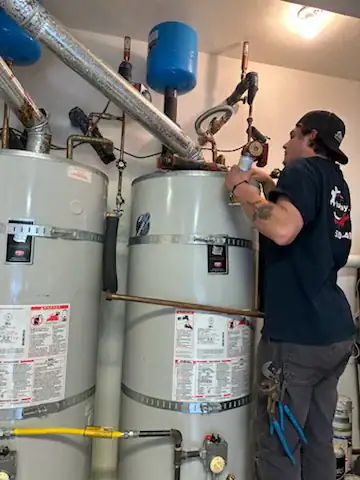
Yes and this is one of the more important things to get right. Because Orangevale is unincorporated, it falls under Sacramento County’s jurisdiction rather than a city building department. Sacramento County requires a permit for all water heater installations and replacements, and after the work is completed, a county inspector has to sign off on it. Skipping that step isn’t just a code violation it can create real problems when you go to sell your home, and some homeowner’s insurance policies won’t cover water damage from unpermitted work.
The permit process also triggers other requirements that protect you: proper venting for gas units, certified earthquake strapping at both the upper and lower portions of the tank, and compliance with California Plumbing Code standards on installation location. We handle all of this as part of every job in Orangevale pulling the permit, completing the work to code, and coordinating the inspection so you’re not chasing paperwork on your own.
That sound is almost always sediment. Over time, minerals in your water supply calcium and magnesium, primarily settle at the bottom of your tank and harden into a layer of scale. When your heating element fires up, it has to push heat through that layer to reach the water above it. The popping and rumbling you hear is water getting trapped beneath the sediment and turning to steam as it escapes.
In Orangevale specifically, this happens faster than in some other areas because of the mineral content in the water distributed through the Orange Vale Water Company’s lines. The source is Sierra snowmelt naturally soft but by the time it reaches your home, the distribution process introduces enough mineral content to accelerate buildup in tank-style water heaters. A sediment flush can address this if caught early. If the buildup has been there long enough to cause pitting or corrosion in the tank wall, replacement is usually the smarter call. A technician can tell you which situation you’re in after a proper diagnostic.
It depends on what’s actually wrong. Smaller repairs a thermostat replacement, a failed heating element, a worn-out anode rod typically run between $100 and $350. More involved repairs, or situations where multiple components have failed, can land in the $500 to $600 range. Full replacement, installed and permitted, generally runs between $850 and $2,500 for a standard tank unit, and higher for tankless or high-efficiency systems.
What matters most is getting an honest diagnostic before committing to anything. A unit that’s 8 years old with a failed heating element is usually worth repairing. A unit that’s 15 years old, has visible corrosion, and has been losing efficiency for two years is probably not and putting $400 into it is likely throwing money at a problem that’s going to force a replacement in six months anyway. We give you that read plainly, with a firm quote before any work begins. The price quoted is the price on the invoice no surprises.
The short answer: age and condition. Tank-style water heaters have an expected lifespan of 8 to 12 years. If your unit is under that threshold and the problem is isolated a single failed component, no signs of tank corrosion, no history of repeated repairs fixing it is usually the right move. If you’re past that window and things are starting to go wrong more frequently, replacement starts to make more financial sense, especially when you factor in the energy efficiency gains from a newer unit.
A lot of Orangevale’s housing stock was built during the 1980s and 1990s, which means there are a significant number of homes in this community with water heaters that are either approaching or well past their expected service life. If you bought your home and aren’t sure how old the unit is, the serial number on the tank will tell you most manufacturers encode the manufacture date in the first few characters. A technician can decode that for you on-site and give you a straight assessment of what you’re working with.
For a lot of Orangevale homeowners, yes but it depends on your household’s hot water usage and your current setup. Tankless units heat water on demand rather than maintaining a full tank at temperature around the clock, which cuts standby energy loss significantly. California’s energy efficiency standards have been pushing the market in this direction for years, and the long-term operating cost difference is real especially during Orangevale’s hot summers when a traditional tank is cycling constantly to maintain temperature in a warm utility space.
The upfront cost is higher than a standard tank replacement a tankless system installed typically runs between $1,500 and $3,500 depending on the unit and your home’s existing gas or electrical infrastructure. Homes with older gas lines or electrical panels may need upgrades to support a tankless unit, which adds to the project cost. We hold a Certified Installer designation for tankless and high-efficiency systems, so if you’re weighing the switch, that conversation starts with an honest look at your current setup and actual usage not a pitch for the most expensive option.
There are usually warning signs before a complete failure, and catching them early is the difference between a repair call and an emergency. The most common ones: water that takes noticeably longer to heat up, inconsistent temperatures during a single shower, discolored or rust-tinged water coming from your hot tap, visible moisture or corrosion around the base of the tank, and that popping or rumbling sound that signals sediment buildup. Any one of these on its own might be a minor issue. More than one at the same time usually means the unit is in decline.
In Orangevale, the combination of mineral-heavy water from the local supply and the wide seasonal temperature swings from below-freezing winter nights to 100-degree summer days puts more cumulative stress on water heaters than homeowners in more temperate climates deal with. If your unit is over ten years old and showing any of these signs, getting a diagnostic done now is almost always cheaper than waiting for a full failure. A tank that lets go completely can release 40 to 80 gallons of water into your utility room and water damage remediation in Sacramento County averages well over $1,000, often much more.