
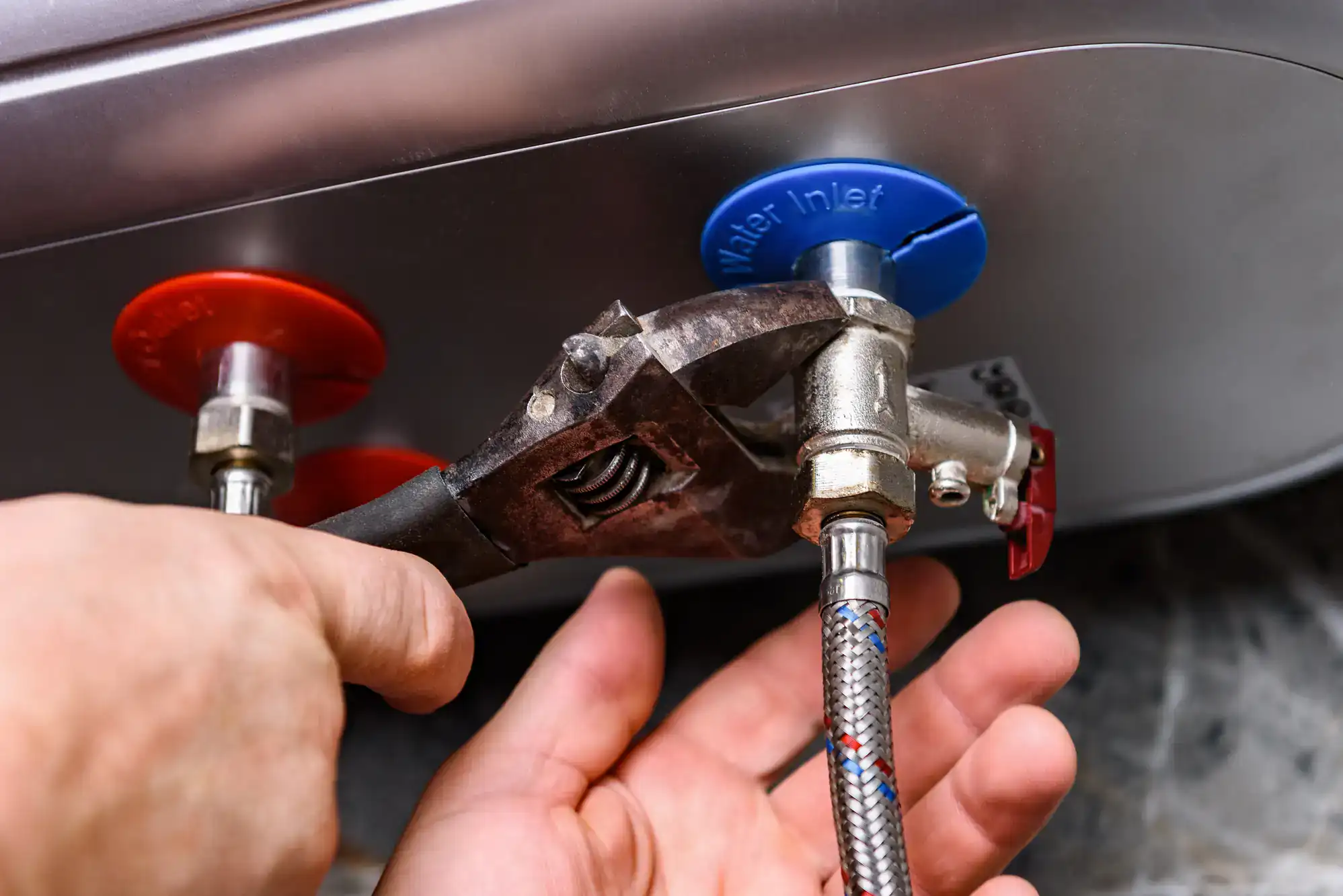
Water Heater Repair
Get a free quote for water heater repair from your local plumbing team.
We’ll contact you about your water heater repair request. Privacy policy
Hear from Our Customers
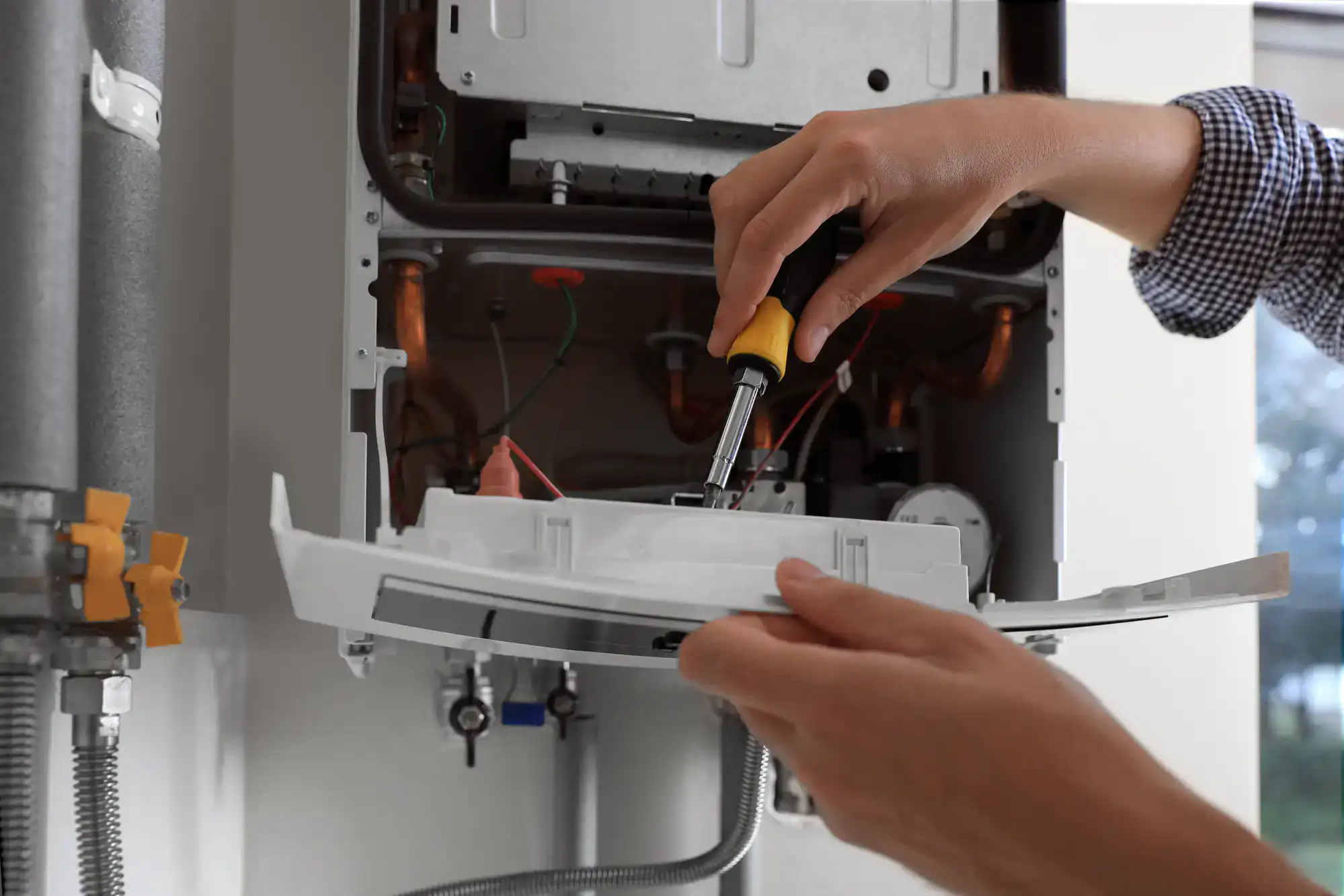
A broken water heater in South Lake Tahoe isn’t just an inconvenience it’s a guest complaint, a negative review, and a refund conversation you don’t want to have. Whether you’re managing a short-term rental off Ski Run Boulevard or living full-time in Bijou or Upper Truckee, the outcome you need is simple: reliable hot water, fast, without surprises on the invoice.
What makes water heater repair here different from anywhere in the Sacramento Valley is the environment itself. The granite bedrock and glacial geology of the Lake Tahoe basin produce hard, mineral-heavy water that builds sediment inside your tank faster than almost anywhere in Northern California. Left unchecked, that sediment quietly reduces your unit’s efficiency, strains your heating elements, and shaves years off its lifespan often without any obvious warning until the unit fails completely.
Then there’s the altitude. At over 6,200 feet, lower atmospheric pressure affects how your water heater performs, and standard sea-level settings don’t always translate. A technician who doesn’t account for that may fix the symptom and miss the actual problem. When the repair is done right with the right diagnosis, the right calibration, and honest communication about what was found you get more than hot water back. You get confidence that it won’t happen again next weekend.
We’re Murray Plumbing, a family-owned plumbing company built on the kind of service that actually earns repeat calls showing up on time, diagnosing honestly, and quoting a price you can count on. Our customers have noted their final invoice came in below the original estimate. That’s not a gimmick. That’s just how transparent pricing works when a company isn’t trying to squeeze every dollar out of a stressed homeowner.
South Lake Tahoe has a well-earned reputation for contractor inconsistency. Callbacks get missed. Quotes go quiet. We operate differently and our 4.7-star Google rating across 93 verified reviews reflects that. Whether you’re a full-time resident in Meyers or Al Tahoe, or you’re managing a vacation property in Tahoe Keys from three hours away, you deserve a plumber who communicates clearly and treats your home with care whether you’re standing in the kitchen or not.
We handle everything from gas and electric water heater repair to full replacements, tankless systems, and emergency calls all backed by 24/7 availability for when timing isn’t optional.
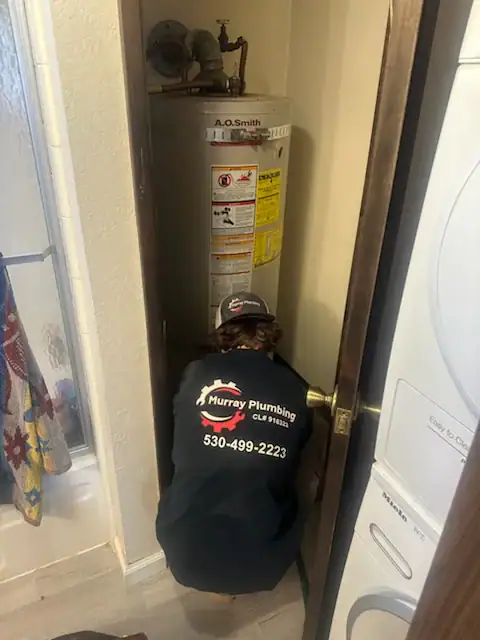
It starts with a call or a booking and from there, you get a confirmed arrival window, not a vague “sometime between 8 and 5.” When our technician arrives, the first priority is a real diagnosis. That means checking the thermostat, heating elements, anode rod condition, sediment buildup, pressure relief valve, and any signs of corrosion or leaking not just the obvious symptom that prompted the call. In South Lake Tahoe’s hard water environment, sediment accumulation is one of the most common and most overlooked contributors to water heater failure, so that assessment is always part of our process.
Once the diagnosis is complete, you get a clear explanation of what was found and a firm quote before any work begins. No surprises. If the repair makes sense, it gets done. If the unit is too far gone to justify the cost especially in a vacation home that may have sat cold and idle through a Tahoe winter you’ll hear that honestly, along with replacement options and what they’ll realistically cost.
For water heater replacements, we handle the permit process on your behalf. In South Lake Tahoe, that means working through either the City’s building department or the El Dorado County Building Division depending on where your property sits city limits versus unincorporated areas like Meyers or Tahoe Paradise. Either way, the work is permitted, inspected, and code-compliant. You don’t have to figure out which jurisdiction applies to your address. That’s already handled.
Ready to get started?
Water heater repair in South Lake Tahoe covers a wider range of issues than most homeowners expect. The most common calls we handle involve failed heating elements, burned-out thermostats, sediment-clogged tanks, depleted anode rods, faulty pressure relief valves, and pilot light or ignition failures on gas units. Each of those issues is diagnosed individually not assumed because the same symptom (no hot water) can have four different causes, and the right fix depends on knowing which one you’re actually dealing with.
For properties in the Lake Tahoe basin, hard water management is built into every service call we make. That means a sediment flush assessment is standard, not an upsell. Anode rod inspection is included because granite-mineral water depletes those rods faster than soft-water environments, and a depleted anode rod accelerates tank corrosion in ways that aren’t visible until real damage is done. For gas water heaters, altitude-adjusted burner performance is also evaluated because a burner running lean at 6,200 feet behaves differently than one at sea level, and that difference affects both efficiency and longevity.
We also handle tankless water heater repair and full unit replacement for tanks that have reached the end of their useful life. For vacation homeowners in Christmas Valley, Montgomery Estates, or the Tahoe Keys area managing properties remotely, the process includes clear written or verbal documentation of findings so you know exactly what was done and what to watch for before your next visit.
Yes, and it’s one of the more commonly overlooked factors in high-altitude plumbing. At South Lake Tahoe’s elevation of roughly 6,237 feet, atmospheric pressure is lower than at sea level and that affects both gas and electric water heaters in different ways. For gas units, reduced oxygen at altitude means the burner has to work harder to maintain combustion efficiency, which can lead to incomplete heating cycles, higher gas consumption, and accelerated wear on burner components. For electric units, the effects are subtler but still present in how the system manages heat and pressure at lower boiling points.
The practical result is that a water heater installed or calibrated for sea-level conditions may underperform in South Lake Tahoe delivering lukewarm water, running longer cycles than it should, or triggering pressure relief issues that wouldn’t occur at lower elevations. A technician who accounts for altitude during diagnosis and calibration will get you meaningfully better results than one who applies a standard checklist without adjusting for where you actually live.
Repair costs vary depending on what’s actually wrong with the unit. Smaller fixes a thermostat replacement, a heating element swap, a sediment flush typically run in the $150 to $350 range. More involved repairs involving multiple components, pressure relief valve replacement, or gas valve issues can run $350 to $600 or more depending on parts and labor. Full tank replacement, installed and permitted, generally falls in the $1,600 to $3,500 range for standard units, with tankless systems running higher.
In South Lake Tahoe specifically, hard water from the Lake Tahoe basin’s granite geology tends to accelerate component wear particularly anode rods and heating elements which means deferred maintenance often converts a $200 repair into a full replacement. Getting a clear diagnosis early and addressing the actual issue is almost always the more cost-effective path. We provide a firm quote before any work begins, so you know exactly what you’re looking at before committing to anything.
Yes California law requires a permit for water heater replacement, and that applies throughout South Lake Tahoe regardless of whether your property is within city limits or in the unincorporated areas of El Dorado County. The permitting authority depends on your specific address. Properties within the incorporated City of South Lake Tahoe are permitted through the City’s building department. Properties in Meyers, Tahoe Paradise, Christmas Valley, and other unincorporated communities fall under the El Dorado County Building Division, which lists residential water heater replacement as a standard permit category.
This matters more than many homeowners realize, especially for vacation properties and short-term rentals. An unpermitted water heater replacement can create problems with insurance claims, complicate a future sale, and potentially surface as a compliance issue for STR permit holders. We handle the permit process as part of every qualifying replacement so the work is inspected, documented, and fully code-compliant. You don’t need to figure out which jurisdiction covers your property. That’s part of what we handle for you.
It’s a very common scenario in South Lake Tahoe, and yes extended vacancy during a Tahoe winter is one of the leading causes of water heater failure in vacation properties. When a unit sits idle in a home that drops to near-freezing temperatures for weeks at a time, several things can go wrong. Sediment that was suspended in the tank settles and hardens at the bottom, creating a layer of insulation between the burner and the water that forces the unit to run longer and hotter to compensate. Pilot lights on gas units go out. Thermostats that were borderline functional before the idle period often don’t survive the thermal stress of being reactivated after a cold, dormant stretch.
The best approach when reactivating a vacation home after a winter absence is to have the unit inspected before assuming it’s working properly not just checking whether hot water comes out, but assessing sediment levels, anode rod condition, and thermostat calibration. Catching a marginal unit before a full house of guests arrives for a ski weekend is significantly less expensive than an emergency call on a Friday night in January.
The repair-versus-replace decision comes down to three things: the age of the unit, the cost of the repair relative to replacement, and the condition of the tank itself. A standard tank water heater has a typical lifespan of 8 to 12 years under normal conditions but in South Lake Tahoe, hard water from the Lake Tahoe basin’s mineral-rich geology can shorten that effective lifespan, particularly if the unit has never been flushed or had its anode rod replaced. A 10-year-old tank with heavy sediment buildup and a depleted anode rod may be closer to the end of its useful life than its age alone suggests.
A general rule of thumb: if the repair cost is less than 50% of what a new unit would cost installed, and the tank itself is in sound condition with no signs of corrosion or active leaking, repair usually makes sense. If the tank is corroded, actively leaking, or the repair cost approaches or exceeds half the replacement cost, replacement is typically the smarter investment. Our technicians will give you both numbers clearly what it costs to fix it and what it costs to replace it so you can make the call based on real information, not pressure.
Yes, and it’s one of the most significant factors affecting water heater longevity in the Lake Tahoe area. South Lake Tahoe’s water supply draws from the granite bedrock and glacial deposits of the Tahoe basin, which naturally introduce calcium and magnesium minerals into the water. Over time, those minerals accumulate as sediment at the bottom of tank-style water heaters, forming a layer that reduces heating efficiency, forces the unit to run longer cycles, and generates the popping or rumbling sounds that many homeowners notice before a failure. That same mineral content also accelerates scale formation on electric heating elements and depletes anode rods faster than in soft-water cities.
The practical impact is real: a water heater in South Lake Tahoe that never receives a sediment flush or anode rod inspection will typically fail earlier than the same unit in a low-mineral environment. Annual or biannual maintenance flushing the tank, inspecting the anode rod, checking the heating elements is one of the most cost-effective things you can do to extend the life of your unit and avoid a premature replacement. For vacation homeowners especially, building that maintenance into your seasonal property checklist pays off in fewer emergency calls and a longer-lasting unit.