
Hear from Our Customers
You wake up, turn on the shower, and the water is hot. That sounds simple but when you’ve been nursing an aging unit through another Sierra Nevada winter, it’s not simple at all. A properly replaced water heater means no more lukewarm water at 6 a.m., no more worrying about what happens if it finally gives out during a cold snap, and no more watching your energy bill climb because an old tank is working twice as hard just to keep up.
Homes in Colfax deal with something the Sacramento Valley doesn’t real winter. Ambient temperatures in garages, crawl spaces, and utility closets drop hard here, and that puts constant stress on water heaters that are already past their prime. Units that might survive 12 years in a mild climate often show signs of failure at 9 or 10 years up here. A new, energy-efficient unit installed correctly doesn’t just restore your hot water it stops the unit from fighting your climate every single day.
If your Colfax home runs on propane, or you’re pulling water from a private well, those factors matter too. Sediment buildup from well water accelerates tank wear faster than most homeowners realize. Getting the right unit matched to your actual setup not just a generic swap is what makes the difference between a replacement that lasts and one that causes problems two years down the road.
We’ve been family-owned for over 60 years and five generations. That kind of history doesn’t come from being average it comes from doing the work right, showing up when we say we will, and being honest about what something costs before we start. Our final bill sometimes comes in under the original estimate. That’s not a gimmick it’s just how we’ve always operated.
Colfax sits at the junction of I-80 and SR-174, and the homes here from the historic district near Railroad Street to the rural acreage properties out toward Rollins Lake have their own set of demands. Older plumbing configurations, propane systems, well water, and real winter weather are all part of the picture. Our technicians have worked in these conditions long enough to know what to expect and how to handle it.
With a 4.7/5 rating across 93 Google reviews and 369 verified reviews across platforms, our track record speaks for itself. But more than the numbers customers consistently mention that the technician arrived when we said they would, explained everything clearly, and left the job cleaner than we found it.

It starts with a call. You describe what’s happening no hot water, strange noises, visible leaking, or just an old unit you know is on its last leg and we give you a real estimate before anyone shows up at your door. No vague ranges, no “we’ll figure it out when we get there.” You know what it costs before the work begins.
When our technician arrives, they assess your current setup tank size, fuel type, venting configuration, and the condition of the surrounding plumbing. In Colfax, that assessment includes checking whether you’re on natural gas or propane, whether there’s sediment buildup from well water affecting the unit, and whether your current installation meets California’s Title 24 energy standards. The City of Colfax requires a building permit for water heater replacement, and we handle that as part of the job not as an add-on or an afterthought.
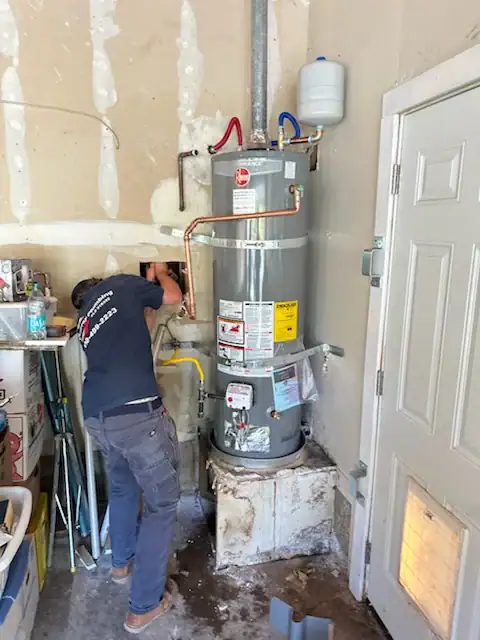
The old unit comes out, the new one goes in, and before our technician leaves, you have hot water running and a fully permitted, code-compliant installation. Most jobs are completed in a single visit. If you’re replacing a standard tank unit, you’re typically looking at a few hours from arrival to hot water restored. Tankless installations take a bit longer depending on the existing setup, but the process is the same clear, upfront, and done right the first time.
Ready to get started?
Water heater replacement in Colfax isn’t one-size-fits-all. The mix of housing here older downtown properties with non-standard configurations, newer builds on rural acreage, homes on well water, homes on propane means the right replacement depends entirely on what your home actually has and how it runs. We work across traditional tank water heaters, tankless systems, natural gas, electric, and propane setups. Whatever your current system is, we match the replacement to it.
For tank water heaters, the typical replacement cost runs between $882 and $1,816 depending on unit size, fuel type, and the complexity of the installation. Tankless systems range from approximately $1,400 to $3,900. Homes in the Colfax area especially those on propane or well water sometimes fall toward the higher end of those ranges because the job requires more technical specificity. Our Certified Installer status means every unit is installed to manufacturer specifications, which keeps your warranty intact from day one.
Beyond the replacement itself, we can assess whether your water quality particularly relevant if you’re on a private well or drawing from the Bear River watershed through Placer County Water Agency is accelerating wear on your system. Pairing a new water heater with a water softener or filtration solution where appropriate isn’t an upsell it’s the difference between a unit that lasts its full lifespan and one that degrades in five years.
Yes the City of Colfax requires a building permit for water heater replacement. This applies whether you’re replacing a tank unit or switching to a tankless system. The permit process ensures the installation is inspected and meets California’s current building and energy codes, including Title 24 efficiency standards. It’s not optional, and it’s not something you want to skip.
The practical reason it matters: if you sell your home, unpermitted work triggers disclosure requirements and can complicate or kill a sale. If you file an insurance claim related to water damage, an unpermitted installation can affect your coverage. We pull the permit as a standard part of every water heater replacement job in Colfax you don’t have to manage that separately or worry about whether it was handled.
The national average for a conventional tank water heater is somewhere between 10 and 15 years. In Colfax, that window often tightens. Sitting at over 2,400 feet elevation, homes here experience colder ambient temperatures in utility spaces garages, crawl spaces, and closets that don’t stay warm the way they do in the Sacramento Valley. That means your water heater cycles more often and works harder to maintain tank temperature, which accelerates wear on heating elements, thermostats, and the anode rod.
If your Colfax home draws from a private well, sediment buildup is another factor that shortens a unit’s lifespan. Mineral-heavy water insulates the bottom of the tank from the heating element, causing the unit to overheat over time. A water heater that might hit 12 years in a mild, municipal-water home may show serious performance decline at 8 or 9 years in a Colfax property with well water and cold winters. If your unit is past the 8-year mark and you’re noticing inconsistent hot water or unusual sounds, it’s worth having it assessed before it fails on you mid-January.
A traditional tank water heater stores a set volume of hot water typically 40 to 50 gallons and keeps it heated continuously. When you use hot water, the tank refills and reheats. Tankless units, by contrast, heat water on demand as it flows through the unit. There’s no storage tank, no standby heat loss, and no running out of hot water mid-shower.
For Colfax homeowners, the choice often comes down to your household’s usage pattern, your current fuel setup, and your budget for upfront installation. Tankless units cost more to install typically $1,400 to $3,900 versus $882 to $1,816 for a tank replacement but they last significantly longer (up to 20 years with proper maintenance) and use less energy over time. If you’re on propane, a tankless system can meaningfully reduce your fuel consumption. If your home has an older venting configuration or non-standard pipe setup, there may be additional work involved in the switchover. A technician can walk you through what your specific home requires before you commit to either direction.
Yes. A significant number of homes in the broader Colfax area particularly those on rural acreage outside city limits where natural gas distribution doesn’t reach run on propane. Propane water heater replacement requires specific technical knowledge that not every plumbing company has. Regulator settings, BTU calculations, and venting configurations for propane systems differ from natural gas, and getting those details wrong creates real safety and performance problems.
Our technicians work with propane systems regularly in the foothill communities around Colfax. Whether you’re replacing a propane tank unit or looking at a propane tankless system, the assessment starts with your existing setup tank size, current regulator, venting and we match the replacement to what your home actually needs. If you’re unsure whether your home is on propane or natural gas, that’s an easy thing to confirm during the initial call before anyone comes out.
For a standard tank water heater replacement, you’re typically looking at somewhere between $882 and $1,816 that range covers the unit itself and labor. Tankless systems run higher, generally $1,400 to $3,900 depending on the unit and what the installation requires. In Colfax, jobs involving propane systems, well water setups, or older homes with non-standard configurations sometimes land toward the higher end of those ranges because there’s more technical specificity involved.
What you won’t get from us is a lowball estimate that balloons once the technician is already in your home. The estimate you get before work starts is the number you’re working with and in some cases, customers have actually paid less than the original quote. That’s not a common experience with most trades contractors, but it’s a consistent pattern in our reviews. If cost is a concern, the best move is to call and get an actual estimate for your specific setup rather than going off general ranges the specifics of your home matter more than any average.
There are situations where a repair makes sense a failed heating element, a faulty thermostat, a pressure relief valve that needs replacing. But there are also situations where putting money into a repair just delays an inevitable replacement by a year or two. Knowing the difference saves you money.
The clearest indicators that replacement is the right call: the unit is 10 years or older, there’s visible rust or corrosion on the tank body or connections, you’re seeing discolored water from the hot tap, or the unit is leaking from the tank itself (not a fitting the tank). In Colfax specifically, if your unit has been running on well water for most of its life without regular flushing, sediment damage can be severe enough that repair isn’t practical. A unit that’s been struggling through multiple Sierra Nevada winters and is already past the 8-year mark is often closer to the end than homeowners want to believe. A technician can assess whether what you’re seeing is a fixable component issue or a sign that the tank itself is done and give you an honest answer either way.