
Hear from Our Customers
At 6,325 feet with nearly 16 feet of snow falling every year, Carnelian Bay’s pipes take a beating that most plumbers have never dealt with. Freeze-thaw cycles crack supply lines, stress fittings, and work on older cabin plumbing in ways that don’t show up until the damage is already done. When a pipe lets go in a property that’s been sitting vacant for two months, what could have been a quick repair turns into a flooded subfloor and a mold problem.
Getting a leak fixed quickly means the water stops before it reaches the framing. It means your Carnelian Bay property is back to normal before your next visit not waiting on a contractor who’s still figuring out the NTPUD shutoff procedure. For vacation rental owners, it means your bookings stay intact instead of getting cancelled while a slow-moving repair drags on.
The older cabins in Cedar Flat and the historic homes near Flick Point were built in an era before modern freeze-protection standards. Original supply lines, galvanized pipes, and fittings that have been through decades of Tahoe winters are worth treating seriously. A proper repair not a patch is what actually holds when the next cold snap hits.
We’ve been working in Placer County mountain communities for over 24 years. That includes Carnelian Bay, the North Shore, the NTPUD service territory, and the kind of high-elevation plumbing conditions that catch out-of-area contractors off guard. We’re not driving up from the valley and guessing we know this environment.
Our Google rating sits at 4.7 out of 5 based on 93 verified reviews. Customers consistently mention that we showed up when we said we would, explained the problem clearly, and charged exactly what we quoted sometimes less. That last part matters a lot when you’re managing a repair on a Carnelian Bay property from two hours away and can’t be there to watch the work.
We’re a licensed California C-36 plumbing contractor, and we’re available 24/7 for emergencies. When you call, a real person answers not a dispatch center.
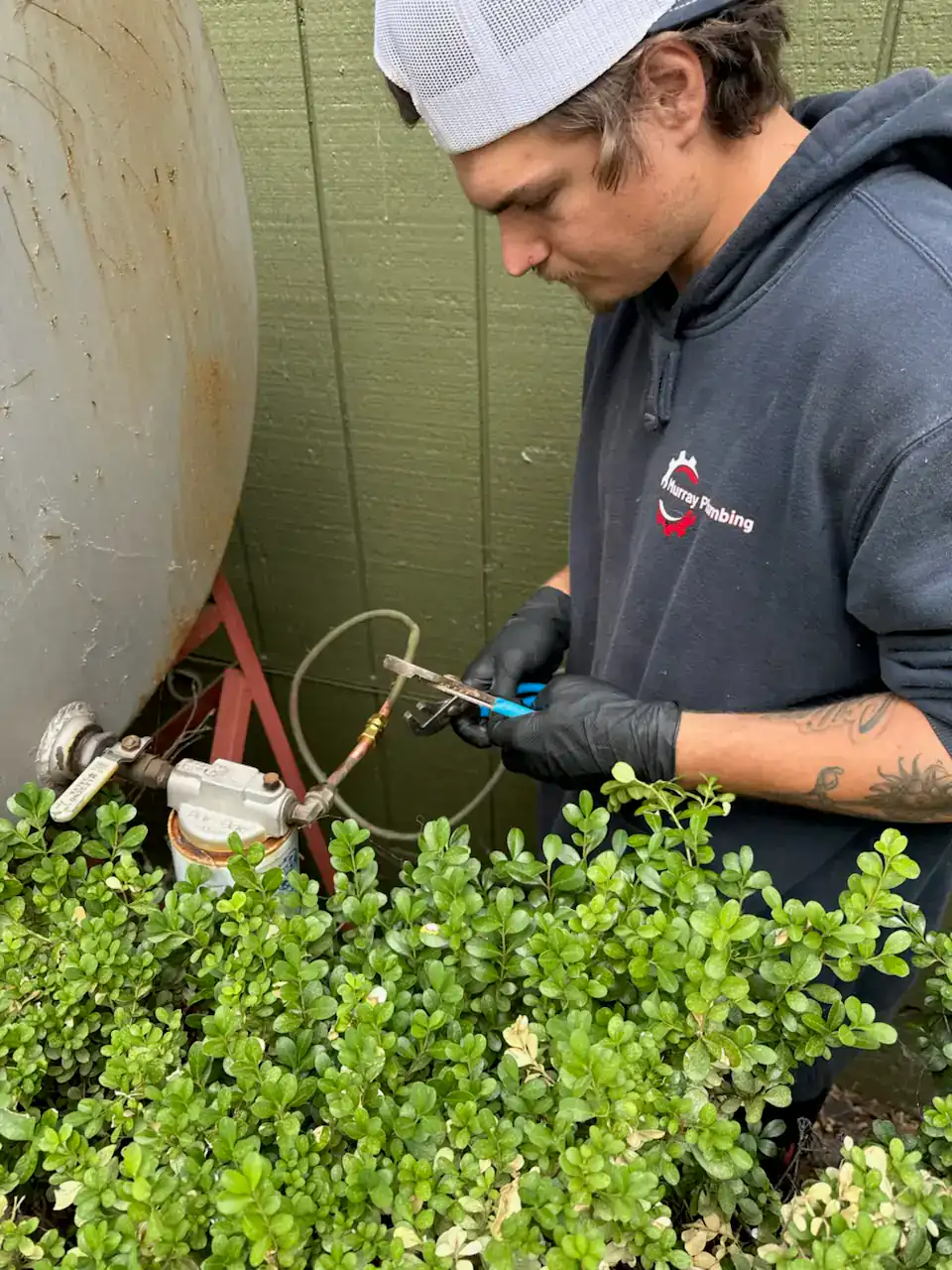
You call or reach out day or night and you get a real person. We ask the right questions to understand what you’re dealing with: where the leak is showing up, whether the property is currently occupied, and whether the water is still running. If you’re calling from out of town, which is common for Carnelian Bay property owners, we walk you through what to do right now to limit the damage while we’re on the way.
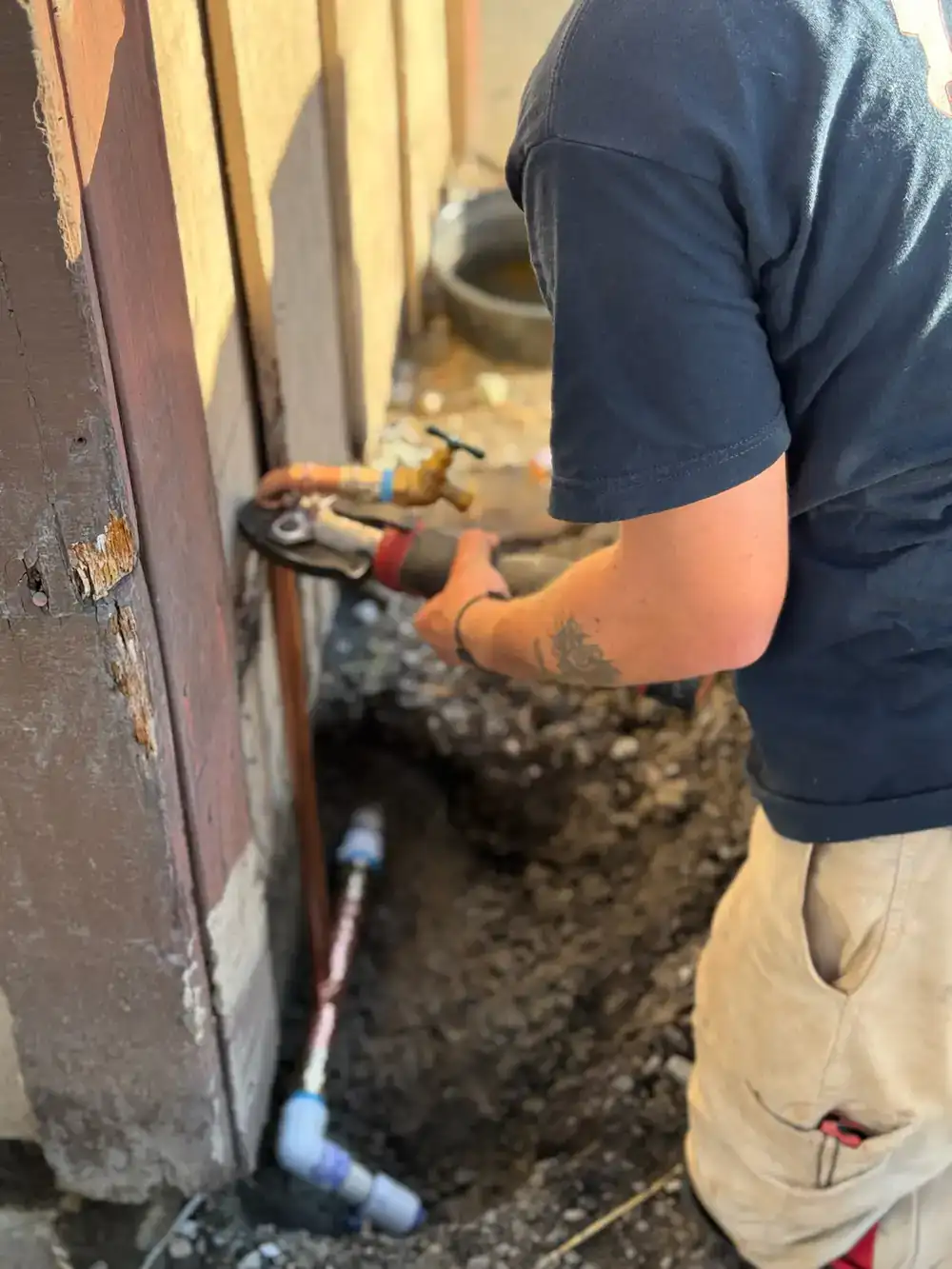
When we arrive, we locate the source of the leak not just the visible symptom. A wet wall in a 1950s Cedar Flat cabin might trace back to a fitting three feet away. An unexplained spike on your NTPUD water bill might mean an underground line issue that hasn’t surfaced yet. We find it, we show you what we found, and we give you the exact repair cost before any work begins. No open-ended hourly billing, no surprises when the invoice shows up.
Once you approve the scope, we complete the repair and verify the fix before we leave. If the work requires a Placer County permit which applies to certain pipe replacements and alterations under Title 24 we handle that process, including coordination with the county’s Tahoe Building Services Division on North Lake Boulevard in Tahoe City. You don’t have to figure out which office to call or whether TRPA has additional requirements. We already know.
Ready to get started?
Water leak repair in Carnelian Bay covers a wider range than it does in most of our service territory, simply because of what this environment throws at a plumbing system. Emergency water leak repair is the most urgent burst pipes, active flooding, supply lines that gave out during a freeze. We respond to those around the clock, and we treat them with the urgency they deserve.
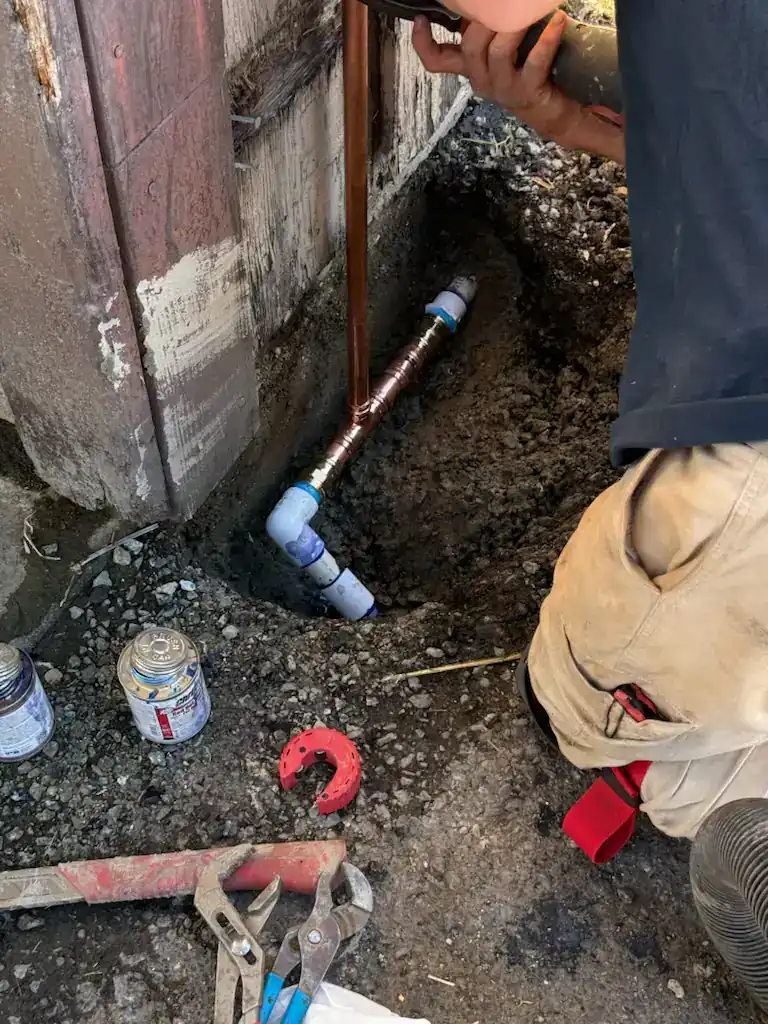
Beyond emergencies, we handle toilet leak repair for the slow, silent leaks that run undetected for weeks in a vacant vacation home and quietly inflate your NTPUD water bill. Wall leak repair in older Carnelian Bay cabins often involves tracing a failure through exterior walls that were never properly insulated the kind of work that requires knowing what you’re looking for, not just cutting drywall until you find something wet. Underground water leak repair is increasingly relevant here given the aging service connections in the area and the active meter replacement work NTPUD is completing throughout Carnelian Bay, Kings Beach, and Tahoe Vista.
If you’re dealing with a slab leak, a failed main line, or a fixture leak that’s been quietly doing damage since your last visit, the process is the same: we find it, we tell you what it costs to fix it, and we fix it. Carnelian Bay properties whether a mid-century cabin or a lakefront estate deserve a repair that holds through the next seven months of winter.
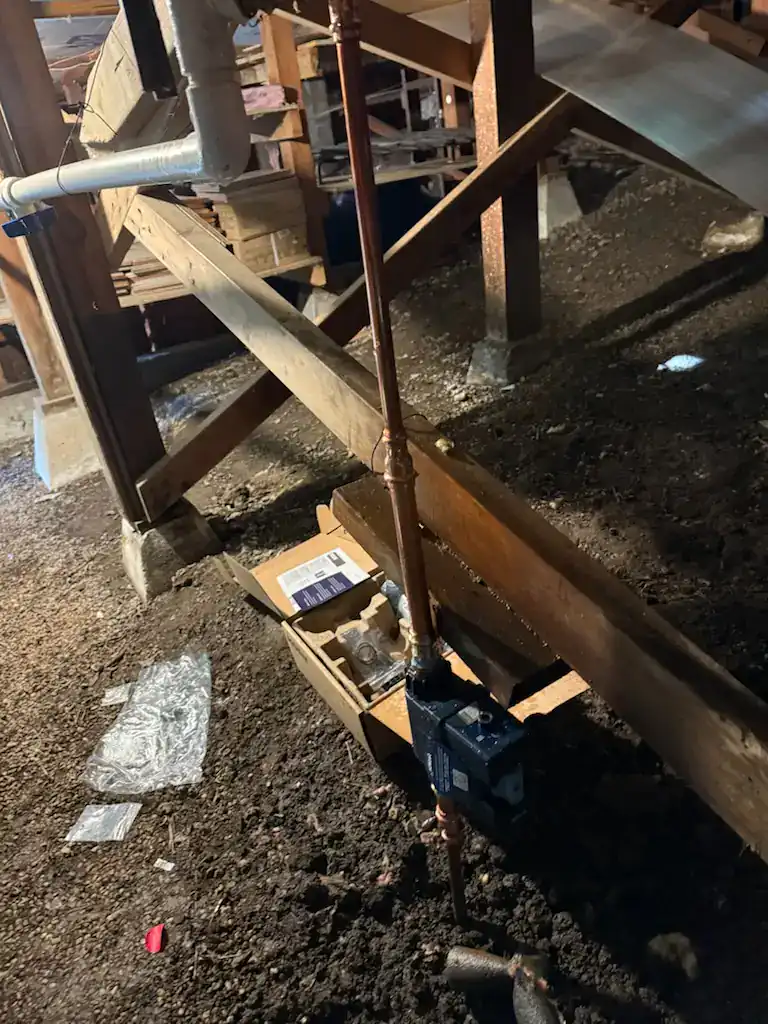
For active leaks and emergencies, we aim for same-day response. Carnelian Bay sits in Placer County’s North Shore territory, and we’re familiar with the area we’re not routing a technician from Sacramento who’s never driven SR-28 in winter conditions. When you call, we’ll give you a realistic arrival window based on current dispatch and let you know exactly what to expect.
If you’re calling from out of town and can’t be at the property, we’ll coordinate with whoever has access a neighbor, a property manager, a rental platform contact and keep you updated throughout. We know that for a lot of Carnelian Bay owners, managing a plumbing emergency remotely is the reality, and we make that process as straightforward as possible.
The most common cause is freeze damage. Carnelian Bay averages around 191 inches of snow per year, and winter temperatures drop well below freezing for extended stretches. Pipes in exterior walls, crawl spaces, garages, and attics are the most vulnerable especially in older cabins where those spaces were never insulated to modern standards. When a property sits vacant and the heat drops below 55°F, it’s only a matter of time.
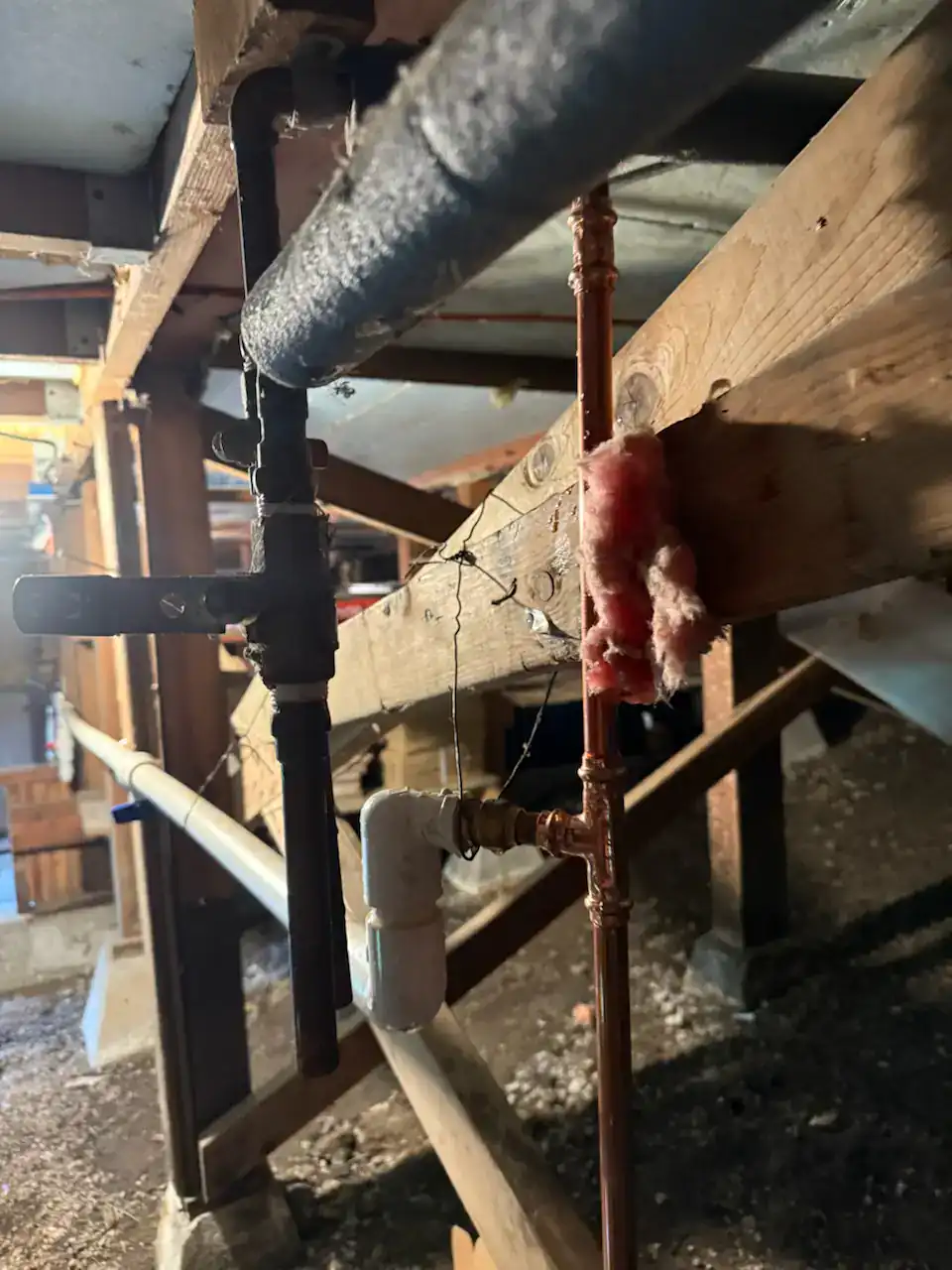
Beyond freezing, aging infrastructure plays a big role. Many homes in the Cedar Flat area and around Flick Point were built in the 1950s and still have original or early-generation plumbing. Galvanized steel pipes corrode from the inside out over decades. Supply lines crack. Fittings fail after years of freeze-thaw stress. The North Tahoe Public Utility District actually advises homeowners to verify their main shutoff valve works before each winter and notes that some older homes in the area don’t have one at all.
The clearest early signal is an unexplained spike in your NTPUD water bill. If usage jumps significantly between billing cycles and nothing changed about how the property was used, there’s a good chance water is going somewhere it shouldn’t. Smart leak detection devices installed near water heaters, under sinks, and near supply line connections can alert you remotely before a small leak becomes a major one. Several property managers serving the Carnelian Bay area specifically recommend these for vacation homes.
Other signs include a neighbor noticing water where it shouldn’t be, visible moisture or staining on exterior walls when you do visit, or a musty smell when you first open the property after a long absence. If any of those apply, don’t wait to see if it resolves on its own. Water moving through a wall or subfloor in a cabin that’s been closed up for months can generate serious mold growth before it becomes visible. The sooner you call, the smaller the repair scope tends to be.
It depends on the scope of work. Simple fixture repairs a toilet, a supply line under a sink, a visible pipe joint typically don’t require a permit. But if the repair involves replacing a section of pipe, repiping a portion of the system, or any structural modification, Placer County’s building code requires a permit under California Title 24. Carnelian Bay is an unincorporated community, so the authority having jurisdiction is Placer County’s Building Services Division, which operates a Tahoe-specific office at 775 North Lake Blvd in Tahoe City.
There’s also a second layer that applies specifically to Lake Tahoe Basin communities: the Tahoe Regional Planning Agency, or TRPA, has jurisdiction over construction and modifications in the basin. For most standard plumbing repairs, TRPA isn’t involved but for larger projects, it can be. We’re familiar with both sets of requirements and handle the permit process when it applies, so you’re not left trying to figure out which agency to contact.
In most homes, a slow leak is annoying. In a Carnelian Bay vacation property that sits vacant for weeks or months at a time, it can be catastrophic. Water moving through a wall or subfloor in a closed-up cabin generates mold quickly in the absence of ventilation or heat. By the time you return for your next visit, what started as a dripping supply line can mean rotted framing, damaged insulation, and a remediation bill that dwarfs what the original repair would have cost.
The EPA estimates the average home loses around 10,000 gallons per year to leaks alone. Insurance data puts the average water damage claim at over $15,000 and that’s for homes where someone was present to catch the problem early. In a seasonal property, the exposure is considerably higher. Fixing a leak when you first notice it is almost always the least expensive path forward, and it keeps your property in the condition it needs to be in for rental income, resale value, or just your own enjoyment.
The first step is shutting off the water supply. If the leak is isolated to one fixture, the shutoff valve directly behind or beneath that fixture is usually enough. If you’re dealing with something larger a burst pipe, a leak inside a wall, or a line you can’t trace shut off the main supply valve for the property. If you’re not sure where it is or whether it’s functioning, that’s something worth locating and testing before next winter. The NTPUD specifically recommends verifying your main shutoff works as part of annual winterization prep, and notes that some older Carnelian Bay homes may not have a functional one.
Once the water is off, call us. We’ll ask a few quick questions to understand the situation and get someone moving toward your property. If you’re not on-site, let us know who has access. While you’re waiting, avoid using electricity near any standing water, document what you can see with photos for insurance purposes, and if there’s significant water on the floor, start removing it if it’s safe to do so the faster it’s out, the less secondary damage you’re dealing with.