
Hear from Our Customers
A water leak in a Cold Springs cabin isn’t just a plumbing problem it’s a slow-moving property damage event. When no one’s around to catch it early, a small drip behind a wall or under a floor can work through an entire winter undetected. By spring, what started as a $400 repair can turn into soaked insulation, rotted subflooring, and mold that started growing weeks before you even knew there was a problem.
Once the leak is found and properly repaired, that stops. Your water bill normalizes. The moisture that was quietly feeding mold growth disappears. The structural damage that would’ve compounded over months doesn’t happen. For a vacation cabin or a full-time mountain home, that’s not a small thing that’s protecting an investment you care about.
Cold Springs sits on a private water system fed by the North Fork of the Tuolumne River, not a large municipal grid with regular infrastructure renewals. Older service line connections, pressure inconsistencies, and aging cabin plumbing are common here. A proper repair accounts for all of that not just the visible symptom, but what’s actually causing the problem in a system like this one.
We’ve been a licensed California plumbing contractor for over 24 years, serving mountain and foothill communities throughout the Northern California Sierra Nevada corridor the kind of terrain, housing stock, and climate that defines Cold Springs and the Highway 108 corridor through Tuolumne County.
The reviews tell a specific story: fast arrival, straight answers, no inflated invoices after the fact. Customers consistently note that the final cost came in at or below what was quoted upfront. That’s not a policy statement it’s what people actually say in writing, publicly, after the job is done.
For Cold Springs cabin owners managing repairs from Sacramento, the Bay Area, or anywhere else that isn’t up Highway 108, that kind of transparency matters more than almost anything else. You’re authorizing work you can’t supervise in person. You need a plumber who operates the same way whether you’re standing there or not.
When you call about a water leak in Cold Springs, the first thing that happens is a real conversation not a form submission or a callback queue. You describe what you’re seeing, and we ask the right questions to understand whether this is an active emergency or a slower-moving issue that needs same-day attention. Either way, we give you a realistic arrival window before we hang up.
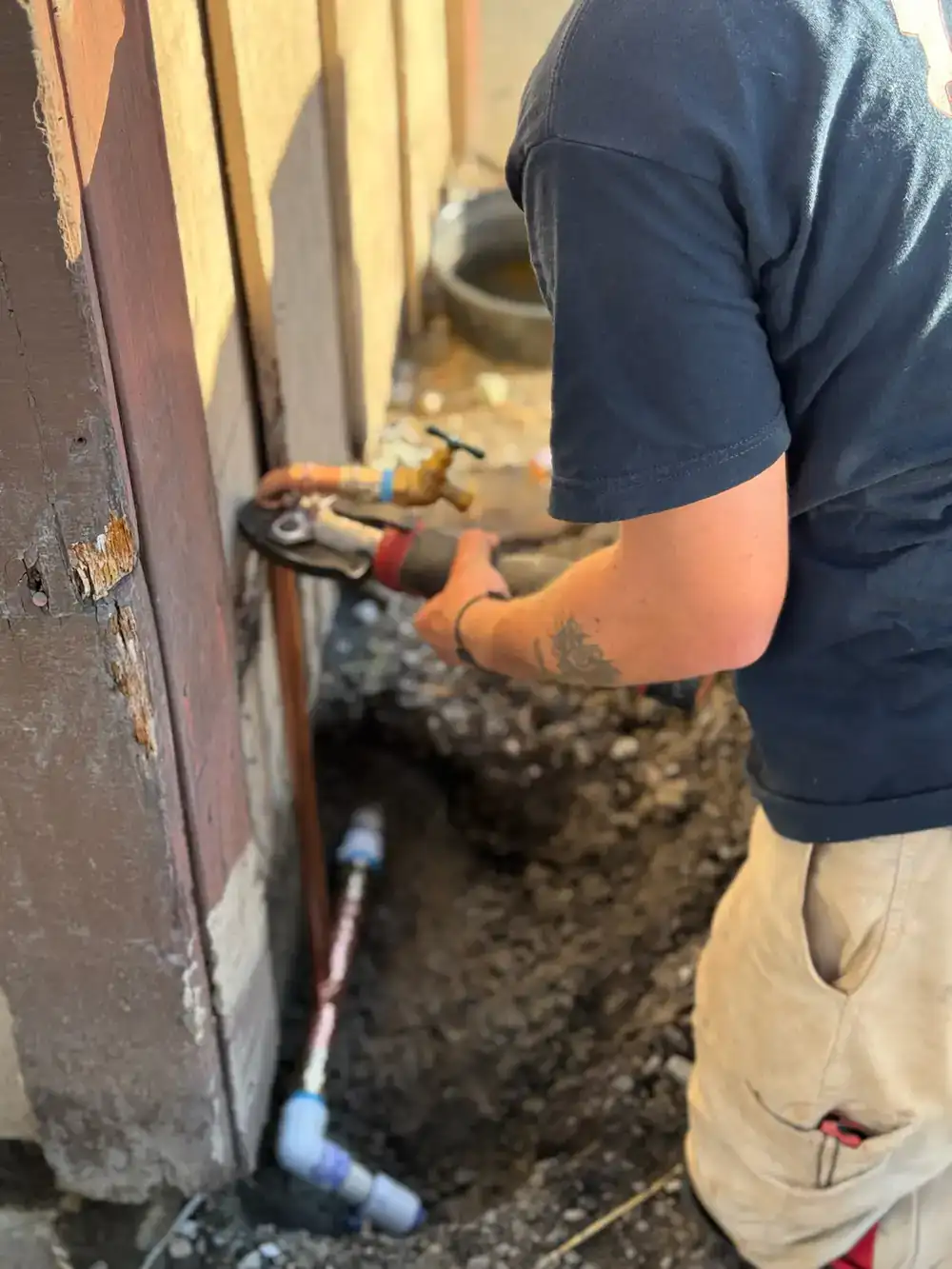
On-site, the first step is locating the source not just where water is showing up, but where it’s actually coming from. In older Cold Springs cabins, those two things are often not the same place. Water travels. A wet spot on the ceiling might trace back to a supply line failure two rooms away. We don’t start cutting or digging until we know what we’re dealing with. For underground or slab leaks, we use detection methods that minimize unnecessary disruption to your property.
Once the source is confirmed, you get a clear cost before any repair work begins. In Tuolumne County, permitted plumbing work follows the California Plumbing Code, and any project over $500 requires a licensed C-36 contractor which we are. After the repair is complete, we walk you through what was found, what was done, and what to watch for going forward. If you’re not on-site, that same explanation happens over the phone.
Ready to get started?
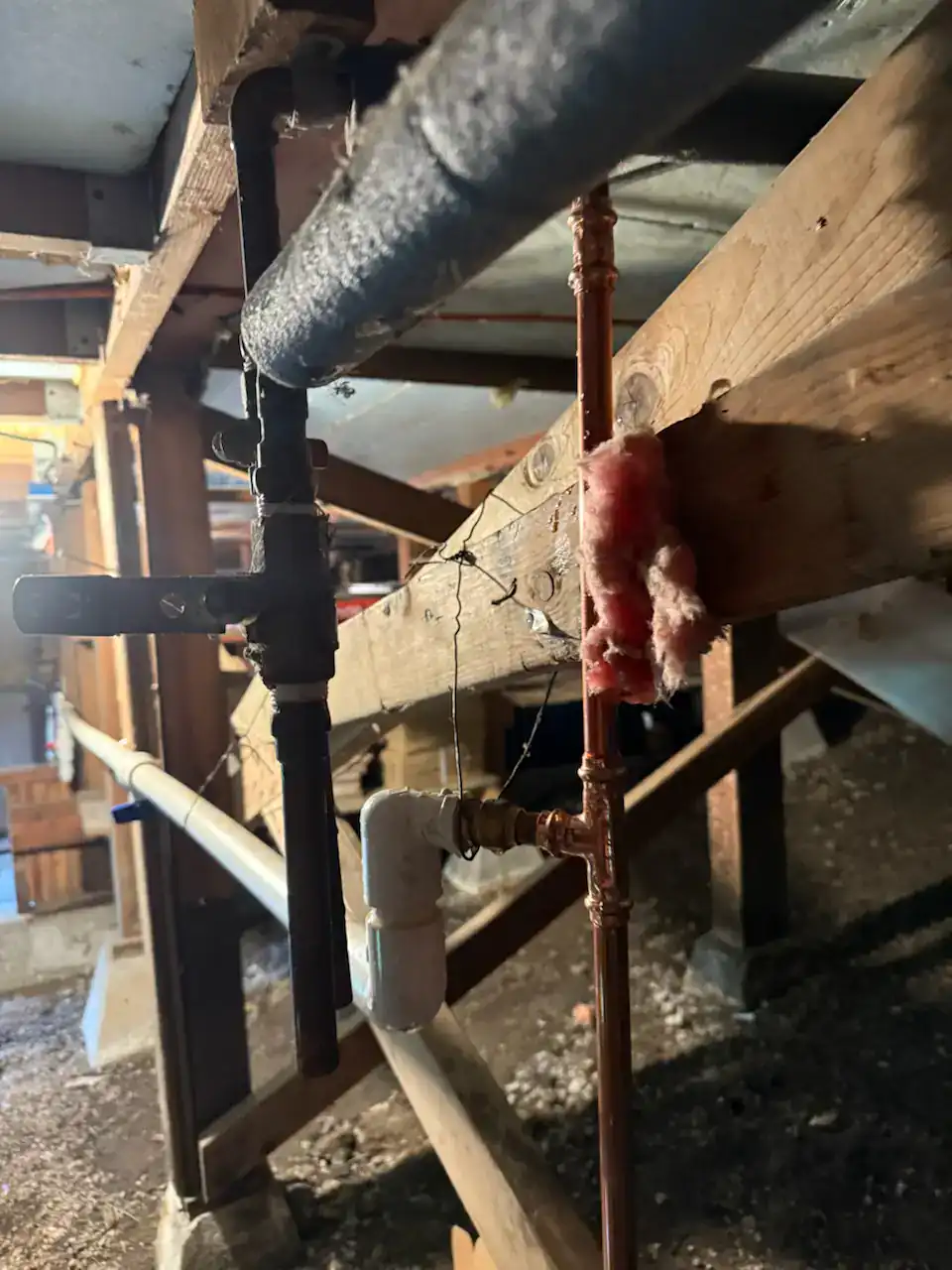
Water leak repair in Cold Springs covers a wider range of situations than most valley or suburban plumbing calls. Burst and frozen pipes are a real seasonal risk at over 5,300 feet especially in cabins with supply lines running through uninsulated exterior walls or crawl spaces that see sustained sub-freezing temperatures from October through April. Toilet leaks, wall leaks, and fixture failures are common in older mountain cabin construction where fittings and connections have been through decades of freeze-thaw cycling.
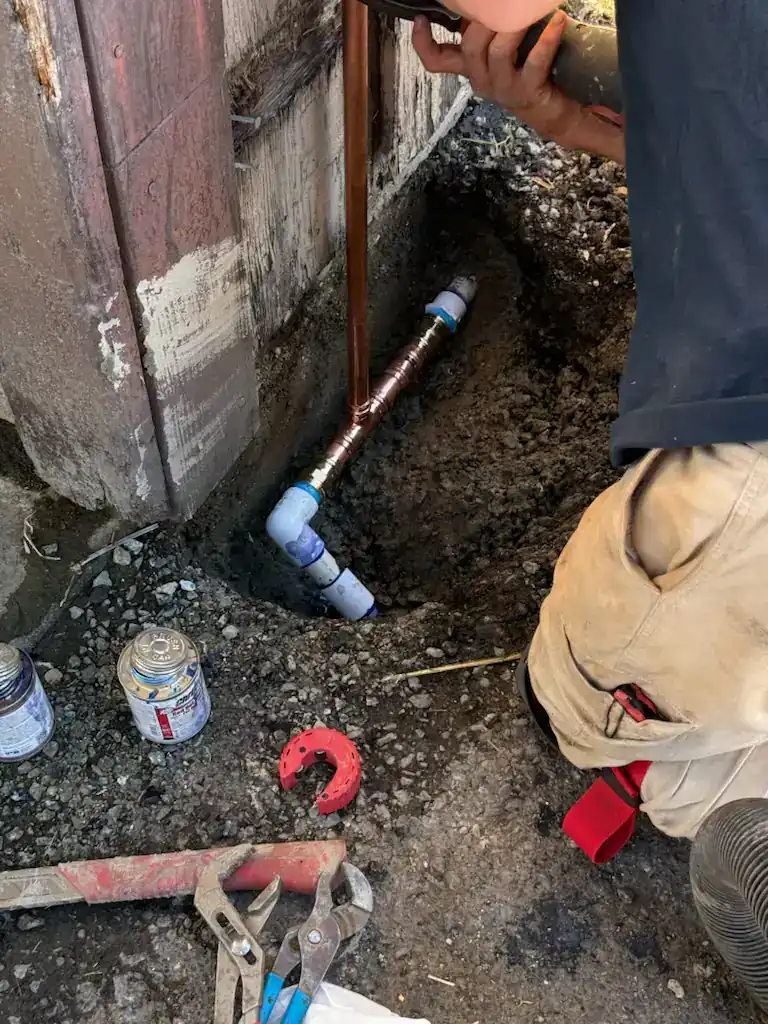
Underground and slab leak repair here requires familiarity with Cold Springs Water Company’s private infrastructure a CPUC-regulated Class C utility that operates differently from a large municipal system. Service line connections are older, pressure behavior can vary, and some properties in the Cold Springs and Peter Pam subdivision areas are still on flat-rate unmetered service, meaning there’s no automatic alert when consumption spikes from a hidden leak. That context changes how a leak is diagnosed and where we look first.
Emergency water leak repair is available for active failures burst pipes, sudden flooding, or any situation where water is actively damaging the property. For non-emergency situations, same-day and next-day scheduling is the standard. If you’re a cabin owner opening your property for the season and something doesn’t look or smell right, that counts as a reason to call catching a slow leak early is always the better outcome.
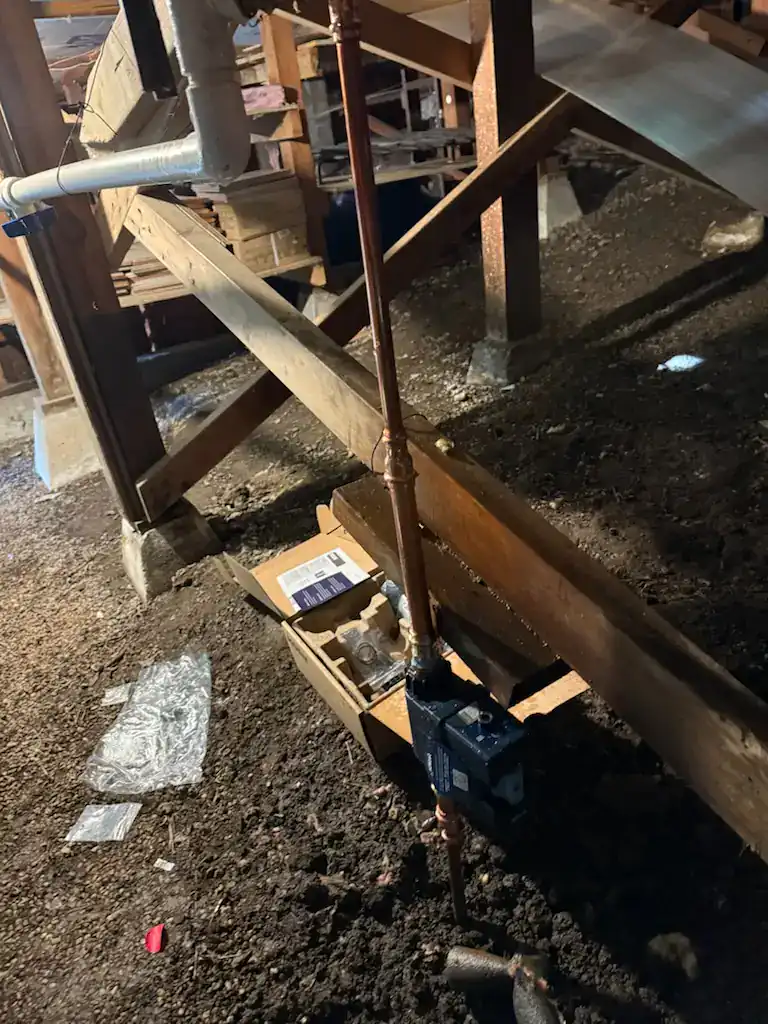
The most common signs are a water bill that’s higher than expected, a musty or damp smell when you open the cabin after a long absence, soft or discolored spots on walls or ceilings, and flooring that feels slightly spongy underfoot. In Cold Springs, where many properties sit vacant through the winter, hidden leaks often go undetected for months which is why the damage is so much worse by the time someone notices.
If your cabin is on Cold Springs Water Company service and you’re on a metered account, a sudden spike in usage between visits is one of the clearest indicators something is wrong. For properties still on flat-rate unmetered service, there’s no automatic alert which makes a visual walkthrough at the start of each season especially important. If anything looks off, don’t wait to see if it gets better on its own.
Cold Springs sits above 5,300 feet in the Sierra Nevada, which means genuine mountain winters not the mild cold snaps that affect foothill communities. Pipes freeze when temperatures drop below 32°F and stay there long enough for standing water inside the pipe to solidify and expand. The most vulnerable spots are supply lines running through uninsulated crawl spaces or exterior walls, pipes near unheated areas of the cabin, and any low point in the system where water can collect and sit.
In vacation cabins that are shut down for the season, the risk goes up significantly. If the water isn’t fully drained from the system before the first hard freeze, there’s a real chance something splits. When the property warms back up either from a temporary thaw or when the heat is turned back on in spring that’s when the damage reveals itself. A burst pipe repair in a Cold Springs cabin that’s been sitting all winter can range from a straightforward fix to a significant water damage situation depending on how long the water had been running before anyone noticed.
The cost depends on what type of leak it is and where it’s located. A straightforward fixture or toilet leak repair is generally on the lower end. Wall leaks and supply line failures fall in the mid-range depending on access. Underground or slab leak repairs which require detection equipment and more involved work tend to run higher, sometimes significantly so depending on depth and location.
What we do differently is give you the exact cost before any work begins. No estimates that balloon after the job is done. Customers consistently report that the final bill came in at or below the original quote which matters especially for Cold Springs cabin owners who are authorizing repairs remotely and can’t be on-site to question a surprise charge. California law requires a licensed C-36 contractor for any plumbing project over $500, so make sure whoever you hire meets that standard regardless of what the quote looks like.
Yes, and it happens regularly with Cold Springs vacation properties. Many cabin owners live in Sacramento, the Bay Area, or elsewhere and aren’t able to make the drive up Highway 108 on short notice. The key is clear communication from the start a detailed description of what you’re seeing, remote access to the property, and a plumber you can actually trust to do the work honestly when no one is watching.
We handle remote authorization routinely. Before work begins, you receive a clear cost breakdown over the phone. After the job is done, you get a full explanation of what was found and what was repaired not a vague summary. If there’s anything unexpected discovered during the job, you’re contacted before anything additional is done. That’s how it should work, and it’s reflected in the reviews from customers who have been in exactly that situation.
In a few meaningful ways, yes. Cold Springs is served by Cold Springs Water Company, a small private utility regulated by the California Public Utilities Commission not a large municipal water district. That means service line infrastructure tends to be older, pressure behavior can differ from what you’d see on a city system, and the utility operates under CPUC rules rather than a local water district’s standard procedures. A plumber unfamiliar with private small-system infrastructure may miss things that someone with experience in this type of setup would catch immediately.
The elevation and climate also change the equation. At over 5,300 feet, freeze-thaw cycling is a real and recurring stress on plumbing systems especially in older cabins built before modern insulation standards. The types of failures that show up here, and the methods used to repair them correctly, are different from what a plumber based entirely in the valley would typically encounter. That experience matters when it comes to diagnosing the actual cause and choosing a repair approach that holds up through the next winter.
The two most important windows are early spring when you’re reopening the cabin after winter and early fall, before you close it down again. Spring is when freeze damage reveals itself. Pipes that cracked or developed micro-fractures over the winter often don’t show symptoms until water starts flowing again and pressure builds. Catching those failures before they become a full-season water damage problem is significantly cheaper than discovering them the following year.
Fall is the right time to address anything that’s been slow or questionable over the summer, before the property sits vacant for months. A small drip that seemed manageable in August becomes a very different problem if it runs unchecked through a Cold Springs winter with no one around to notice. If you’re on a metered Cold Springs Water Company account, checking your usage before closing up for the season can tell you a lot an unexplained spike is worth a call before you leave.