
Main Office
Placerville
Open 24/7- 4330 Panorama Dr, Unit 36
Placerville, CA 95667 - (530) 444-5419
- Open 24 hours, 7 days a week
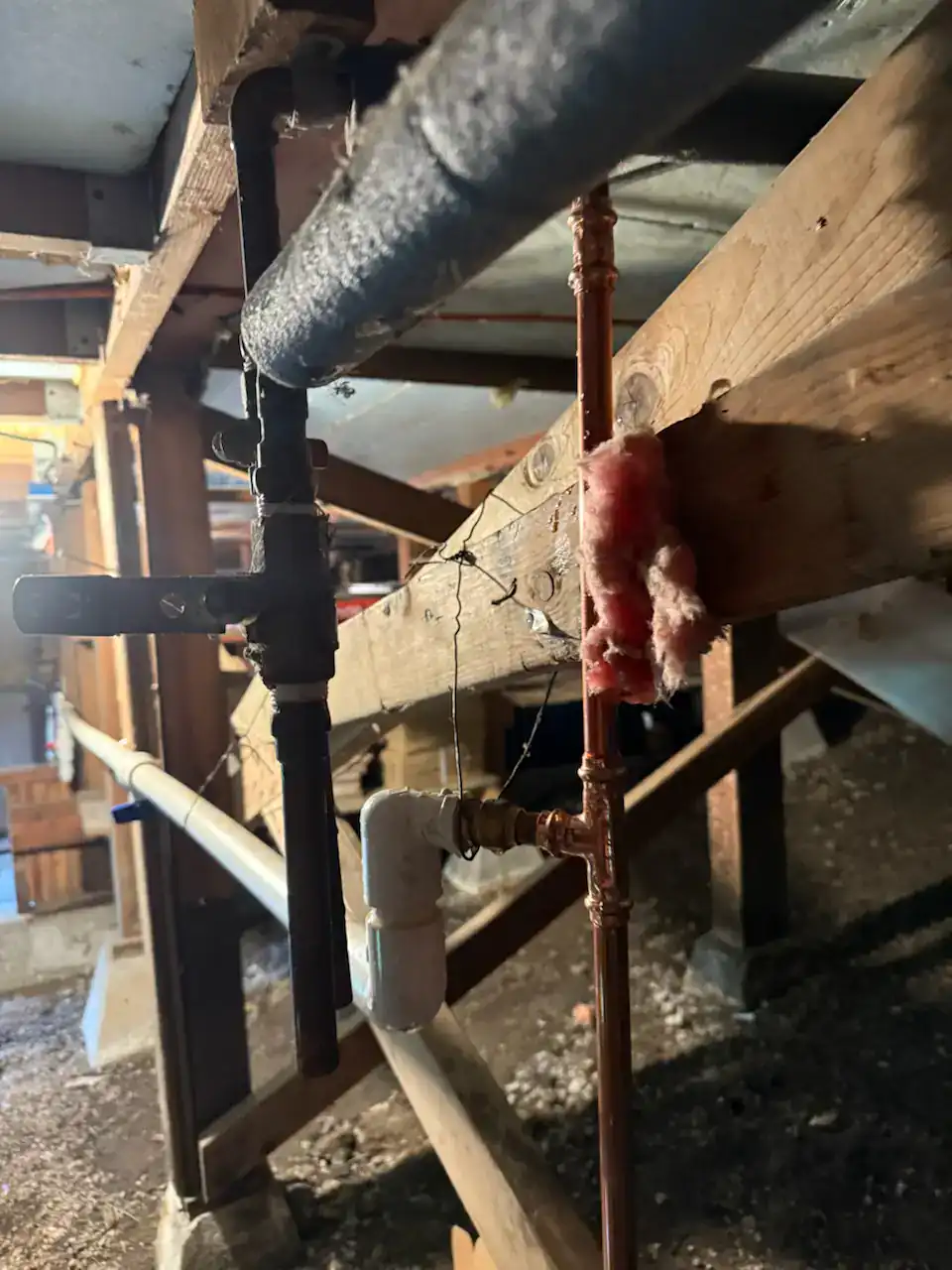
Get a free quote for water leaks from your local plumbing team.
We’ll contact you about your water leaks request. Privacy policy
Hear from Our Customers
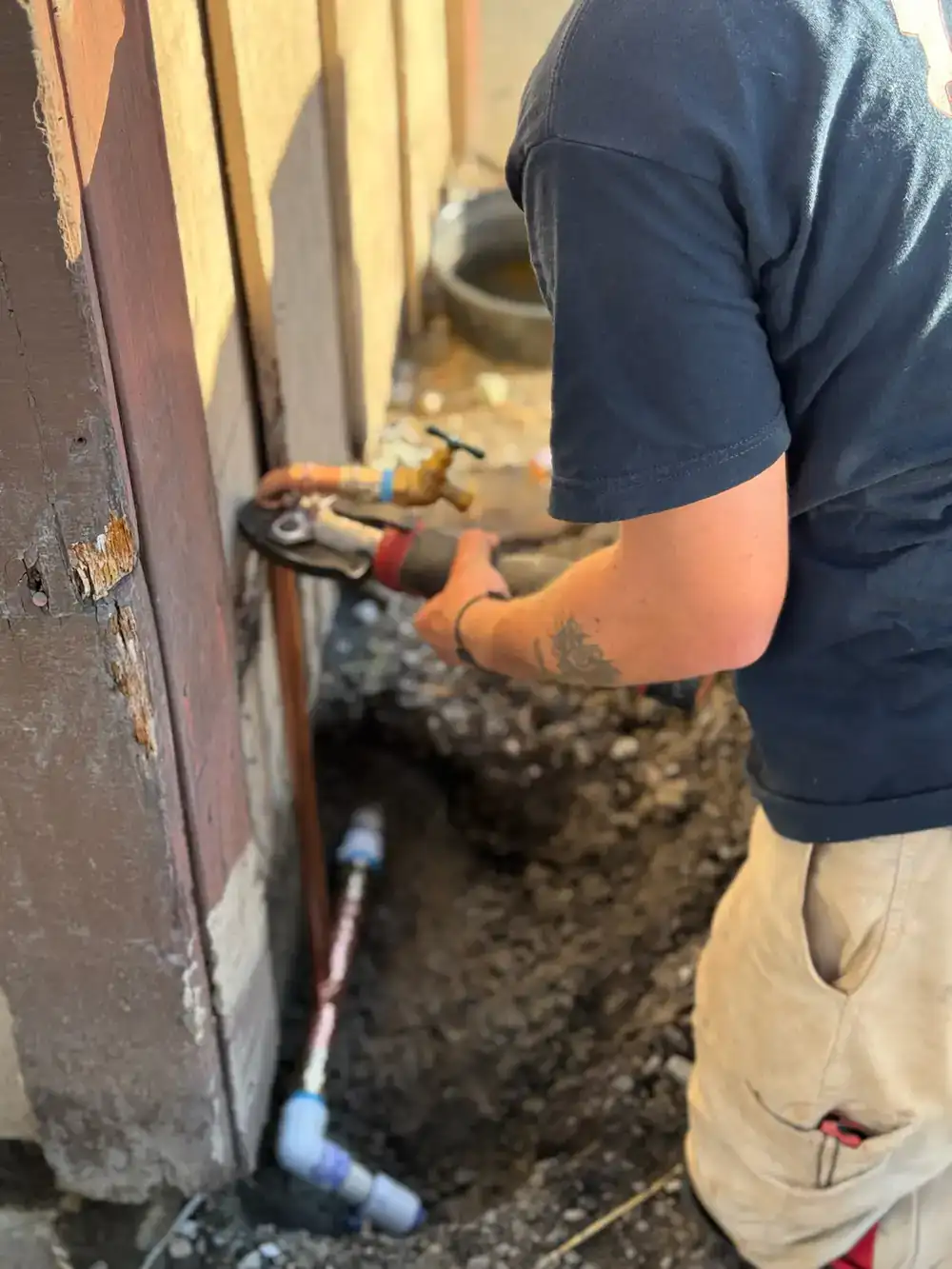
A slow drip behind a wall or a wet patch in your Diamond Springs yard might not feel urgent right now but in a 1970s ranch home with galvanized or copper pipes, that small problem is usually the first sign of something bigger working its way through. The average home loses around 10,000 gallons of water a year to leaks. In Diamond Springs, where EID water travels through mineral-rich Sierra Nevada geology before it ever reaches your faucet, that mineral buildup accelerates corrosion in ways you won’t see until a pipe finally gives.
When the leak is properly repaired not patched, actually fixed your water bill drops, the risk of mold disappears, and you stop wondering what’s happening inside your walls. For homeowners in the 95619 ZIP code, where most homes were built between the 1940s and 1970s, that peace of mind is worth a lot more than the repair itself.
The other thing that changes is your foundation’s exposure. Diamond Springs sits at just under 1,800 feet, and the soil here swells and contracts dramatically between the wet season and the dry summer months. That seasonal ground movement puts real stress on underground lines and slab plumbing. Getting ahead of a leak before it turns into a slab problem or a flooded crawl space is the difference between a manageable repair and a serious one.
We’ve been serving Diamond Springs and the surrounding El Dorado County area since 1999. That’s not a marketing number it means we’ve worked on the same types of homes you’re living in, dealt with the same EID water chemistry, and navigated the same foothill terrain that makes some service calls more complicated than they look on paper.
We hold California Contractor License #916322, carry full liability insurance, and show up when we say we will. Customers consistently note that the final bill came in at or below the original estimate which, in the plumbing industry, is genuinely uncommon. Our Google rating sits at 4.7 out of 5 across 93 verified reviews, and those reviews mention the same things over and over: on time, honest, and no surprises.
If you’re near the Highway 49 corridor, out toward the El Dorado area, or on a larger lot with a private well or septic system, we’ve been out there. We’re not figuring out Diamond Springs we already know it.
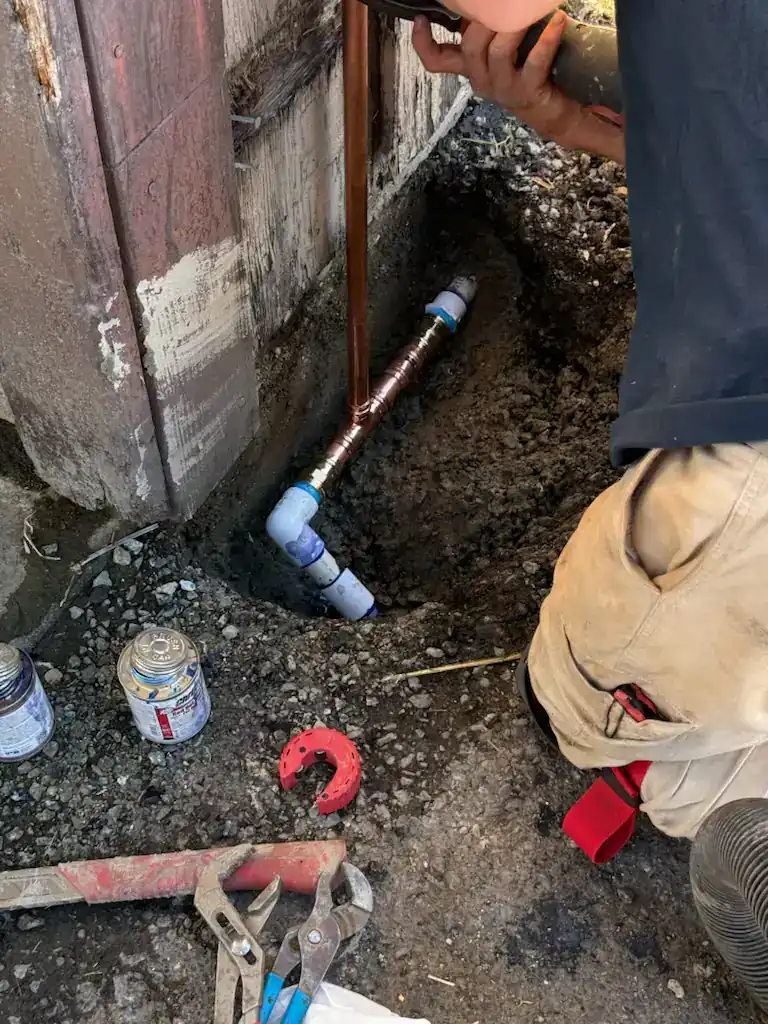
When you call, you’ll reach a real person not a call center, not a voicemail. We’ll ask a few quick questions to understand what you’re dealing with, and in most cases we can get someone out the same day. If it’s an emergency, we’re available around the clock.
Once on-site, the first step is locating the leak accurately. This matters more than most people realize. In older Diamond Springs homes, a visible wet spot on a wall or ceiling is rarely where the leak actually originates water travels along pipes, joists, and framing before it shows itself. We use leak detection methods that find the source without tearing open walls unnecessarily, which protects your home and keeps the repair scope honest.
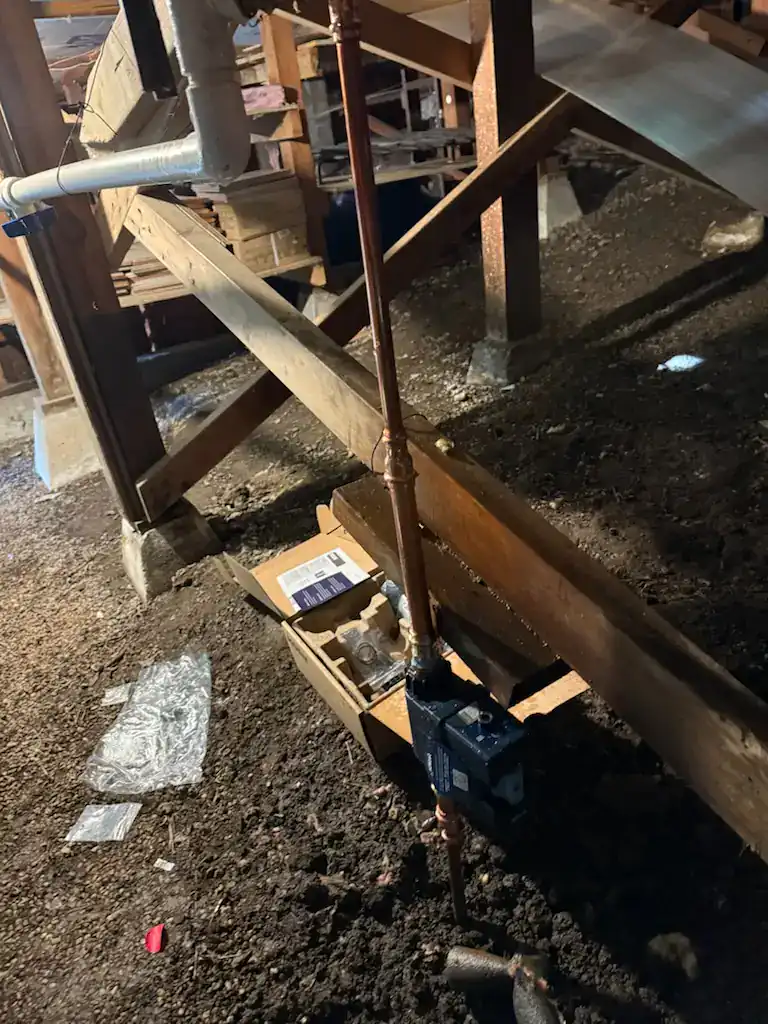
From there, we’ll walk you through exactly what needs to be done and give you a clear price before any work begins. Because Diamond Springs is unincorporated El Dorado County, some plumbing repairs require a permit through the county’s Development Services Department we’ll let you know upfront if that applies to your job and handle the compliance side so you don’t have to. Once you approve the work, we get it done. We clean up after ourselves, and we don’t leave until the repair holds.
Ready to get started?
Water leaks in Diamond Springs homes don’t come in one form. We handle the full range water leak detection and repair for hidden leaks behind walls or under slabs, underground water leak repair for service lines and yard leaks, toilet leak repair for supply line and flapper failures, wall leak repair for pinhole leaks in aging copper, and emergency water leak repair when something gives way at 2am on a Sunday.
The homes along and off Highway 49 tend to have the most common combination of issues: galvanized or early copper supply lines that are now 50 to 80 years old, cast iron drain lines that crack as the foothill soil shifts, and mineral scale buildup from EID water that restricts flow and eventually causes leaks in hot water lines. If your Diamond Springs property uses a private well or a septic system common on larger lots east of the 49 corridor we handle those service lines as well.
One thing worth knowing: oak and pine tree roots are aggressive in this climate. During Diamond Springs’ long, dry summers, roots seek moisture from any nearby water source, including your sewer and water lines. If you’re seeing slow drains alongside a suspected leak, there’s a reasonable chance the two are connected. We diagnose both.
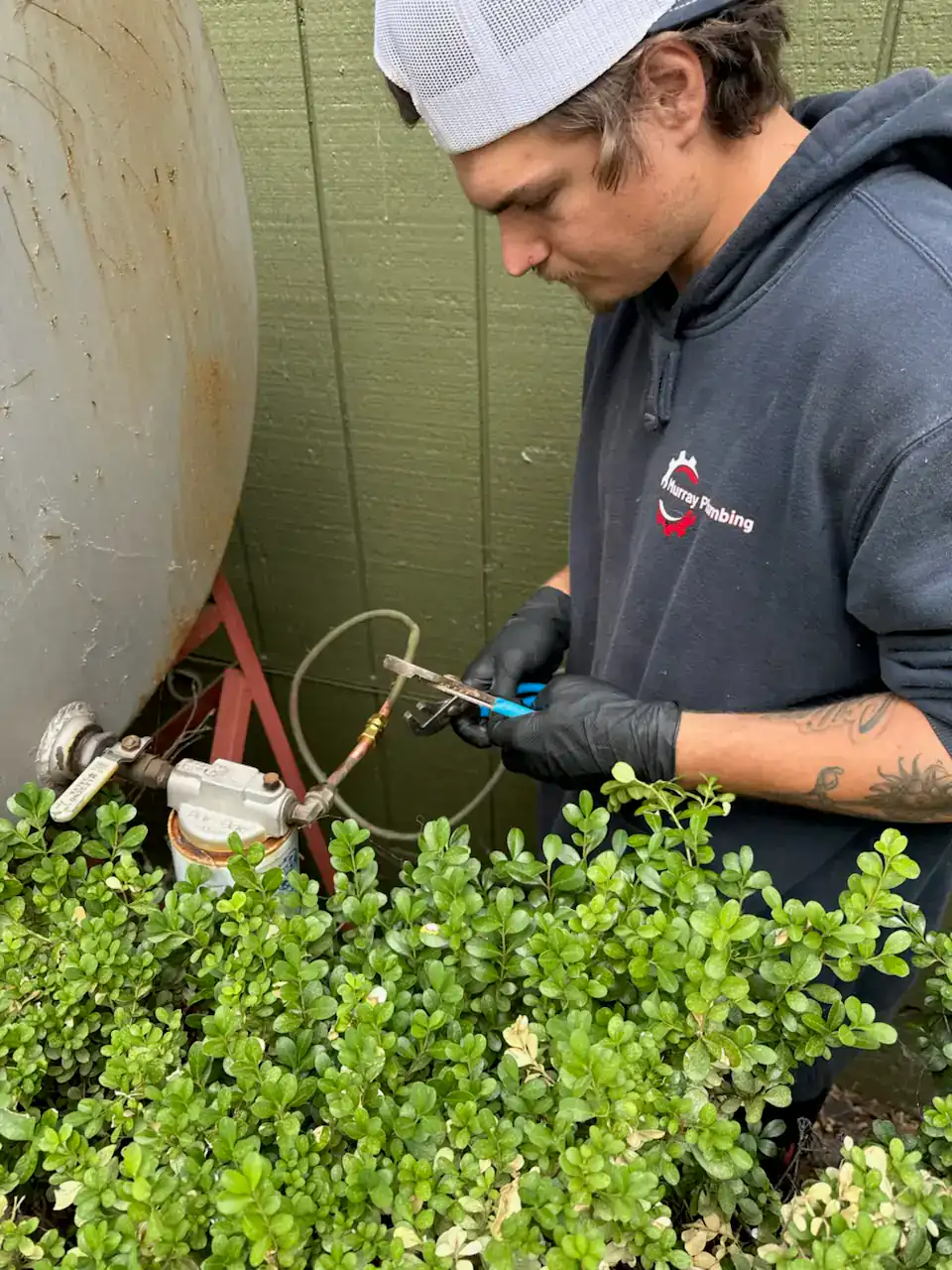
The most reliable early sign is an unexplained spike in your EID water bill without a change in usage. Other signs include the sound of running water when everything is off, warm spots on a concrete floor, soft or discolored patches on walls or ceilings, and musty smells in areas that should be dry. In Diamond Springs homes built in the 1960s and 70s, these signs often point to pinhole leaks in aging copper or galvanized pipe corrosion that’s been building for years before it finally breaks through.
If you notice wet ground in your yard during the dry summer months when Diamond Springs gets almost no rainfall that’s almost certainly a leak in an underground supply line or sewer line. Don’t wait on it. Water damage compounds quickly, and mold can begin forming within 24 to 48 hours of sustained moisture exposure. A leak detection visit will tell you exactly what you’re dealing with before the damage gets ahead of you.
The two biggest factors in Diamond Springs are pipe age and water chemistry. Most homes in the 95619 ZIP code were built between the 1940s and 1970s, which means the original plumbing galvanized steel, cast iron, or early copper is now well past its designed service life. Galvanized pipe corrodes from the inside out, slowly narrowing the line until pressure builds and a leak forms. Cast iron drain lines crack and separate as the ground shifts beneath them.
The second factor is the water itself. The El Dorado Irrigation District draws from Jenkinson Lake and routes it through Sierra Nevada geology before it reaches your home. That water carries calcium, magnesium, and other minerals that build up inside pipes over time especially in hot water lines where temperature fluctuations speed up the process. The combination of old pipes and mineral-heavy water creates a corrosion environment that’s more aggressive than what you’d find in a newer suburban community. It’s not a matter of if these pipes will eventually fail it’s a matter of catching it early.
No. The EID is responsible for the water main up to your meter. Everything on your side of the meter the service line running from the meter to your home, all interior supply lines, drain lines, fixtures, and water heater connections is your responsibility as the homeowner. This is a common source of confusion, especially for newer residents who assume the district handles leaks on the property.
What the EID does offer is a leak adjustment program. If a hidden leak caused an unusually high water bill and you’ve since had it repaired, you can submit a repair receipt to the EID and request a billing adjustment for the affected billing period. They don’t guarantee the adjustment, but it’s worth submitting. Keep your repair documentation from us a licensed contractor invoice with the license number (CA Lic #916322) is exactly what the district needs to process that kind of request.
It depends on the scope of the work. Diamond Springs is an unincorporated community, so all permit requirements fall under El Dorado County’s Development Services Department not a city building department. Minor repairs like replacing a toilet supply line, fixing a leaking shut-off valve, or patching a small section of pipe typically don’t require a permit. Larger repairs replacing a full water service line, repiping a section of the home, or any work that involves opening walls and modifying the plumbing system generally do.
California state law also requires that any plumbing contractor performing work valued over $500 hold a valid C-36 Plumbing Contractor license. We hold CA Lic #916322 and are fully licensed, insured, and bonded. We’ll tell you upfront whether your specific repair requires a county permit and handle the compliance process so you’re not navigating El Dorado County’s permitting system on your own.
Yes and it catches more Diamond Springs homeowners off guard than you’d expect. The town sits at about 1,800 feet elevation, and while temperatures here don’t regularly drop to the extremes you’d see up near South Lake Tahoe, Diamond Springs does experience nights in January and February where temperatures dip to the low 30s or below. That’s enough to freeze water in exposed or poorly insulated pipes, particularly in exterior walls, crawl spaces, garages, and lines that run along the north-facing side of a home.
The risk is actually higher here than in true mountain communities not because the freezes are worse, but because residents aren’t in the habit of winterizing. Tahoe homeowners expect hard freezes and prepare for them. Diamond Springs homeowners often don’t think of it as freeze territory, so pipes that should be insulated aren’t. If you’ve had a freeze event and you’re now seeing low pressure, wet walls, or no water flow in part of the house, that’s a burst pipe until proven otherwise. Call immediately the faster the line is repaired and the water is shut off, the less secondary damage you’re dealing with.
It varies based on where the leak is, what caused it, and how much access is involved. A straightforward toilet leak repair or supply line replacement is typically on the lower end. A slab leak or underground line break that requires excavation or concrete work will cost significantly more. For most common residential leak repairs in Diamond Springs pinhole leaks, wall leaks, and fixture-related leaks you’re generally looking at a few hundred dollars. For more involved repairs like full service line replacement or slab leak rerouting, costs can run into the low thousands depending on the scope.
What we do differently is give you a clear, honest price before any work starts no hourly billing that spirals once the job is open, no invoice that’s double what you expected. Customers have repeatedly noted that their final bills came in at or below the original estimate. For homeowners in El Dorado County who’ve dealt with contractors that quote one number and bill another, that’s a meaningful difference. You’ll know what you’re agreeing to before we touch anything.
Our Locations
From the foothills to the valley, Murray Plumbing has a licensed team close by. Find the office nearest you — we’re open 24 hours a day, 7 days a week.