
Get a free quote for water leaks from your local plumbing team.
We’ll contact you about your water leaks request. Privacy policy
Hear from Our Customers
In most towns, a slow leak is an inconvenience. In Locke, it’s a different kind of problem. The buildings here were framed between 1912 and 1922 wood construction, built before modern plumbing was even a standard practice. When water gets into those walls or under those floors, it doesn’t just stain drywall. It works into structural lumber that can’t be pulled from a hardware store shelf and replaced the same afternoon.
The Delta environment makes it worse. Locke sits on reclaimed peat and clay soil right along the Sacramento River, and the water table here is high year-round. Underground leaks in this environment don’t always announce themselves the way they would on a dry hillside. The ground is already moist. A line can be losing water for weeks before you notice a spike in your bill or a soft spot in the floor. By the time it’s visible, the damage is already in progress.
Getting a leak located and repaired quickly means protecting the structural integrity of your home, keeping mold from taking hold in wood that’s already seen a century of Delta humidity, and stopping a water bill that’s quietly climbing for no obvious reason. That’s the real outcome not just a fixed pipe, but a house that stays sound.
We’ve been serving Sacramento County for over 24 years not as a franchise, not as a call center operation, but as a locally rooted plumbing company that actually picks up the phone and shows up. That track record matters in a place like Locke, where most Sacramento-area plumbers don’t bother making the drive down River Road.
The Delta communities along State Route 160 Locke, Walnut Grove, Courtland have a plumbing reality that suburban Sacramento doesn’t. Old structures, clay soils that shift with the seasons, high groundwater, and buildings that carry historic significance. You need someone who understands what they’re working on before they touch anything. Our 4.7/5 Google rating across 93 verified reviews reflects a consistent pattern: people who called with a real problem and got a real answer, not a runaround.
Pricing is upfront before any work begins. No hourly ambiguity, no surprise total when the job wraps. Some customers have told us their final bill came in under the original estimate. That’s the standard, not the exception.
When you call, you reach a real person not a voicemail, not an answering service. You describe what you’re seeing, and we figure out together whether this is an emergency dispatch situation or a same-day scheduled call. Either way, we’re not leaving you guessing about when someone will arrive.
Once on-site, the first priority is finding the source not just the symptom. In Locke’s historic structures, that matters more than almost anywhere else. We use acoustic detection and thermal imaging to locate the leak precisely before opening any wall or floor. These buildings have irreplaceable historic fabric, and the goal is always to disturb as little of it as possible. We find the exact location first, then we make the repair not the other way around.
After the repair, we walk you through what was found, what was done, and what to watch for going forward. If the work requires a Sacramento County permit which applies to plumbing projects beyond minor repairs we handle that process as a licensed California C-36 contractor. You don’t have to navigate the county’s requirements on your own. For properties within Locke’s National Historic Landmark District, we work carefully and with full awareness of what’s at stake structurally and historically.
Ready to get started?
Water leak repair in Locke covers a wider range of situations than a standard Sacramento suburb call. We handle interior pipe leaks, wall leaks, toilet leaks, underground water line failures, and hidden leaks behind surfaces that haven’t been opened in decades. Each one requires a different approach, and the Delta environment shapes all of them.
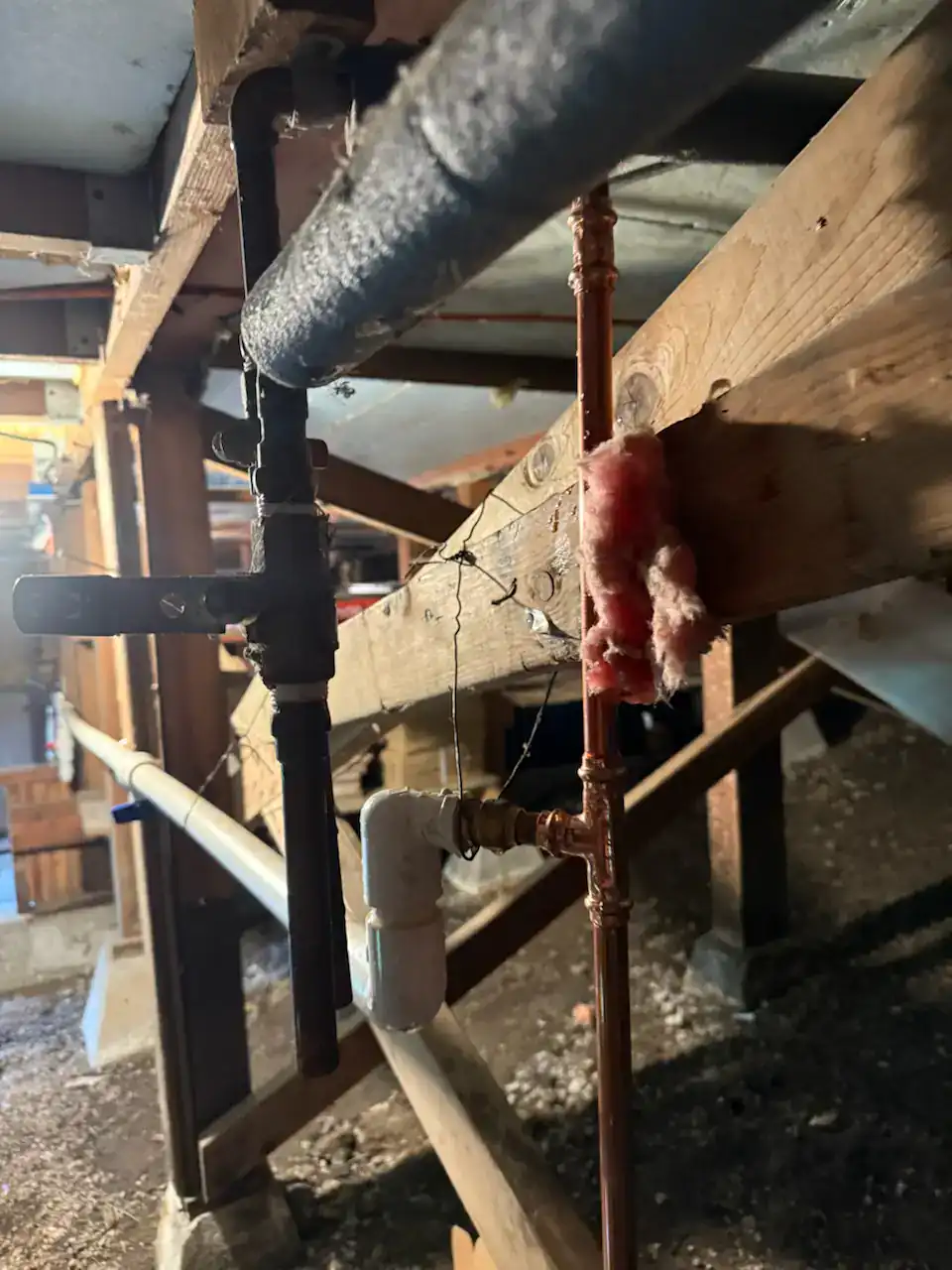
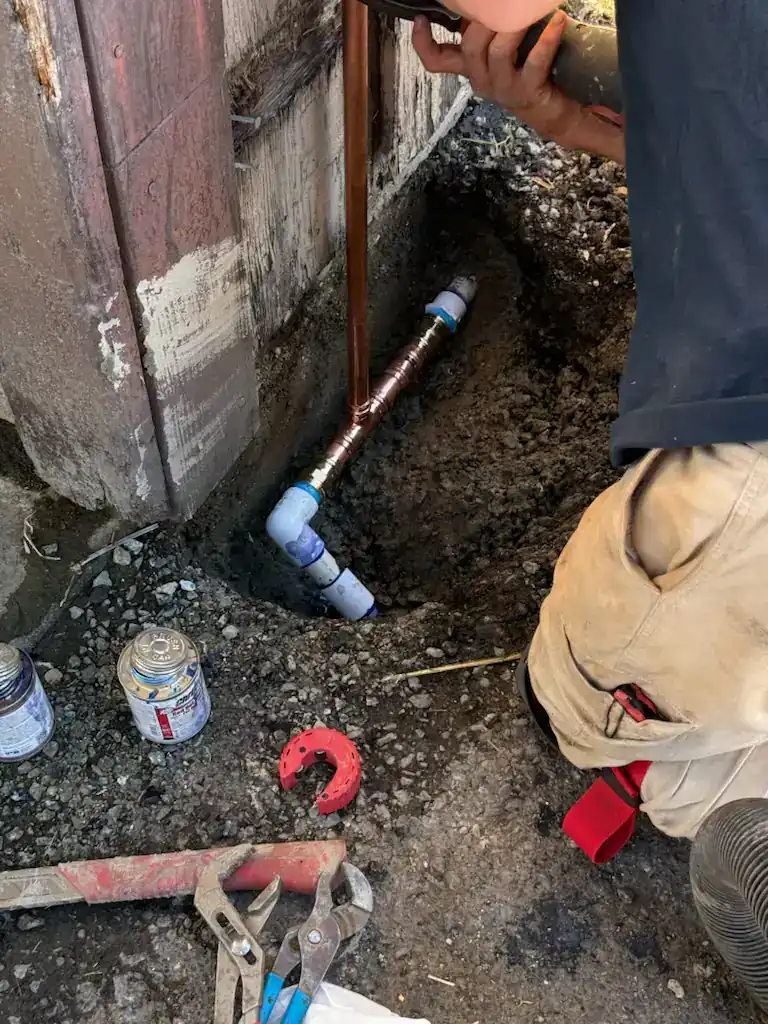
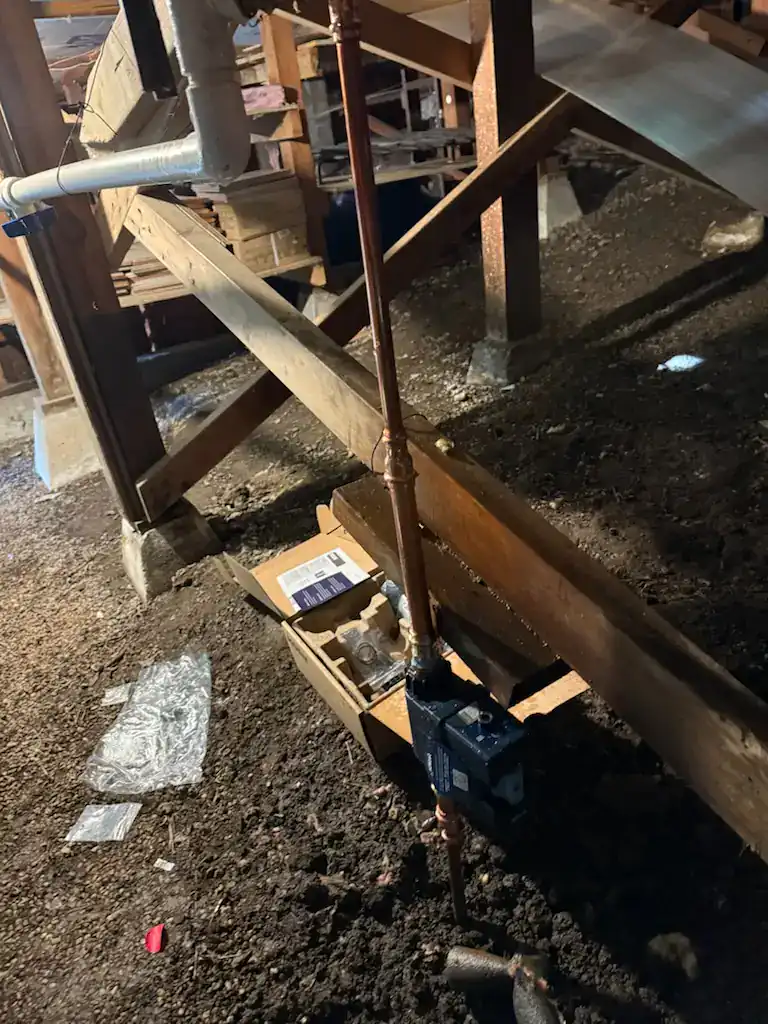
Underground water line leaks are especially common in Locke because the clay-heavy soil around the area expands in winter and contracts in the dry summer heat a cycle that stresses buried pipes year after year. Combined with the high water table adjacent to the Sacramento River, a failing underground line here can go undetected far longer than it would in a drier environment. Pressure testing and acoustic equipment let us find the break without excavating blindly.
For in-wall and under-floor leaks in Locke’s historic structures, the diagnostic step is non-negotiable. Thermal imaging identifies temperature differentials caused by moisture behind surfaces, so we know exactly where to open before anything is cut. Toilet leaks, supply line failures, and fixture leaks are handled the same day in most cases. Whatever the source, the repair is built to hold up not patched to buy time. Locke’s buildings have lasted over a century. The plumbing work done on them should be held to the same standard.
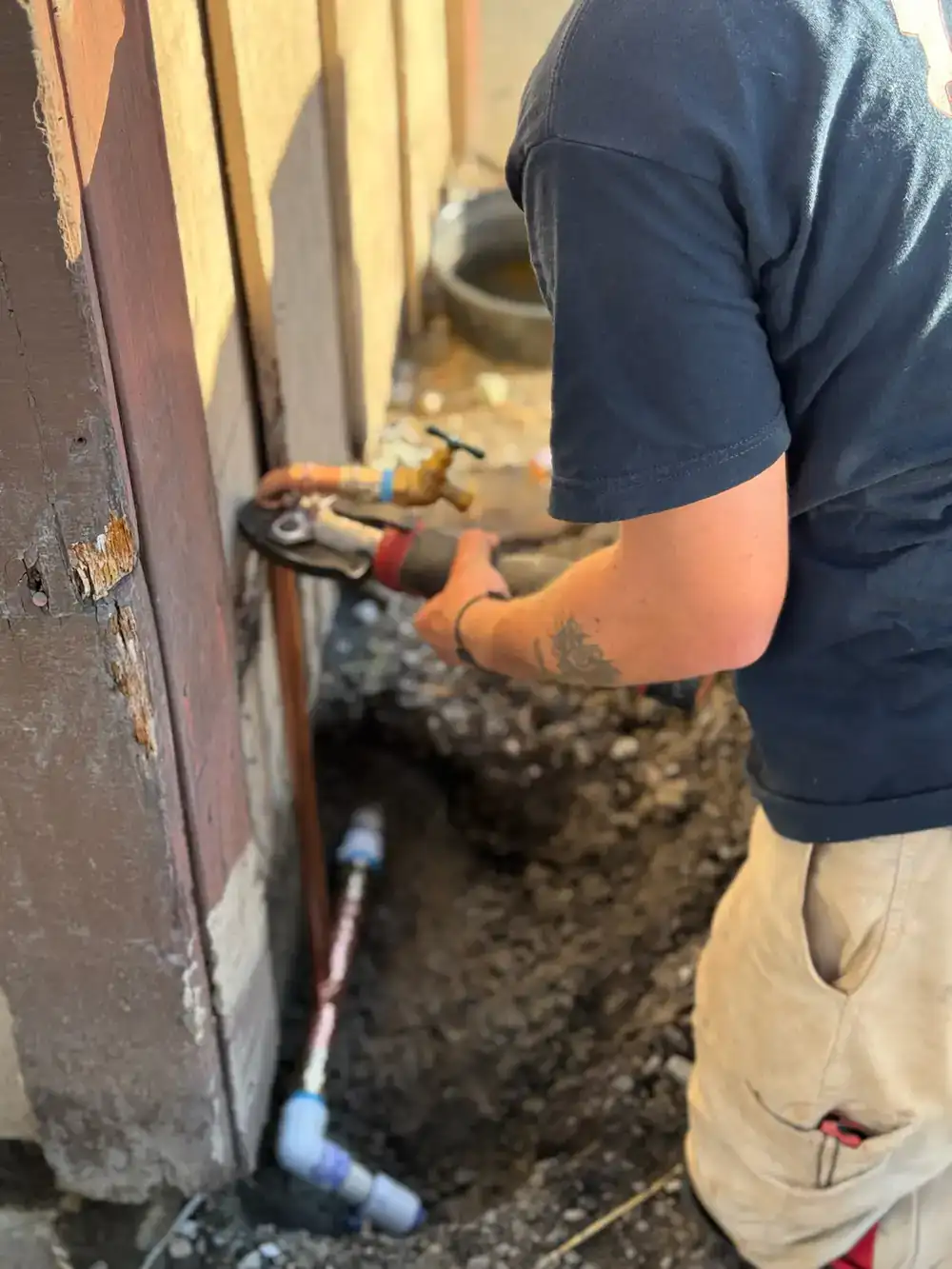
The most common signs are a water bill that’s higher than usual without a clear explanation, the sound of running water when everything in the house is off, soft or discolored spots on floors or walls, and a faint musty smell that doesn’t go away. In Locke’s older wood-frame structures, that musty smell is worth taking seriously it can indicate moisture that’s been sitting in the framing for longer than you’d think.
The challenge in the Delta is that the ground around your home is already moist much of the year. An underground line leak won’t necessarily show up as a soggy patch in the yard the way it might in a drier area. If your bill has crept up and you can’t explain why, that’s often the first real signal. A pressure test on your water line can confirm whether you’re losing water underground before any digging happens.
The buildings in Locke were constructed primarily between 1912 and 1922, which means the original plumbing if it hasn’t been updated is well past its expected lifespan. Cast iron pipes typically last 80 to 100 years. Galvanized steel runs 40 to 70 years. Both of those windows have closed for Locke’s oldest structures. What you get at that age is internal corrosion, scale buildup that eventually breaks through the pipe wall, and joint failures where fittings have been under stress for decades.
The Delta environment accelerates the problem underground. The clay soil around Locke expands when it’s wet and contracts when it dries out a cycle that happens every year and puts lateral stress on buried pipes. Over time, that movement creates micro-fractures that widen into real leaks. If your home hasn’t been repiped and you’re dealing with recurring issues, the age of the system is likely the root cause, not just bad luck.
For minor repairs replacing a section of pipe, fixing a toilet, swapping a fixture a permit is generally not required. But for work that involves repiping, rerouting lines, or any significant alteration to the plumbing system, Sacramento County requires a permit under the California Plumbing Code. As a licensed California C-36 plumbing contractor, we handle the permit process when it applies, so you’re not left figuring that out on your own.
For properties within Locke’s National Historic Landmark District, there’s an additional layer to consider. Work that affects the structural or exterior fabric of a historic building may require coordination with the California State Historic Preservation Office. That’s not a reason to avoid the repair it’s a reason to work with a licensed contractor who understands what those requirements mean in practice and can approach the job with the care these buildings deserve.
We offer 24/7 emergency service, and when you call, you reach a real person who can assess the situation immediately. Locke is approximately 30 miles south of Sacramento via State Route 160, and same-day response is standard for genuine emergencies, the goal is to get there as quickly as road conditions allow. You won’t be waiting through a callback queue or trying to reach someone through an answering service at 2 in the morning.
The reason response time matters so much in Locke specifically is the building stock. A water leak in a 100-year-old wood-frame structure on Delta soil is not a problem that gets better with time. Mold can begin growing within 24 to 48 hours of water exposure. In wood framing that’s already absorbed a century of Delta humidity, moisture damage can move fast once a leak gets going. Calling early even if you’re not certain it’s a leak is always the right call.
The cost depends on where the leak is, how accessible it is, and how much repair work is involved. A straightforward toilet or supply line repair is typically on the lower end. An underground water line leak that requires locating the break, excavating, and repairing the line will run higher. The range across common residential water leak repairs generally falls somewhere between a few hundred dollars for simple fixes and $1,500 or more for underground line work, depending on depth and access.
What we commit to is telling you the exact cost before any work begins. There’s no hourly billing that climbs while you’re not watching, and no surprise total when the job is done. For Locke residents who are already managing the costs of maintaining older homes in a geographically remote area, that transparency matters. You know what you’re agreeing to before a wrench is picked up.
In most cases, yes and that’s exactly why the diagnostic step matters so much in Locke. Using acoustic leak detection and thermal imaging, we can identify the precise location of a leak behind a wall or under a floor before anything is opened. That means the area of disturbance is as small as possible, targeted to where the problem actually is rather than a broad section of the surface.
Locke’s buildings are part of a National Historic Landmark District, and the materials inside them original wood framing, historic finishes, century-old construction details can’t simply be replaced with modern equivalents. The goal is always to find the leak first and limit the repair footprint to what’s necessary. That approach protects the structural and historic character of your home while still getting the problem fully resolved. It’s not about working around the building it’s about working with it.