
Hear from Our Customers
A water leak doesn’t announce itself. It hides behind drywall, works its way under a slab, or quietly runs through an underground line somewhere between your meter and your front door. By the time you notice the stain on the ceiling or the spike in your water bill, the damage has already been building for weeks sometimes months.
That’s especially true in Loomis, where a lot of homes sit on larger parcels with underground water lines that run significantly farther than in a standard subdivision. More pipe in the ground means more exposure to soil movement, root intrusion from those mature oaks, and seasonal ground shifts that can open up a joint over time. The foothill clay soils here swell in winter and contract in the dry summer months and that cycle puts real stress on underground plumbing year after year.
Once the leak is found and repaired, you get back to normal. Your water bill drops. The moisture stops feeding mold growth behind your walls. You stop wondering whether that soft spot in the floor is something serious. For homeowners in Loomis who’ve invested in their property whether it’s a custom home, a place with acreage, or one of the older houses near the Taylor Road corridor getting a clean, permanent fix matters a lot more than a fast patch that fails again in six months.
We’ve been serving Placer County for over 24 years. Not as a franchise. Not as a call center that dispatches whoever’s available. As a local plumbing operation that built our reputation one job at a time, in communities exactly like Loomis where neighbors talk, word travels fast, and a bad job follows you.
Our reviews reflect that. A 4.7 out of 5 on Google across 93 verified customers, with people consistently naming specific technicians, noting that someone actually showed up on time, and mentioning that the final bill came in at or below the original estimate. That last part is rare in this industry, and it’s not an accident it’s how we operate.
Loomis falls squarely in the Placer County territory we know well. The foothill soil conditions, the mix of older and newer housing stock, the rural property configurations out past Horseshoe Bar Road this isn’t unfamiliar terrain. When you call, you’re not getting someone learning your area on your dime.
When you call us, a real person picks up not a voicemail, not an automated system. You describe what you’re seeing, and from there the process is straightforward. Same-day arrival is our goal, and in most cases it’s our reality. If you’re one of the many Loomis residents who works from home, you won’t have to rearrange your day around a vague four-hour window.
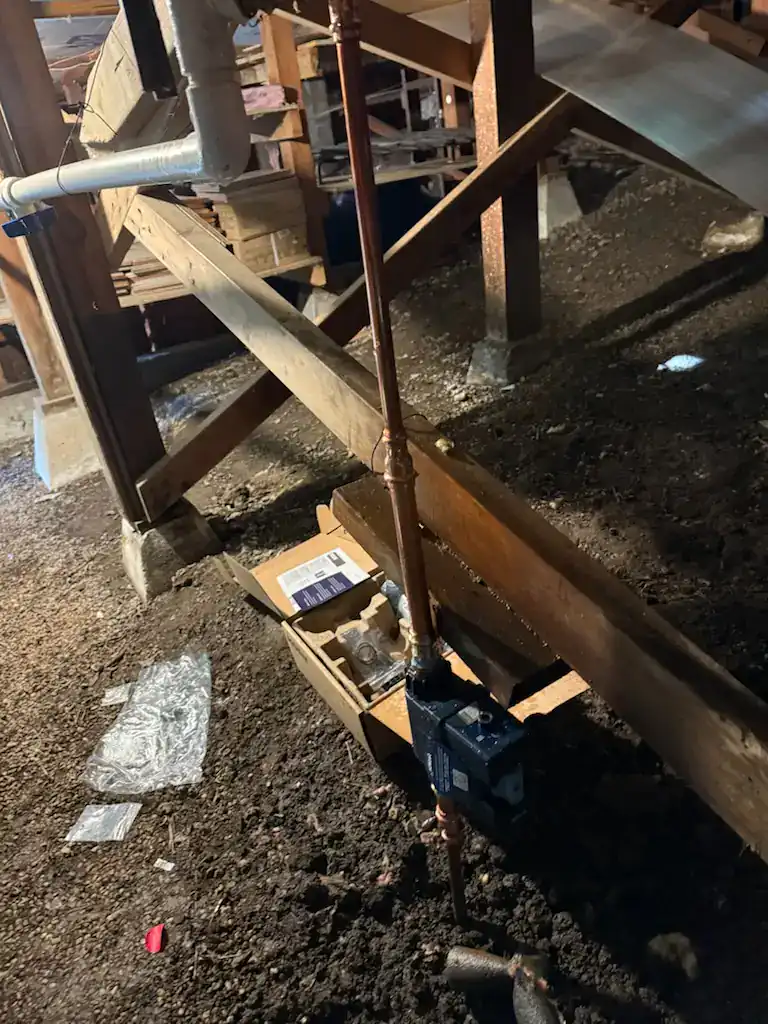
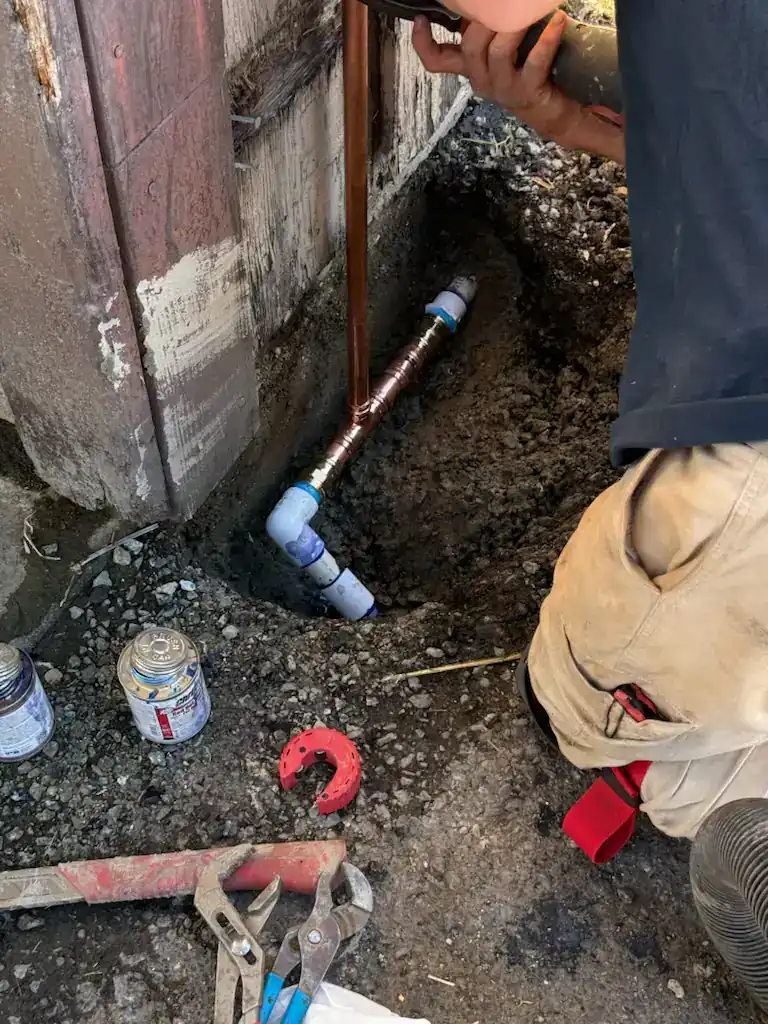
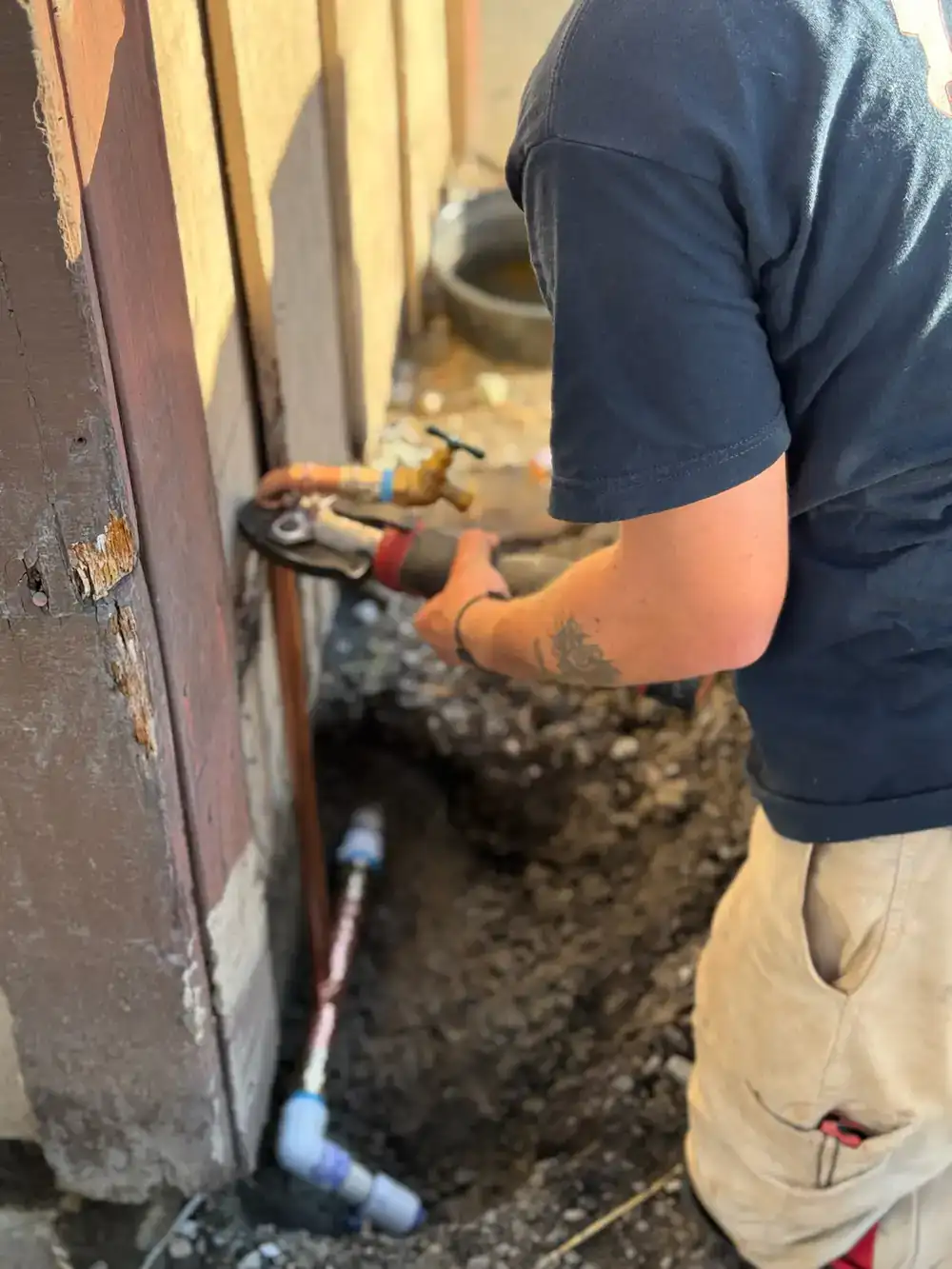
Once on-site, our first priority is finding the actual source of the leak not just treating the visible symptom. For hidden leaks behind walls or under slabs, we use specialized detection equipment to locate the problem without unnecessary demolition. For underground line leaks on larger parcels, that means tracing the line from the meter to your home and identifying exactly where the integrity has failed. In Placer County, any repair work that goes beyond a simple fixture fix requires a permit through the county’s Building Services Division we pull those permits, handle the compliance side, and make sure the work is done to current California Title 24 code standards.
After the repair, you’ll know exactly what was found, what was done, and why. The pricing you agreed to before work started is the pricing you pay and in many cases, customers have walked away paying less than the original estimate. No surprises, no add-ons at the end.
Ready to get started?
Water leak repair in Loomis covers a wider range of scenarios than it does in a typical suburban market. We handle all of it from a running toilet that’s silently wasting hundreds of gallons a month, to a pinhole leak inside a wall of an older home near the High Hand Nursery, to a full underground water line failure on a rural parcel with a 200-foot service run.
Slab leaks are a real concern in the foothill communities. The expansive clay soils common throughout Placer County shift with the seasons, and that movement puts ongoing stress on pipes running beneath concrete foundations. If your floors feel warm in one spot, or you’re hearing water moving when nothing’s turned on, that’s worth taking seriously. Wall leaks in older homes along the Taylor Road corridor often trace back to aging copper joints or galvanized pipe that’s been corroding from the inside out for decades. And for properties near Secret Ravine Creek or anywhere with a mature oak canopy, root intrusion into underground lines is one of the most common causes of slow, hard-to-detect water loss.
If you’re on a well-water system which applies to a number of Loomis properties outside the municipal service area we work on those systems too. No water source is excluded, and no job is too far off the standard suburban script.
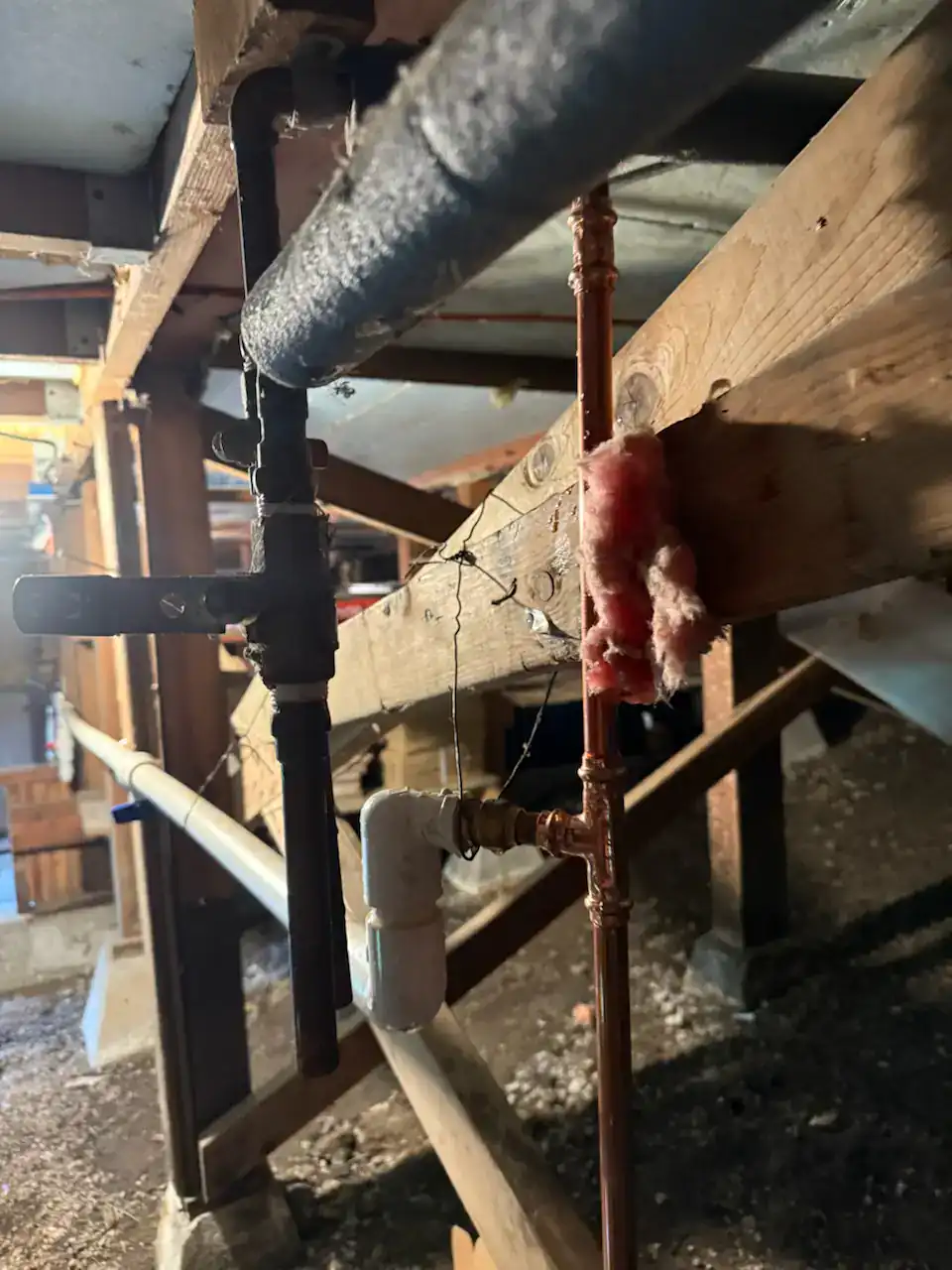
The most common early signs are a water bill that’s higher than usual with no clear explanation, the sound of running water when every tap is off, warm or soft spots on the floor, or a musty smell coming from a wall or crawl space. In Loomis, where nearly one in four residents works from home, people often catch these signs earlier than homeowners who are out of the house all day which is a real advantage, because the sooner a leak is found, the less damage it causes.
If you suspect something but can’t pinpoint it, the fastest way to confirm is to turn off every water fixture in the house and check your meter. If the dial is still moving, water is going somewhere it shouldn’t be. At that point, it’s worth calling for a professional inspection rather than waiting to see if it gets worse. Mold can start developing within 24 to 48 hours of water exposure, and in an older Loomis home with a crawl space or wood subfloor, that timeline matters.
The honest answer is that it depends on where the leak is and what’s involved in reaching it. A straightforward toilet leak or exposed pipe repair is going to be on the lower end. A slab leak or an underground line failure on a larger Loomis parcel where the service run might be 150 to 200 feet is going to involve more labor and potentially more materials, which affects the total cost.
What we commit to is giving you a real number before any work starts. Not a range that balloons once the job is open, but an upfront price you can agree to or walk away from. And based on what customers have reported in verified reviews, the final bill has frequently come in at or below that original estimate. That’s not a common thing in the plumbing trades, and it’s worth factoring in when you’re comparing options. A low quote that doubles by the end of the job is never actually the cheaper choice.
For minor repairs replacing a faucet, swapping out a toilet, fixing an exposed fitting typically no permit is required. But for anything more involved, like replacing a section of underground pipe, rerouting a water line, or repairing a slab leak, Placer County’s Building Services Division requires a permit. This applies to all work done in Loomis, which falls under county jurisdiction for building and plumbing permits.
This matters more than most homeowners realize. Unpermitted plumbing work can create real problems when you go to sell the property and in a market like Loomis where home values are significant, that’s not a risk worth taking. It can also complicate homeowners insurance claims if damage is later tied to work that wasn’t properly permitted. We pull the required permits on every applicable job and ensure the work meets California’s current Title 24 code standards, including updates that took effect January 1, 2026. You don’t have to manage that side of it it’s handled.
Yes, and it happens faster than most people expect. Mold can begin growing within 24 to 48 hours of water exposure in the right conditions and the crawl spaces, wall cavities, and subfloor areas common in Loomis’s older homes near the Taylor Road corridor are exactly the kind of enclosed, low-airflow spaces where mold takes hold quickly once moisture gets in.
The foothill climate in Loomis adds another layer to this. Winter brings cool, damp conditions that slow evaporation, meaning water that gets into a wall or under a floor can sit there much longer than it would in a drier climate. A leak that might air out on its own in a desert environment can quietly feed mold growth for weeks in a Placer County crawl space. The faster a leak is identified and repaired, the smaller the remediation problem you’re left with. That’s one of the main reasons same-day response matters not just for the pipe, but for everything around it.
The most common causes are root intrusion, soil movement, corrosion, and aging pipe material. In Loomis specifically, all four of these are relevant. The mature oak trees throughout the community have aggressive root systems that actively seek out water sources and an underground service line is exactly what those roots are looking for. Over time, roots can infiltrate joint connections or apply enough pressure to crack a pipe.
The expansive clay soils throughout the Placer County foothills also play a significant role. These soils swell when saturated in winter and contract during the dry summer months, creating a seasonal push-and-pull on buried pipes that gradually opens up weak points. On a Loomis property with a long underground service run especially on acreage or an equestrian property where the line might travel several hundred feet there’s simply more pipe exposed to these conditions. Older galvanized or early PVC lines are most vulnerable, but even copper can develop pinhole failures over time in shifting soil. When an underground leak is suspected, the goal is to locate it precisely before digging, which is why we use specialized detection equipment rather than guesswork.
Yes. A number of Loomis properties particularly on the rural and equestrian parcels farther from the municipal water system are served by private wells rather than a public water main. Well-fed systems have their own pressure tanks, pressure switches, and distribution plumbing, and leaks in those systems are entirely the homeowner’s responsibility to find and repair.
One thing that makes well-water leaks particularly tricky is that there’s no municipal meter to flag unusual usage. On a city-connected property, a spike in your water bill is often the first sign something’s wrong. On a well system, that signal doesn’t exist which means leaks can go undetected longer and cause more damage before anyone notices. If you’re on a well in Loomis and you’re seeing unexplained pressure drops, the pump cycling more than usual, or wet spots in your yard with no clear source, those are the warning signs to act on. We’re familiar with the range of plumbing configurations on Loomis’s rural properties and can diagnose and repair well-system leaks with the same process used for municipal-connected homes.