
Hear from Our Customers
A slow leak in a 1958 ranch house doesn’t announce itself. It shows up as a soft spot in the floor, a water bill that jumped $40 for no reason, or a faint musty smell you’ve been ignoring for two weeks. By the time it’s visible, it’s already been working against you for a while.
That’s the reality for a lot of homes in South Land Park. The neighborhood’s housing stock is predominantly from the 1940s through the 1960s, which means galvanized iron pipes that are well past their expected lifespan and early copper systems that Sacramento’s mineral-rich water supply has been slowly corroding from the inside out. These aren’t hypothetical risks they’re the most common reasons homeowners in South Land Park end up with water damage they didn’t see coming.
Getting ahead of it means less structural damage, lower repair costs, and no emergency on a Sunday night. A proper leak detection and repair visit finds the source not just the symptom and fixes it in a way that holds. Your water bill goes back to normal. The soft spot firms up. And you stop wondering what’s happening inside your walls.
We’ve been serving Sacramento County homes for over 24 years. That’s not a marketing number it means we’ve worked in homes just like yours, in neighborhoods like South Land Park, the Pocket, Greenhaven, and Little Pocket, long enough to know exactly what aging Sacramento plumbing looks like and how to fix it right.
Our Google rating is 4.7 out of 5 based on 93 real reviews. Customers consistently mention on-time arrivals, honest communication, and something that doesn’t happen often enough in this industry: final invoices that came in at or below the original estimate. We give you the number before we start, and we stick to it.
We’re licensed, insured, and bonded holding the California C-36 Plumbing Contractor license required for any plumbing work in this state. When you call us, you’re getting a local team that knows South Land Park’s housing stock, understands the permit process, and isn’t going to disappear after the job is done.
When you call us, you reach a real person not a call center, not a voicemail. We’ll ask you a few quick questions about what you’re seeing, and if it’s urgent, we move fast. South Land Park sits right off I-5 and Freeport Boulevard, so we can reach most addresses in the area quickly, often the same day.
Once we’re on-site, we start with a thorough diagnostic before anything else. For homes in South Land Park, that usually means checking for the issues most common to mid-century Sacramento construction galvanized pipe corrosion, pinhole leaks in copper lines, deteriorated joints under slabs, and underground service line failures in older residential lots. If you’re in one of the Eichler homes along South Land Park Drive, we pay specific attention to the radiant floor heating system, since those pipes are embedded in the concrete slab and require a different approach to locate and access.
After we’ve identified the source, we walk you through exactly what needs to be done and give you the cost upfront before any repair work begins. No surprises, no scope creep added after the fact. For projects that require a City of Sacramento permit, we handle that process. The work gets done, we clean up, and you get a repair that’s built to last not one that sends you back to Google in six months.
Ready to get started?
Water leaks in South Land Park homes don’t all look the same, and they don’t all come from the same place. We handle the full range from a running toilet quietly wasting 90 gallons a day to an underground water line that’s been saturating your yard for weeks without breaking the surface.
For homes in the 95822 and 95831 ZIP codes, the most common issues we see are galvanized pipe failures in homes built before 1970, pinhole copper leaks caused by Sacramento’s soil chemistry and mineral content, slab leaks particularly in the Eichler-era homes in South Land Park Hills where radiant heating pipes run through the concrete foundation and cracked or deteriorated service lines connecting the home to the City of Sacramento water meter. It’s worth knowing that the city is only responsible for the water main up to your meter. Everything from that connection point to your home is your repair to make, and that’s where we come in.
We also handle wall leaks, fixture leaks, toilet and supply line failures, and water line repairs throughout the home. If your City of Sacramento water bill has spiked and you can’t explain why, that’s often the first sign something is leaking somewhere it shouldn’t be. We find it, we fix it, and we give you the documentation you need if an insurance claim is involved.
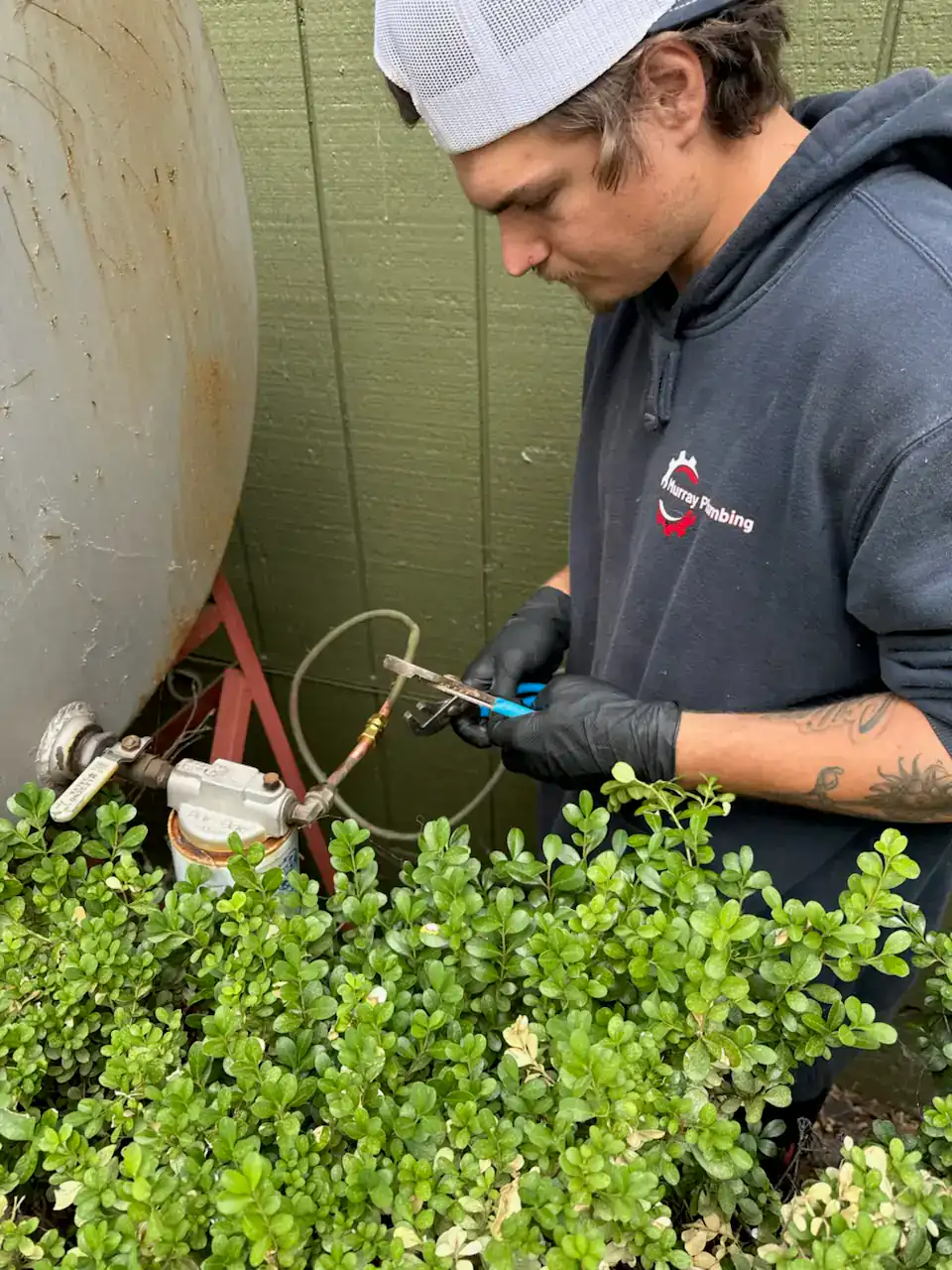
The most reliable early sign is an unexplained increase in your City of Sacramento water bill if your usage habits haven’t changed but the bill jumped, something is likely leaking somewhere between your meter and your fixtures. Other signs include soft or discolored patches in the yard, warm spots on a concrete floor, reduced water pressure throughout the house, or a faint musty smell near walls or under cabinets.
In South Land Park specifically, the age of the housing stock makes hidden leaks more common than in newer neighborhoods. Homes built in the 1950s and 60s are running on plumbing systems that were never designed to last this long. Galvanized pipes corrode from the inside out narrowing over time and eventually failing while older copper lines develop pinhole leaks that can saturate a wall or subfloor for months before any visible damage appears. If something feels off, it’s worth having it checked before the damage makes the decision for you.
The two most common culprits in pre-1970 Sacramento homes are galvanized iron pipes and early copper plumbing, and both fail for different reasons. Galvanized pipes corrode from the inside a process called tuberculation, where mineral buildup from Sacramento’s water supply slowly narrows the pipe until it restricts flow and eventually cracks or separates at the joints. By the time you notice reduced pressure or a leak, the pipe has usually been deteriorating for years.
Copper pipes from the same era face a different problem. Sacramento’s soil chemistry particularly in areas with clay-heavy ground like parts of South Land Park creates conditions for pitted corrosion on the outside of buried copper lines. This produces pinhole leaks that are small enough to go undetected for a long time but significant enough to cause real structural damage over months. Both issues are common in this neighborhood, and both require proper diagnosis before any repair approach is chosen.
A slab leak is a leak in a water line that runs beneath or through a concrete foundation. They’re harder to detect than above-ground leaks because there’s no visible pipe to inspect the signs are usually warm spots on the floor, the sound of running water when everything is off, or a water bill that keeps climbing without explanation.
Eichler homes in South Land Park Hills are at a genuinely elevated risk for this type of leak. These homes built in 1955 and 1956 along South Land Park Drive, Fordham Way, and Oakridge Way used radiant floor heating systems, which route hot water through pipes embedded directly in the concrete slab. Those pipes are now approaching 70 years old. When they develop leaks, the repair process is more involved than a standard plumbing fix because the pipe is encased in concrete. Detection requires specialized equipment, and the repair approach depends on where the leak is located and the condition of the surrounding slab. If you own one of these homes, it’s worth having a plumber who understands this specific construction type not one who’s figuring it out on your dime.
This is one of the most common questions we hear, and the answer is straightforward once you know where the line is. The City of Sacramento is responsible for the water main and the infrastructure up to your meter, meter setter, or curb stop. Everything from that connection point into your home including the service line running through your yard, the pipes inside your walls, and all fixtures is your responsibility as the homeowner.
That distinction matters because a lot of South Land Park residents see a wet patch in the yard or get a high water bill and assume the city will handle it. In most cases, they won’t. If the leak is on your side of the meter, you need a licensed plumber. The city’s Department of Utilities main office is actually located at 1395 35th Avenue right in the South Land Park ZIP code so if you’re unsure which side of the meter your issue falls on, you can contact them directly. But if it’s on your property, that’s where we come in.
Cost depends on what type of leak you’re dealing with and where it’s located. A straightforward fixture leak or supply line repair is typically on the lower end often a few hundred dollars. Underground water line repairs or slab leak repairs are more involved and can range from $1,500 to $4,000 or more depending on the depth, access, and extent of the damage. Full repiping of an older South Land Park home which may be the right call if galvanized pipes have reached the end of their useful life typically runs between $4,000 and $10,000 depending on the size of the home and the scope of the work.
What matters most is getting an accurate diagnosis before any number is put on the table. We give you the full cost upfront before any work begins so you’re not guessing or getting hit with additions after the fact. And based on real customer feedback, our final invoices have frequently come in at or below the original estimate. That’s not a standard outcome in this industry, but it’s a consistent pattern in our reviews.
Yes 24/7, including nights and weekends. When you call, you reach a real person who can dispatch a technician, not a recorded message or a third-party answering service routing your call through a queue. For South Land Park residents, that matters because an active leak in a 1950s or 60s home doesn’t wait for a business-hours callback. The older the plumbing, the faster a small leak can become a serious one.
South Land Park is easily accessible via I-5 and Freeport Boulevard, which means we can reach most addresses in the neighborhood quickly often within hours of your call. Sacramento’s wet season runs November through March, and that’s typically when we see the highest volume of emergency calls in older residential neighborhoods like South Land Park. Saturated soil puts pressure on aging underground lines, and what was a slow drip in October can become an active failure by December. If something is happening right now, call us don’t wait to see if it gets better on its own.