
Hear from Our Customers
You’ll have a plumbing system you can actually insure. One that won’t leak behind your walls or burst open while you’re out of town.
The orange and blue pipes are gone. Replaced with copper or PEX that’s built to last decades, not years. Your drywall’s patched, painted, and back to normal.
And if you’re selling, you can disclose the problem—and the professional solution. That changes the conversation entirely. Buyers see a home that’s been maintained, not a liability they’re inheriting.
Most importantly, you’re done worrying about it. No more wondering when it’s going to fail. No more calls with your insurance agent. Just a system that works.
We’ve been handling residential plumbing in Northern California for over 24 years. We’ve replaced Kitec systems in more than 150 homes—so we know what we’re walking into before we even open the wall.
Dutch Flat homes were mostly built in the ’60s and ’70s, but plenty got updated in the ’90s and early 2000s when Kitec was still considered acceptable. If your home was repiped or remodeled during that window, there’s a good chance it’s in there.
We’re a small, family-owned company. That means lower overhead and no pressure to upsell you on things you don’t need. You’ll get a straight answer about what needs to happen, what it’ll cost, and how long it’ll take.
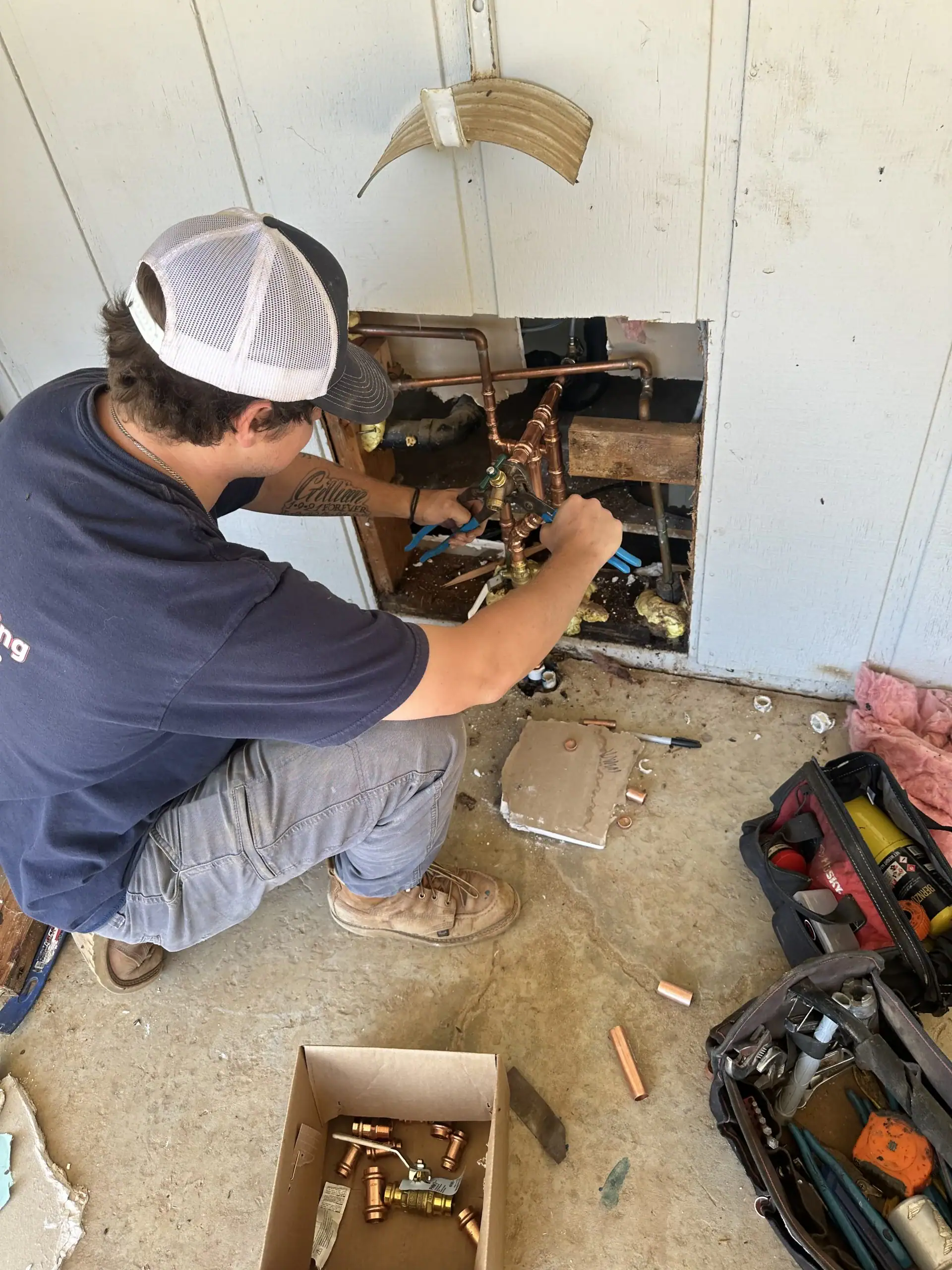
We start with a full inspection. That means checking every line—hot and cold water, not just the visible stuff. Kitec was used for both, and both need to go.
Once we know the scope, we give you a detailed quote. No surprises. You’ll know what’s getting replaced, what materials we’re using, and what the timeline looks like.
Then we pull the old pipes and install the new system. Depending on your home’s layout and how much Kitec is in there, this usually takes a few days. We’ll cut into drywall where we need to, but we keep it minimal.
After the plumbing’s done, we handle the drywall repair and painting. You’re not left coordinating three different contractors. We take it all the way through so you’re not staring at holes in your walls for weeks.
Ready to get started?
You’re getting complete removal of all Kitec piping—supply lines, fittings, manifolds, everything. We replace it with either copper or PEX, depending on your home’s setup and your preference. Both are code-compliant and built to last 50-plus years.
We also handle all the finish work. Drywall gets patched, textured to match, and painted. You shouldn’t be able to tell we were there once it’s done.
In Dutch Flat, where many homes sit on larger parcels with well water or older municipal connections, we make sure the new system integrates cleanly with your existing setup. If there are pressure issues or outdated shutoff valves, we’ll flag those too—but we won’t push you into extra work you didn’t ask for.
You’ll also get documentation of the work. That’s important if you’re selling or dealing with insurance. It shows the problem was identified and corrected by a licensed contractor.
Look for orange or blue plastic pipes, usually in your water heater closet, under sinks, or in the crawlspace. The pipes are often labeled with “Kitec” or “KTC,” but not always.
The fittings are brass and tend to tarnish or corrode faster than the pipe itself. If you see discoloration or small leaks around joints, that’s a red flag.
Kitec was most commonly installed between 1995 and 2007 during remodels or whole-house repipes. If your home was updated during that time, it’s worth having someone take a look. We do free inspections and can tell you in about 20 minutes whether you’ve got it.
Most full replacements run between $5,000 and $15,000, depending on the size of your home and how much Kitec is in the system. A 1,200-square-foot home with a straightforward layout will cost less than a 2,500-square-foot place with multiple bathrooms and complex routing.
We include drywall repair and painting in that number. Some companies quote the plumbing and leave you to figure out the rest—we don’t.
You’ll get a written estimate before any work starts. And in a lot of cases, the final bill comes in under the original quote because we find ways to work more efficiently once we’re in there. We’re not interested in dragging things out.
For most homes, the plumbing work takes two to four days. Drywall and paint add another day or two, depending on how many access points we needed.
You’ll have water shut off during active work hours, but we’ll get you back up and running each evening if possible. We’re not leaving you without water overnight unless there’s no other option.
If you’re on a tight timeline—say, you’ve got a closing date or an insurance deadline—we’ll work with you. We’ve done same-day emergency calls when a Kitec line bursts, and we’ve scheduled full replacements around people’s work travel. Just let us know what you’re dealing with.
Probably not. Most insurance companies won’t pay to replace Kitec unless it’s already failed and caused damage. Even then, they’ll cover the damage—not the cost of replacing the rest of the system.
What insurance will do is drop you or refuse to renew your policy if they find out you have Kitec and haven’t replaced it. Some companies give you 60 days to get it done. Others just cancel.
If you’re buying a home with Kitec, your lender might require it to be replaced before they’ll approve the loan. That’s becoming more common, especially in California where insurers are already pulling back on coverage.
The class action settlement against the Kitec manufacturers is mostly wrapped up. The deadline to file was January 2020, and the payout was a fraction of replacement costs anyway. You’re better off just getting it done.
You could, but it won’t solve the problem. The fittings fail first, but the pipe itself degrades too. Replacing just the fittings buys you a little time—maybe a year or two—but you’ll be back in the same spot soon enough.
Insurance companies and home inspectors know this. If you’re trying to sell or maintain coverage, a partial fix won’t satisfy them. They want the entire system out.
And from a cost perspective, it doesn’t make sense. You’re paying for labor to open walls, access the lines, and do the finish work. If you’re going to do that, you might as well replace everything and be done with it. Otherwise you’re just paying twice.
You’re looking at serious water damage. Kitec doesn’t just drip—it splits open. That means gallons of water flooding into your walls, ceilings, or floors before you even know there’s a problem.
If it happens while you’re home, shut off your main water line immediately and call us. We offer 24/7 emergency service and can usually get someone out the same day.
If it happens while you’re gone, the damage gets exponentially worse. We’ve seen cases where homeowners came back from a weekend trip to find inches of standing water and destroyed drywall. Your insurance might cover the water damage, but they’re not going to be happy—and they’ll likely require full Kitec replacement before they’ll continue covering you. Better to replace it on your timeline than theirs.
Other Services we provide in Dutch Flat