

Hear from Our Customers
The American River runs right along the northern edge of College/Glen, and the alluvial soils beneath this neighborhood are exactly the kind that shift and settle during seismic events. You don’t need a major local earthquake for that to become a problem ground motion from Bay Area fault systems has been felt in Sacramento before, and saturated soil along a river corridor responds to it differently than solid ground. A seismic shut-off valve is what stops your gas supply automatically when that movement hits a threshold. No one has to be home. No one has to make a call. It just works.
For homeowners in College/Glen, this matters more than it might in a newer Sacramento suburb. The homes here were built in the 1940s, 50s, and 60s long before seismic codes existed, and with gas infrastructure that’s been in the ground for decades. Older black iron pipe, aging connections, appliances that have been running on the same lines for generations. When a seismic event stresses that system, the valve is the one thing standing between a minor disruption and a gas leak that turns into something far worse.
There’s also the practical side. If you’re in the middle of selling your home and College/Glen homes are moving fast right now, often pending within a week a home inspector flagging the absence of a seismic valve can stall or kill an escrow. A permitted, documented installation removes that flag entirely. And for homeowners who aren’t selling, it’s the kind of safety upgrade that your insurance company increasingly wants to see on record.
We founded Murray Plumbing in 2009, and we’ve operated under California C-36 Plumbing Contractor License #916322 since the beginning. That’s the specific license classification California requires for gas line and seismic valve work not a general contractor registration, not a handyman permit. You can verify it in about 30 seconds at cslb.ca.gov, and we expect you to.
Ryan has been doing this work in Sacramento neighborhoods for over 15 years. College/Glen, Campus Commons, River Park, Tahoe Park he knows the housing stock, the City of Sacramento permit process, and what aging gas infrastructure in a mid-century home typically looks like when you open it up. That context matters when someone is working on your gas line.
Our 4.7-star rating across 93 Google reviews didn’t come from a marketing campaign. It came from jobs that showed up on time, cost what we said they would, and left homeowners with documentation they could actually use.
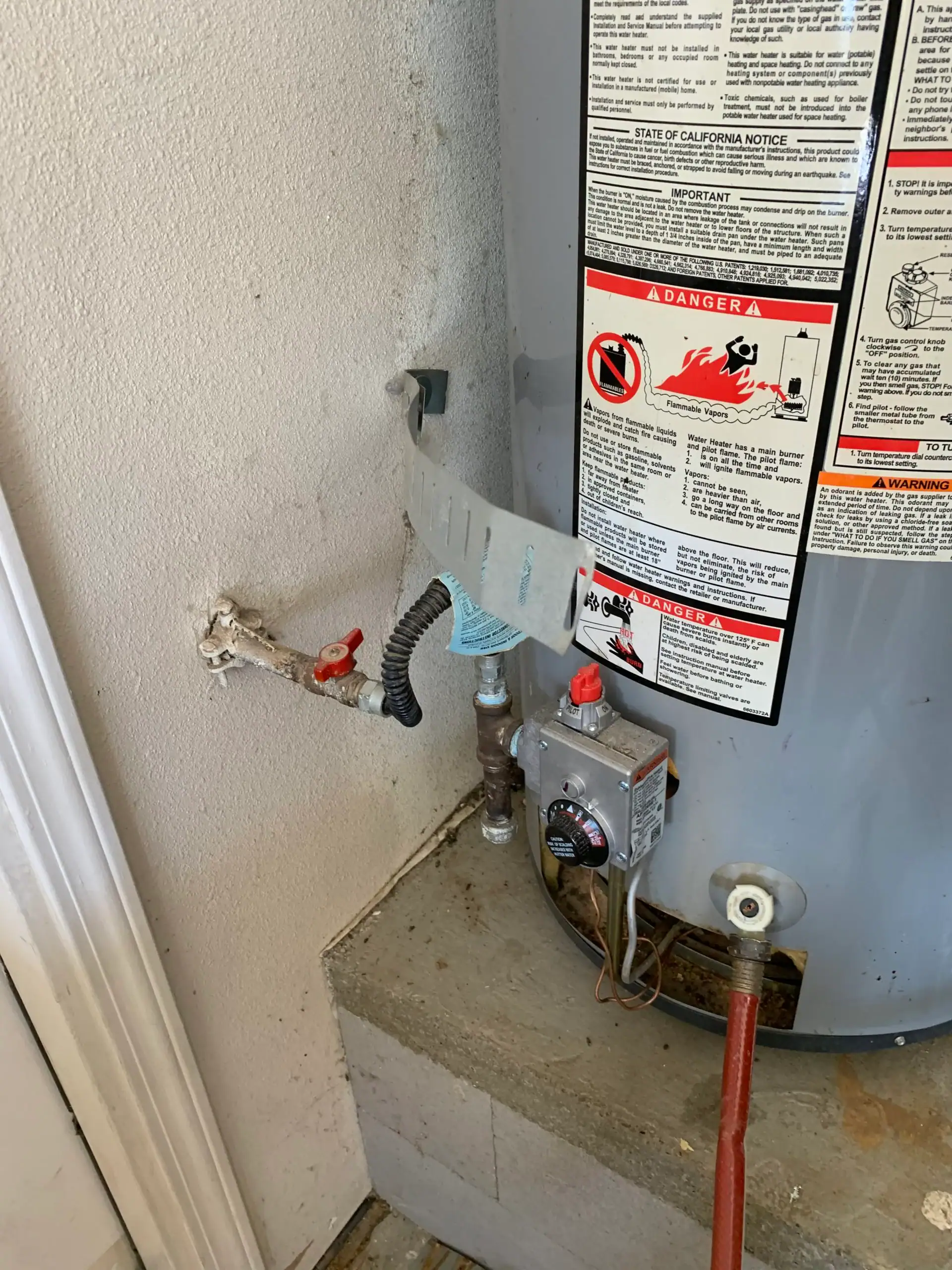
It starts with a free assessment. Before any work is scheduled, a licensed plumber reviews your meter configuration, checks the gas line setup, and confirms the right valve size and placement for your specific home. For College/Glen’s older housing stock many homes built in the 1940s and 50s that assessment sometimes turns up aging connections or configurations worth noting. You’ll know about anything relevant before the job begins, and you’ll get an exact price. No range, no estimate that inflates at the invoice.
Once the scope is confirmed, we pull a building permit through the City of Sacramento Building Division before any work starts. This is required by California Plumbing Code for seismic valve installations, and it’s non-negotiable not because of bureaucracy, but because an unpermitted installation has no value in a real estate transaction and won’t satisfy insurance documentation requirements. The valve we install is DSA-certified, meaning it has been tested and approved under California’s Division of the State Architect standards the only type that passes a City of Sacramento inspection.
The installation itself typically takes a few hours. After the valve is set, a City of Sacramento inspector signs off, and you receive written documentation of the installation: valve brand, model, permit number, and installation date. That paperwork is what your insurance company, real estate agent, or future buyer will ask for. We make sure you have it before we leave.
Ready to get started?
We price our earthquake valve installations at $400–$650 for most residential jobs in College/Glen all-in, covering the DSA-certified valve, labor, and permit fees. That range exists because meter configurations vary, especially in homes built across several different decades. The free pre-installation assessment is what locks in your exact number before anything is scheduled. Our customers have consistently noted that their final invoice came in at or below the original estimate. That’s not a tagline it’s just what happens when pricing is done honestly upfront.
Every installation includes the DSA-certified seismic shut-off valve, the City of Sacramento building permit, a scheduled final inspection, and written documentation of the completed work. The valve is the specific type required to pass inspection and satisfy insurance and real estate disclosure requirements not a hardware store alternative that looks similar but won’t hold up to scrutiny.
For homes in College/Glen near the American River corridor, where the May 2025 California Geological Survey seismic hazard maps have now formally activated liquefaction zone review for Sacramento, having a permitted and documented installation on record carries real weight. PG&E does not install these valves that’s a question that comes up often, and the answer is always the same. This is licensed plumber work, and it requires a C-36. We hold that license and serve College/Glen directly.
Yes and this is one of the most important details to understand before hiring anyone for this job. The City of Sacramento Building Division requires a building permit for seismic shut-off valve installation on any residential property within city limits, which includes College/Glen. That permit triggers a final inspection by the city, and the inspection is what creates the official record of the installation.
Why does that record matter? Because if you ever sell your home, your real estate agent is required to disclose safety upgrades, and buyers and their agents will ask for documentation. An unpermitted installation even a technically correct one has no verifiable value in that transaction. Same goes for insurance: if your carrier is asking for proof of a seismic valve, a permit record is what satisfies that request. We pull the permit, schedule the inspection, and hand you the completed paperwork before the job is considered done.
For most single-family homes in College/Glen and the surrounding Sacramento area, the all-in cost runs between $400 and $650. That range covers the DSA-certified valve itself, labor, and permit fees there are no separate line items added at the end. The variation within that range comes down to your specific meter configuration and whether any additional work is needed at the gas line connection point.
The free pre-installation assessment is what eliminates the ambiguity. A licensed plumber reviews your setup, confirms the right valve and placement, and gives you a fixed price before anything is scheduled. Homeowners in College/Glen who’ve gone through this process with us have noted that their final invoice matched or came in under the original number. For a neighborhood where median home values are sitting around $559,000 and transactions move quickly, knowing your exact cost upfront rather than finding out at the invoice stage makes the whole process a lot less stressful.
DSA stands for California Division of the State Architect. A DSA-certified seismic valve has been independently tested and approved to California’s specific standards for trigger sensitivity, reset reliability, and durability. It’s not a marketing designation it’s the technical standard that the City of Sacramento requires for a seismic valve installation to pass permit inspection.
Here’s why this matters practically: you can buy valves online or at a home improvement store that look nearly identical to a DSA-certified unit. Some of them are significantly cheaper. But they will not pass a City of Sacramento inspection, will not satisfy insurance documentation requirements, and may not function correctly in an actual seismic event. For homeowners in College/Glen where the 2025 California Geological Survey seismic hazard maps have now formally identified Sacramento as a region requiring active liquefaction zone review installing a valve that doesn’t meet the standard is essentially the same as not installing one at all. We install only DSA-certified valves on every job, no exceptions.
A properly installed, DSA-certified seismic valve is designed to trigger only when ground motion reaches a specific threshold typically around 0.2g of seismic acceleration, which corresponds to a meaningful earthquake, not everyday vibrations. Normal foot traffic, nearby construction, heavy vehicles on Folsom Boulevard or the Highway 50 corridor, and similar everyday disturbances will not set it off.
That said, valve placement and installation quality do matter. A valve that’s poorly mounted or installed on a section of pipe that vibrates abnormally under normal conditions can cause nuisance trips. This is one of the reasons the pre-installation assessment exists to identify the right mounting location and confirm that the valve is positioned where it will respond to what it’s supposed to respond to, and nothing else. If your valve does trip after a felt seismic event in the Sacramento area, the correct protocol is not to reset it yourself. Call a licensed plumber first to inspect your gas lines for damage before restoring service.
It can, and it’s worth knowing upfront. Homes built in the 1940s and 1950s which make up a significant portion of College/Glen’s housing stock were constructed before modern seismic codes and often have gas infrastructure that’s been in place for 50 to 70 years. That typically means older black iron piping, connections that may have some corrosion, and meter configurations that don’t always match what you’d find in a newer home.
None of that prevents a seismic valve from being installed, but it does mean the pre-installation assessment is especially important for older College/Glen homes. A licensed plumber needs to look at what’s actually there before recommending a valve size and placement. In some cases, a broader gas line inspection is worth doing at the same time not as an upsell, but because it’s the right thing to know when you’re adding a safety device to an aging system. We’ll tell you what we find and let you decide what to do with that information. No pressure, no manufactured urgency.
No this is one of the most common misconceptions homeowners run into when they start looking into this. PG&E handles gas delivery, emergency response, and leak repairs. They do not install seismic shut-off valves on residential gas lines, and their website is clear about this. The installation requires a licensed C-36 Plumbing Contractor, which is the specific California license classification for gas line work.
For College/Glen homeowners who assumed they could call PG&E and get this handled, the practical path forward is straightforward: contact a C-36 licensed plumber, schedule a free assessment, and get the installation permitted through the City of Sacramento Building Division. We hold C-36 License #916322 verifiable at cslb.ca.gov and serve College/Glen directly. Most jobs are scheduled within days, and same-day availability exists for urgent situations like an active escrow or a post-earthquake follow-up. One call handles the assessment, the permit, the installation, and the documentation.
Other Services we provide in College/Glen