
Hear from Our Customers
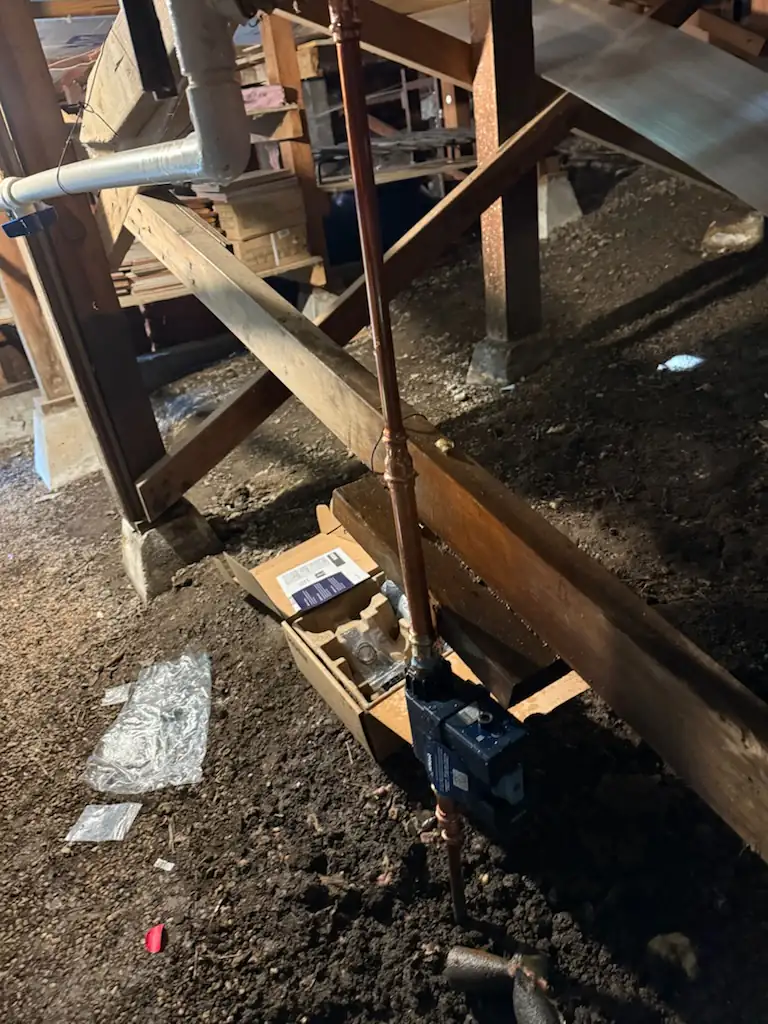
College/Glen sits on some of Sacramento’s oldest residential housing stock. When a home has been standing since the Johnson administration, the copper and galvanized pipes inside it have been working just as long. You’re not dealing with a hypothetical risk you’re dealing with infrastructure that is statistically overdue. A whole house leak detection system installed on your main supply line means the moment flow patterns shift or moisture appears where it shouldn’t, you know about it. Not in three months when the drywall starts to bubble. Right now, on your phone.
That matters especially in a neighborhood where Highway 50 runs straight through the middle of it. A lot of College/Glen residents are commuters Sacramento State faculty, state workers heading downtown, healthcare professionals. When you’re on the light rail or sitting in traffic on the 50, your house is unoccupied. If a supply line gives out while you’re gone, an automatic shutoff system stops the water before it ruins the floor, the subfloor, and everything underneath it.
For the landlords in the neighborhood and with 55% of College/Glen residents renting, there are quite a few remote monitoring through a smartphone app means you don’t have to rely on a tenant to notice and report a slow leak. It’s just reality. A smart leak detection system installation gives you eyes on the property whether you’re on-site or not.
We’ve been serving Sacramento County since 2009, founded by Ryan Murray after years working as a construction superintendent. That background matters here College/Glen’s homes weren’t built the way newer developments in Folsom or El Dorado Hills were built, and the plumbing reflects that. Knowing how a 1960s Sacramento home was constructed, where the vulnerabilities typically are, and what to look for before cutting into a supply line is the kind of knowledge that only comes from years of hands-on regional work.
We hold California Contractor’s License #916322 a C-36 Plumbing Contractor classification you can verify yourself at CSLB.ca.gov before you ever pick up the phone. Our Google rating sits at 4.7 out of 5 across 93 reviews, and the feedback that shows up consistently is the same: we showed up on time, the price was what we said it would be, and the work was done right. Sacramento County is one of our three primary service areas, and College/Glen is squarely in that territory.
It starts with a call. No estimate fees, no obligation you describe what you’re working with, and we give you a straight answer on what’s involved and what it costs. For most College/Glen homes, that means assessing the age and condition of the main supply line, which in a 1960s or 1970s build could be galvanized steel, copper, or in some cases polybutylene each of which has its own considerations before any installation begins.
Once the assessment is done and the scope is confirmed, the Flo Smart Water Monitor gets installed directly on your main cold water supply line. This is where the licensed contractor requirement becomes real the process involves cutting into the supply line, and that work legally requires a C-36 Plumbing Contractor license in California. It is not a DIY project, and it is not a job for an unlicensed handyman. Because College/Glen falls within the City of Sacramento limits, any main line work may also require a City of Sacramento plumbing permit, which we handle as part of the job.
After the physical installation, the Moen Smart Water App gets configured on your phone, your alert preferences get set, and the system gets tested end-to-end before we leave. You’ll walk through how to read the app, what the alerts mean, and what to do if one fires. When the job is done, your system is live not sitting in a box waiting for a Saturday you’ll never have.
Ready to get started?
Our water leak detector installation in College/Glen covers the full scope not just the device. The service includes a main line assessment, professional installation of the Flo Smart Water Monitor on your primary cold water supply line, City of Sacramento permit coordination if required, full Moen Smart Water App setup on your device, alert configuration, end-to-end system testing, and a hands-on walkthrough before the job is closed out. Nothing is left for you to figure out after the fact.
For College/Glen homeowners specifically, the main line assessment step carries more weight than it would in a newer build. Homes in this neighborhood frequently have original plumbing that has never been inspected or replaced. Galvanized steel pipes from the 1960s corrode from the inside out they restrict flow, develop pinhole leaks, and can fail without warning. Copper pipes from the 1970s are more durable but are not immune to Sacramento’s water chemistry or the kind of pressure fluctuations that come with aging municipal infrastructure. Knowing what you’re working with before installation begins is the difference between a system that performs correctly and one that gets installed on a pipe that’s already compromised.
The automatic shutoff capability is what separates a whole-home system from a basic sensor. A $25 sensor on the floor under your sink will alert you. It will not stop the water. The Flo Smart Water Monitor shuts off the main supply automatically when it detects an anomaly which means if a pipe lets go at 2 a.m. on a Tuesday while you’re asleep, or while you’re away for a week in August, the damage stops at the source.
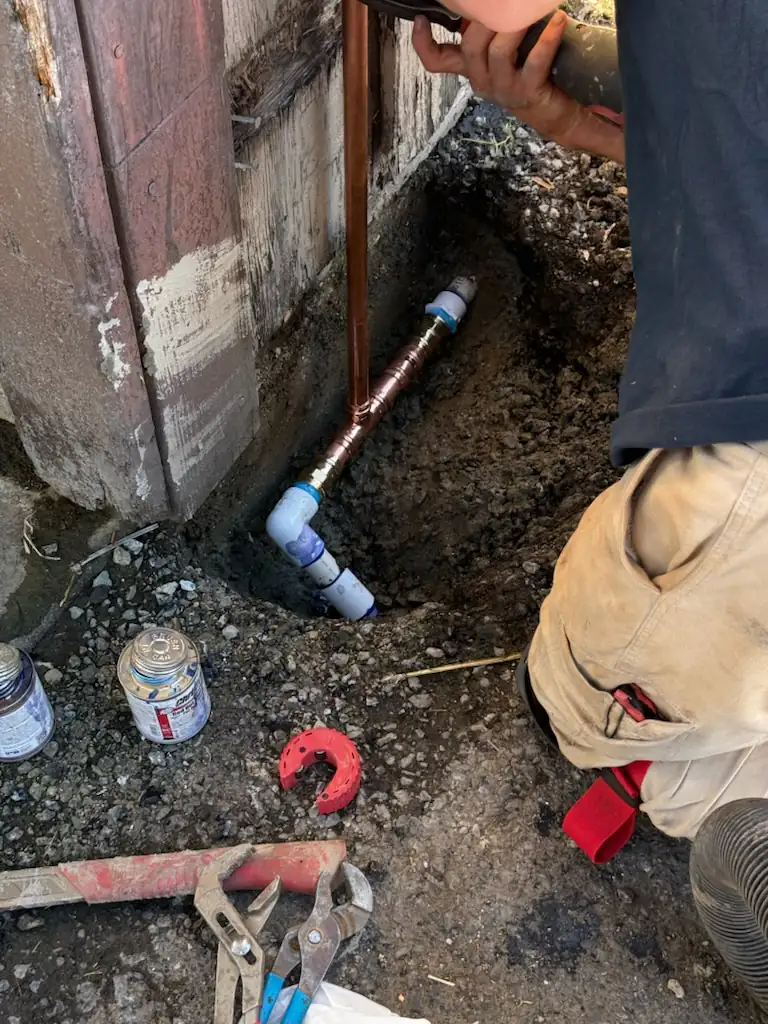
For a basic point-of-use sensor that sits on the floor and sends an alert to your phone, no you can place those yourself. But that’s not what most College/Glen homeowners are asking about when they search for water leak detector installation. A whole-home system with automatic shutoff requires cutting into your main cold water supply line and installing a motorized shutoff valve. In California, any plumbing work that involves the main supply line and exceeds $500 in combined labor and materials requires a licensed C-36 Plumbing Contractor. We hold CA Lic. #916322, which you can verify at CSLB.ca.gov.
Beyond the legal requirement, there’s a practical one. College/Glen’s homes are predominantly 50 to 60 years old. Before anyone cuts into a supply line in a 1960s or 1970s home, the condition of that pipe needs to be assessed. An unlicensed installer isn’t going to do that evaluation. A licensed plumber will and if there’s an issue with the existing pipe, you’ll know before it becomes a bigger problem.
The cost of a whole-home water leak detection system installation in the Sacramento area typically ranges from $500 to $1,500 depending on the complexity of the installation, the condition of your main supply line, and whether any permit fees apply. For most College/Glen homes, the installation involves assessing and working with older pipe materials galvanized steel or copper from the 1960s and 1970s which can affect the scope of the job compared to a newer build with clean, accessible supply lines.
We give you the price before work begins, with no estimate fees and no surprise charges at the end. Multiple customers have noted that the final invoice came in at or below the original quote. The more useful way to think about the cost is to weigh it against the alternative: the average water damage insurance claim in California runs between $13,954 and $15,400. A professionally installed automatic shutoff system is a fraction of that number and it may also qualify you for a 5% to 10% reduction in your annual homeowners insurance premium, which can offset the installation cost within a year or two.
Many homeowners insurance carriers in California offer discounts for smart water leak detection systems, typically in the range of 5% to 10% off your annual premium. The exact discount depends on your specific carrier and policy, so the most direct answer is to call your insurance agent and ask before you schedule the installation. Given that California homeowners already pay some of the highest insurance rates in the country, even a 5% reduction adds up meaningfully year over year.
The reason insurers offer the discount is straightforward: water damage accounts for 56.90% of all homeowners insurance claims in California it is the single most common covered loss in the state, not fire, not theft. Interior plumbing leaks specifically make up 17.44% of those California water damage claims. A smart water monitoring system with automatic shutoff directly reduces the insurer’s risk exposure, and many carriers reflect that in the premium. For College/Glen homeowners with aging 1960s and 1970s housing stock, the risk profile is real and the discount conversation with your agent is worth having before you write off the installation cost.
A point-of-use sensor is a small, battery-powered device you place under a sink, near a water heater, or behind a washing machine. When it detects moisture, it sends an alert to your phone. That’s it it does not stop the water, and it only covers the specific spot where it’s placed. For a College/Glen home with original plumbing running through walls and under a slab, a handful of floor sensors gives you very partial coverage at best. A pipe that fails inside a wall cavity or beneath the foundation will not trigger a floor sensor until the water has already traveled far enough to reach one.
A whole-home system like the Flo Smart Water Monitor installs on your main cold water supply line and monitors the entire home’s water flow continuously. It detects anomalies in pressure and flow rate that indicate a leak even a slow one inside a wall and can shut off the main supply automatically when it identifies a problem. For a neighborhood where a significant share of homes still have their original 1960s plumbing, that level of whole-home visibility is the meaningful difference between catching a problem early and discovering it after the damage is already done.
It’s not a problem, but it is a factor that a qualified installer needs to account for. Homes built in College/Glen during the 1960s were typically plumbed with galvanized steel supply lines, which corrode from the inside out over time. By now, many of those pipes are well past their expected service life they may have reduced interior diameter from mineral buildup, active corrosion, or early-stage pinhole leaks that haven’t surfaced yet. Before installing a whole-home shutoff valve on a main supply line in a home of this age, a licensed plumber needs to assess the condition of the pipe to make sure the installation is done on infrastructure that can support it.
Our installation process includes that assessment as a standard first step not as an upsell. If the existing pipe condition is a concern, you’ll know about it upfront, with options and pricing, before any work begins. That transparency is especially important in a neighborhood like College/Glen, where the real estate listings themselves acknowledge that some homes still have original plumbing from the day they were built. Knowing what you’re working with before cutting into anything is how a professional installation is supposed to go.
For most College/Glen homes, a full water leak detector installation including the main line assessment, physical installation of the Flo Smart Water Monitor, permit coordination if required, app setup, and system testing takes between two and four hours. The variability comes down to the condition and accessibility of your main supply line. In a 1960s home where the main line runs through a utility area with reasonable access, the job moves quickly. If the pipe is in a more difficult location or the condition requires additional work before the valve can be installed, the timeline adjusts accordingly and you’ll know that before the job starts, not after.
We offer same-day service and 24/7 availability, which matters in a neighborhood where a lot of residents are working commuters. You don’t have to take a day off or wait a week for a scheduling window. The goal is to have your system fully installed, tested, and running with the app configured on your phone in a single visit. No return trips, no half-finished jobs, no leaving you to figure out the app setup on your own.
Other Services we provide in College/Glen