
Hear from Our Customers
Most water damage doesn’t announce itself. It starts small a pinhole in an aging galvanized line, a supply valve that’s been corroding quietly for years, a toilet that keeps running while you’re commuting down I-80 to Auburn. By the time you notice, the floor is soaked and the wall is compromised. A professionally installed automatic water leak detection system changes that equation completely. The moment something abnormal happens with your water flow, you get an alert on your phone and if you don’t respond in time, the system shuts off your water automatically.
For Dutch Flat specifically, that kind of protection matters more than it does in most places. A significant portion of homes here were built before 1900, and many have plumbing systems that have never been fully replaced. At 3,144 feet elevation, you’re also dealing with real winters the kind where pipes in uninsulated walls or crawl spaces can freeze and burst overnight. A burst frozen pipe can release hundreds of gallons before morning. If you own a vacation rental on Airbnb or VRBO, or if your home sits empty for days at a stretch while you travel, that scenario isn’t hypothetical it’s a real risk that a whole house leak detection system directly prevents.
The financial case is straightforward too. The average water damage insurance claim runs between $13,954 and $15,400. Smart water leak detectors can also qualify you for 5% to 10% discounts on your annual homeowners insurance premium. For a historic property in Dutch Flat where replacement values are high and original materials can’t simply be replicated that combination of avoided claims and ongoing savings adds up fast.
We’ve been serving Placer County since 2009, founded by Ryan Murray a former construction superintendent who understands how homes are actually built, including the ones that have been standing since the Gold Rush era. That background matters when you’re working in Dutch Flat, where a home’s plumbing might run through original 19th-century framing and walls that deserve careful hands, not guesswork.
We hold California Contractor’s License #916322 (C-36 classification), which you can verify right now at CSLB.ca.gov. That’s not a marketing claim it’s a public record. Our 4.7 out of 5 Google rating across 93 verified reviews shows that customers consistently note final costs came in at or below the original estimate. No estimate fees, no surprise invoices, 24/7 emergency availability. In a small community like Dutch Flat where a contractor’s reputation travels fast, that track record means something.
When you call us, the first thing that happens is a straightforward conversation about your home its age, your water line size, whether you’re on the property full-time or managing it remotely. That context matters. A pre-1900 home in Dutch Flat’s historic district has different plumbing realities than a newer build, and our installation approach adjusts accordingly.
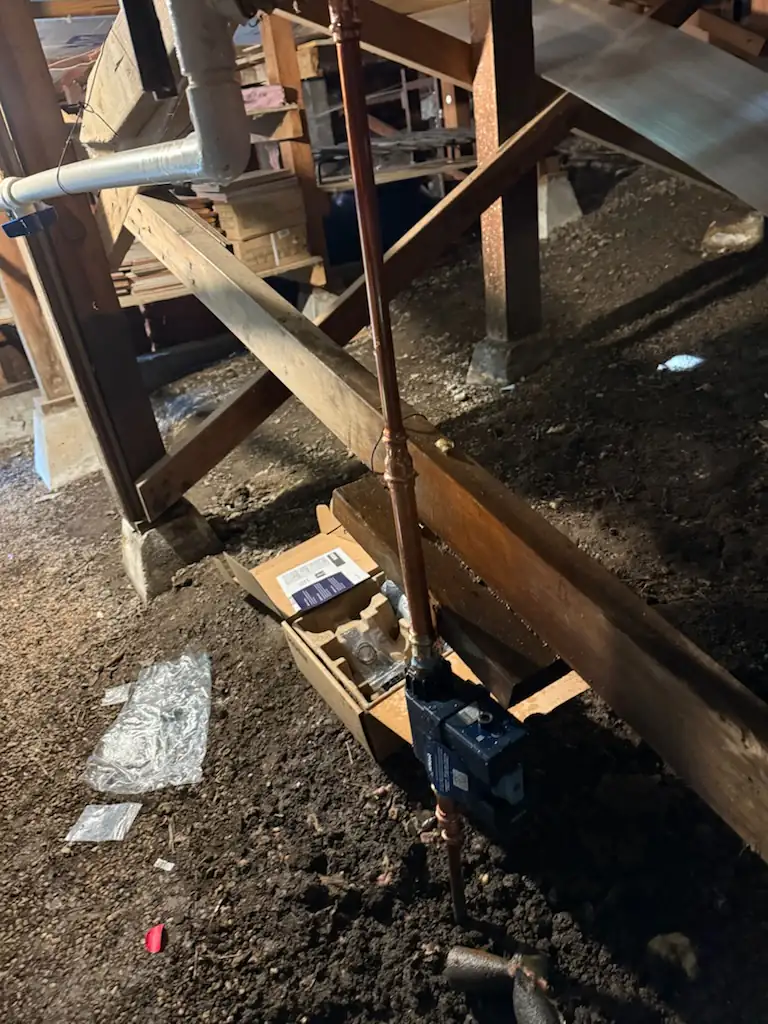
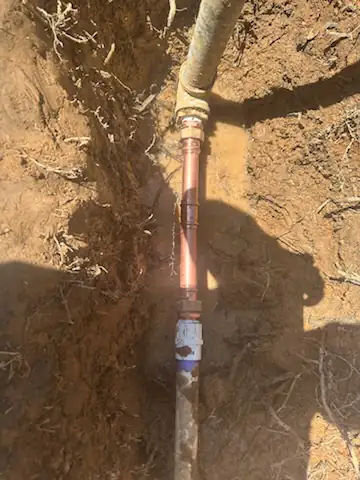
On the day of installation, we place the system after your water meter and pressure regulating valve the correct position per California Plumbing Code and manufacturer specifications. We size the device to match your home’s actual water line diameter, which is a step some installers skip and one that affects how accurately the system reads your usage. Once the hardware is in place, your Moen Smart Water App gets set up on your phone, alerts are configured, and the system is tested before we leave your property. If an existing leak is found during the process, we repair it on the same visit.
Because Dutch Flat is an unincorporated community in Placer County, plumbing work falls under Placer County’s Building Department and the California Plumbing Code. Any permit requirements for work on your main supply line are handled as part of the job you won’t be left to figure that out on your own. When the visit is done, your system is live, your app is working, and you know exactly how to shut off your water remotely if you ever need to. That’s the whole job, completed in one trip.
Ready to get started?
A smart water leak detection system installation from us is a complete service, not a device drop-off. That means proper sizing for your home’s water line, code-compliant placement on your main supply line, full Moen Smart Water App configuration, alert setup, system testing, and hands-on walkthrough before the job is closed out. If something needs to be repaired before the system can be installed correctly, we handle that in the same visit.
For Dutch Flat homeowners specifically, a few things are worth knowing upfront. Homes in the Dutch Flat Historic District many of which are listed on the National Register of Historic Places often have plumbing configurations that don’t match what you’d find in newer construction. Older pipe diameters, corroded shutoff valves, and non-standard line layouts are common. Our installation process accounts for these realities rather than assuming a clean, modern setup. The goal is a system that actually works in your home, not one that was sized and placed for a cookie-cutter tract house in Roseville.
If you own a vacation rental or a property that sits empty for stretches during the off-season, the remote monitoring and automatic shutoff features are especially relevant. You can check your Dutch Flat home’s water status from anywhere Sacramento, out of state, wherever and the system acts on your behalf if you don’t respond to an alert in time. For a community at this elevation, with real freeze seasons and aging infrastructure, that’s not a luxury feature. It’s the whole point.
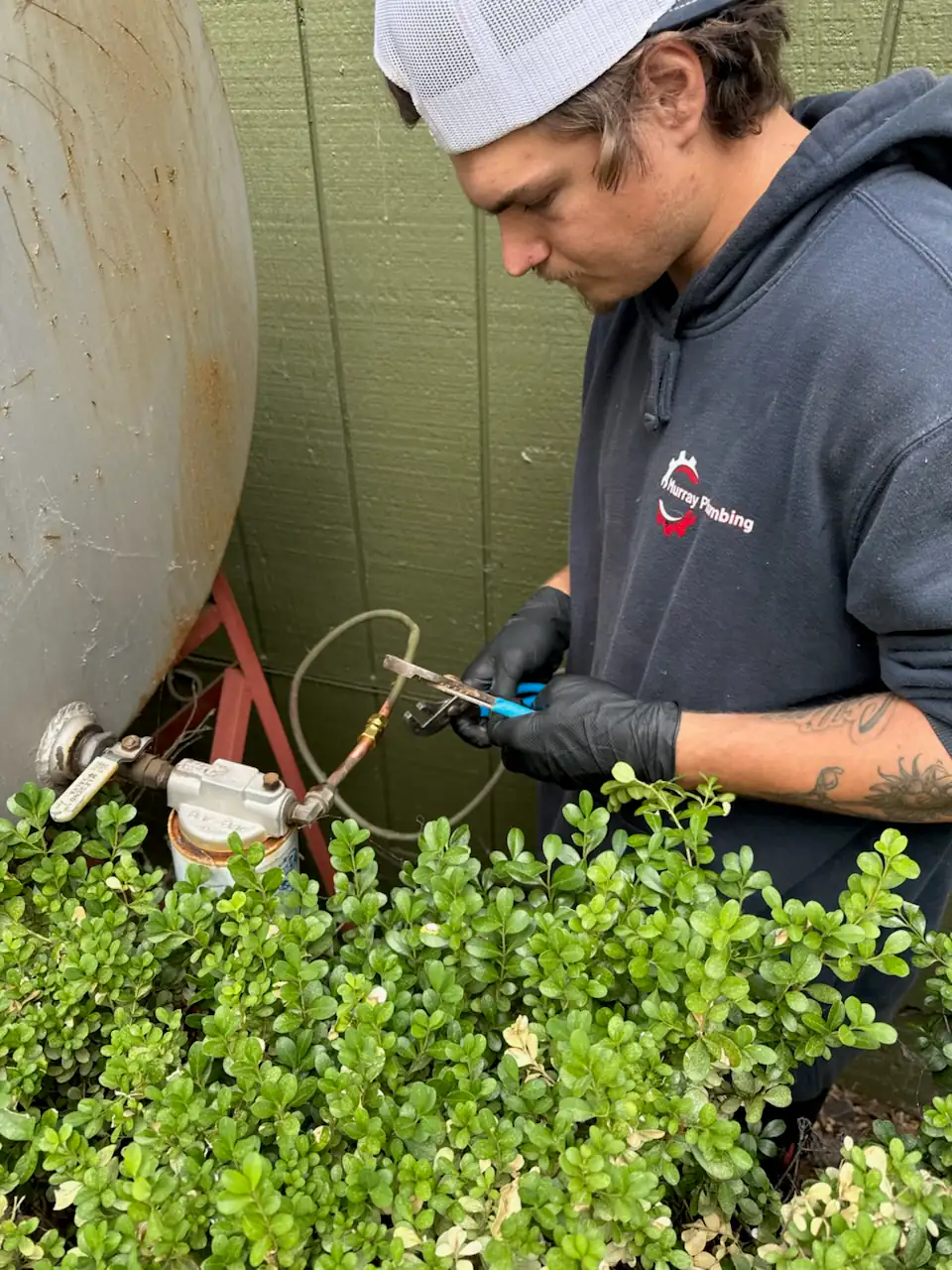
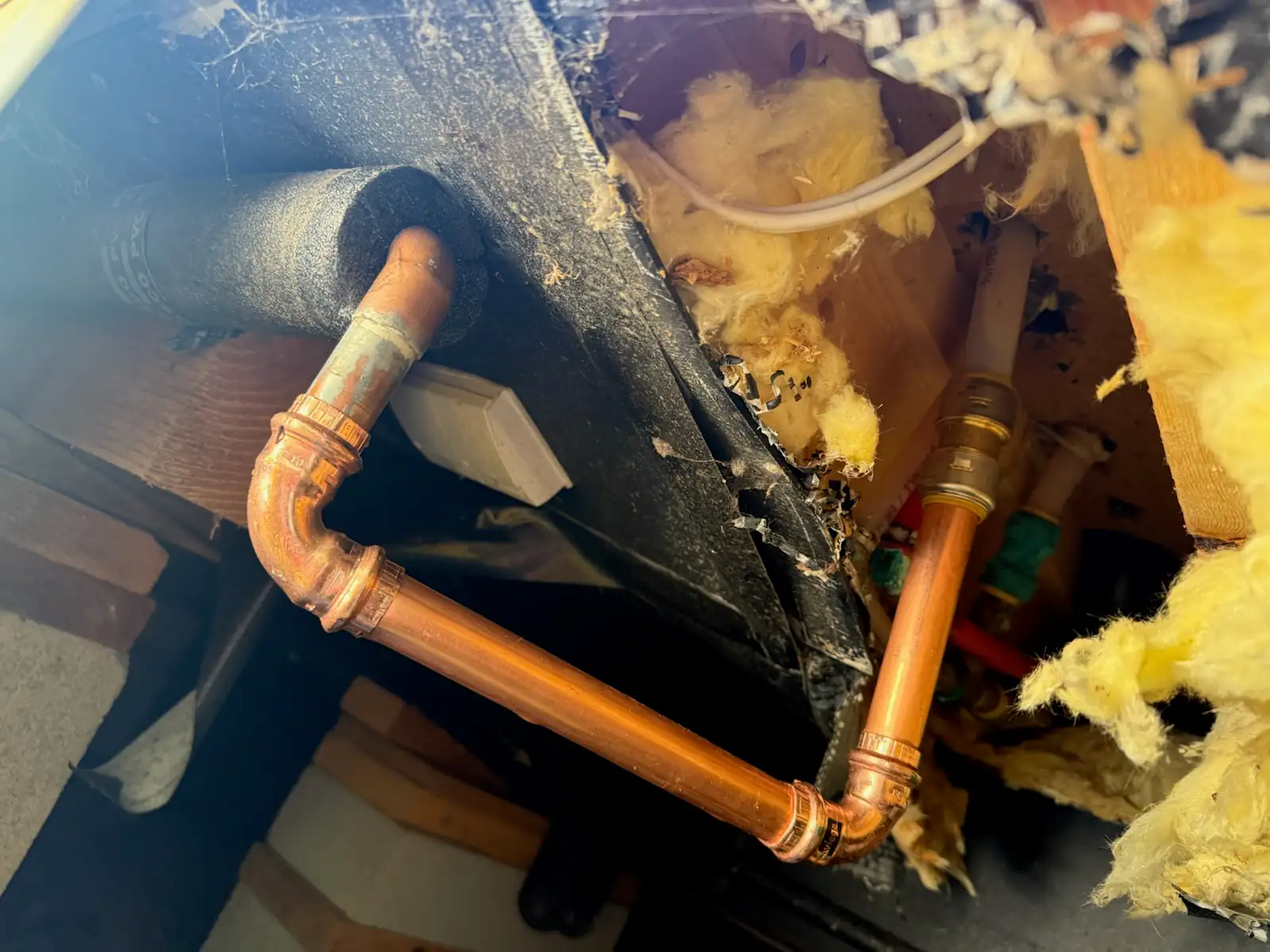
For a standard plug-in point sensor that sits on the floor near a water heater, no you can place that yourself. But that’s not what this page is about. A whole-home automatic water leak detection system, like the Moen Flo, installs directly on your main water supply line and requires shutting off your water, cutting into the line, and reconnecting everything correctly. In Dutch Flat, where many homes have plumbing systems that date back 80 to 120 years, that process can surface surprises corroded shutoff valves that won’t close, non-standard pipe diameters, brittle fittings that need to be replaced before a new device can be seated properly.
We handle those issues on the spot rather than leaving you with a partially installed system and a list of follow-up calls to make. California also requires a C-36 Plumbing Contractor’s License for any plumbing work over $500 in labor and materials so beyond the practical reasons, there’s a legal one too. We hold CA License #916322 and have worked in older Sierra Nevada foothill homes where the plumbing doesn’t match any modern diagram.
The total cost depends on a few variables: the device itself, the complexity of your main line access, whether any repairs are needed before installation, and local permit requirements if applicable. For a whole-home automatic shutoff system like the Moen Flo, the device alone typically runs between $500 and $800 depending on line size, and professional installation adds to that. Our service calls start at $175, with free estimates on larger jobs.
What’s worth knowing is that we don’t charge for estimates, and multiple customers have noted that their final invoice came in at or below the original quote. In Placer County’s unincorporated communities like Dutch Flat, permit requirements for main line work can add a step to the process but that’s handled as part of the job, not passed off to you. The more useful financial frame is this: the average water damage claim runs nearly $14,000. A professionally installed detection system, when you factor in avoided damage and the insurance premium discounts many carriers offer for smart water systems, tends to pay for itself within one to two years.
Yes and this is one of the strongest use cases for the technology at Dutch Flat’s elevation. At roughly 3,144 feet in the Sierra Nevada foothills, Dutch Flat gets real winters. Temperatures drop to and below freezing, snow accumulates, and the freeze-thaw cycle puts genuine stress on pipes especially in older homes where supply lines may run through uninsulated exterior walls or crawl spaces that were never designed with modern insulation standards in mind.
When a pipe freezes and bursts, the damage doesn’t always happen immediately. Sometimes the pipe holds until it thaws, then releases all at once. A whole-home automatic shutoff system monitors your water flow continuously and detects the abnormal pressure or flow pattern that follows a burst. The moment that happens, it shuts off your water supply stopping hundreds of gallons from flooding your home before you even know there’s a problem. If you’re commuting to Auburn on I-80 or your Dutch Flat property is sitting empty during a cold snap, that automatic response is the only thing standing between a manageable repair and a structural disaster.
Many carriers do offer discounts for smart water leak detection systems, typically in the range of 5% to 10% off your annual premium. Whether your specific policy qualifies depends on your carrier and your coverage terms so the honest answer is to call your insurance agent before installation and ask directly. Some carriers require documentation of the installed device, which we can provide.
For Dutch Flat homeowners, this question is worth taking seriously. Homes in the Dutch Flat Historic District carry high replacement values original Victorian woodwork, historic plaster, pre-1900 framing and none of that is cheap to restore after water damage. A 5% to 10% annual premium reduction on a policy covering a high-value historic property adds up to real money over time. And that’s on top of the avoided claim itself, which for water damage averages nearly $14,000. The insurance savings angle is one reason a smart leak detection system is worth treating as a long-term investment rather than just an upfront expense.
Remote monitoring through the Moen Smart Water App is genuinely reliable for exactly this scenario. The system connects to your home’s Wi-Fi and sends real-time alerts to your phone if it detects abnormal water flow a slow leak, a running toilet that won’t stop, a supply line failure. You can also check your property’s water usage on demand from anywhere, which is useful for confirming that everything looks normal between guest stays or during off-season periods when the property sits empty.
The more important feature for an unoccupied property, though, is the automatic shutoff. If a leak is detected and you don’t respond to the alert because you’re traveling, asleep, or simply didn’t see the notification in time the system shuts off your water supply on its own. For a Dutch Flat vacation rental that might sit empty for days or weeks at a stretch, especially heading into the winter months when freeze risk is real, that automatic response is what prevents a small failure from turning into a gutted floor, a mold remediation job, and lost rental income while the property is out of commission.
Yes Dutch Flat falls within our Placer County service territory. We’re based in Placerville and serve El Dorado, Sacramento, and Placer counties, with Dutch Flat accessible via I-80 through the Dutch Flat/Monte Vista exit. It’s a mountain community with a different character than the Sacramento suburbs we also serve, and the work reflects that older homes, different plumbing configurations, elevation-specific freeze considerations.
For emergency calls, we operate 24/7, which matters in a remote community like Dutch Flat where the nearest plumbing supply house isn’t around the corner. The 24/7 availability isn’t a marketing line it’s confirmed by customer reviews documenting early-morning and weekend responses. If you’re managing a vacation rental remotely and get an alert at 11 p.m. on a Friday, that’s when the availability actually counts. Scheduling a standard installation visit is straightforward call to discuss your home’s setup, confirm the appointment, and we handle everything from there in a single trip.
Other Services we provide in Dutch Flat