
Hear from Our Customers
Most water damage doesn’t announce itself. It starts behind a wall, under a slab, or in a crawlspace you haven’t checked since you moved in and by the time you notice something’s wrong, the damage is already done. A professionally installed automatic water leak detection system changes that entirely. It monitors your water supply around the clock and shuts off the flow the moment something abnormal is detected, whether you’re home or not.
For Gold Hill homeowners, this matters in a way it simply doesn’t for someone living in a flat Sacramento suburb. You’re at elevation, on terrain that sits atop an ancient river bed where soil shifts and settles over time and that slow ground movement puts real stress on pipe joints that you’d never see coming. Add in the freeze risk that comes with Gold Hill winters, and you have two very specific, very local reasons to stop relying on luck and start relying on a system that’s watching when you’re not.
If your property runs on a private well, there’s another layer to this. No utility company is tracking your consumption and flagging an unexplained spike. Your smart water detection system becomes the only thing standing between a slow hidden leak and a major repair bill. That’s not a hypothetical for rural El Dorado County it’s a real gap that a lot of homeowners here don’t realize they have until it’s too late.
We’ve been working in El Dorado County since 2009, and Gold Hill is part of the corridor we know well we already serve neighboring Coloma just a few miles up Highway 49. When you call us, you’re not getting a dispatch center routing someone from Sacramento. You’re getting a Placerville-based crew that understands foothill plumbing: the freeze risk, the older housing stock, the rural water systems, and the soil conditions that come with this part of the county.
Ryan Murray founded this company on a straightforward premise show up on time, charge what you quoted, and do the job right. That’s held up across 93 verified Google reviews and a 4.7 out of 5 rating. No estimate fees, no surprise invoices, and more than a few customers who’ve noted the final cost came in under the original quote. You’ll know exactly what you’re paying before any work starts, and if we find something else while we’re there, we tell you we don’t just fix it and add it to the bill.
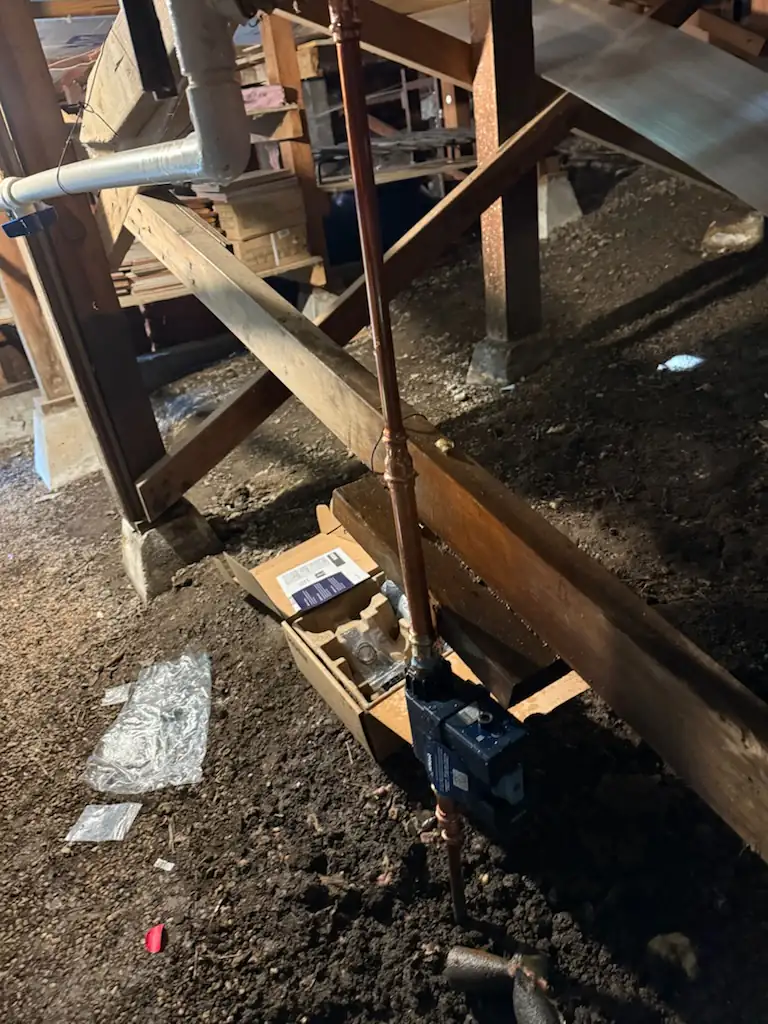
It starts with a quick assessment of your home’s water supply setup specifically, where your main line comes in, what diameter it runs, and whether there’s a pressure regulating valve already in place. In Gold Hill, where properties vary widely from newer builds to homes with decades-old plumbing infrastructure, that first look matters. Getting the sizing right for your specific line is what separates a system that performs from one that throws false alerts or misses a real event.
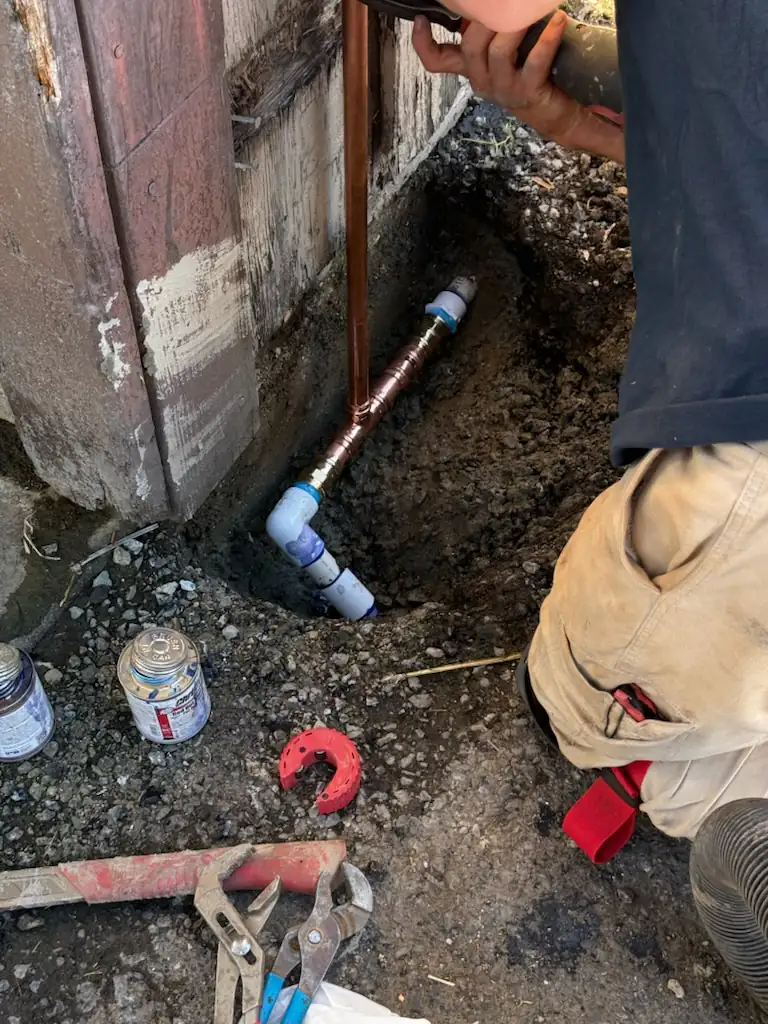
Once we’ve confirmed the right fit, we install the leak detection device at the correct point on your main line after the meter and after any existing pressure regulating valve. This placement gives the system full visibility over everything flowing into your home. For properties on private wells, the placement approach adjusts accordingly, and we walk you through what that means for your specific setup before we start.
After the hardware is in, we don’t hand you a manual and leave. We set up the Moen Smart Water App on your phone, configure your alert preferences, run a full system test, and walk you through remote shutoff so you actually know how to use it. By the time we’re done, your system is live, your phone is connected, and you understand exactly what happens if an alert fires at 2 a.m. on a January night. That’s the whole job not just the installation.
Ready to get started?
When we install your water leak detection system in Gold Hill, the service covers the full scope hardware, installation, app setup, alert configuration, system testing, and hands-on training before we leave. There’s no partial job here. You’re not getting a device dropped in and a door closed behind us.
Because Gold Hill falls under unincorporated El Dorado County jurisdiction, plumbing work on your main supply line is governed by California state plumbing code and administered through the county building department. As a licensed C-36 plumbing contractor License #916322 we handle permit requirements as part of the job. You don’t need to figure out what’s required or make a separate trip to the county. That’s already built into how we work.
One more thing worth knowing: if we find an existing leak during installation, we fix it on the spot. You don’t need to schedule a follow-up with a different contractor or wait another week to get it addressed. Detection, installation, and repair from one licensed plumber that’s the practical difference between hiring a local specialist and buying a device online and hoping for the best. For a rural homeowner in Gold Hill managing a property on acreage, that full-service approach isn’t a perk. It’s the point.
Yes and honestly, it may matter more on a well-fed system than on a municipal connection. When you’re on city water, the utility is passively tracking your consumption and can sometimes flag unusual usage. On a private well in Gold Hill, that safety net doesn’t exist. If a pipe is leaking slowly behind a wall or under your slab, nothing is watching for it except your water bill and by the time that spikes noticeably, real damage may already be underway.
A whole-home leak detection system installed on your main supply line monitors flow continuously, regardless of whether that water is coming from a municipal source or a private well. It measures flow rate, detects anomalies, and triggers an alert or an automatic shutoff the moment something abnormal is happening. For rural El Dorado County properties where well systems are common and pipe runs often extend to outbuildings or detached structures, that continuous monitoring is exactly what fills the gap a utility meter would otherwise cover.
The total cost depends on a few variables the size of your main water line, whether any preparatory work is needed before installation, and the specific system being installed. For a professionally installed whole-home smart water shutoff system like the Moen Flo, most homeowners can expect the installed cost to fall in the range of roughly $700 to $1,500 depending on those factors. We provide upfront pricing before any work begins, so you’ll know the full number before we start no estimates that balloon into something else once we’re on-site.
It’s also worth a conversation with your insurance carrier before you write this off as a pure expense. Many homeowners insurance providers offer premium discounts of 5% to 10% for homes with qualifying smart water protection systems. For Gold Hill homeowners already carrying elevated premiums due to the area’s wildfire risk profile, that annual reduction can meaningfully offset the installation cost over time. We’d recommend calling your agent and asking directly the answer might change how you think about the investment.
It depends on the scope of the work. For installations that involve cutting into your main water supply line which is what a whole-home automatic shutoff system requires there may be a permit requirement under El Dorado County’s building and plumbing code jurisdiction. Because Gold Hill is an unincorporated community, there’s no city building department involved. Everything runs through El Dorado County, and the applicable code is California’s Title 24 plumbing standard.
As a licensed C-36 plumbing contractor, we’re equipped to handle permit requirements as part of the installation process. You don’t need to research what’s required, make calls to the county building department, or figure out the inspection process on your own. That’s part of what you’re paying for when you hire a licensed professional rather than attempting a main-line installation as a DIY project which, for work exceeding $500 in labor and materials, requires a C-36 license under California law anyway.
For homes in the Gold Hill and Coloma corridor many of which have older plumbing infrastructure, crawlspace pipe runs, and in some cases original or mid-century supply lines a whole-home monitoring system installed on the main supply line is the most effective approach. Individual point sensors placed under sinks or near appliances are better than nothing, but they only catch a leak after water has already reached that specific location. A main-line system catches any abnormal flow event anywhere in the house, including in spaces you’re not checking regularly.
Older homes in this area sometimes have galvanized steel or iron supply lines that are at or past their useful service life. These pipes don’t fail all at once they develop small cracks and slow leaks that can go undetected for months in a crawlspace or inside a wall. A whole-home flow monitoring system will catch that kind of slow, sustained leak through flow anomaly detection, even if no water has reached a visible surface yet. For a property with aging plumbing, that early detection capability is where the real value sits.
The honest answer is: before winter. Gold Hill sits at over 1,600 feet of elevation, and overnight temperatures during the winter months drop low enough to put real freeze risk on exposed hose bibs, crawlspace plumbing, and any pipe running through an unheated space. If a frozen pipe thaws and bursts while you’re at work or away for a weekend, the damage accumulates by the minute until someone shuts the water off. A smart detection system with automatic shutoff is what stops that from becoming a five-figure insurance claim.
That said, fall October through early November is the practical sweet spot for scheduling. You’re ahead of the freeze season, contractors are generally more available than they are in December and January when emergency calls spike, and you have time to get familiar with the system before you actually need it. Summer installations also make sense for homeowners who travel or take extended trips the automatic shutoff capability is just as valuable when you’re away in July as it is in January. There’s no wrong time, but there is a smarter time, and it’s before the season that puts your pipes at risk.
Many insurance carriers do offer premium discounts for homes equipped with qualifying smart water protection systems the range is typically 5% to 10% annually, though the exact amount varies by carrier and policy. It’s not automatic, and not every insurer handles it the same way, so the right move is to call your agent directly and ask whether your policy qualifies and what documentation they need.
For homeowners in El Dorado County’s foothill communities like Gold Hill, this conversation is worth having. Properties in the area are already operating in a zone where wildfire risk factors into premium calculations some carriers have adjusted rates upward for this region in recent years. A smart water detection system is one of the few home upgrades that can actively work in your favor on the insurance side, because it directly reduces the likelihood of a water damage claim, which is statistically the most common type of homeowners claim filed. If your carrier confirms a discount applies, the system can realistically pay for a meaningful portion of its installation cost through premium savings over the first few years alone.
Other Services we provide in Gold Hill