
Hear from Our Customers
Water damage is the second most common homeowners insurance claim in the country more than six times more likely than a house fire. The average claim runs between $13,954 and $15,400. And most of those situations started small: a pinhole leak behind drywall, a supply line that wore through quietly, a pipe that froze during a cold snap while the homeowner was out of cell range.
That last part matters here specifically. Kelsey properties sit at nearly 2,000 feet, and the winters are wet close to 39 inches of rain a year, with temperatures that push toward freezing in December and January. Pipes in unheated crawl spaces take a beating. And if you spend any time hiking, camping, or on the American River and you’re not reachable, there’s nothing standing between a small failure and a very expensive one.
A professionally installed whole-home automatic water leak detection system changes that equation entirely. The moment a leak is detected, the water shuts off automatically, whether you’re home or not. No waiting for an alert. No hoping a neighbor notices. Just protection that works while you’re living your life. And on top of that, many homeowners insurance carriers offer a 5%–10% annual premium reduction for having a certified system installed which means this investment often pays for itself within a year or two.
We’re based in Placerville about 8 miles from Kelsey. That matters more than it sounds. Most plumbing companies that say they serve El Dorado County are actually dispatching from El Dorado Hills, Sacramento, or further. By the time they get to you, the damage has had time to spread.
Ryan Murray founded our company in 2009, and in the 15-plus years since, we’ve worked on everything from older rural homesteads in the Kelsey foothills to newer builds throughout the county. We know the El Dorado Irrigation District infrastructure. We know what acidic foothill soil does to copper pipes over time. We know the difference between a property on well water and one on EID supply and how that affects where a whole-home shutoff system needs to be installed.
We hold California Contractor’s License #916322 (C-36 classification), which you can verify directly at CSLB.ca.gov before you ever pick up the phone. We carry a 4.7/5 Google rating across 93 reviews, and customers consistently note that the final invoice came in at or below the original quote. No estimate fees. No surprises.
It starts with a call and a straight answer on price. We don’t charge for estimates on major installs, and we’ll tell you what the job costs before we schedule anything. If your property is on EID supply or a private well, that gets factored into the assessment because the placement of a whole-home system depends on your specific water line configuration, not a generic diagram.
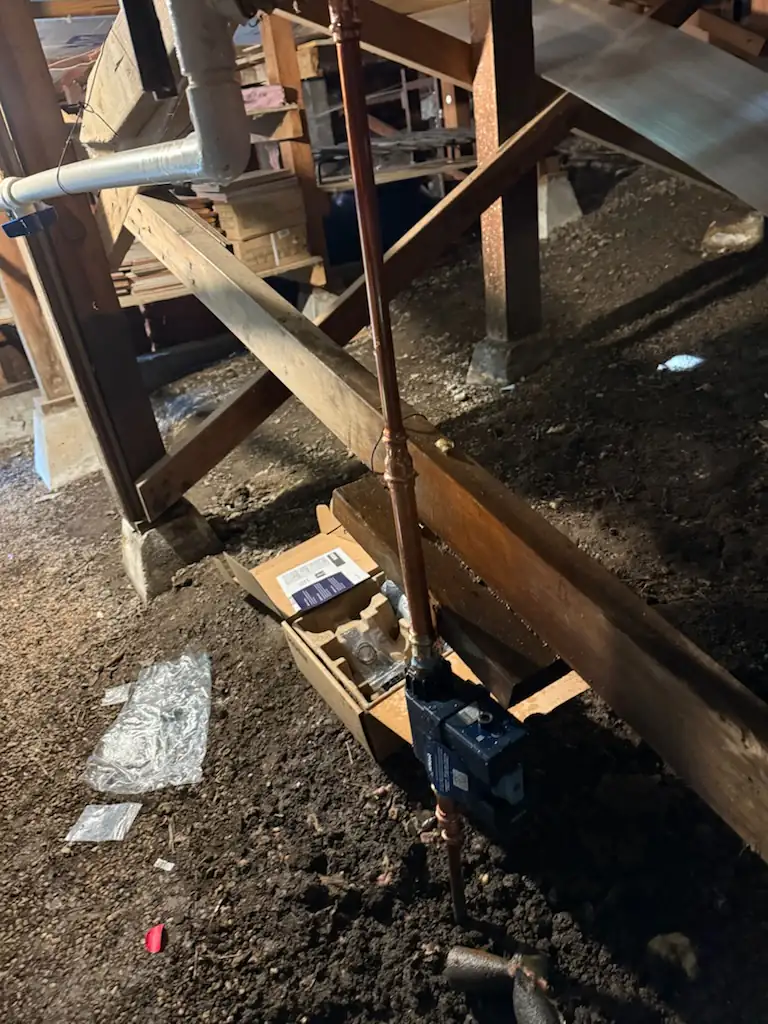
On installation day, our technician sizes the Moen smart water detector correctly for your water line diameter, installs it on the main supply line after the water meter and pressure regulating valve, and ensures it’s placed in compliance with California Plumbing Code. For Kelsey properties many of which have crawl spaces, older copper plumbing, or supply lines that have been in the ground for decades that assessment step isn’t a formality. It’s where a lot of the real work happens.
Once the hardware is in, the job isn’t done. Our technician sets up the smartphone app, configures your alert thresholds, walks you through the remote shutoff function, and runs a live test before leaving. You’ll know exactly how the system works, what triggers an alert, and how to shut your water off from anywhere whether you’re at work in Placerville or out of cell range somewhere along the South Fork. El Dorado County doesn’t require a permit for every smart shutoff installation, but if your specific setup calls for one, we handle that assessment and compliance as part of the process.
Ready to get started?
This isn’t a drop-off-and-go install. Our water leak detector installation covers the full scope: device sizing for your specific water line, main-line installation after the meter and pressure regulating valve, California Plumbing Code compliance review, smartphone app setup and alert configuration, remote shutoff testing, and hands-on homeowner training before the job is closed out.
For Kelsey specifically, that training piece carries real weight. A lot of properties out here are older, and many homeowners haven’t dealt with smart water systems before. Our technician walks you through what the app shows, what a high-flow alert means versus a leak alert, and how to use the remote shutoff if you get a notification while you’re somewhere without easy access home. That’s not a bonus it’s part of the job.
The system we install also gives you ongoing water usage monitoring, which is genuinely useful in a community where EID water bills can spike unexpectedly and slow leaks often go unnoticed for months. If your usage suddenly jumps overnight, you’ll know about it before it turns into a claim. And if you’re one of the Kelsey homeowners with a crawl space and aging copper supply lines the kind that El Dorado County’s acidic soil has been quietly working on for years a system that monitors flow 24 hours a day is the closest thing to having eyes on your plumbing at all times.
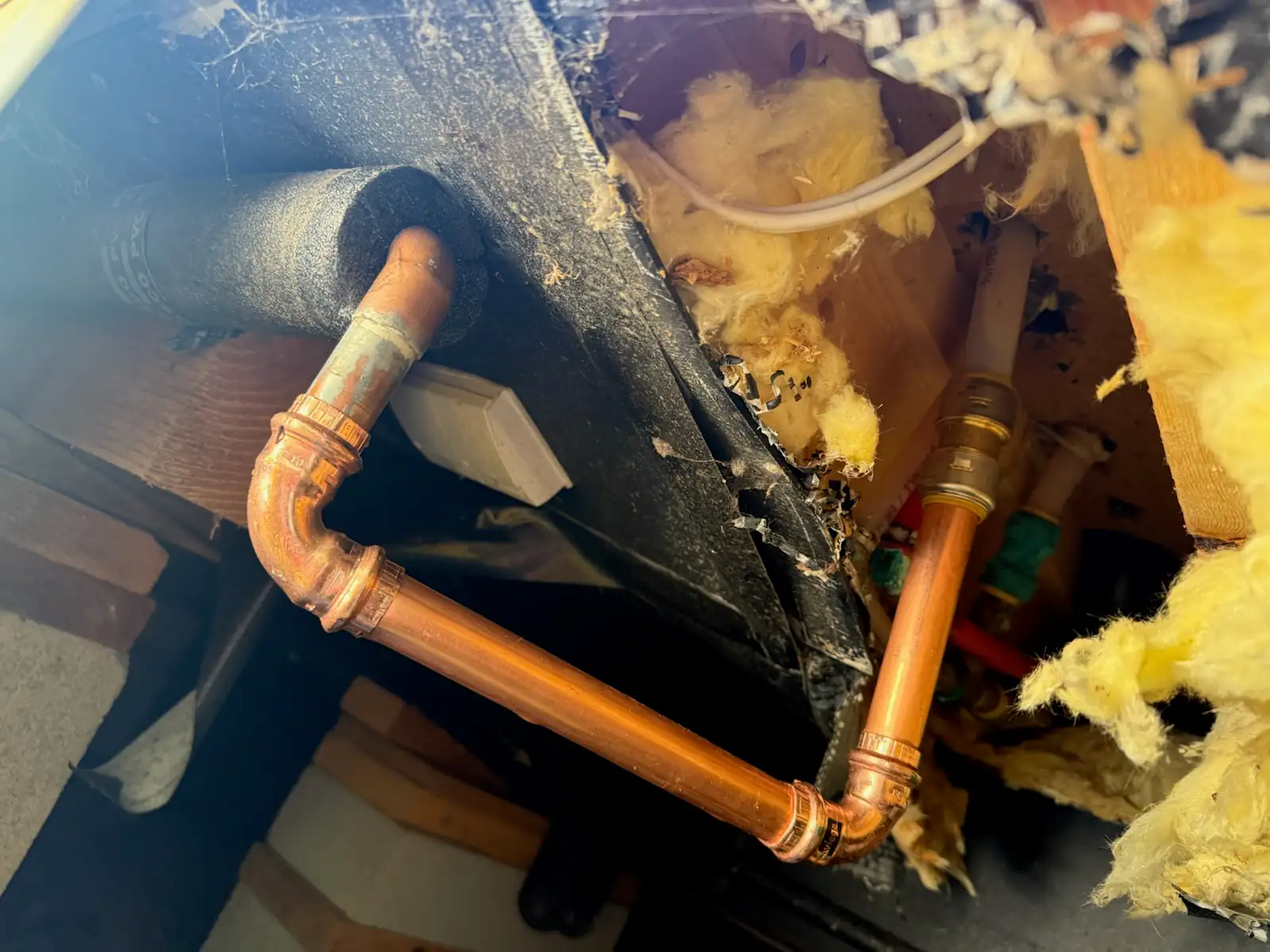
Yes and the difference is significant. A battery-powered point-of-use sensor sits under your sink or near your water heater and alerts you when it gets wet. That means water has already reached the floor before anything happens. A whole-home smart water detection system installs on your main supply line and monitors water flow continuously. It can detect a slow leak, an abnormal usage pattern, or a sudden high-flow event and it can shut your water off automatically the moment something looks wrong, before water reaches your floors, walls, or subfloor.
For Kelsey homes with crawl spaces and older plumbing, that distinction matters a lot. A leak in a crawl space can go undetected for weeks with a point-of-use sensor. A main-line system catches the anomaly in the flow data and acts on it even if you’re not home, even if you’re out of cell range, and even if the leak is somewhere you’d never think to put a floor sensor.
The total cost depends on your home’s water line size, the complexity of the installation, and whether any additional work is needed at the main supply line. For a straightforward whole-home smart shutoff installation on a standard residential property in El Dorado County, most homeowners are looking at a range that reflects the equipment, labor, app setup, and testing and we give you that number before the job starts, not after.
What’s worth keeping in mind is the other side of that math. The average water damage insurance claim runs between $13,954 and $15,400. Many homeowners insurance carriers also offer 5%–10% annual premium discounts for certified smart water detection systems and given that El Dorado County homeowners already carry elevated premiums due to wildfire risk in the foothills, that reduction adds up quickly. Call your insurance agent before or after installation to ask about eligibility. For a lot of Kelsey homeowners, the system ends up paying for itself within the first year or two.
It depends on the scope of the work. Kelsey is an unincorporated community under El Dorado County jurisdiction, so permit requirements follow California Plumbing Code as administered by the county not a city building department. For a whole-home smart shutoff system installed on the main supply line, the permit requirement varies based on what’s being modified and how. Some installations fall within the threshold that doesn’t require a separate permit; others do.
The honest answer is that you shouldn’t guess on this. We hold California Contractor’s License #916322 (C-36 classification) and handle the code compliance assessment as part of every installation. If your job requires a permit, we identify that upfront and manage the process. If it doesn’t, we’ll tell you that too. Either way, you’re not left navigating El Dorado County’s permitting process on your own and the work is done to California Plumbing Code standards regardless.
Yes but the installation approach differs depending on your water source, which is exactly why professional installation matters for Kelsey properties. If your home connects to the El Dorado Irrigation District’s municipal supply, the whole-home system installs on the main line after the water meter and pressure regulating valve. If your property uses a private well which is common in the rural, unincorporated areas around Kelsey and Garden Valley the placement is different, and the sizing needs to account for your specific pump and pressure setup.
Our technicians assess your water supply configuration before recommending or sizing any system. We’ve worked on both EID-connected properties and private well systems throughout El Dorado County, so this isn’t new territory. The goal is a system that’s correctly placed, correctly sized, and actually functional for your specific property not a generic install that was designed for a suburban tract home with a standard city connection.
Without a whole-home shutoff system, the answer is: water runs until someone turns it off. If you’re out of cell range on the American River, camping in the El Dorado National Forest, or just away for a weekend and not checking your phone, a burst pipe can run for hours. At typical residential water flow rates, that’s thousands of gallons and the structural damage to floors, walls, and subfloor compounds fast.
With a professionally installed automatic water leak detection system, the moment flow exceeds normal parameters which a burst pipe absolutely does the system shuts the water off at the main line. Automatically. You still get the alert on your phone, but the shutoff doesn’t wait for you to respond. For Kelsey homeowners at nearly 2,000 feet elevation, where crawl space pipes are exposed to freezing temperatures during winter cold snaps and the nearest plumber can’t always be there in 15 minutes, that automatic function isn’t a convenience feature. It’s the whole point of the system.
Yes and honestly, older homes with aging copper plumbing are exactly where these systems make the most sense. El Dorado County’s acidic soil is documented to corrode copper pipes over time, creating pinhole leaks that can go undetected for months before they become visible. Properties in Kelsey and the surrounding foothills many built decades ago on rural acreage are more likely to have this kind of slow, hidden deterioration than newer homes built with PEX or CPVC.
A whole-home smart water detection system doesn’t require you to replace your plumbing first. It installs on the main supply line and monitors flow data continuously so if a pinhole leak develops and your daily usage quietly climbs, the system flags it. Our technicians assess the condition of the main supply line connection as part of the installation process, and if we see something that needs attention before the system goes in, we’ll tell you directly. No upsell pressure just a straight read on what your property actually needs.
Other Services we provide in Kelsey