Thinking about tankless? Learn how El Dorado County homeowners are cutting energy costs by 30%, reclaiming floor space, and never running out of hot water again.
Share:

Summary:
Traditional tank water heaters keep 40-80 gallons of water hot around the clock, whether you’re using it or not. That’s called standby heat loss, and it’s why your water heater runs even when everyone’s asleep or away at work. You’re essentially paying to maintain a reservoir of hot water that might sit unused for hours.
Tankless systems work differently. They heat water only when you turn on a faucet or start the dishwasher. Cold water flows through the unit, passes over a heat exchanger powered by gas or electricity, and comes out hot on the other side. No storage tank means no energy wasted maintaining water temperature during the 20+ hours a day you’re not actively using hot water.
The Department of Energy puts real numbers to this. Homes using 41 gallons or less of hot water daily can see 24-34% better energy efficiency with tankless systems compared to conventional tanks. Even households with higher usage—around 86 gallons daily—still gain 8-14% efficiency. For El Dorado County families, that typically translates to $100-200 in annual savings on energy costs, and over a 20-year lifespan, you’re looking at $2,000-4,000 in reduced utility bills.
Let’s get specific about what those efficiency numbers mean for your monthly bills. If you’re currently spending $40-50 per month heating water with a traditional tank, a properly sized tankless system could drop that to $30-40. The exact savings depend on your household size, usage patterns, and whether you’re running a gas or electric system.
El Dorado County’s hard water adds another layer to this equation. The high mineral content in local water—calcium and magnesium picked up as water moves through underground rock formations—creates scale buildup inside water heaters. In traditional tanks, this sediment settles at the bottom, forcing the heating element to work harder to maintain temperature. That means higher energy consumption and shorter equipment life.
Tankless systems aren’t immune to hard water issues, but they handle it differently. Annual descaling maintenance removes mineral deposits from the heat exchanger before they significantly impact performance. Yes, that’s an additional maintenance step, but it’s far less expensive than the accelerated wear and tear hard water causes in tank systems. Many El Dorado County homeowners find their tankless units maintain consistent efficiency for 15-20 years with proper care, while tank heaters in the same water conditions often need replacement after 8-10 years.
The energy efficiency advantage also matters for California’s evolving regulations. The state is pushing hard toward carbon neutrality by 2045, with gas water heater sales banned statewide by 2030. Upgrading to an energy-efficient tankless system now positions you ahead of these changes, and Energy Star certified models may qualify for federal tax credits up to $600 plus utility rebates that can reach $1,200 in some California programs.
Here’s the ROI calculation that matters: a tankless installation runs $3,500-6,500 depending on your home’s setup. Factor in $100-200 annual energy savings, plus available rebates and tax credits, and most El Dorado County homeowners hit breakeven within 5-7 years. After that, you’re banking savings for the remaining 13-15 years of the system’s lifespan.
Not every home sees the same efficiency improvement from going tankless, and understanding why helps you set realistic expectations. The biggest efficiency gains happen in households with moderate, consistent water usage rather than heavy simultaneous demand. If your typical morning involves one shower, someone making coffee, and maybe the dishwasher running later—that’s ideal tankless territory.
The efficiency sweet spot sits around 41 gallons or less of hot water daily. That covers most 2-3 person households who stagger their hot water use throughout the day. You’ll hit that maximum 24-34% efficiency improvement because the system only fires up for relatively short periods, then shuts off completely between uses.
Larger families or homes where multiple people shower simultaneously face different math. Tankless units have flow rate limits—typically 2-5 gallons per minute depending on the model. Run two showers plus the washing machine at once, and you might push the system to its capacity. It won’t run out of hot water like a tank would, but it has to work harder to maintain temperature, which reduces some of the efficiency advantage. You’re still likely to see that 8-14% improvement, but not the higher end of the savings range.
This is where proper sizing becomes critical. A licensed plumber experienced with El Dorado County homes can calculate your peak demand—the maximum hot water you’ll need at any one time—and recommend a unit with adequate flow rate. Some larger homes install two smaller tankless units instead of one large one, placing them strategically to serve different areas of the house. That approach maintains efficiency while ensuring sufficient hot water during high-demand periods.
Your incoming water temperature also affects performance. El Dorado County’s relatively mild climate means groundwater temperatures stay moderate year-round, which is actually advantageous for tankless systems. In regions with very cold groundwater, tankless heaters have to work harder to achieve the desired output temperature, which can impact efficiency. Here, the system doesn’t face that challenge, helping you capture the full efficiency potential.
One often overlooked factor is how tankless systems perform during partial-load situations. When you’re just washing hands or filling a small pot, traditional tanks deliver the same amount of energy regardless of the small demand. Tankless units modulate their energy use based on flow rate—less water flowing means less energy consumed. This self-adjusting operation is where much of the efficiency advantage comes from in real-world daily use.
Want live answers?
Connect with a Murray Plumbing expert for fast, friendly support.
The phrase “unlimited hot water” gets thrown around a lot with tankless systems, and it’s technically accurate but needs context. You won’t run out of hot water the way you do with a tank—there’s no reservoir to deplete. As long as water flows through the unit, it keeps heating. That third or fourth shower in a row stays hot from start to finish, which is a genuine improvement over tank systems where someone inevitably gets stuck with lukewarm water.
But “unlimited” doesn’t mean “infinite flow at any volume.” Tankless heaters have maximum flow rates, and if you exceed that by running too many fixtures simultaneously, you’ll notice temperature fluctuations. The water doesn’t go cold like an empty tank would, but it might not stay as consistently hot as you want. Proper sizing prevents this issue for most households.
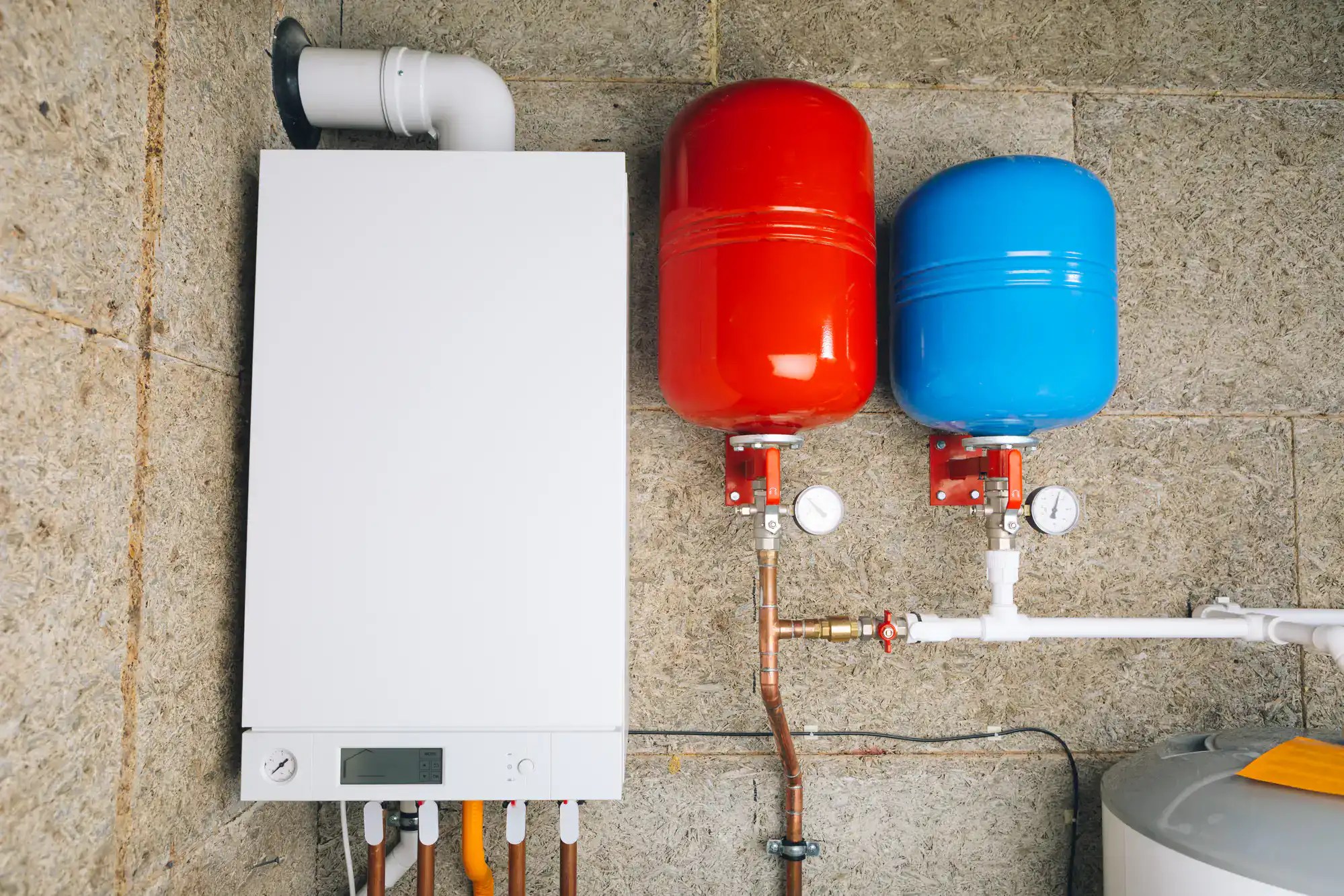
The space savings are straightforward and immediately noticeable. Traditional water heater tanks stand 4-6 feet tall and occupy 2-3 feet of floor space. Tankless units mount on walls, typically measuring about 2 feet tall by 1.5 feet wide and less than a foot deep. In El Dorado County homes where utility rooms, garages, or basements serve multiple purposes, reclaiming that floor space matters. You’re not just freeing up room—you’re eliminating a bulky appliance from a space you might want to use differently.
Let’s talk about what actually changes in your day-to-day life when you switch to tankless. The most obvious improvement hits during high-demand periods—weekend mornings when multiple people need showers, or when you have guests visiting. With a 50-gallon tank, you might get two good showers before the third person faces cooling water and a 30-45 minute wait for the tank to reheat. Tankless eliminates that wait entirely.
This matters more than it might seem. Families with teenagers, households where people work different shifts, or homes that frequently host guests all benefit from not having to coordinate shower schedules around hot water availability. You’re not rationing a limited resource anymore. Someone can take a 20-minute shower without impacting the next person’s experience.
The performance stays consistent because the system isn’t depleting a reservoir—it’s heating water in real-time as it passes through. The heat exchanger maintains temperature continuously, so the water coming out at minute 15 is just as hot as minute 1. With tank systems, even if you don’t fully deplete the tank, the last portion of a long shower often runs cooler as the heating element struggles to keep up with outflow.
There’s a practical limit to this, though, and it’s worth understanding. If you’re running two showers, the dishwasher, and the washing machine all at once, you’re asking the tankless unit to heat water for multiple high-flow applications simultaneously. Most residential tankless heaters can handle 2-3 simultaneous uses depending on the model, but pushing beyond that can cause the temperature to drop slightly. The system doesn’t stop working—it just can’t heat enough water fast enough to maintain full temperature at every fixture.
For most El Dorado County families, this isn’t a real-world problem. People don’t typically run every hot water fixture at once. But if you have a large household with heavy simultaneous demand, discussing flow rate requirements with us during the sizing process prevents disappointment later. In some cases, installing two tankless units—one for the master bathroom and main living areas, another for secondary bathrooms and laundry—solves the problem while still delivering better efficiency than a single massive tank would.
The other aspect of “unlimited hot water” that matters is recovery time, or rather, the lack of it. With tank systems, once you deplete the hot water supply, you’re waiting 30-60 minutes for a full tank to reheat. Even partial depletion means some recovery time. Tankless systems have zero recovery time because they’re not recovering anything—they’re just heating the next gallon of water that flows through. This makes a bigger difference than most people expect, especially in homes where water use happens in clusters throughout the day.
The physical footprint difference between tank and tankless systems opens up options you might not have considered. Traditional tanks need floor space and clearance around them for maintenance access. They’re also heavy when full—a 50-gallon tank weighs over 400 pounds—so they’re essentially permanent fixtures wherever they’re installed.
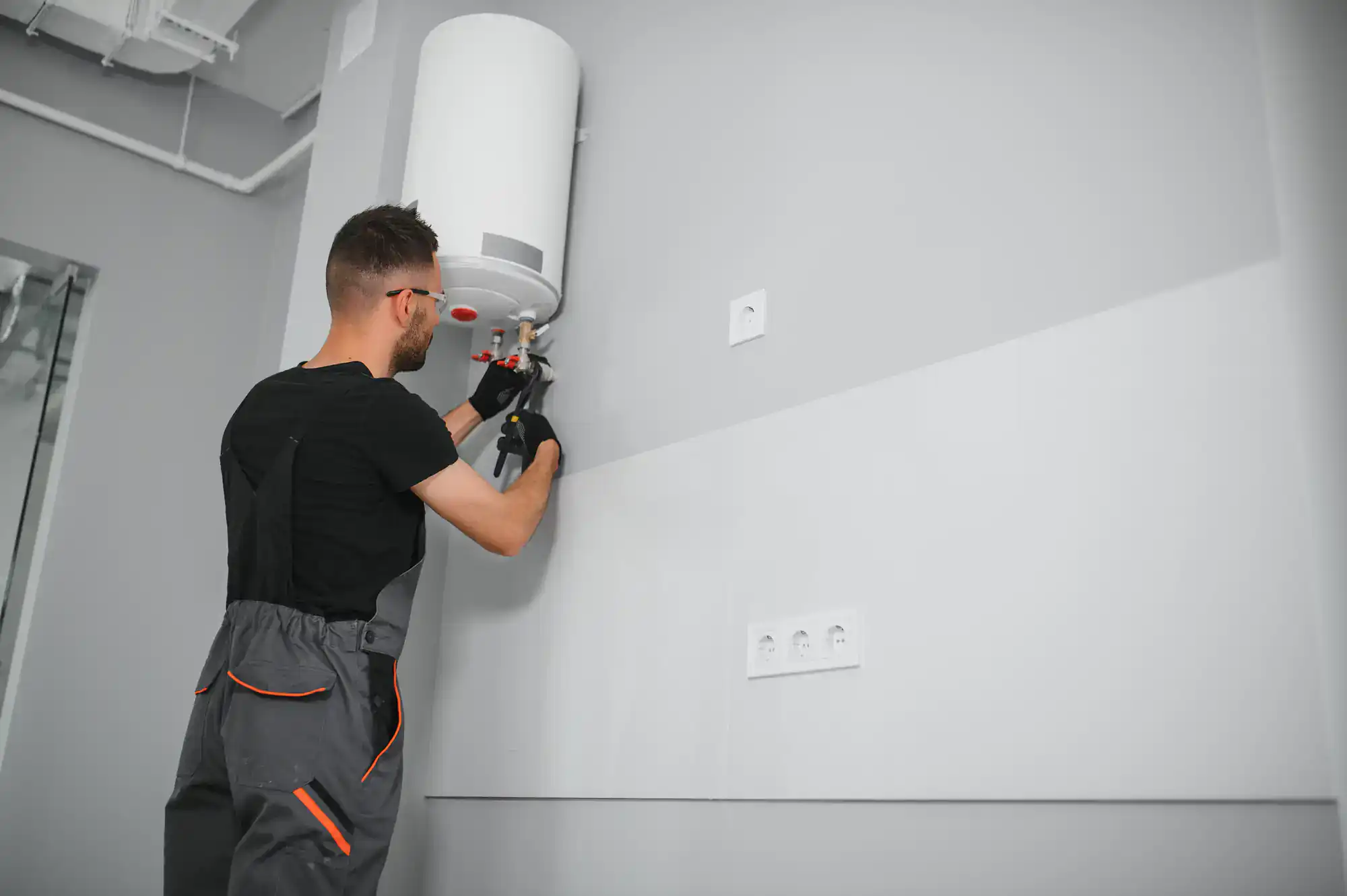
Tankless units mount on walls, indoors or outdoors depending on the model. This flexibility matters in El Dorado County’s diverse housing stock. Older homes built during the Gold Rush era often have cramped utility spaces that weren’t designed for modern appliances. Newer homes might have finished basements or converted garages where a bulky tank looks out of place. Wall-mounting a compact tankless unit solves both problems.
The space you reclaim isn’t trivial. Removing a water heater tank frees up 10-15 square feet of floor space, which you can repurpose for storage, laundry facilities, or just better traffic flow in a tight utility room. Some homeowners install tankless units in locations that would never work for traditional tanks—tight closets, exterior walls, or even attics in some cases.
Installation flexibility also matters when you’re dealing with El Dorado County’s terrain. Properties on hillsides or with limited access can make replacing a heavy tank challenging. Tankless units weigh 20-30 pounds, making them far easier to transport and position, especially in homes where access requires navigating stairs or narrow doorways.
There’s also the aesthetic factor, though it’s secondary to function. A wall-mounted tankless unit in a finished basement or visible utility area looks more like a modern appliance and less like industrial equipment. If your water heater is in a space that’s even partially visible or used for purposes beyond utilities, the visual improvement is noticeable.
One consideration specific to El Dorado County is placement relative to hard water concerns. Tankless units need annual descaling in areas with high mineral content, so installing them in locations with easy access for maintenance makes sense. Wall mounting at chest height is often more convenient for service than a tank sitting on the floor in a corner. We can recommend placement that balances space savings with practical access for the maintenance these systems need to perform well long-term.
The installation itself requires some modifications compared to a simple tank replacement. Tankless units need different venting (for gas models), potentially upgraded gas lines or electrical service, and sometimes new water line routing. These aren’t dealbreakers, but they do add to installation time and cost. However, the one-time investment in proper installation pays off in the system’s performance and longevity, especially when you’re working with a plumber who understands El Dorado County’s specific requirements around permits, codes, and local water conditions.
The benefits of tankless water heaters are measurable—24-34% better energy efficiency, 20+ year lifespan, unlimited hot water, and meaningful space savings. For El Dorado County homes, the hard water conditions and aging infrastructure make the longevity advantage particularly relevant. The upfront cost is higher, typically $3,500-6,500 installed, but the long-term ROI from energy savings, available rebates, and extended equipment life makes the math work for most households.
The real question isn’t whether tankless systems work—they do—it’s whether the benefits match your specific situation. Families tired of running out of hot water, homeowners looking to reduce energy costs, and anyone planning to stay in their home long enough to realize the payback period should seriously consider the upgrade. If you’re already facing water heater replacement, the incremental cost difference between a new tank and going tankless shrinks considerably when you factor in long-term savings.
We’ve been handling water heater replacements and tankless installations throughout El Dorado County for over 24 years. We understand the local water conditions, permitting requirements, and installation challenges unique to this area. If you’re considering a tankless upgrade or your current water heater is showing its age, we can assess your home’s specific needs and provide transparent pricing on what the switch would actually cost for your situation.
Article details:
Share:
Continue learning: