Gas line safety isn't just about emergencies. Here's what foothill and Sacramento homeowners should know before something goes wrong.
Share:
Summary:
Most people don’t think about their gas lines until something smells off — literally. Maybe it was faint, maybe it went away on its own, and now you’re not sure whether to call someone or let it go. That uncertainty is exactly where gas safety problems tend to grow.
This page is for homeowners in El Dorado County, Placer County, and Sacramento County who want straight answers. We’ll walk through what automatic gas shut-off valves actually do, why they matter more here than most people realize, and what separates a home that’s genuinely protected from one that just hasn’t had a problem yet.
There’s a common assumption in El Dorado Hills, Cameron Park, Roseville, and other foothill communities that earthquakes are a Bay Area problem. That assumption is wrong, and it leaves a lot of homes unprotected in ways that are entirely fixable.
El Dorado, Placer, and Sacramento counties all fall within the Delta-Sierra seismic zone — a documented fault system that runs through the Sierra Nevada foothills and the western Sacramento Valley. Moderate earthquakes have occurred throughout this region. They don’t make national headlines the way Bay Area quakes do, but they happen. When they do, natural gas contributes to one in four post-earthquake fires.
Add wildfire evacuation risk — something El Dorado County residents know firsthand after the Caldor Fire forced communities near Placerville off the mountain with almost no notice — and you have a region where gas safety deserves more attention than it typically gets. For homeowners in Placer County communities like Rocklin, Roseville, and Auburn, the same seismic and wildfire vulnerabilities apply. Sacramento County residents in older neighborhoods from Carmichael to Land Park face aging gas infrastructure that compounds these risks.

An automatic gas shut-off valve is exactly what it sounds like: a device installed on your gas line that closes automatically under certain conditions, cutting off the flow of gas to your home without any action required from you.
There are two main types worth knowing about. The first is a seismic or earthquake-actuated valve. This device detects ground movement above a certain threshold and shuts off gas flow immediately — whether you’re home, asleep, at work, or driving back from Sacramento on US-50. It doesn’t wait for you to smell something or remember to turn a knob. It acts on its own, in the moment it’s needed most.
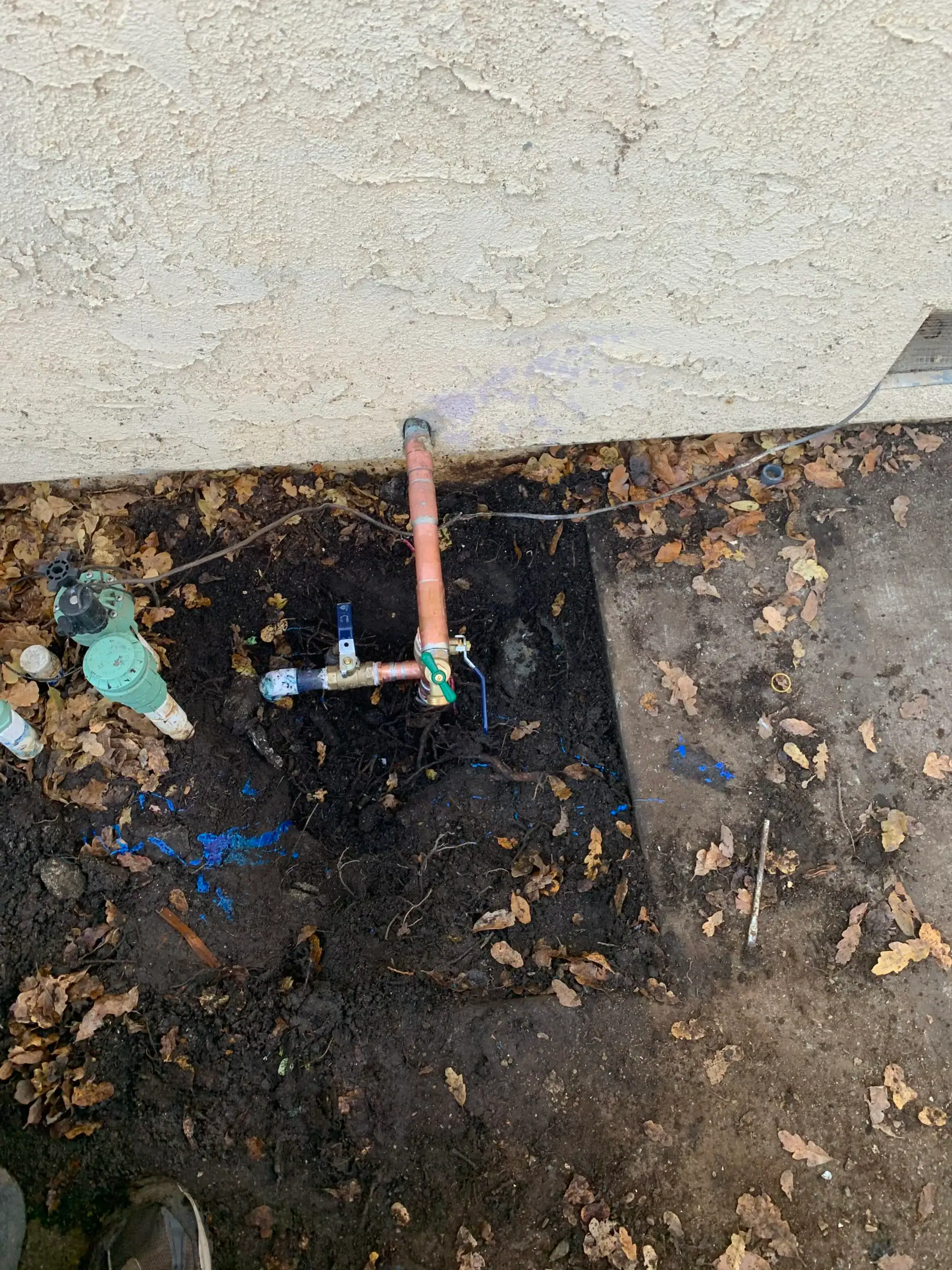
These valves are typically installed on the homeowner’s side of the gas meter, downstream of the pressure regulator, in an accessible location on the outside of the home. The second type is an excess flow valve. This one is usually installed by the utility — in this region, that’s PG&E — on the underground service line between the gas main and your meter. It’s designed to close when there’s a sudden, substantial increase in gas flow, the kind caused by a line rupture.
Here’s the critical limitation most homeowners don’t know: an excess flow valve only protects the pipe between the street and your meter. It does nothing for the gas piping inside your home. If a line fails inside your walls, or a connector behind your stove cracks, the excess flow valve won’t respond. That’s the gap a seismic valve is designed to fill.
In California, earthquake-sensitive automatic shutoff valves must be certified by the Division of the State Architect (DSA) and comply with ANSI/ASCE/SEI 25-16. Only licensed contractors may legally install them. This isn’t a device you pick up at a hardware store and put in yourself — doing so voids permits, may void your homeowner’s insurance, and creates serious risk if the valve isn’t properly positioned or connected.
Here’s something that surprises almost everyone: the flexible rubber hose connecting your gas stove, water heater, or dryer to the gas line has a rated service life of roughly 18 months. Not 18 years. Eighteen months.
In older Sacramento neighborhoods — the mid-century homes in Carmichael, Arden-Arcade, and Land Park, or the established Placer County communities off Auburn-Folsom Road — those connectors may be decades old. They’ve been twisted, exposed to heat, and in some cases damaged by pests or time. They don’t announce when they’re failing. They just quietly degrade until they don’t hold anymore.
This is one of the most common and most overlooked gas safety issues in the region. A home can pass a casual inspection, show no obvious signs of trouble, and still have a connector that’s well past any reasonable safe service life. The smell of natural gas — that rotten egg odor that comes from mercaptan, the additive PG&E mixes in for exactly this reason — is sometimes the first signal. But not always.
A professional gas line inspection looks at the full picture: the condition of your connectors, the integrity of your black iron or corrugated stainless steel tubing, the fittings at every appliance connection, and the overall pressure in the system. It’s not a dramatic process. It’s a thorough one. For homes built before 1980 in Sacramento County or the western El Dorado County foothill communities, it’s one of the more practical safety investments a homeowner can make.
If you’ve recently added a gas appliance — a new range, an outdoor grill line, a gas dryer — that’s another moment worth having a professional look at the full system. New connections interact with existing infrastructure, and a fresh installation is only as safe as the lines feeding it.
Want live answers?
Connect with a Murray Plumbing expert for fast, friendly support.
This is the question most foothill homeowners haven’t asked yet. If you’re commuting into Sacramento on I-80 from Roseville or Rocklin, or on US-50 from El Dorado Hills or Cameron Park, your home is sitting unattended for hours every day. If a seismic event happens while you’re on the road, your gas line has no way to protect itself unless a shut-off valve is already in place.
The same logic applies during wildfire evacuations. When you have 30 minutes to get out, you’re thinking about your family, your pets, your medications. You are not thinking about whether the gas is off. An automatic shut-off valve removes that variable entirely.
This is one of the most common questions we hear, and the answer depends on the situation.
After a confirmed earthquake, some jurisdictions allow homeowners to reset a tripped seismic valve themselves — but only after checking for leaks, ensuring there’s no smell of gas, and confirming the valve hasn’t been physically damaged. If everything looks and smells clear, a reset is often straightforward. The valve manufacturer’s documentation will walk through the steps.
However, if your seismic valve trips without any apparent seismic event, that’s a different situation entirely. A valve that trips on its own may be responding to vibration from nearby construction, a heavy vehicle, or a minor tremor you didn’t feel — but it could also be signaling a problem with the line itself. In that case, do not reset it yourself. Call a licensed plumber to inspect the system before gas is restored.
The same rule applies if you smell gas after a valve trips, even a faint smell. Get everyone out of the house, don’t use any electrical switches, and call from outside. Gas ignites from sources that don’t seem obvious — a light switch, a thermostat clicking on, a phone charger. Once you’re outside and clear, call your gas utility and a licensed plumber. Don’t go back in until both have given the all-clear.
For El Dorado County and Placer County homeowners in foothill communities where cell service can be spotty and utility response times may be longer than in urban Sacramento, having a licensed plumber you already trust — one with a local number, not a regional dispatch center — makes a meaningful difference in how quickly you can get back into your home safely.
Potentially, yes — though the specifics depend on your insurance provider and your policy. Some homeowners insurance companies recognize the risk-reduction value of seismic gas shut-off valves and offer premium discounts for homes that have them installed. It’s worth a direct conversation with your insurer before or after installation, because the savings over time can meaningfully offset the cost of the device and the licensed installation required.
Beyond the insurance angle, there’s a practical point about liability worth understanding. Gas line work in California must be performed by a licensed contractor. If a gas-related incident occurs in your home and the investigation finds that unpermitted or unlicensed work was done on your gas system — even years earlier — your insurance claim can be complicated or denied. Permitted, licensed work creates a documented record that protects you, not just the contractor.
This is one of the reasons we pull permits and schedule inspections for gas line work. It’s not a bureaucratic formality. It’s the paper trail that demonstrates your home’s gas system was installed and inspected correctly, which matters when it matters most.
If you’re buying or selling a home in Sacramento County, El Dorado County, or Placer County, a gas line inspection is also worth considering as part of the transaction. Real estate activity in this region has been significant, and buyers and sellers alike benefit from knowing the condition of the gas infrastructure before the deal closes. Pipe repair or connector replacement discovered during a sale negotiation is far less stressful than the same discovery after move-in.
It’s also worth noting that drain cleaning and water leak inspections often happen alongside gas safety checks when we’re already in a home — not because we’re looking to add to the scope, but because plumbing systems are interconnected, and a full picture of your home’s infrastructure is simply more useful than a partial one.
Gas line safety doesn’t have to be overwhelming. The core of it is pretty simple: know the age of your connectors, understand what your shut-off valve does and doesn’t protect, and have a licensed plumber inspect your system if you have any doubt about its condition.
For homeowners in the Sacramento foothills and the broader three-county region, the seismic and wildfire context adds a layer of urgency that most of the country doesn’t face in the same way. An automatic shut-off valve is one of the few safety devices that works entirely on its own — no action required from you, no matter what’s happening outside.
We’ve been serving El Dorado County, Placer County, and Sacramento County for over 24 years. If you have questions about your gas lines, want an inspection, or are ready to talk about shut-off valve installation, Murray Plumbing is here — with local numbers, free estimates, and same-day emergency availability when you need it fast.
Article details:
Share:
Continue learning: