If your sewer backed up after the first heavy rain, the rain wasn't the problem. Here's what was actually happening underground all summer long.
Share:
Summary:
There’s a pattern that plays out across the foothills every single year. Summer ends, the first real storm rolls through, and suddenly homeowners in Placerville, Cameron Park, Shingle Springs, and El Dorado Hills are dealing with backed-up drains and toilets that won’t flush. They call it a plumbing emergency. In most cases, it isn’t — at least, not a new one. The problem was already there. The rain just finished what months of slow deterioration had started.
Understanding why this happens, and when it’s likely to happen to you, is the difference between a quick camera inspection in September and a full sewer backup in December. We’ve been helping homeowners across these three counties avoid that exact scenario for over 24 years.
The Northern California foothills get roughly 40 inches of rain per year, and the vast majority of it falls between October and March. That concentrated wet season does something specific to the soil around aging sewer lines — it saturates it.
Saturated soil softens the ground around old pipe joints, shifts them, and accelerates the growth of tree roots that have already found their way into cracks in clay and cast iron lines. A line that was 30% blocked in August can be completely backed up by December. The rain didn’t create the blockage. It just pushed a manageable problem past the tipping point.
This is why sewer backups in El Dorado County, Placer County, and Sacramento County follow such a predictable seasonal pattern — and why waiting until something goes wrong is the most expensive approach a homeowner can take.
The median home in El Dorado County was built in 1982. That means the average house in Shingle Springs, Cameron Park, or Placerville is over 40 years old — and in many cases, the sewer lateral running from the house to the street has never been inspected since it was installed.
Clay pipe and cast iron, which were the standard materials in that era, were never designed to last indefinitely. They crack, they shift, and the joints that hold them together eventually open up just enough to let in something that doesn’t belong there: tree roots.
Oak trees are everywhere in the foothills. They’re native, they’re beautiful, and their root systems are aggressive. Roots actively seek out moisture, and a cracked sewer line full of warm water is exactly what they’re looking for. Once a root finds an entry point, it doesn’t stay small. It grows, it branches, and over time it can fill an entire section of pipe. You won’t notice it at first — the water still drains, just a little slower. By the time you notice a problem, the blockage is often significant.
Add in the elevation factor and the problem compounds further. Placerville sits at roughly 1,900 feet. Pollock Pines is closer to 3,600 feet. Both communities experience regular below-freezing temperatures in winter. Repeated freeze-thaw cycles stress older pipes that are already weakened by age and root intrusion, causing cracking and joint failure that flat Sacramento Valley homes simply don’t face to the same degree.
A homeowner in Elk Grove and a homeowner in Pollock Pines are dealing with fundamentally different plumbing conditions — and the advice that works for one doesn’t necessarily apply to the other.
Up in Sacramento’s older neighborhoods — Del Paso Heights, for example — the challenge is different but just as real. Pre-1960 housing stock with original cast iron sewer infrastructure sits beneath one of the densest urban tree canopies in California. Valley oaks, elms, and sycamores line those streets, and their roots have had decades to find every weak joint in those aging lines. The sewer problems in Sacramento’s older urban core look different from the foothill freeze-thaw failures, but the underlying dynamic is the same: old pipes, mature trees, and a wet season that turns a slow drain into a full backup.
This is one of the most important questions a homeowner can ask — and most people don’t ask it until after they’ve filed a claim and been denied. The short answer is: standard homeowner’s insurance almost certainly does not cover the kind of sewer backup that happens in this region.
Most policies explicitly exclude damage caused by root intrusion, gradual deterioration, and age-related pipe failure. Those are the exact causes behind the overwhelming majority of sewer backups in El Dorado County, Placer County, and Sacramento County. Insurance companies draw a sharp line between sudden, accidental damage — a pipe that bursts because a tree fell on your house — and the slow, predictable failure of an aging system. Root intrusion is not sudden. A 40-year-old clay pipe that finally collapses is not accidental. Both are excluded.
Optional endorsements like service line coverage and water backup coverage can fill part of this gap, with coverage limits that typically range between $10,000 and $20,000. But those are add-ons that most homeowners don’t know to ask for until it’s too late. The practical implication is straightforward: if your sewer line fails due to root intrusion or age-related deterioration, you are almost certainly paying for the repair out of pocket.
That changes the math on proactive inspection considerably. A camera inspection before the wet season costs a fraction of what an emergency sewer repair costs — and it gives you documented evidence of your line’s condition before anything goes wrong.
This is also worth knowing if you’re buying a home anywhere along the US-50 corridor from El Dorado Hills through Placerville, or in any of the older Placer County foothill communities off I-80 toward Auburn and Colfax. A sewer scope during escrow is one of the most valuable inspections a buyer can request, and it’s one of the most commonly skipped.
Want live answers?
Connect with a Murray Plumbing expert for fast, friendly support.
There’s a right way and a wrong way to diagnose a sewer problem. The wrong way is to snake the drain, declare it cleared, and send you a bill. Mechanical snaking punches a hole through a blockage — it doesn’t remove root material, it doesn’t clean pipe walls, and it doesn’t tell you anything about the condition of the pipe itself. The blockage grows back, often within months, and you’re back to square one.
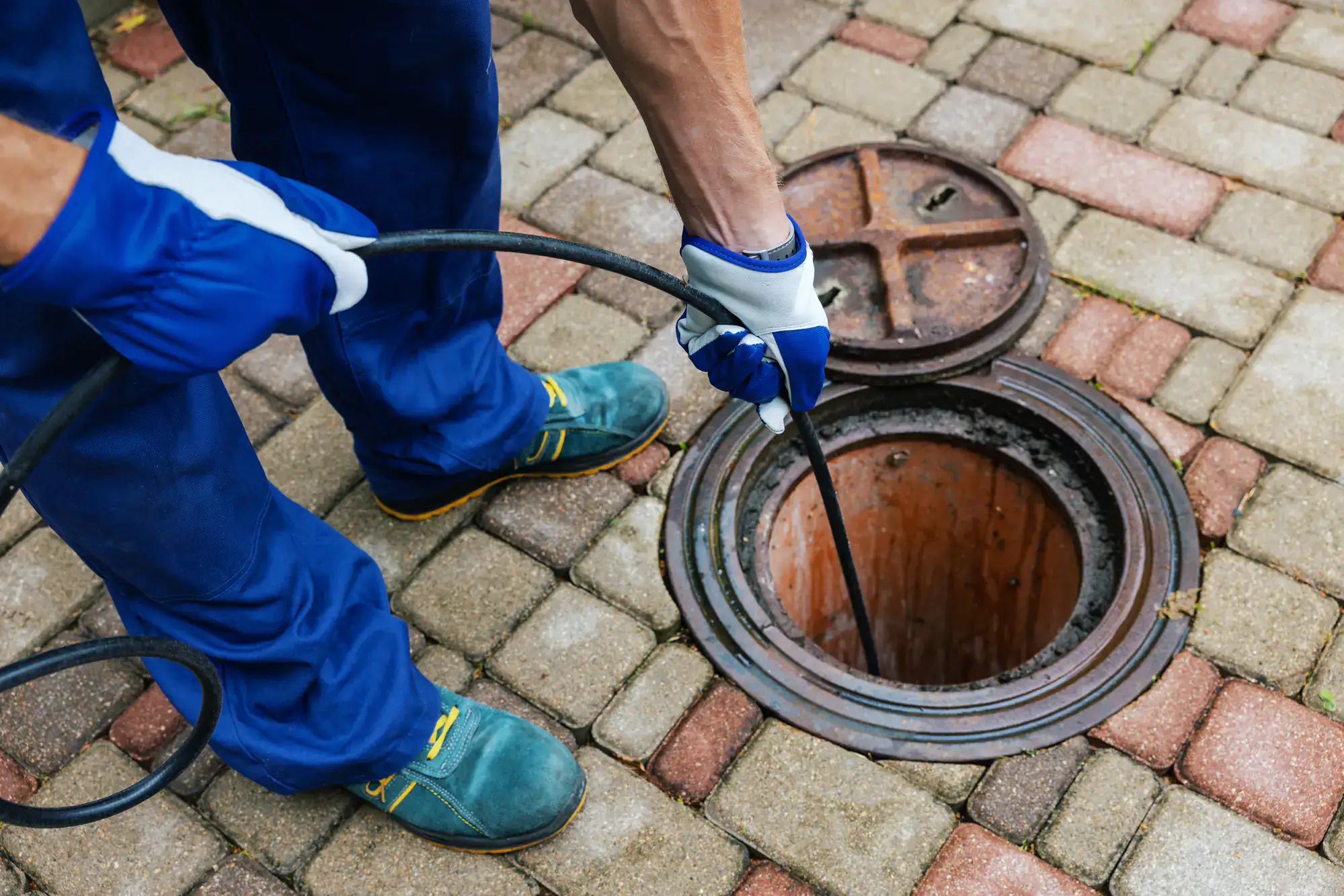
The right way starts with a camera. Before we recommend any repair, a camera should go into the line so both we and you can see exactly what’s there. Not a guess. Not a theory. Actual footage of the inside of the pipe — showing root intrusion, cracks, offsets, or buildup — documented and visible before a single repair dollar is spent.
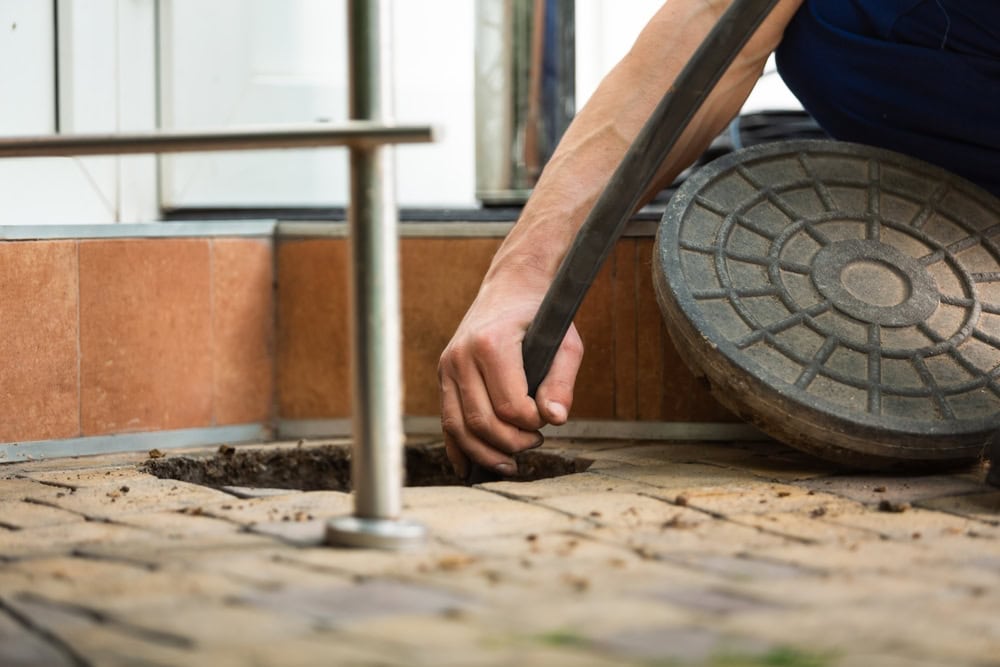
Once a camera confirms what’s in the line, the repair approach depends on what we find. For root intrusion and grease buildup, hydro jetting is significantly more effective than mechanical snaking. Hydro jetting uses high-pressure water to blast through blockages and clean the entire interior wall of the pipe — not just punch a passage through the middle of a clog. The result lasts longer, and it leaves the pipe in a condition where the next camera inspection can actually show you the pipe wall rather than a wall of debris.
Hydro jetting is particularly well-suited to the older clay and cast iron lines common in El Dorado County and Sacramento’s pre-1960 neighborhoods. These pipes often have decades of buildup on their interior walls, and a snake simply can’t address that. The high-pressure water reaches the full circumference of the pipe, which matters when you’re dealing with roots that have spread across an entire section rather than a single point blockage.
That said, hydro jetting isn’t always the right answer. If a camera reveals that a pipe is already cracked, severely offset, or collapsed, forcing high-pressure water through it can cause additional damage. This is exactly why the camera comes first — the inspection determines the approach, not the other way around. A technician who recommends hydro jetting without looking at the line first is guessing, and guessing on a 40-year-old sewer line in the foothills is not a strategy that ends well.
For homeowners in Roseville, Folsom, and the El Dorado Hills corridor who have homes built or repiped between 1995 and 2007, there’s an additional layer worth checking: Kitec piping. Kitec was a widely used product during that period that is now known for premature failure. It’s not a sewer issue — it affects supply lines — but it’s worth identifying during any comprehensive plumbing inspection of a home in that build window.
For homeowners who need more than a cleaning — a section of pipe that is cracked, root-damaged, or deteriorated beyond what hydro jetting can address — the next question is usually about excavation. Nobody wants to dig up a yard they’ve spent years landscaping, and in many foothill properties, the sewer lateral runs beneath mature trees, established gardens, or concrete driveways. The prospect of open-cut excavation is a real deterrent to getting necessary work done.
Trenchless sewer repair addresses this directly. There are two primary methods: pipe lining, where a resin-coated liner is inserted into the existing pipe and cured in place to create a new interior surface, and pipe bursting, where a new pipe is pulled through the old one, fracturing the old pipe outward as it goes. Both methods can address significant pipe damage without requiring a trench the length of the lateral. In many cases, the access points needed are small enough that the landscaping impact is minimal.
Trenchless is not always the right answer — camera inspection determines whether the pipe’s condition and configuration make it a viable option. Severely collapsed sections or certain types of pipe offsets may still require excavation. But for a large percentage of sewer laterals in El Dorado County, Placer County, and Sacramento County, trenchless repair is a legitimate alternative that saves you significant disruption.
The practical upside extends beyond the yard. Trenchless repairs are generally faster than open-cut work, which matters when the repair is happening during the wet season and you need a functioning sewer line. And because the work is done under permit — with city inspection — you have documented proof that the repair was done to code, which protects you at resale. Any sewer repair work that skips the permit process is a liability, not a savings.
If you’ve had a slow drain this summer, a gurgling toilet, or a faint sewer smell in the house, those are not minor annoyances. They are early indicators of a line that is already partially compromised. The October–March rain window is not far off, and the first significant storm of the season is when partially blocked lines become completely blocked ones.
The most useful thing you can do right now is get a camera inspection before the wet season starts. Not because something is definitely wrong, but because not knowing is the most expensive position you can be in when it rains. A documented look at the inside of your sewer line tells you exactly what you’re working with — and if the line is in good shape, you’ll have peace of mind going into winter. If it isn’t, you’ll know before you’re dealing with a backup on a Sunday night in December.
We’ve been working on homes across El Dorado County, Placer County, and Sacramento County for over 24 years. If you want a straight answer about what’s in your sewer line before the rains make the decision for you, give us a call.
Article details:
Share:
Continue learning: