Mountain homes in Pollock Pines face a freeze risk most California homeowners never think about. Here's what changes above 3,000 feet — and what to do about it.
Share:
Summary:
Most California homeowners don’t think much about frozen pipes. And honestly, if you’re in Sacramento or the valley floor, that’s probably fine. But once you’re up in Pollock Pines, Camino, Grizzly Flats, or anywhere else above 3,000 feet in El Dorado County, the rules change — and they change fast.
Pollock Pines sits at 3,980 feet. That means 35 to 45 nights below freezing every winter, with average lows hitting 20 to 25°F. That’s not a rare event. That’s just November through March. If your plumbing isn’t ready for it, you’ll find out the hard way. This post will help you get ahead of it.
There’s a common assumption among people who move to the Sierra Nevada foothills from the Bay Area or Sacramento: California doesn’t get cold enough for pipes to actually freeze. That assumption holds up at 500 feet. It falls apart at 4,000.
El Dorado County spans elevations from the valley floor all the way into the Sierra Nevada, and the difference in freeze exposure between El Dorado Hills and Pollock Pines is not subtle. December in Pollock Pines averages a low of 31.6°F, with snowfall possible from October through May. The pipes in your crawl space, your garage, or your exterior walls don’t care that you’re still technically in California.
When water freezes, it expands by about 9%. That pressure has to go somewhere — and in a pipe, it often goes sideways, cracking or splitting the line. A crack as small as 1/8 of an inch can release up to 250 gallons of water per day. That’s not a drip. That’s a flood.
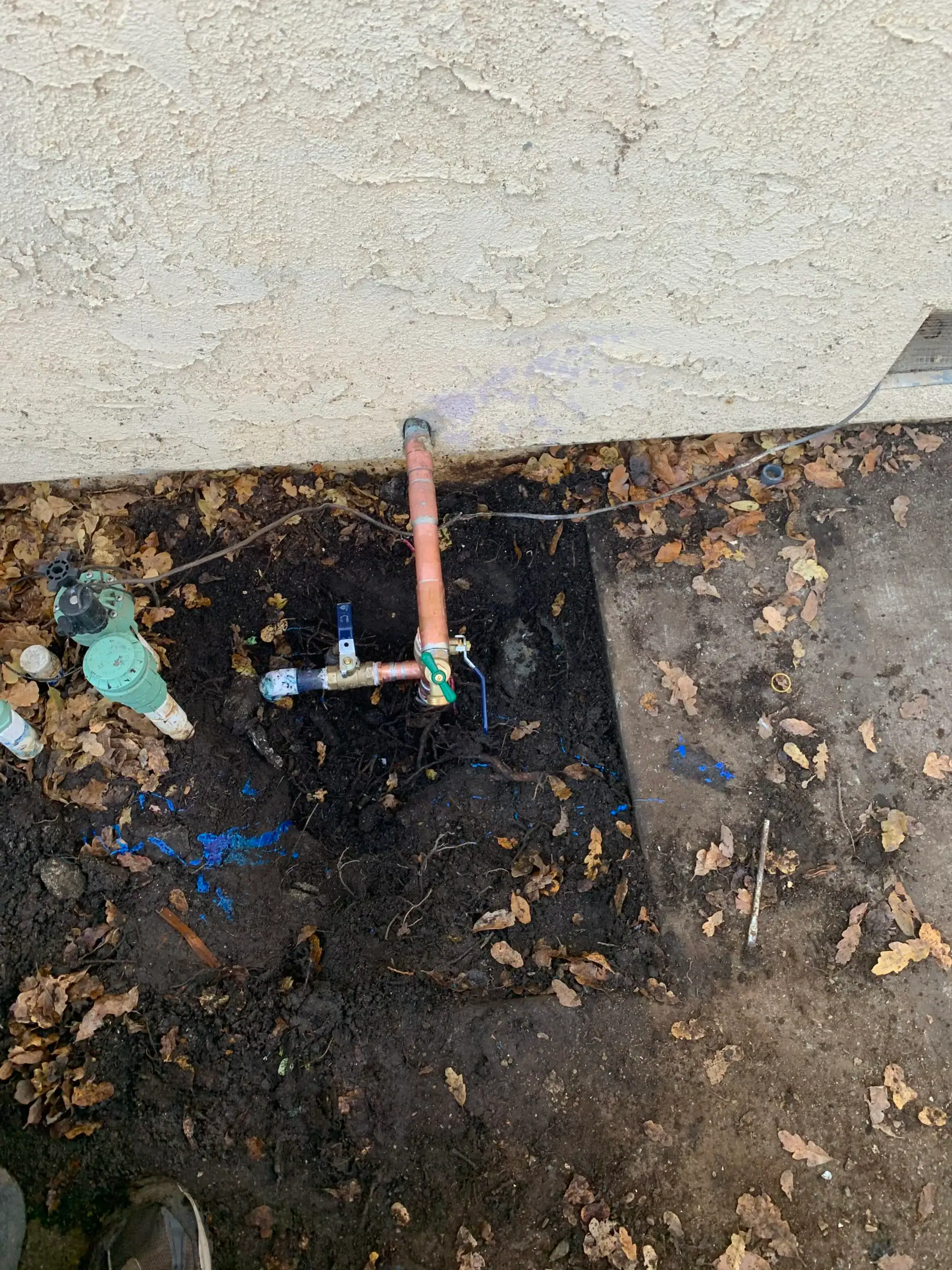
This is where a lot of homeowners get tripped up — especially those who are newer to mountain living. They insulate the outdoor hose bib, maybe let a faucet drip on the coldest nights, and figure they’ve covered their bases. But the pipes that cause the most damage in mountain homes are often the ones you can’t see.
Pipes running through unheated crawl spaces are among the most vulnerable. In many El Dorado County homes — particularly those built in the 1970s through the 1990s — the crawl space sits below the living area with little to no insulation between the floor joists and the pipes. On a night when temperatures drop to 20°F, that crawl space can get cold enough to freeze a supply line in a matter of hours.
Garage walls are another problem area. If your water heater or laundry connections run through an unheated garage, those pipes are exposed to outside temperatures every time the garage door opens or the temperature drops. The same goes for pipes inside exterior walls that weren’t properly insulated during construction — a common issue in older mountain-area homes.
Attic runs are less common but not unheard of, and they’re among the most severe when they fail because the water has nowhere obvious to go before it reaches the living space below.
Outdoor hose bibs absolutely still matter — leaving a garden hose connected in winter is one of the fastest ways to freeze and crack a bib — but they’re usually the easiest fix. The harder problems are the ones hiding in your walls and under your floors.
If you’re not sure where your most vulnerable pipes are, that’s not a bad reason to have someone walk through the house before the first hard freeze. Knowing what you’re dealing with is half the battle, and it’s a lot cheaper than finding out after the fact.
General winterization advice — the kind you’ll find on most websites — is written for a broad audience. “Insulate your pipes.” “Keep your thermostat above 55°F.” That’s not wrong, but it’s not complete for a home at elevation in El Dorado County.
Foam pipe sleeves work well for accessible interior runs in conditioned spaces, but for pipes in a crawl space or exterior wall, you need more. Fiberglass pipe wrap with weather-resistant tape handles exposed sections better in conditions where temperatures stay well below freezing for extended periods. For the most exposed runs — think pipes along the north-facing exterior of a home, or supply lines that run through a garage — self-regulating heat tape is worth the investment. Unlike standard heat cable, self-regulating tape adjusts its output based on the surrounding temperature, so it uses more energy when it’s colder and less when it’s not.
Keeping the home at a minimum of 55°F matters even when you’re away. This is especially relevant for the large number of vacation properties and second homes in eastern El Dorado County and the South Lake Tahoe area. A home left unheated during a cold snap is the highest-risk scenario for a catastrophic pipe failure — and it’s also the scenario most likely to result in a denied insurance claim.
That last point is worth sitting with. Most homeowners insurance policies cover sudden water damage from a burst pipe — but coverage can be denied if the home was left without adequate heat or if reasonable precautions weren’t taken. The cost of keeping the heat on or having us winterize the system before you leave for the holidays is trivial compared to the cost of a denied claim on top of a repair bill that can run anywhere from $350 to $2,500 depending on the severity and location of the damage.
For absentee owners, the most reliable approach is professional winterization before the season starts: draining the system, shutting off the water supply, and making sure any remaining water in the lines can’t freeze and expand. It’s not complicated, but it does need to be done correctly.
Want live answers?
Connect with a Murray Plumbing expert for fast, friendly support.
Sometimes you don’t get to prevent it. You wake up on a January morning, turn on the faucet, and nothing comes out. Or almost nothing — just a trickle where there should be full pressure.
The first thing to check is whether your neighbors still have water. If they do and you don’t, or if only certain fixtures in your home are affected while others work normally, the problem is almost certainly on your side of the meter. That’s a homeowner-side issue, not something the El Dorado Irrigation District is going to fix.
A frozen pipe doesn’t always mean a burst pipe — not yet. But the window between frozen and burst can be short, especially if temperatures stay low.
Sometimes, yes — but it depends entirely on whether you can locate the frozen section and access it safely.
If the pipe is visible and accessible — say, under a sink or along an exposed basement wall — a hair dryer or heat lamp applied slowly and carefully along the frozen section can work. You start at the faucet end and work back toward the cold section, which lets the melting water escape rather than building pressure in a closed section of pipe.
What you should never do is use an open flame. A propane torch or any kind of blowtorch on a frozen pipe is a serious mistake — it can damage the pipe itself, create a fire hazard in the surrounding structure, and make an already bad situation significantly worse.
The more important question is what you can’t see. If the frozen section is inside a wall, under a floor, or in a crawl space you can’t safely access, that’s not a DIY situation. You don’t know whether the pipe has already cracked. You don’t know whether thawing it will release water into a space where you can’t see or stop it. In that case, shut off the main water supply to the house — know where that valve is before you need it — and call us.
In Pollock Pines and the surrounding mountain communities along the US Highway 50 corridor, the risk of a pipe that has already cracked but hasn’t released water yet is real. The freeze holds the crack closed until the pipe thaws, and then the damage becomes visible all at once. Getting a professional to assess the situation before you thaw anything is the safer call.
A few questions we hear regularly from homeowners in the mountain communities we serve:
**At what temperature do pipes actually freeze?** Pipes begin to freeze when ambient temperatures around them drop to 20°F. Sustained cold below 15°F significantly increases the risk of a pipe not just freezing but bursting. In Pollock Pines and throughout El Dorado County, those temperatures are not uncommon during January and February.
**Does homeowners insurance cover frozen pipe damage in California?** It depends on the circumstances. Most standard policies cover sudden water damage from a burst pipe, but they typically do not cover the cost of repairing or replacing the pipe itself. More importantly, if the home was left unheated or reasonable precautions weren’t taken, the claim can be denied entirely. This is a real issue for vacation property owners in El Dorado County and the Tahoe area of Placer County — and it’s a strong argument for professional winterization before you leave for the season.
**Do I need to worry about this if my home is newer construction?** Yes. New construction in mountain communities can still have pipes running through unheated crawl spaces, garages, or exterior walls. Homes rebuilt in the Caldor Fire recovery zone along the US Highway 50 corridor are newer, but they face the same elevation-driven freeze risk as any other home above 3,000 feet in El Dorado County.
**What about dripping the faucets — is that enough?** It helps, but it’s not a complete solution. Keeping water moving through the lines reduces freeze risk in active supply pipes, but it does nothing for pipes in unheated spaces that aren’t connected to a running fixture. Think of it as one layer of protection, not the whole plan.
**What if I lose power during a cold snap?** This is a real concern in mountain communities where PG&E Public Safety Power Shutoffs can occur during high-wind winter events. If you rely on electric heat tape for pipe protection, a PSPS event can eliminate that protection entirely. Having a backup plan — whether that’s a generator, a propane space heater for the crawl space, or simply knowing how to shut off and drain the system quickly — is worth thinking through before it happens.
If you’re not sure whether your pipes are adequately protected for winter at your elevation, that uncertainty is worth acting on before November. Prevention is straightforward. Repair is not — and the cost difference between the two is significant.
We’ve been working in El Dorado County, Placer County, and Sacramento County for over 24 years. We know the housing stock, we know the elevations, and we know what mountain homes actually need — not just what general plumbing advice says. When something goes wrong, we respond the same day you call, and the price we quote is the price you pay.
If you want a straight answer about where your home stands heading into winter, reach out to us. We’re available 24/7, and we’d rather help you prevent a problem than show up after one has already started.
Article details:
Share:
Continue learning: