

Hear from Our Customers
The Natomas Basin isn’t like most of Sacramento. It’s a reclaimed floodplain built on deep, sandy, water-saturated soil the exact conditions the California Geological Survey flags as prone to liquefaction. In a seismic event, that soil doesn’t just shake. It moves. And rigid gas piping buried beneath or running through your home can’t flex with it. That’s not a theoretical risk. It’s a documented one, and the CGS’s newly released Seismic Hazard Zone Maps designate this basin as a Zone of Required Investigation for exactly that reason.
An earthquake shut-off valve solves one specific problem: it cuts your gas automatically the moment it detects that kind of movement before a ruptured line can fill your home with gas or find an ignition source. You don’t have to be home. You don’t have to react in time. It just works.
If you’re already carrying mandatory flood insurance because of where you live in Natomas Park, you already understand that your location comes with specific obligations. A seismic valve is the same logic applied to your gas system documented, permitted, and on record. When your insurer asks, or when you go to sell, the paperwork is there.
We’ve been serving the Natomas Park and greater Sacramento area since 2009. That’s over 15 years of pulling permits through the City of Sacramento’s building department, showing up on time, and charging what was quoted sometimes less. Owner Ryan Murray holds California C-36 License #916322, the specific classification required by state law for gas line and seismic valve work. You can verify it at cslb.ca.gov in about 60 seconds.
This isn’t a franchise. It isn’t a call center that dispatches whoever’s available. When you call Murray Plumbing, you’re dealing with a named, licensed professional who has a reputation in Natomas Park worth protecting.
We know these neighborhoods Natomas Park, Northpointe Park, Gateway West, Natomas Crossing. We know that most homes here were built between 1998 and 2008, the gas infrastructure is now 20-plus years old, and the soil conditions make seismic preparedness a real conversation, not a sales pitch. We live and work in the communities we serve.
It starts with a free pre-installation assessment. Before any money changes hands, a licensed technician comes out, looks at your gas meter configuration, checks site access, and confirms whether any aging components near your meter warrant attention. Most Natomas Park homes were built in the late 1990s through early 2000s, so this visit often catches first-generation fittings that haven’t been looked at since the home was built. You get a firm, all-in price typically $400 to $650 before anything is scheduled.
Once you’re ready to move forward, we pull the required City of Sacramento building permit. This isn’t optional, and any contractor who skips it is putting the liability on you. The installation itself uses only DSA-certified valves the California Division of the State Architect’s certification standard, which is what satisfies permit requirements, insurance documentation, and real estate disclosure obligations. A valve that isn’t DSA-certified doesn’t meet code, regardless of where it came from or how much it cost.
After the valve is installed, the final inspection is scheduled and closed out. You receive written documentation of the valve brand, model, installation date, and permit record. And before the technician leaves, we walk you through what to do if the valve trips because in a liquefaction-prone area like Natomas Park, the ground movement that trips the valve may also have stressed the line beneath your home. Resetting it without a professional inspection first is the one mistake you don’t want to make.
Ready to get started?
Every earthquake valve installation through Murray Plumbing includes the DSA-certified valve, licensed C-36 labor, City of Sacramento building permit fees, final inspection coordination, written installation documentation, and a walkthrough of the post-trip protocol. The all-in price range of $400 to $650 covers all of it. There are no separate line items for the permit, no “valve not included” surprises, and no vague estimates that balloon once work begins.
For Natomas Park homeowners, the written documentation matters more than it might in other parts of Sacramento. You’re already managing mandatory flood insurance tied to your location in FEMA Flood Zone A99. If your insurer adds a seismic safety requirement at renewal which is increasingly common as California’s insurance market tightens or if a buyer’s inspector flags a missing valve during a transaction, you need paperwork that holds up. A DSA-certified valve installed under a pulled City of Sacramento permit, with a closed inspection on record, is what satisfies that requirement. A receipt from a hardware store does not.
PG&E will not install this for you. If you call them, they’ll tell you to hire a licensed plumber. We hold the license, serve Natomas Park, and can schedule your free assessment without a waitlist, an application, or a utility program queue.
Yes, and it’s worth understanding why. Liquefaction happens when water-saturated soil temporarily loses its structural strength during seismic shaking the ground behaves more like a liquid than a solid. The Natomas Basin, which is the reclaimed Sacramento River floodplain that Natomas Park sits on, has deep, sandy, saturated soils that the California Geological Survey specifically identifies as prone to this. The CGS’s 2025 Seismic Hazard Zone Maps formally designate the basin as a Zone of Required Investigation for liquefaction.
What that means for your gas system is that the risk isn’t just from shaking it’s from the ground itself shifting and displacing the rigid piping beneath and around your home. An earthquake shut-off valve is designed to respond to exactly that kind of movement, cutting gas flow automatically before a displaced or ruptured line can cause a fire or fill your home with gas. For a neighborhood with this soil profile, that’s not a precaution it’s a direct response to a documented local hazard.
For most residential installations in Natomas Park, the all-in cost runs between $400 and $650. That range includes the DSA-certified valve, licensed labor, City of Sacramento permit fees, final inspection coordination, and written documentation. The exact number depends on your meter configuration and site access conditions, which is why the process starts with a free pre-installation assessment so you have a firm price before any commitment is made.
What’s worth noting is what that range doesn’t include: surprises. Multiple customers in Natomas Park have noted their final invoice came in at or below the original estimate. In a market where contractors routinely low-ball the quote and adjust upward once work has started, that track record matters. For a Natomas Park homeowner with a home valued in the $570,000 to $625,000 range, a fully permitted, documented seismic valve installation in the $400 to $650 range is a proportionally modest investment against the asset it’s protecting.
Yes. Under California Plumbing Code Section 1211.7, earthquake-actuated gas shutoff valve installations require a building permit and a final inspection before the permit is closed. In Natomas Park, that means a permit pulled through the City of Sacramento’s building department not a county permit, since Natomas Park falls within Sacramento city limits.
The permit matters for several reasons beyond legal compliance. It creates a record at the city building department that is required for insurance documentation and must be disclosed in any future sale of your home. An unpermitted installation is technically an unpermitted modification to your gas system, which can create liability issues and may not satisfy your insurer’s documentation requirements. We pull the permit and schedule the final inspection as a standard part of every installation it’s not an add-on, and the cost is included in the all-in price range.
This is one of the most common concerns homeowners raise, and it’s a fair one. DSA-certified valves are designed and tested to respond to the specific motion signature of seismic activity not to routine vibration from passing trucks, construction equipment, or even a nearby freeway. The I-5 and SR-99 corridors run just west of Natomas Park, and heavy vehicle traffic in the area is a daily reality. A properly certified valve distinguishes between that kind of ambient vibration and the ground motion produced by an actual seismic event.
That said, not all valves are equal. A non-certified valve purchased online and self-installed has no guarantee of meeting that threshold. DSA certification is the California standard that confirms a valve has been tested to perform correctly triggering when it should, and not triggering when it shouldn’t. Every valve we install is DSA-certified. That’s the baseline, not an upgrade.
Do not reset it yourself and turn the gas back on. That’s the most important thing to know. When a seismic event trips your valve, the correct first step is to call a licensed plumber to inspect your gas lines before service is restored. This matters everywhere, but it matters more in Natomas Park specifically because of the liquefaction risk. The ground movement that triggered the valve may have also stressed, displaced, or cracked the gas piping beneath your home and restoring gas flow into a damaged line is a serious hazard.
A licensed plumber will check the lines for integrity before resetting the valve. If everything checks out, the reset is straightforward. If there’s damage, you want to know that before the gas is back on. We walk every customer through this protocol at the time of installation, because most installers don’t cover it and most homeowners don’t think to ask until they’re standing in front of a tripped valve after a 4.5 magnitude event.
Natomas Park’s housing stock is almost entirely from the late 1990s through the early 2000s, which means most of the original gas infrastructure in the neighborhood is now 20 to 25 years old. That’s not an automatic problem, but it is the age range where a professional set of eyes on the meter-side components is worth having especially if nothing has been inspected since the home was built.
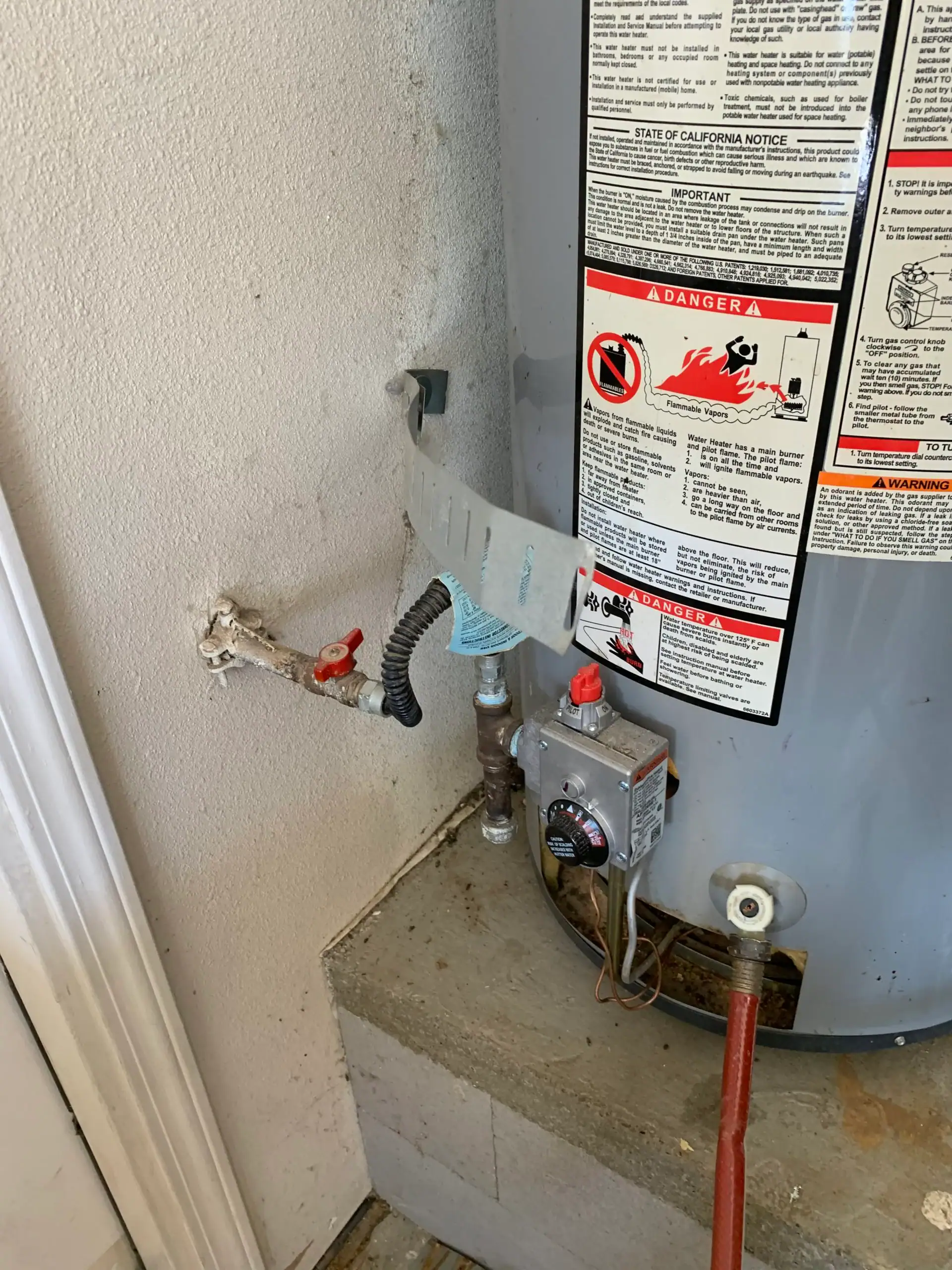
Our free pre-installation assessment covers more than just valve placement. The technician looks at the gas fittings, connectors, and meter-side piping that were installed when your home was built, and flags anything that warrants attention. You’re not paying for a separate inspection it’s part of the same visit. For a neighborhood where every home on the block is roughly the same age and was built by the same handful of developers, that check-in has practical value. If something needs attention, you’ll know before it becomes an emergency. If everything looks fine, you’ll have that confirmation too.
Other Services we provide in Natomas Park