
Get a free quote for plumbing repair from your local plumbing team.
We’ll contact you about your plumbing repair request. Privacy policy
Hear from Our Customers
A plumbing problem in Pocket isn’t just an inconvenience — it’s a threat to a home that’s worth protecting. When the repair is done right, you stop watching a water stain spread across the ceiling, you stop running the faucet and wondering why the pressure keeps dropping, and you stop putting off a problem that’s only getting more expensive the longer it sits.
Pocket sits inside a bend of the Sacramento River, and that geography matters more than most homeowners realize. The clay soil throughout Pocket expands when it’s wet and contracts when it dries out — and that cycle happens every single year. That movement puts constant stress on underground pipes and sewer joints. Homes built here in the 1970s and 1980s were commonly plumbed with galvanized steel supply lines and cast iron drain pipes, both of which are now well past their designed service life. The result is reduced water pressure, slow drains, discolored water, and sewer backups that don’t announce themselves until they’re already a serious problem.
On top of that, Sacramento’s water supply carries calcium and magnesium minerals that build up inside pipes and water heaters over years. You may not notice it until your water heater starts struggling or your showerhead barely trickles. Getting those systems properly repaired or replaced — with quality parts that actually last — means you’re not calling a plumber again in six months for the same issue.
We’ve been serving Sacramento County since 2009. That’s over 15 years of working in neighborhoods exactly like Pocket — homes with original galvanized pipes, clay soil that shifts with the seasons, and the kind of mature tree canopy that sends roots straight into aging sewer laterals. This isn’t a franchise dispatching from a call center. It’s a locally built company where the work is done by licensed, insured technicians who show up on time and tell you the price before anyone touches a wrench.
Our flat-rate pricing model isn’t a sales pitch — it’s how we’ve operated from day one. You get the exact cost upfront, and it doesn’t change once the job starts. In fact, customers have noted that the final invoice came in under the original estimate. For Pocket homeowners with significant equity in their properties, that kind of pricing integrity matters. Whether the job is in Riverlake, Greenhaven, or anywhere else in the 95831 ZIP code, the standard stays the same: licensed work, quality parts, and a repair that holds.
When you call Murray Plumbing, you reach a real person. Not a voicemail, not an automated system. You describe what’s happening, and we work to get a licensed plumber to your Pocket home the same day — often within hours. For genuine emergencies like a burst pipe, a sewer backup, or a water heater that’s completely failed, 24/7 availability means the clock doesn’t dictate when you can get help.
Once on-site, the first step is a thorough diagnosis. In Pocket specifically, that means accounting for what’s common here: galvanized or cast iron pipe systems in older homes, potential root intrusion in sewer laterals from the neighborhood’s mature tree canopy, and the soil movement patterns that come with clay-heavy ground near the Sacramento River. If a sewer issue is suspected, a camera inspection gives a clear picture of what’s actually happening underground before any repair decisions are made. You won’t be told you need a full sewer replacement based on a guess.
After the diagnosis, you get a flat-rate quote. No hourly estimates that balloon once work starts. If you approve it, the work begins. Because Sacramento city permits are required for certain plumbing alterations and replacements, we handle that process — you don’t have to navigate the City of Sacramento Building and Safety Division on your own. When the job is done, the repair is backed by our commitment to getting it right the first time, and we stand behind the work.
Ready to get started?
We handle the full range of residential plumbing repair services in Pocket — from a clogged drain or a leaking supply line to a full sewer lateral replacement using trenchless methods that don’t require tearing up your yard. For Riverlake homeowners with landscaped properties and high-value grounds, trenchless sewer repair is often the right call: it eliminates the excavation, the restoration costs, and the disruption that traditional methods bring.
Pipe repair in Pocket covers the materials that are actually in these homes: copper, PEX, PVC, galvanized steel, and cast iron. Galvanized steel corrodes from the inside out, progressively narrowing the pipe until water pressure drops noticeably across the whole house. Cast iron drain pipes crack at the joints, scale internally, and become a target for root intrusion — especially in a neighborhood with the tree density Pocket carries along its parks, bike trails, and residential landscaping. Water line repair addresses breaks, leaks, and pressure loss from the main into the house. Water heater repair and replacement covers both traditional tank units and tankless systems, with attention to the scale buildup that Sacramento’s hard water deposits inside tanks over time.
For homes dealing with recurring mineral buildup, hard water scale on fixtures, or reduced flow that doesn’t trace back to a single pipe failure, we also provide water softening, filtration, and reverse osmosis systems — treating the source of the problem rather than repeatedly addressing the symptoms.
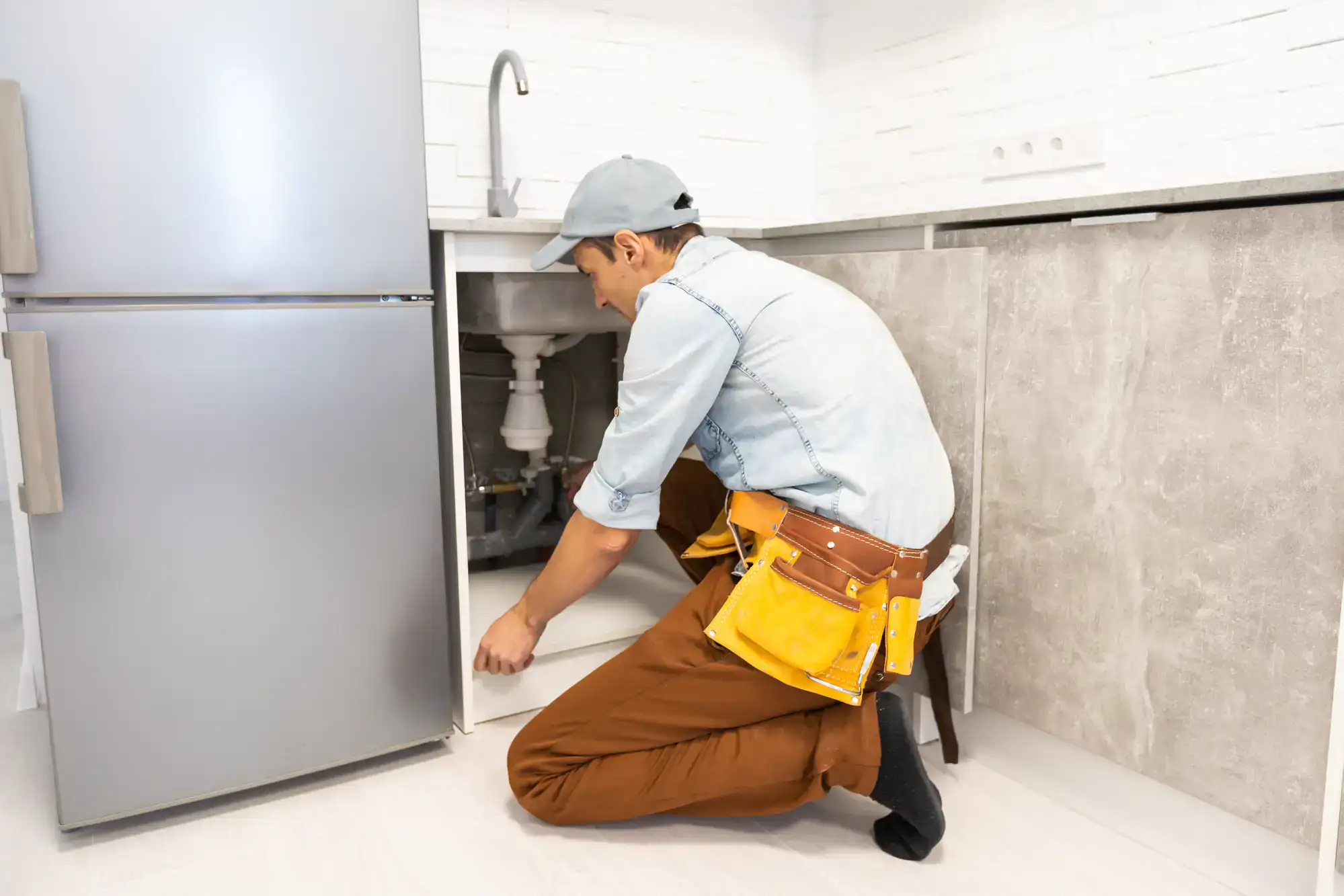
The combination of factors in Pocket is pretty specific to this neighborhood. You’ve got homes built primarily between the 1970s and 1990s, which means original cast iron and clay sewer laterals that are now 30 to 50 years old. Cast iron corrodes, scales internally, and eventually cracks — especially at the joints, where tree roots find their way in. The valley oaks, elms, and sycamores throughout Pocket’s parks and residential streets have aggressive root systems that follow moisture directly into those gaps.
Then there’s the soil. Pocket’s clay-heavy ground sits low and close to the Sacramento River, which means it stays wetter longer than most Sacramento neighborhoods and goes through a pronounced expansion-contraction cycle each year. That movement shifts underground pipes, offsets joints, and creates the kind of gradual damage that doesn’t show up until you’ve got a backup or a slow drain that won’t clear. A sewer camera inspection is the only reliable way to know what’s actually happening before a full failure forces the issue.
Galvanized steel pipes corrode from the inside, so the damage isn’t visible until it’s already well advanced. The signs you’re looking for are reduced water pressure across multiple fixtures at the same time — not just one faucet, but the whole house feeling weaker than it used to. Discolored water, especially a brownish or rust-tinged color when you first turn on a tap, is another strong indicator. If you’re noticing both, the pipe interior is likely heavily corroded and restricting flow.
In Pocket homes built in the 1970s and early 1980s, galvanized supply lines are common and are now operating well past their typical 40 to 50 year service life. Whether a section can be repaired or whether a full repipe makes more sense depends on how widespread the corrosion is. We can assess the condition of the system and give you a straight answer on what’s actually necessary — not the most expensive option, but the right one for where the pipe is in its lifecycle.
It can, and it’s worth understanding why. In 2017, water was documented seeping from yards and pooling in roadways in the Pocket neighborhood — not from rain, but from levee seepage pushing groundwater up through the soil. The U.S. Army Corps of Engineers has been actively working on Sacramento River East Levee seepage and stability remediation since 2019, with construction ongoing through at least 2026. That kind of active ground work and elevated water table creates real conditions for underground plumbing stress.
When groundwater rises due to seepage events, it can infiltrate sewer lateral pipes through cracked or deteriorated joints, create hydrostatic pressure against slab foundations, and accelerate corrosion in buried pipes. Homes closer to the levee boundary are at higher risk, but the clay soil throughout Pocket retains moisture broadly. If you’ve noticed slow drains, sewage smells in the yard, or unexplained wet spots in your lawn, those can all be signs that groundwater is interacting with your sewer system in ways that need a professional diagnosis.
Traditional sewer repair requires digging a trench along the path of the damaged pipe — which means tearing up your lawn, driveway, or garden to access it, then paying to restore all of that after the repair is done. For properties in Pocket with established landscaping, that restoration cost can be significant on top of the repair itself.
Trenchless sewer repair accesses the existing pipe from entry points at either end and either lines the pipe from the inside or pulls a new pipe through the old one, depending on the method. The yard stays intact. The disruption is minimal. And because you’re not adding excavation labor, concrete repair, and landscaping restoration to the bill, trenchless often costs less overall than the traditional approach — even though the technology itself is more advanced. Not every situation qualifies for trenchless methods, but when it does, it’s generally the better outcome for the homeowner on both cost and convenience.
It depends on the scope of the work. Minor repairs — fixing a leaking faucet, replacing a toilet, clearing a drain — typically don’t require a permit. But more substantial work does. In Sacramento, replacing water lines, altering drain and sewer systems, installing new fixtures as part of a remodel, or replacing a water heater in certain configurations all require a permit from the City of Sacramento Building and Safety Division.
For sewer lateral work specifically, the Sacramento Area Sewer District governs the connection between your home’s private lateral and the public sewer main. Any work on the lateral that connects to the SASD system requires coordination with the district. We handle the permit process as part of the job — you shouldn’t have to navigate that on your own. What matters for you as a homeowner is that permitted work is inspected, documented, and protects you if you ever sell the property or file an insurance claim. Unpermitted plumbing work done by an unlicensed contractor can create real liability down the road.
Sacramento’s water supply picks up calcium and magnesium minerals as it moves through Sierra Nevada granite formations, and by the time it reaches homes in Pocket, it carries enough mineral content to create visible scale on faucets and fixtures over time. Inside your pipes and water heater, that same buildup happens more slowly but more consequentially. Mineral deposits accumulate on the interior walls of pipes, gradually narrowing the flow path and reducing water pressure. Inside a tank water heater, scale settles at the bottom and insulates the heating element from the water it’s supposed to heat — the heater works harder, uses more energy, and wears out faster.
For Pocket homes with original plumbing from the 1970s or 1980s, years of hard water running through those pipes means the buildup has had decades to accumulate. If your water heater is making popping or rumbling sounds, that’s often scale. If you’re seeing white deposits around faucet bases or showerheads, that’s calcium. A water softener or filtration system addresses the mineral content before it enters your plumbing — which extends the life of your pipes, fixtures, and water heater rather than repeatedly treating the damage the minerals leave behind.
Other Services we provide in Pocket