
Placerville
Open 24/7- 4330 Panorama Dr, Unit 36
Placerville, CA 95667 - (530) 499-2223
- Open 24 hours, 7 days a week
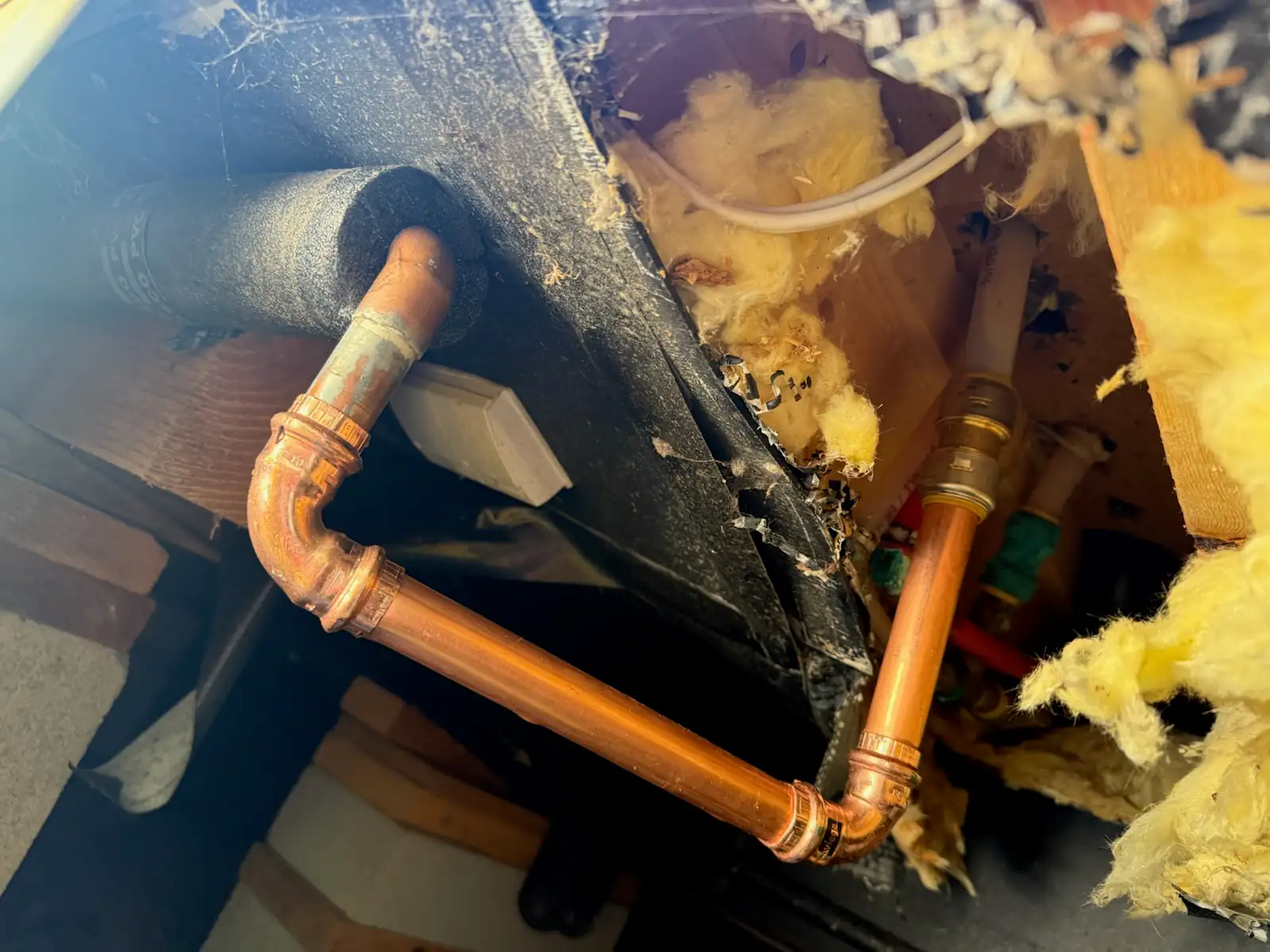
Water Leak Detector Installation
Get a free quote for water leak detector installation from your local plumbing team.
We’ll contact you about your water leak detector installation request. Privacy policy
Hear from Our Customers
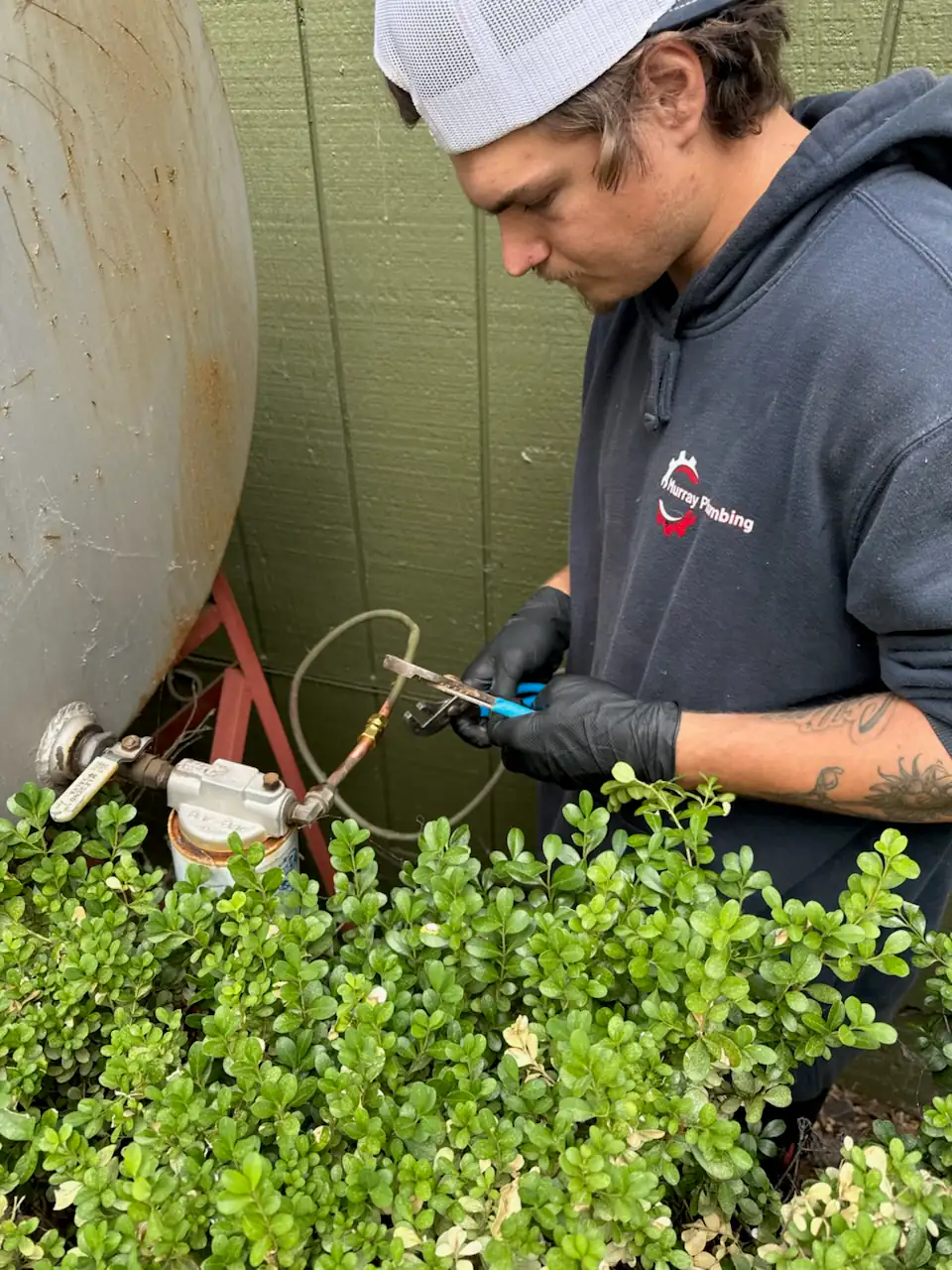
There’s a specific kind of water damage that doesn’t announce itself. It starts behind a wall, under a floor, or beneath a slab and by the time you notice the stain on the ceiling or the soft spot in the hardwood, it’s already been going on for weeks. In New Era Park, where most homes were built between 1906 and 1929, that risk isn’t hypothetical. Galvanized steel pipes were designed to last 40 to 70 years. Most of the pipes in this neighborhood are pushing 100.
A professionally installed whole house leak detection system monitors your water flow and pressure around the clock. The moment something looks off a slow drip, a pressure drop, an unexplained spike in usage you get an alert on your phone. If you have an automatic shutoff system installed, the water stops on its own. You don’t have to be home. You don’t have to be awake. The system handles it.
For New Era Park homeowners near Sutter’s Landing and the American River corridor, there’s an added layer worth thinking about. The moisture-rich soil along the levee system accelerates pipe corrosion on underground lines, and Sacramento’s expansive clay shifts with every wet season, putting stress on aging pipe runs that most people never think about until something breaks. We give you visibility into exactly what your plumbing is doing before the ground or the walls tell you the hard way.
We’ve been doing this work since 2009. Founded by Ryan Murray, we hold California Contractor’s License #916322 a C-36 classification you can verify yourself at CSLB.ca.gov before we ever show up. That’s not a throwaway line. It means real trade experience, a state-administered exam, a contractor bond, and personal accountability for every job.
Sacramento County is a core part of our service area, which means New Era Park isn’t a fringe call it’s a neighborhood we know. The housing stock here, the aging pipe materials, the proximity to the American River, the historic preservation considerations that come with Boulevard Park-adjacent properties these aren’t surprises to us. They’re exactly the kind of conditions we work in regularly.
The pricing is upfront before anything starts. No estimate fees, no line items that appear after the fact. Multiple customers have noted their final bill came in below the original quote. That’s not a marketing claim it shows up in the reviews, and you’re welcome to read them.
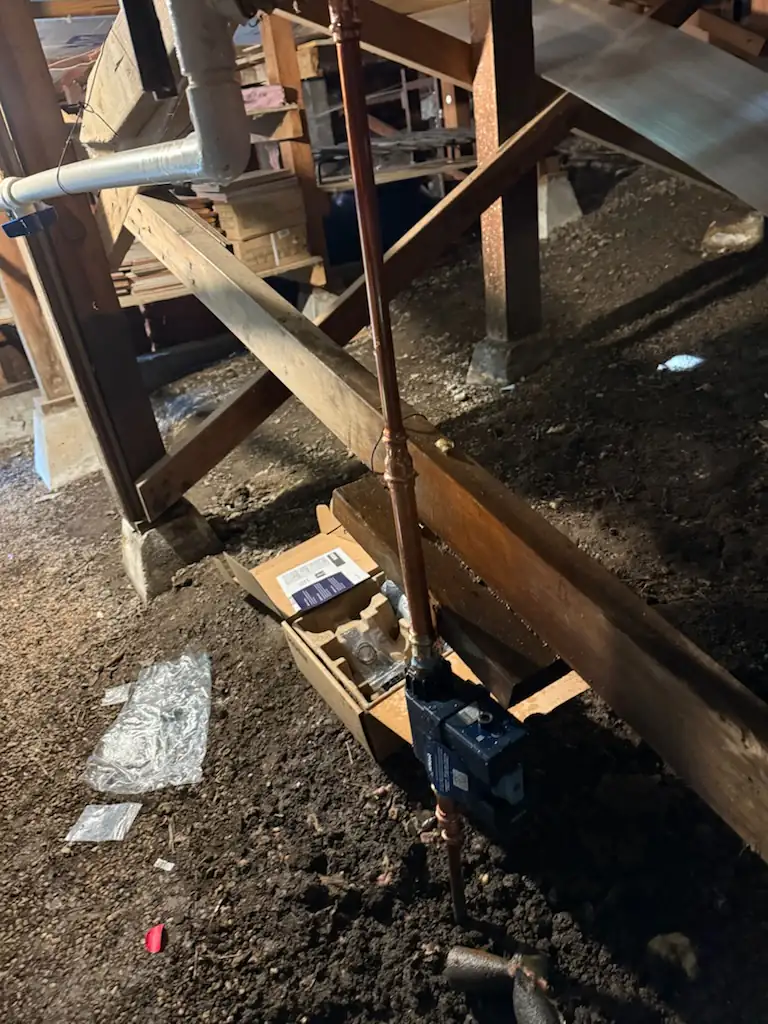
It starts with a call and a clear quote no estimate fee, no obligation. Once you’re ready to move forward, we schedule a visit and show up on time. That part matters more than it sounds, and it’s something our customers mention consistently.
When we arrive, the first thing we do is assess your plumbing system. In a New Era Park home built in the early 1900s, that means looking at what pipe materials are present, where the main supply line runs, whether there are any existing signs of corrosion or slow leaking, and where the best placement points are for sensors and a whole-home shutoff device. Older homes often have mixed pipe materials galvanized, copper, and PVC in the same system and that affects both placement and how the system reads pressure data. We account for all of it before we install anything.
The installation itself covers the main shutoff valve integration, sensor placement at the highest-risk points in your home under sinks, near the water heater, behind appliances and full app setup on your phone. You leave knowing how to read the alerts, how to trigger a manual shutoff remotely, and what the system will do on its own if something is detected while you’re at work or away for the weekend. For properties in Sacramento that may require a permit for main-line shutoff valve work, we handle that conversation upfront so there are no surprises after the fact.
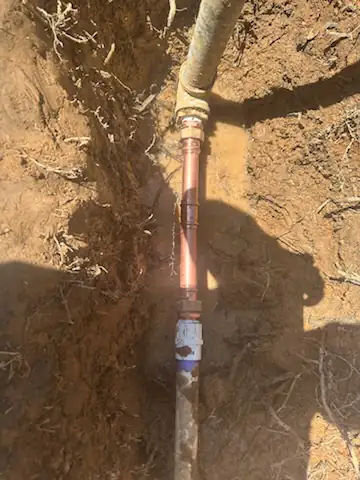
Ready to get started?
A lot of contractors will install a device and call it done. Our installation includes the full picture: the device, the shutoff valve integration, sensor placement throughout the home, complete app configuration, alert customization, and a walkthrough so you actually know how the system works before we leave. If we find an existing issue during installation a slow drip under the kitchen, early signs of galvanized pipe corrosion, a water heater showing wear we tell you about it and can address it in the same visit.
For New Era Park homeowners specifically, the Moen smart leak detection system is one of the most effective options available. It monitors flow rate and pressure continuously, learns your household’s normal usage patterns, and flags anomalies automatically. The automatic shutoff capability is particularly relevant here if you’re commuting downtown to a state agency or leaving for a summer trip, the system protects your home whether you’re two miles away or two states away.
It’s also worth a conversation with your insurance carrier after installation. Smart water leak detection systems are increasingly recognized by homeowners insurance providers as risk-reduction devices, and some Sacramento-area homeowners have seen annual premium reductions in the range of five to ten percent. For a high-value historic property in New Era Park, that adds up. We’re happy to provide documentation of the installation if your carrier requests it.
For a basic single-sensor plug-in device, technically no but that’s not what most New Era Park homeowners actually need. A whole-home water leak detection system that integrates with your main shutoff valve is a different job entirely. It involves working on your primary water supply line, which in California requires a licensed C-36 plumbing contractor. We hold License #916322, verifiable at CSLB.ca.gov.
Beyond the licensing requirement, there’s a practical reason to hire a professional for homes in this neighborhood specifically. The housing stock here is 95 to 120 years old, and the plumbing inside these homes has a history. An experienced plumber can identify existing corrosion, assess pipe materials, and place sensors at the actual high-risk points in your specific home not just wherever the instructions say to put them. The difference between a properly installed system and a device sitting under a sink is the difference between real protection and a false sense of security.
The system monitors your water flow and pressure continuously not just at one point, but across the entire plumbing system. It learns what normal looks like for your household: how much water you use in the morning, when usage typically drops off, what your baseline pressure runs. When something deviates from that pattern a slow drip, a pressure drop, a pipe that’s been running longer than it should the system flags it and sends an alert to your phone.
If you have an automatic shutoff model installed, it goes one step further. The moment the system detects an anomaly that crosses a threshold, it closes the shutoff valve on your main supply line without waiting for you to respond. For homeowners who commute to Downtown Sacramento or travel during the summer, that automatic response is the whole point. A slow leak that runs for eight hours while you’re at work can cause the same damage as a burst pipe the only difference is whether the system caught it first.
Yes, and honestly, older homes are exactly where these systems matter most. The Moen Flo and similar whole-home monitors attach to your main water supply line they don’t care whether the rest of your system is galvanized steel, copper, or a mix of both. What they’re reading is flow rate and pressure, which tells the same story regardless of pipe material.
What does matter is having an experienced plumber assess the system before installation. In a 1920s New Era Park home, it’s common to find galvanized lines that have been partially replaced over the decades, creating a mix of materials with different pressure characteristics. We can calibrate the system correctly and place sensors at the points where failures are most likely which in older homes often means under-slab runs, connections between dissimilar pipe materials, and aging supply lines to appliances. Getting that placement right is what makes the system actually useful.
The cost depends on the system you choose and the complexity of the installation. A basic single-zone sensor setup runs lower, but a whole-home automatic shutoff system the kind that actually stops water flow without you having to intervene typically falls in the range of several hundred to over a thousand dollars for the device itself, plus professional installation labor.
For New Era Park homes specifically, the installation can take a bit longer than a newer construction job because of the age and condition of the plumbing. If the main shutoff valve needs to be updated before a new system can integrate properly, that’s an additional step. We give you a clear, itemized quote before anything starts no estimate fee, and no line items added after the fact. The goal is that you know exactly what you’re paying before we pick up a tool. If anything changes during the job, we tell you before we proceed, not after.
It can, and it’s worth asking your carrier directly after installation. Many homeowners insurance providers now recognize smart water leak detection systems as qualifying risk-reduction devices, and discounts in the five to ten percent range on annual premiums are not uncommon. For a high-value historic property in New Era Park where replacement costs for original hardwood floors, plaster walls, and period millwork can far exceed standard construction costs insurance premiums tend to run higher than average, which makes that discount more meaningful in real dollars.
The key is documentation. Your carrier will likely want to know the make and model of the system installed and confirmation that it was professionally installed. We can provide that documentation after the job is complete. It’s a straightforward conversation to have with your agent, and for most New Era Park homeowners, the annual savings alone start moving the system toward paying for itself within a few years before you factor in what it might prevent.
There’s a learning curve with any flow-based monitoring system, and early false alerts are possible usually in the first week or two while the system is building a baseline for your household’s normal usage patterns. Running a bath, filling a pool, or irrigating a garden can sometimes trigger an alert if the system hasn’t yet learned that those are routine events in your home. Most systems let you adjust sensitivity thresholds and set usage schedules to reduce that.
The bigger risk, honestly, is the opposite a system that’s miscalibrated and misses a real slow leak because the baseline was set too loosely. That’s why professional installation matters, particularly in a neighborhood like New Era Park where the plumbing history of a given home can be complicated. When we set up your system, part of the process is calibrating it to your specific home’s pressure and flow characteristics, walking you through the app, and making sure you know how to read what the alerts actually mean. A system you understand is a system you’ll actually use.
Other Services we provide in New Era Park
Our Locations
From the foothills to the valley, Murray Plumbing has a licensed team close by. Find the office nearest you — we’re open 24 hours a day, 7 days a week.