

Hear from Our Customers
The moment a seismic event hits, an automatic gas shut-off valve does one thing: it cuts your gas supply before a ruptured line has the chance to become a fire. That’s not a hypothetical the 1994 Northridge earthquake caused over 14,000 gas leaks and more than 50 structure fires. Most of those homes had no seismic shut-off in place.
For Boulevard Park specifically, the risk isn’t just about proximity to a fault. Sacramento’s alluvial valley soil the deep sediment deposits left by the Sacramento and American Rivers is known to amplify ground shaking from regional faults, even when those faults are miles away. A tremor that barely registers elsewhere can hit harder here. That matters when your home’s gas infrastructure is potentially a century old.
Beyond the immediate safety benefit, a properly installed, permitted valve creates a paper trail. For homeowners in the Boulevard Park Historic District where properties regularly trade at $500,000 to over $1,000,000 that documentation has real value when you’re refinancing, selling, or renewing your insurance policy. It’s not just protection. It’s a documented asset.
We hold California C-36 Plumbing Contractor License #916322 the specific classification required by state law for gas line and seismic valve work. You can verify it at cslb.ca.gov in under a minute. That’s not a boast. It’s just what accountability looks like when you’re working on homes in a National Register Historic District like Boulevard Park.
Ryan Murray founded this company in 2009, and it’s been owner-operated ever since. We’ve worked on historic properties throughout Midtown Sacramento including the early 1900s Craftsman bungalows and Foursquare homes that line 21st and 22nd Streets in Boulevard Park. Old gas systems, unusual meter setups, a century of patchwork repairs none of that is new territory for us.
With a 4.7/5 Google rating across 93 reviews, the feedback is consistent: on time, clear about pricing, no surprises on the final bill.
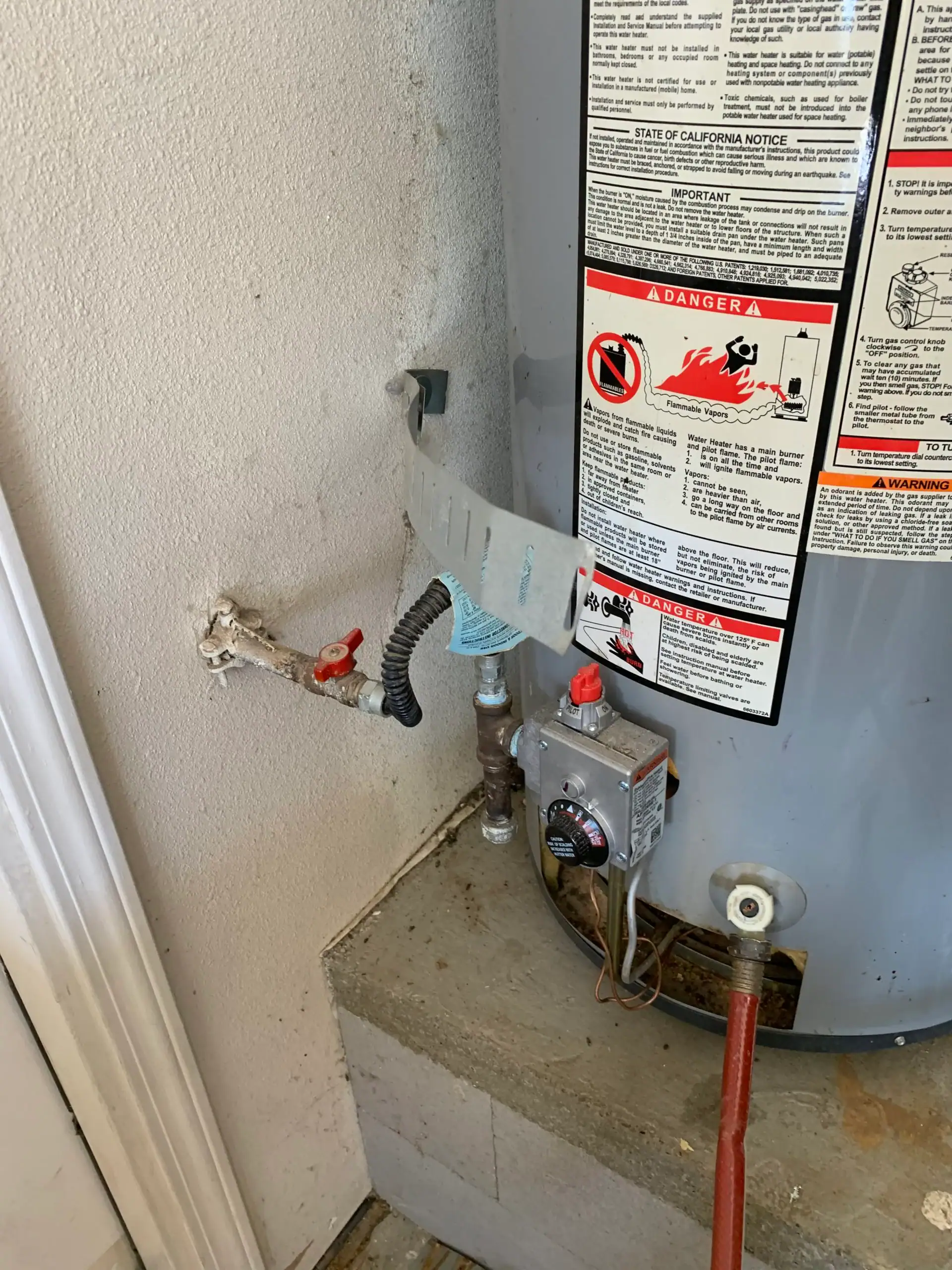
It starts with a free pre-installation assessment. Before any money changes hands, we evaluate your gas meter, existing piping, and overall setup to confirm valve compatibility and give you an accurate, all-in price. For homes in Boulevard Park where original gas infrastructure from 1905 to 1915 is still common this step matters more than it does in a newer subdivision. Older configurations can vary significantly, and you deserve to know what you’re looking at before committing.
Once the scope is confirmed, we pull the required permit with the City of Sacramento’s Community Development Department. This isn’t optional, and it’s not an upsell it’s the law, and it’s how you end up with a legal record of the installation at the building department. The valve we install will be DSA-certified, meaning it satisfies California’s Division of the State Architect standard required for permit inspections, insurance documentation, and real estate disclosures.
The installation itself is typically completed in a single visit. After the valve is set and inspected, we’ll walk you through how it works and critically what to do if it trips after a seismic event. That last part is important: you should not attempt to reset a tripped valve yourself until a licensed plumber confirms your lines are undamaged. Most installers skip that conversation. We don’t.
Ready to get started?
Every earthquake valve installation through our company runs $400–$650, all-in. That covers the DSA-certified valve, labor, permit fees, and written documentation. If your home’s configuration puts the job outside that range which can happen with older multi-unit buildings or non-standard meter setups you’ll know why before the work starts, not after.
The valves we install are earthquake-actuated gas shut-off valves certified by California’s Division of the State Architect. This is the certification that actually counts when a Sacramento building inspector shows up, when your insurance carrier asks for documentation, or when a buyer’s inspector flags the absence of one during escrow. A non-certified valve from a hardware store doesn’t satisfy this standard, regardless of what the packaging says.
For property owners managing rental units in Boulevard Park and given the neighborhood’s roughly 90% rental occupancy rate, there are more of you than most people realize the installation process accounts for multi-unit configurations and the more complex gas setups that often come with converted historic homes. Whether you’re an owner-occupant on 22nd Street or a landlord managing a Midtown duplex two blocks from the Capitol, the documentation you receive after installation is the same: a permitted, inspected, warranted record that the work was done correctly and to code.
There’s no city-wide ordinance in Sacramento that legally requires every homeowner to install a seismic shut-off valve so technically, no, it’s not mandatory in most cases. But “required” and “necessary” aren’t the same thing. Boulevard Park’s housing stock was built primarily between 1905 and 1915, which means the gas infrastructure in many of these homes is approaching or exceeding a century in age. That piping was never engineered with seismic resilience in mind.
Sacramento sits on deep alluvial soil deposits that are known to amplify ground shaking from regional fault systems, including the Great Valley fault system to the west. You don’t need a fault running directly beneath your Boulevard Park home for the risk to be real. Add to that the fact that California’s insurance market is tightening some carriers are now treating seismic safety upgrades as underwriting conditions rather than optional discounts and the question shifts from “do I need one” to “why haven’t I done this yet.”
We price most residential earthquake valve installations at $400–$650, all-in. That’s not a “starting at” number it covers the DSA-certified valve, labor, permit fees, and written documentation of the completed work. The only time a job goes outside that range is when an older or non-standard gas configuration requires additional work, and if that’s the case, you’ll know before anything gets started.
For Boulevard Park specifically, older homes with original gas piping or converted multi-unit setups can occasionally present more complexity than a newer single-family home. That’s exactly why the free pre-installation assessment exists it gives you an accurate number before you commit to anything. No one wants to find out mid-job that the price changed. The assessment eliminates that problem entirely.
Yes. Gas line work in the City of Sacramento requires a building permit through the City’s Community Development Department, and earthquake valve installation falls under that requirement. Any contractor who skips the permit process is leaving you exposed unpermitted gas work must be disclosed in future real estate transactions and can complicate insurance claims significantly.
For homeowners in the Boulevard Park Historic District, this matters even more than it does in a standard Sacramento neighborhood. Historic properties carry additional scrutiny during sales and refinances, and buyers’ inspectors in this price range are thorough. A permitted installation creates a legal record at the building department documentation that has tangible value when it’s time to sell, refinance, or renegotiate your insurance policy. We pull the permit and schedule the inspection as a standard part of every job, not an add-on.
No. PG&E manages the gas infrastructure serving Boulevard Park and the surrounding Midtown area, but they do not install earthquake shut-off valves. If you call them about seismic safety at your address, they’ll refer you to a licensed plumber. This is one of the most common misconceptions that delays people from actually getting the work done they assume the utility handles it and wait for a call that never comes.
The installation requires a California C-36 licensed plumbing contractor the specific classification for gas line work. That’s not a technicality. It’s the legal standard that ensures the work is done correctly, the right valve is used, and the job can pass a City of Sacramento permit inspection. We hold C-36 License #916322, which you can verify directly at cslb.ca.gov.
DSA stands for California’s Division of the State Architect. The DSA oversees the certification of earthquake-actuated gas shut-off valves under California’s Health and Safety Code, and only DSA-certified valves satisfy the requirements for Sacramento building permit inspections, insurance documentation, and real estate disclosure compliance. There are two certified types: the Excess Flow Automatic Gas Shutoff Valve and the Earthquake Sensitive Shutoff Valve.
The reason this matters practically is that not every valve on the market carries this certification. A cheaper valve purchased at a home improvement store may look similar and claim to do the same thing, but if it isn’t DSA-certified, it won’t pass a City of Sacramento inspection and it won’t hold up when an insurance carrier or title company asks for documentation. For Boulevard Park homeowners with historic properties and active insurance policies, installing a non-certified valve is essentially the same as installing nothing at all from a compliance standpoint.
The most important thing to know is this: do not reset the valve yourself. A tripped seismic shut-off valve is doing exactly what it was designed to do it detected ground movement and cut your gas supply. Before that valve is reset, a licensed plumber needs to inspect your gas lines to confirm there’s no damage, no leak, and no compromised connection anywhere in the system. Resetting without that check is how a safety device becomes a liability.
This is especially relevant for Boulevard Park’s older housing stock. Homes built in the early 1900s have gas piping that has experienced decades of thermal expansion, settling, and wear. A seismic event that trips the valve may have also stressed connections that were already marginal. Once you’ve confirmed the lines are intact, a licensed plumber can reset the valve safely and clear you to restore service. We offer 24/7 availability for exactly this scenario because the call usually comes at an inconvenient hour, and waiting isn’t always an option.
Other Services we provide in Boulevard Park