
Hear from Our Customers

The most immediate thing that changes is what happens if the ground moves. Without a seismic shut-off valve, your gas line stays open after an earthquake whether you’re home or not, whether you smell anything or not. With one installed, the valve trips automatically when it detects seismic activity above a set threshold, and your gas stops flowing before a leak has the chance to become something worse.
For homes out here in Buckeye, that matters more than most people realize. El Dorado County averages around 201 seismic events per year, and the Sierra Nevada foothills sit close enough to regional fault systems that moderate earthquakes get felt not just recorded on a seismograph. You’ve probably felt a few yourself. The question isn’t really whether it’ll happen again. It’s whether your gas system is ready when it does.
There’s also the insurance angle, and if you’ve been watching what’s happening to homeowner coverage in El Dorado County, you already know what we mean. Major carriers have been pulling back from this county for years, and the ones still writing policies are paying close attention to what safety upgrades are in place. A permitted, documented seismic valve installation is the kind of thing that shows up favorably whether you’re renewing a policy, shopping for a new one, or trying to qualify with a specialty insurer after a non-renewal notice.
We were founded in 2009 by Ryan Murray. We’re owner-operated, not a franchise, not a dispatch service, and not a Sacramento company that added El Dorado County to a service area map. Ryan holds California C-36 Contractor License #916322 the specific classification required by state law for gas line and seismic valve work. You can verify it yourself at cslb.ca.gov in under a minute, and we’d encourage you to do exactly that.
We’ve been doing earthquake valve installations throughout El Dorado County long enough to know what rural foothill homes actually look like older gas configurations, remote meter locations, and plenty of properties that haven’t seen a plumber from outside the area in years. The Georgetown corridor, the Wentworth Springs Road stretch, homes up near the reservoir country, and the Buckeye area itself all have their own quirks. We know this region, and we know what to expect when we show up.
Our Google rating sits at 4.7 out of 5 across 93 reviews. The pattern you’ll see in those reviews is pretty consistent: on time, clear communication, final invoice at or below the estimate.
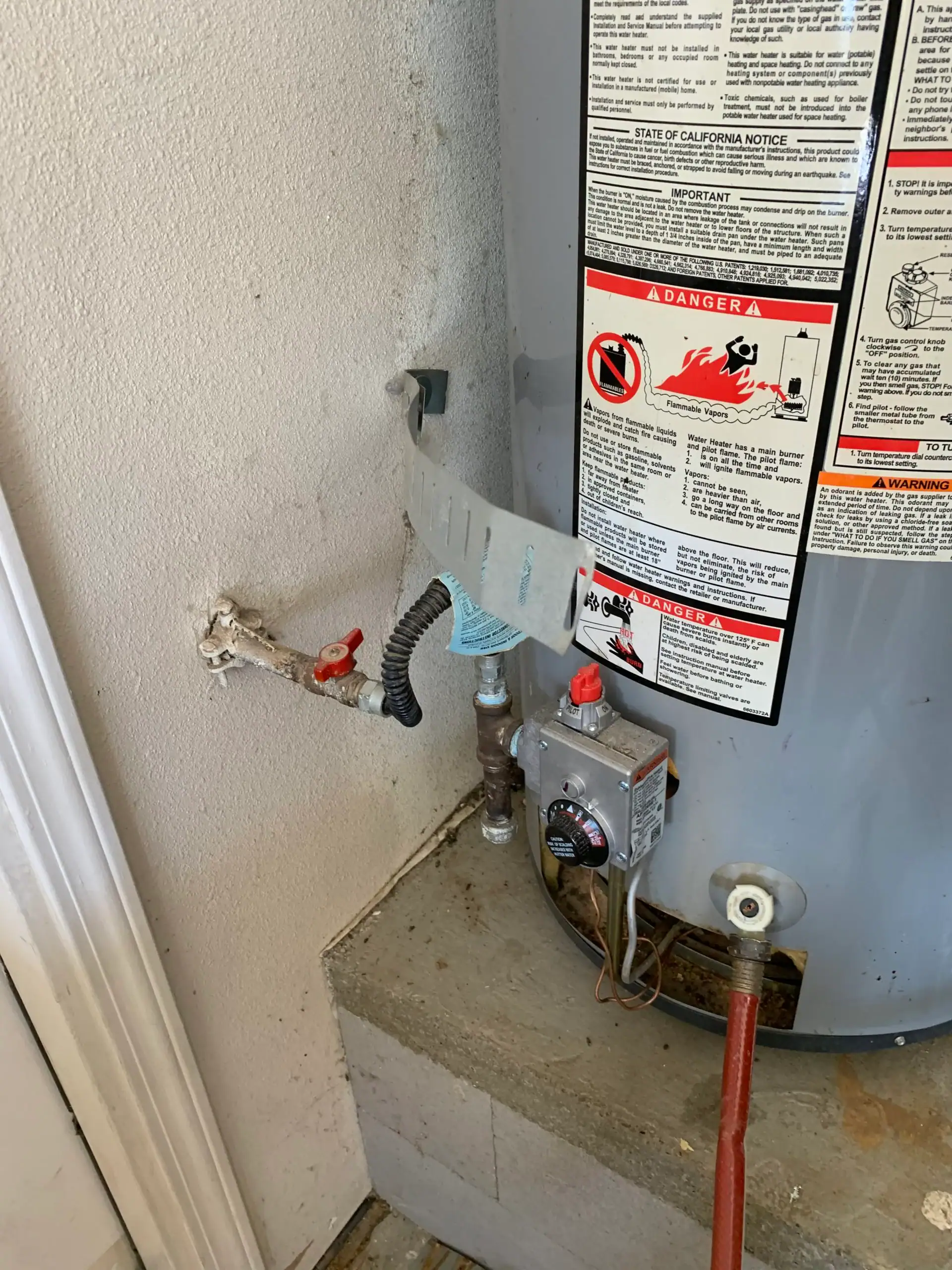
It starts with a free pre-installation assessment. Before any work is scheduled or any money changes hands, we come out and take a look at your gas meter, confirm your fuel type natural gas or propane, because a lot of homes out in the Buckeye area aren’t connected to the PG&E distribution network and determine the right valve size and configuration for your specific setup. If anything looks non-standard or needs to be addressed before the valve goes in, we tell you upfront.
Once we’ve confirmed the scope, we give you an all-in price. For most residential installations in El Dorado County, that lands between $400 and $650, covering the DSA-certified valve, licensed labor, and permit fees. We pull the building permit through the El Dorado County Planning and Building Division not a city department, since Buckeye is unincorporated and we schedule the required inspection. That permit creates a county record of your installation, which is the documentation your insurer, your real estate agent, or a future buyer will want to see.
The installation itself typically takes around two hours. After the valve is in and inspected, we walk you through the post-trip protocol what to do if it activates, why you shouldn’t reset it yourself until your gas lines have been checked for damage, and how to contact your utility if needed. Most contractors skip that part. We don’t.
Ready to get started?
Every earthquake valve installation we perform uses a DSA-certified seismic shut-off valve that’s the California Division of the State Architect certification standard required for building permit compliance, insurance documentation, and real estate disclosure. It’s not a preference or an upgrade option. It’s the standard we use on every job because it’s the only standard that actually holds up when your insurer or a home inspector asks for documentation.
For Buckeye-area homeowners specifically, we handle both natural gas and propane systems. That distinction matters out here. A lot of homes along the Wentworth Springs Road corridor and further east toward the reservoir country run on propane, not PG&E gas, and the valve selection and installation process is different. If you’re not sure which system you have, the pre-installation assessment sorts that out before anything else happens.
What’s included in every installation: the DSA-certified valve, all labor performed under California C-36 License #916322, permit application and coordination with the El Dorado County Building Division, final inspection scheduling, and a written workmanship warranty. You also get a clear post-installation walkthrough so you actually know what to do if the valve trips. The all-in price for most residential jobs runs $400–$650. If your situation is more complex older piping, non-standard meter configuration, propane system with unique access requirements we’ll tell you that during the assessment, not after the work is done.
Yes and this is one of the most common questions we get from homeowners in the rural parts of El Dorado County. Seismic shut-off valves aren’t exclusive to natural gas systems. If your home runs on propane, which is common in the Buckeye area and along the Wentworth Springs Road corridor where PG&E’s gas distribution network doesn’t reach, a seismic valve is just as important. A propane leak after an earthquake carries the same fire and explosion risk as a natural gas leak, and the automatic shut-off function works the same way.
The valve itself is different propane systems require a valve rated and configured for LP gas, not the same unit used on a natural gas meter. That’s why the pre-installation assessment matters. We confirm your fuel type, inspect the tank and regulator setup, and select the right DSA-certified valve for your specific system before any work begins. Don’t assume a contractor who handles natural gas automatically knows how to work with propane ask the question directly before you book.
For most residential installations in El Dorado County, the all-in cost runs between $400 and $650. That includes the DSA-certified valve, licensed labor under a California C-36 license, permit fees, and the final inspection through the El Dorado County Planning and Building Division. There’s no separate charge for the permit paperwork or the inspection coordination it’s part of the job.
Where costs can go above that range is when the installation involves older or non-standard gas piping, a meter location that’s difficult to access, or a propane system with a more complex regulator setup all of which are more common in the older housing stock found in Buckeye and the Georgetown area than in newer suburban developments. That’s exactly why we do a free pre-installation assessment before quoting anything. If your situation is straightforward, you’ll know the price before we start. If something adds complexity, you’ll know that too before any work begins, not after.
It can, and in the current El Dorado County insurance market, that’s not a small thing. Multiple major carriers have significantly reduced or stopped writing new homeowner policies in this county, and the insurers still operating here are looking more carefully at what safety features are in place. A permitted, documented seismic valve installation one that’s on record with the county and backed by a DSA-certified product is the kind of upgrade that shows up in your favor when a policy is being reviewed or renewed.
It won’t automatically fix a non-renewal notice, and we won’t tell you otherwise. But homeowners in El Dorado County who are already navigating the FAIR Plan or shopping with specialty insurers have found that documented safety upgrades matter to underwriters. The key word there is documented a valve installed without a permit doesn’t create the paper trail your insurer needs to see. Every installation we perform is permitted through El Dorado County and includes written documentation you can hand directly to your insurance contact.
Yes. Gas line work in California, including seismic shut-off valve installation, requires a building permit and a final inspection. Because Buckeye is an unincorporated community, that permit comes from the El Dorado County Planning and Building Division not a city building department. There is no City of Buckeye building office. Everything goes through the county, and the process reflects that.
We handle the permit application and inspection scheduling as standard practice on every job. We don’t offer a “skip the permit” option to reduce the price, because that shortcut creates a real problem for you not for us. An unpermitted installation has no county record, which means it can’t be documented for your insurer, it has to be disclosed as unpermitted work in a real estate transaction, and it leaves you with no legal protection if there’s ever a question about the installation. The permit is part of the job. It’s included in the price we quote.
The first thing to know is that you should not reset the valve yourself until your gas lines have been inspected by a licensed plumber. The valve tripped for a reason it detected seismic activity above its threshold and resetting it before confirming your lines are undamaged can put you right back in a dangerous situation. This is especially important in a rural area like Buckeye, where emergency response times are longer and the nearest utility office isn’t a short drive away.
After the valve trips, leave it in the closed position, ventilate the area if you’re inside, and avoid any open flames or electrical switches near gas appliances. Contact your gas utility PG&E if you’re on natural gas, your propane supplier if you’re on LP to report the event, and then call a licensed plumber to inspect your lines before the valve is reset. We’re available 24/7 for exactly this kind of call. We walk every customer through this protocol at the end of every installation, because knowing what to do in the moment matters more than any piece of equipment.
The installation itself typically takes about two hours once we’re on-site. That covers removing the old sediment trap if one is present, installing the DSA-certified seismic shut-off valve at the gas meter, testing the valve and confirming the gas system is functioning correctly, and walking you through the post-installation protocol before we leave.
The full timeline from first call to completed inspection runs a bit longer, because permits through the El Dorado County Planning and Building Division require scheduling a final inspection after the installation is done. In most cases, the inspection can be coordinated within a few days of the installation. If you’re working against a deadline an insurance renewal date, a real estate closing, or an escrow requirement let us know when you call. We understand that urgency is real, especially in a market where El Dorado County homeowners are already dealing with tighter insurance timelines than most of California. We’ll tell you honestly what’s achievable and work to get it done as quickly as the county’s inspection schedule allows.
Other Services we provide in Buckeye