
Hear from Our Customers
Most water damage in Curtis Park doesn’t start with a burst pipe. It starts with a pinhole leak inside a wall, a slow drip under a slab, or a corroded joint that’s been losing water for months without a single visible sign. By the time you notice the stain on the ceiling or the spike on your water bill, the damage is already done and the repair bill reflects it.
A smart water leak detection system changes that. It monitors your home’s water flow continuously, runs daily pressure tests to catch micro-leaks before they escalate, and sends an alert to your phone the moment something looks off. If you’re not home to respond, the automatic shutoff closes your main line on its own. No neighbor with a spare key. No coming home to a disaster.
Curtis Park’s housing stock makes this especially relevant. The galvanized steel supply lines and cast iron drains in homes built between the 1910s and 1940s have long exceeded their design life and Sacramento’s clay soils don’t help, expanding and contracting with every wet and dry season in ways that stress older pipes under slabs and foundations. Add in the root systems from the mature elms lining your street, and you have a combination of risk factors that most suburban neighborhoods simply don’t face. A whole house leak detection system in Curtis Park isn’t a luxury add-on. For a lot of these homes, it’s the most practical thing you can do.
We’ve been serving Curtis Park and Sacramento County homeowners since 2009, and the work speaks for itself 4.7 out of 5 stars across 93 Google reviews, with customers consistently noting upfront pricing, on-time arrivals, and final invoices that came in at or under the original quote. No surprise charges. No vague estimates that balloon after the work starts.
Our California Contractor’s License #916322 (C-36 Plumbing) is on file with the CSLB and verifiable at CSLB.ca.gov before you ever pick up the phone. That matters in a neighborhood like Curtis Park, where homeowners have made a serious investment in their property and expect the people they hire to be just as serious about their work.
From the Craftsman bungalows near Sierra 2 Center to the newer townhomes in Crocker Village, we understand what Curtis Park’s older and newer homes actually look like from the inside and how to install a smart leak detection system that fits the home, not just the box it came in.
The process starts with a free assessment. Before anything gets installed, one of our licensed plumbers evaluates your home’s main water line its diameter, condition, and location to confirm the right system size and placement. In Curtis Park, where homes span nearly a century of construction styles and pipe materials, this step matters more than people expect. A system sized or placed incorrectly won’t give you accurate readings, and that defeats the whole purpose.
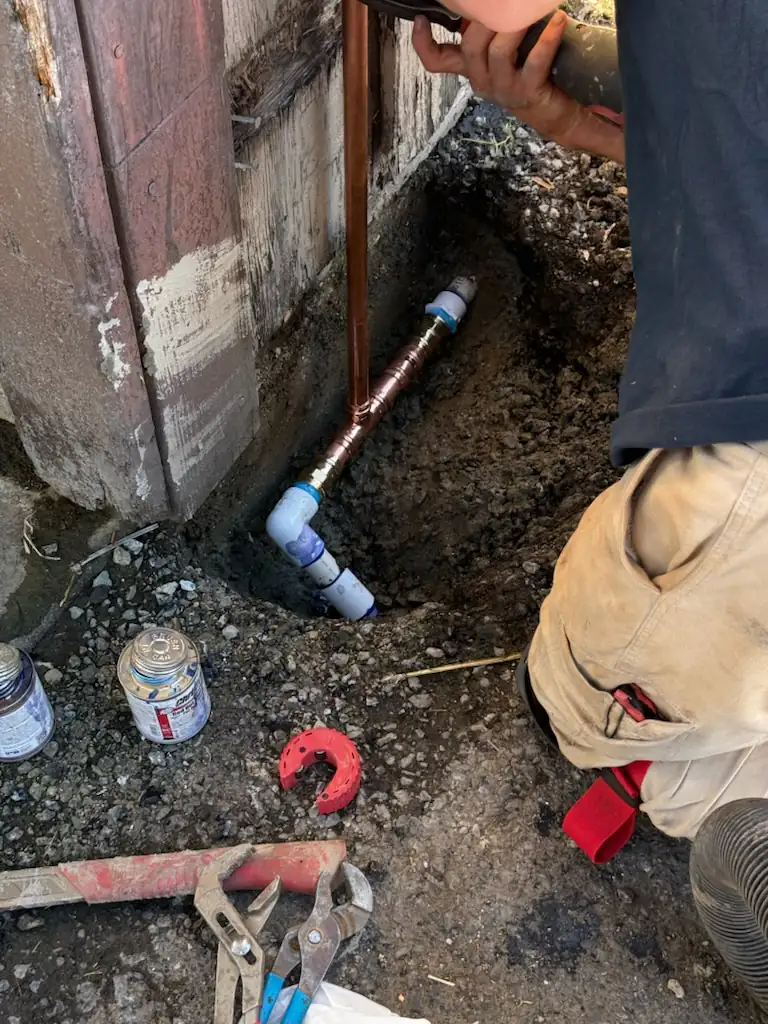
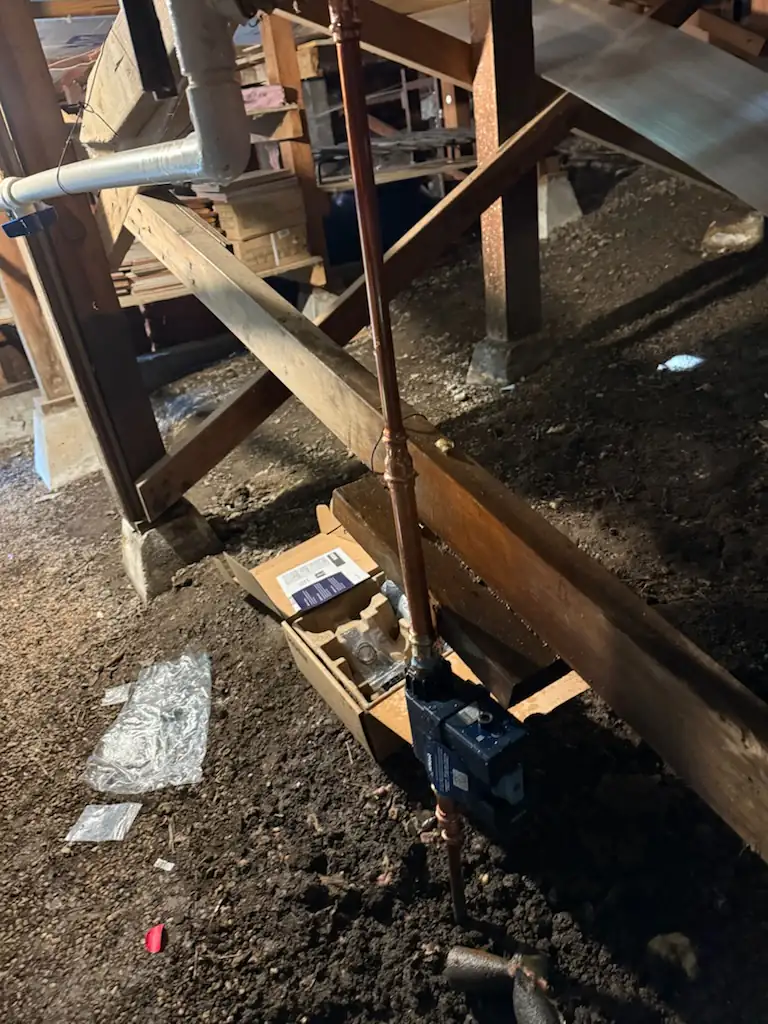
Once the right setup is confirmed, the Moen smart water shutoff gets installed on your main supply line, after the water meter and pressure regulating valve, in compliance with California Plumbing Code requirements. We handle any permitting that applies to the scope of the work you don’t need to figure that out on your own.
After the physical installation, the system gets fully configured. That means the Moen Smart Water app is set up on your phone, alert thresholds are calibrated to your home’s normal usage patterns, and you get a walkthrough of how to use the remote shutoff and read what the system is telling you. By the time our technician leaves, you’re not just the owner of a device you actually know how to use it. If anything existing catches our attention during the visit, like a corroded fitting or a pressure issue common in older Sacramento homes, we’ll flag it and address it on the spot rather than leave you with a half-finished picture.
Ready to get started?
When we install a water leak detection system in your Curtis Park home, the service covers the full scope not just the device. That includes the pre-installation assessment, correct sizing for your water line, code-compliant placement on the main supply line, app setup, alert configuration, and hands-on homeowner training before we leave. If we find an existing issue during the installation a corroded fitting, a pressure irregularity, or a joint that’s showing early signs of failure we handle it as a licensed plumbing contractor, not a device installer who has to hand you off to someone else.
The Moen Flo smart water shutoff is the system we install and stand behind. It runs daily health checks on your entire water supply, monitors real-time flow data, and triggers an automatic shutoff if a leak is detected whether you’re home or not. For Curtis Park homeowners with older copper piping under concrete slabs, this daily micro-leak testing is the only reliable way to catch an early-stage slab leak before it becomes a foundation issue.
California insurance carriers, including Mercury Insurance through their active Flo by Moen program, offer qualifying homeowners premium discounts and in some cases subsidized device costs. Depending on your policy, the system can realistically pay for itself within a few years through savings alone on top of the water damage it helps you avoid. We can walk you through what documentation your insurer typically needs so you can take advantage of that without the runaround.
For a basic point-of-use sensor that sits under a sink, no those are DIY-friendly and don’t require a license. But if you’re installing a whole house leak detection system with an automatic shutoff on your main water line, yes, you need a licensed C-36 plumbing contractor in California. That installation involves working on the main supply line, which has to be done in compliance with the California Plumbing Code, and depending on the scope, a permit may be required through the City of Sacramento.
In Curtis Park specifically, this isn’t just a legal formality. Homes built in the 1920s through 1940s often have supply lines in configurations that don’t match modern assumptions unusual pipe diameters, older fittings, or pressure irregularities that affect where and how the shutoff valve needs to be placed. A licensed plumber who knows Curtis Park’s older housing stock will catch those variables before they become a problem. We hold CA License #916322 and handle the full installation, permitting, and code compliance so you don’t have to piece it together yourself.
The system works in two ways. First, it monitors your home’s water flow in real time tracking usage patterns, pressure levels, and flow rates continuously. If something deviates from your home’s normal baseline, it sends an alert to your phone so you can investigate or shut off the water remotely through the app.
Second, and more importantly for most homeowners, it runs daily automated health checks that test for micro-leaks tiny pressure drops that indicate water is escaping somewhere in the system. This is the feature that catches slow leaks inside walls, under slabs, or in areas you’d never think to check. In Curtis Park, where older copper piping under concrete slabs can develop hairline cracks from Sacramento’s seasonal soil movement, these daily tests are often the only way to catch a slab leak before it saturates the subfloor or undermines the foundation. If a significant leak is detected and you’re not available to respond, the automatic shutoff closes your main water line on its own stopping the flow before the damage compounds.
Tree root intrusion is a real and documented issue in Curtis Park. The neighborhood’s mature elm and palm trees have root systems that actively seek out moisture and older clay or cast iron sewer lines are exactly the kind of target they find. Root intrusion typically develops gradually, causing slow increases in water usage and subtle pressure changes over months before a pipe fully fails or backs up.
A smart leak detection system won’t generate false alerts from root activity in the sewer line, because the shutoff valve monitors the supply side of your plumbing, not drainage. But if root intrusion has caused a supply line to crack or shift which can happen when roots disturb the soil around older pipes the system will catch the resulting pressure drop and alert you. That’s actually one of the more useful scenarios for Curtis Park homeowners: the roots do their slow damage underground, and the leak detector is the first thing that tells you something has changed. We can assess both the detection system and the condition of your supply lines during the same visit.
It can, and in California there are active programs specifically designed to make that happen. Mercury Insurance has a partnership with Flo by Moen that offers California policyholders premium discounts and, in some cases, subsidized device costs as an incentive to install qualifying smart water detection systems. More broadly, smart water leak detectors can qualify homeowners for 5% to 10% discounts on annual premiums depending on the carrier and policy.
For Curtis Park homeowners, the math is worth running. Homes in this neighborhood carry meaningful insurance premiums given their age, historic construction, and replacement cost. A 5% to 10% reduction on a substantial annual premium adds up quickly and when you factor in the cost of the device and installation against the savings over two or three years, the system often pays for itself before it’s ever had to stop a single leak. We can walk you through what documentation most California insurers require to apply the discount so you’re not left figuring that out after the installation is done.
A point-of-use sensor is a small device you place under a sink, behind a toilet, or near a water heater. It detects standing water at that specific location and sounds an alarm. They’re inexpensive, easy to install yourself, and useful for catching appliance failures in spots you check regularly. The limitation is obvious they only cover where you put them, and they can’t detect what’s happening inside a wall, under a slab, or anywhere along your main supply line.
A whole house leak detection system installs on your main water line and monitors your entire home’s water supply from a single point. It tracks flow, pressure, and usage patterns continuously, runs daily health checks for micro-leaks, and can shut off your water automatically if a significant leak is detected. For a Curtis Park home with aging infrastructure spread across walls, under floors, and beneath a concrete slab, point-of-use sensors leave most of your risk uncovered. The whole house system is the one that actually catches what you can’t see which, in a neighborhood with 80- to 100-year-old pipes, is usually where the real problems are hiding.
The total cost depends on the system, the complexity of your main line setup, and whether any additional work is needed during the installation. For a Moen Flo smart water shutoff system with professional installation by a licensed plumber in the Sacramento area, most homeowners are looking at a range of roughly $500 to $900 all in covering the device, labor, app setup, and the pre-installation assessment. If your home has an older or non-standard main line configuration, which is common in Curtis Park’s 1920s and 1930s housing stock, there may be additional work involved that affects the final number.
We provide upfront pricing before any work begins no estimate fees, no hidden charges added after the fact. Multiple customers have noted that their final invoice came in at or below the original quote, which is a deliberate part of how we operate. Given that the average water damage insurance claim runs between $13,000 and $15,000, and that qualifying systems can reduce your annual premium by 5% to 10%, the installation cost is typically recovered well within the first few years often sooner if your insurer participates in a program like Mercury Insurance’s Flo by Moen discount.
Other Services we provide in Curtis Park