
Sewer Camera Inspection
Get a free quote for sewer camera inspection from your local plumbing team.
We’ll contact you about your sewer camera inspection request. Privacy policy
Hear from Our Customers
A slow drain that keeps coming back isn’t just annoying it’s usually a sign that something structural is going on underground. In River Park, where most homes are sitting on 60- to 80-year-old clay or cast iron laterals, a recurring backup is rarely just a clog. It’s often root intrusion, a pipe belly, or a cracked joint that no amount of snaking will permanently fix.
The mature tree canopy along Carlson Drive, Sandburg Drive, and throughout River Park is one of the neighborhood’s most beloved features. It’s also one of the leading reasons sewer lines fail here. Those roots don’t stop growing, and the joints on aging clay pipe are exactly where they find moisture. A sewer line camera inspection shows you how far that intrusion has gone before it turns into a full lateral replacement.
Sacramento’s clay-heavy soil adds another layer to the problem. It expands in the wet season and contracts in the dry summer heat, and that movement stresses buried pipe joints every single year. Pipe bellies form. Joints shift. Sections separate. None of that shows up on a drain snake. It only shows up on camera and catching it early is the difference between a manageable repair and a major excavation.
We’re a licensed C-36 plumbing contractor serving Sacramento County, and River Park is well within the area we know and work in regularly. We carry professional-grade camera equipment that inspects lines up to 350 feet and handles the pipe configurations common in mid-century East Sacramento homes not the consumer-grade tools some outfits show up with.
Our Google rating sits at 4.7 out of 5 across 93 verified reviews, and the pattern you’ll see in those reviews is consistent: on time, transparent about findings, and final bills that come in at or below the original estimate. That last part matters in a neighborhood like River Park, where residents talk to each other and a bad experience travels fast.
The inspection documentation we provide meets California’s sewer lateral compliance certification requirements which means it holds up for Sacramento city records, Private Sewer Lateral program requirements, and real estate transactions. If you’re buying or selling a home near Glen Hall Park or anywhere else in the 95819 ZIP code, that documentation is the real thing.
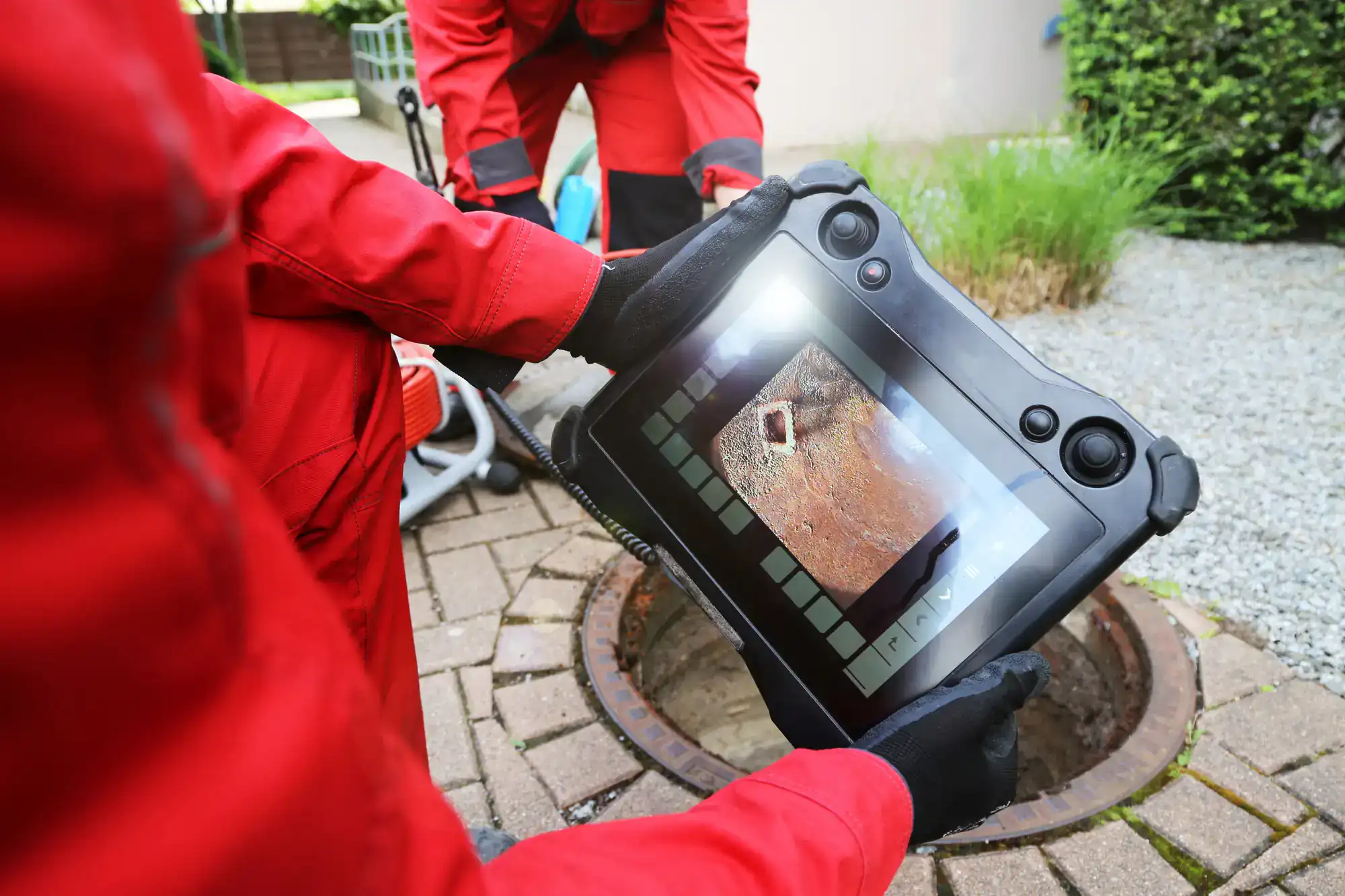
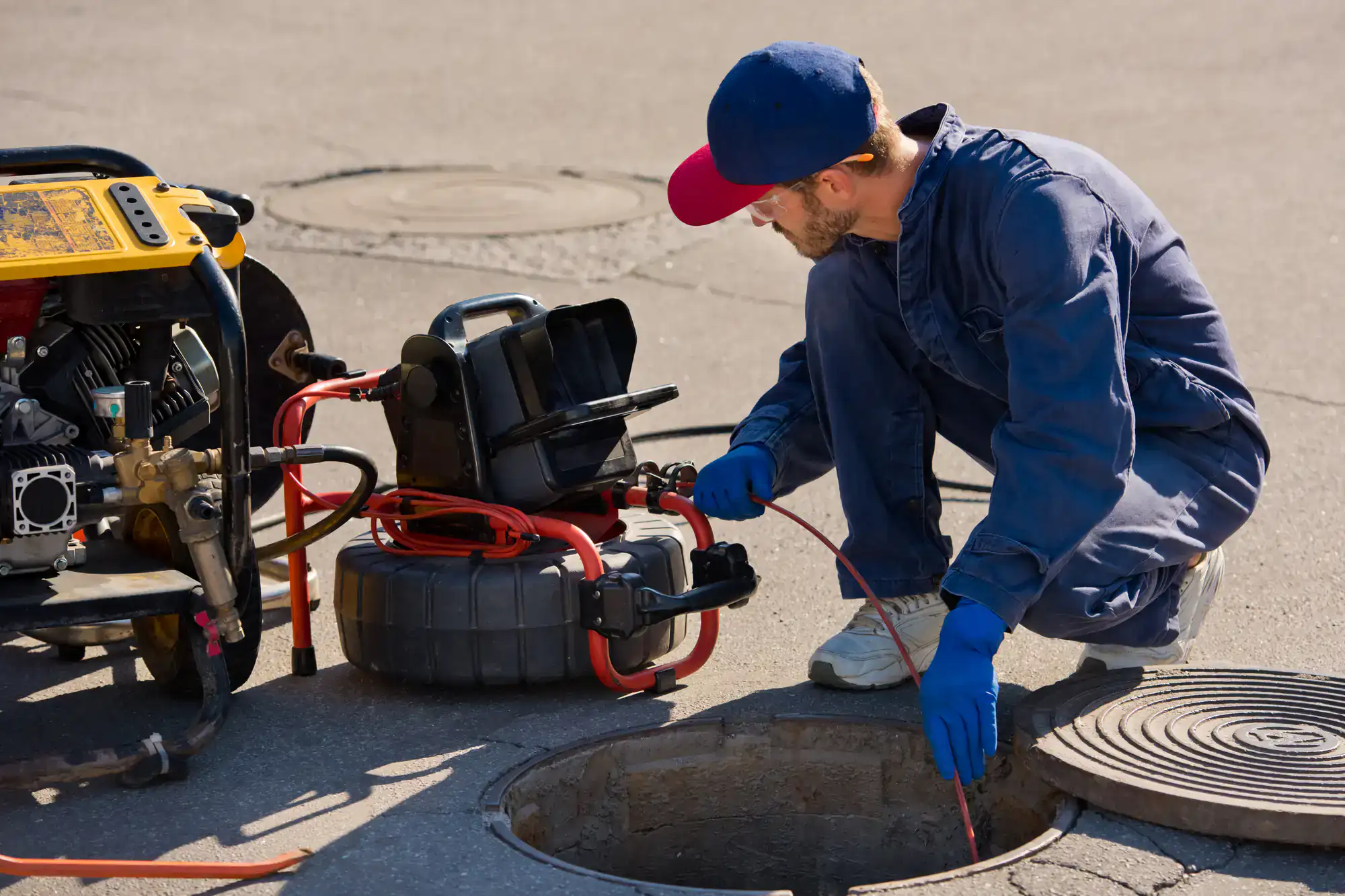
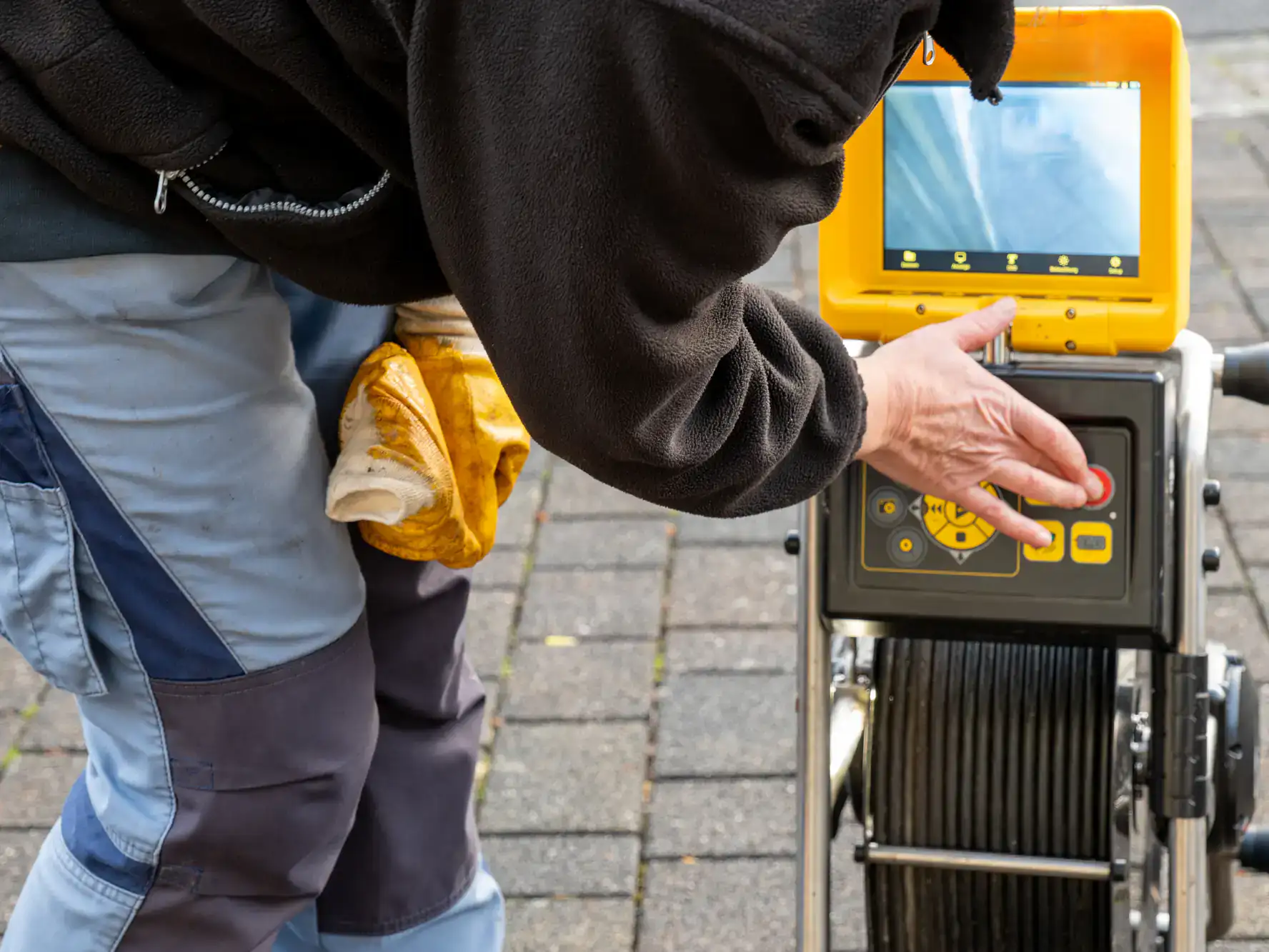
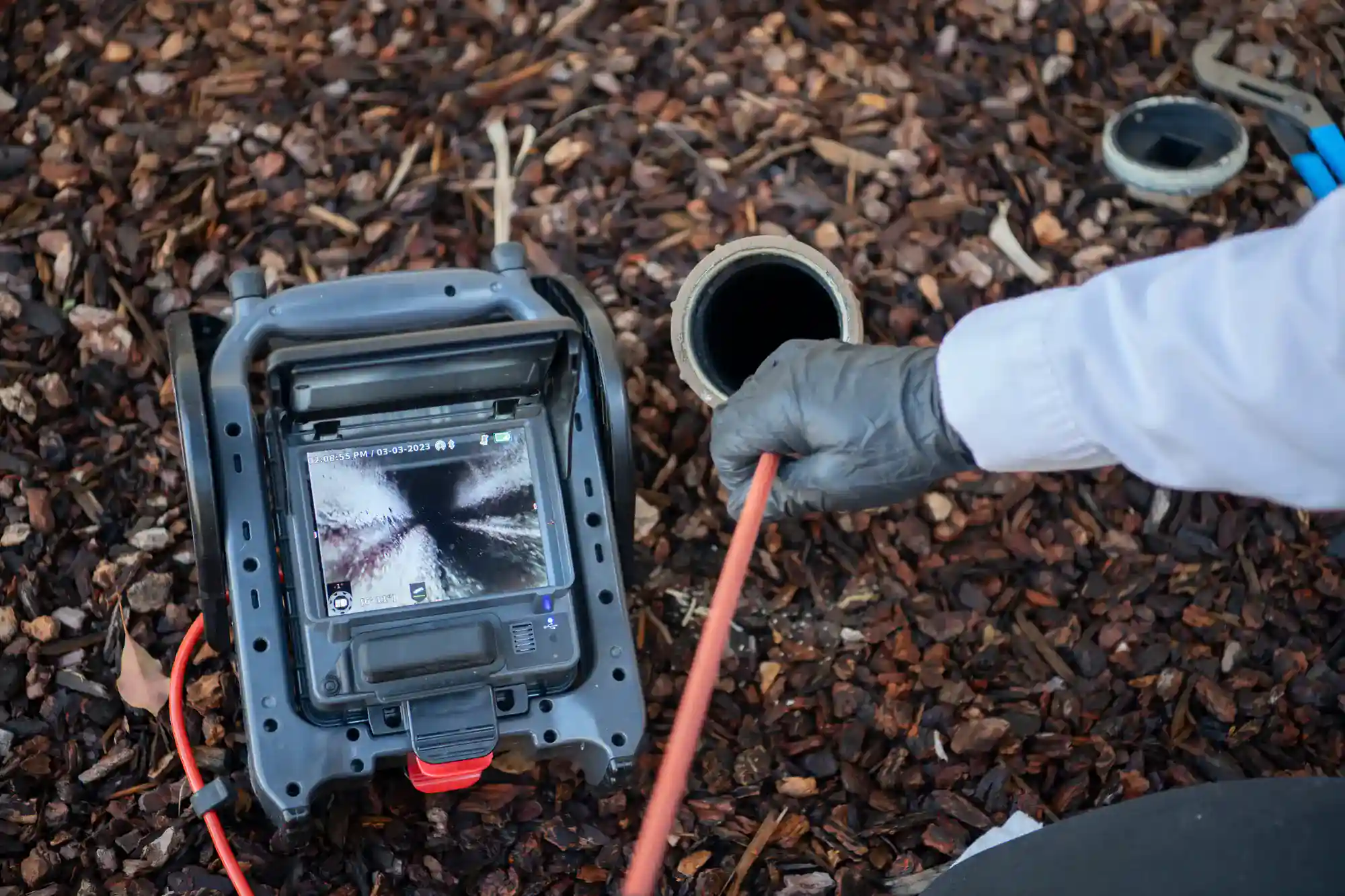
The process starts at your cleanout or an existing access point no digging, no disruption to your yard or landscaping. A high-resolution camera gets fed into the line while a locating transmitter tracks its position underground. You watch the footage in real time on a screen while our technician walks you through what the camera sees as it moves through the pipe.
That real-time walkthrough matters. You’re not handed a report three days later with a list of problems and a repair quote attached. You see your pipe. You see the root tendrils, the buildup, the belly, or the clean stretch of line that means everything is fine and our technician explains it in plain language as it happens. For River Park homeowners who’ve read the stories about plumbers showing footage from someone else’s pipe, this eliminates that concern entirely.
If something does show up, the locating transmitter marks the exact spot above ground. That means any repair work whether it’s trenchless or otherwise targets the precise location rather than guessing. In a neighborhood where mature landscaping and mid-century hardscaping are part of the property’s value, that precision matters. You get a clear picture of what’s going on and what, if anything, actually needs to be done next.
Ready to get started?
We price our sewer camera inspection between $99 and $300 well below the Sacramento-area market range of $250 to $850 and significantly under the national average of $685. That price includes the full camera run, real-time narrated footage, above-ground problem location via transmitter, and a clear explanation of findings before our technician leaves your property.
Our equipment handles lines from 1.5 to 72 inches in diameter and navigates up to 350 feet of pipe. That range matters for older River Park homes, where lateral runs to the city main can be longer than average and where original pipe configurations from the 1940s and 1950s sometimes include transitions that shorter-range cameras can’t reach. LED lighting and self-leveling camera technology mean the footage is clear not the grainy, hard-to-interpret video that leaves you guessing.
The inspection also produces documentation that satisfies California’s sewer lateral compliance requirements. Whether you’re responding to a Sacramento city compliance request, preparing for a pre-listing inspection on a home near Caleb Greenwood Elementary, or doing due diligence before buying a 1950s ranch in the 95819 ZIP code, the report we provide is accepted for official use. And if the camera finds nothing wrong, you’ll hear that too because the goal is accurate information, not a repair invoice.
Our sewer camera inspection in River Park runs between $99 and $300, depending on the specifics of the job. That’s a meaningful difference from what you’ll typically see quoted across the Sacramento market, where inspection prices commonly range from $250 to $850.
What’s included at that price isn’t stripped down either. You get the full camera run, real-time narrated footage so you can see exactly what’s in your line, above-ground location marking via transmitter, and a clear explanation of findings before our technician leaves. There are no hidden fees added after the fact, and the final bill consistently comes in at or below the original estimate. For a River Park homeowner protecting a home worth $750,000 or more, the math on a $99 to $300 inspection versus a potential $6,000 to $10,000 sewer repair is straightforward.
A standard home inspection does not include the underground sewer lateral and in River Park, that’s a significant gap. Homes here were built primarily between the late 1930s and the 1960s, which means the sewer pipes beneath them are likely original clay tile or cast iron. Clay pipe has a functional lifespan of roughly 50 years before it becomes prone to cracking and root intrusion. A home built in 1955 has pipes that are now 70 years old.
River Park’s real estate market moves fast homes have been selling in around 19 days. In that timeline, buyers often skip the sewer scope and find out later what’s underground. Our pre-purchase sewer line camera inspection gives you the full picture before you close. If there’s root intrusion, a pipe belly, or a cracked lateral, you have the option to negotiate repairs, request a price adjustment, or make an informed decision about whether to proceed. That’s information you can’t get any other way.
Yes and it’s one of the most common causes of sewer problems in River Park specifically. The neighborhood has a dense, mature tree canopy that the community actively works to expand through the River Park Neighborhood Association’s Tree Canopy Project. Elms, silver maples, and other large-rooted species are widespread along streets like Carlson Drive and Sandburg Drive. Those root systems are always growing toward moisture, and the joints of aging clay and cast iron sewer pipes are a primary target.
Root intrusion doesn’t happen overnight, and it doesn’t announce itself until a line is significantly blocked or a pipe is cracked. It advances slowly through each dry Sacramento summer when roots push deeper in search of moisture and then gets worse during wet winters when saturated soil shifts pipe sections and widens existing cracks. A sewer blockage inspection shows you exactly how far intrusion has progressed inside your lateral, so you can address it at the right stage rather than waiting for a backup to force the issue.
California has been moving toward mandatory sewer lateral inspections as part of real estate transactions, particularly in municipalities participating in the Private Sewer Lateral regulatory program. The City of Sacramento governs sewer service under Chapter 13.08 of the Sacramento City Code, and compliance requirements in the region have been expanding. Depending on the specifics of your transaction or city request, a sewer lateral inspection may be required not just recommended before a sale can close.
We hold a California CSLB C-36 Plumbing Contractor license, and our inspections produce documentation that meets California’s sewer lateral compliance certification requirements. That means the report is accepted for Sacramento city records, Private Sewer Lateral program compliance, and real estate transactions. If you’re in the 95819 ZIP code and you’ve received a compliance notice, or if your buyer is requesting a sewer scope as a condition of purchase, our inspection covers what’s needed. It’s worth confirming the specific requirements with your real estate agent or the city, but the inspection itself will be done right.
That’s exactly the question a camera inspection answers and it’s the reason skipping straight to cleaning or repair without looking first is often a mistake. Drain cleaning can clear a partial blockage and restore flow temporarily, but if the underlying issue is root intrusion, a pipe belly, heavy mineral buildup, or a cracked pipe wall, the problem will return. In River Park’s older housing stock, where original clay and cast iron laterals are common, structural issues are a real possibility not a worst-case scenario.
The camera footage tells you what you’re actually dealing with. A clean line with minor buildup might just need a hydro-jet cleaning. Moderate root intrusion caught early might be addressed with root treatment and a follow-up inspection schedule. A severely cracked pipe or a significant belly may point toward repair or trenchless replacement. The point is that you’re making that decision based on what’s actually in the ground not on a guess or a recommendation made without looking. Our technician walks you through the footage in real time and explains what each finding means in plain language, so you leave the conversation with a clear picture of where things stand.
For a home built in the 1940s, 1950s, or 1960s which describes most of River Park a proactive sewer pipe inspection makes a lot of sense even without obvious symptoms. Clay pipe doesn’t fail all at once. It deteriorates gradually over decades, and the early stages of root intrusion, mineral buildup, or joint separation often produce no noticeable symptoms at all. By the time a backup forces the issue, the damage is typically more extensive and more expensive to address than it would have been caught earlier.
River Park’s specific conditions make this more relevant, not less. The neighborhood’s clay soil shifts seasonally, stressing buried joints every year. The expanding tree canopy increases root intrusion risk over time a newly planted tree today becomes a serious threat to a clay lateral in ten to fifteen years. And the neighborhood’s enclosed geography, bounded by the American River and the railroad tracks, means a sewer backup is an indoor event in a high-value home with limited alternatives while you wait for help. A $99 to $300 inspection that confirms your system is in good shape or catches a developing problem early is a reasonable investment in a property worth several hundred thousand dollars or more.