Slow drain? Recurring clog? Here is how to tell when it is a DIY moment, and when it is time to call a professional plumber.
Share:
Summary:
Most people do not think about their drains until something goes wrong. Then, suddenly, you are standing in the shower watching water pool around your ankles, or you are plunging the kitchen sink for the third time this month, wondering if you should just call someone already.
The hesitation makes sense. You do not want to pay for a service call if the problem is something you could fix yourself. But you also do not want to wait too long and end up with a backed-up sewer line on a Sunday night.
This post is here to help you figure out which situation you are in, and what to do about it.
Not every slow drain is a crisis. Sometimes it is just a clump of hair near the surface of a bathroom drain; something a pair of gloves and a drain snake can handle in five minutes. The problem is that most homeowners cannot easily tell the difference between a surface-level clog and a developing main line issue, and the two situations require different responses. A good starting point is to pay attention to how many drains are affected. One slow drain usually points to a localized blockage. Multiple slow drains, gurgling sounds coming from fixtures you are not even using, or sewage backing up into your tub when you flush the toilet: those are signs the problem is deeper in the system and beyond the reach of any plunger or bottle of drain cleaner.
This is probably the most common mistake we see, and it is worth spending a moment on because it catches a lot of homeowners off guard. You pour the chemical cleaner in, the drain starts moving again, and you assume the problem is solved. A few weeks later, it is slow again. You pour more. The cycle repeats; and the whole time, the cause of the blockage is still sitting in your pipe, untouched.
Chemical drain cleaners work by generating a chemical reaction that dissolves organic material near the opening of the drain. They are effective at clearing fresh, soft clogs close to the surface. But they do not reach deep blockages, they cannot break up mineral scale, and they have no effect on tree roots; which, in the foothill communities of El Dorado County and Placer County, are one of the leading causes of recurring sewer line problems.
Here is the part that does not make it onto the label: those chemicals generate heat. In older pipes; and most homes in Placerville, Cameron Park, and Shingle Springs were built in the 1970s and 1980s, meaning their plumbing is now 40-plus years old; that heat can warp PVC fittings and accelerate corrosion in galvanized steel lines.
If your home is on a septic system, which many rural El Dorado County properties are, chemical cleaners can also disrupt the bacterial balance that keeps your septic tank functioning properly. The short version: chemical cleaners are a temporary patch that can quietly make your pipes worse over time. If you have used them more than once on the same drain, that drain is telling you something the cleaner is not fixing.
There is a spectrum here, and it is worth walking through it plainly. On one end, you have a single slow drain that has been gradually getting worse over a few weeks: annoying, but not an emergency. On the other end, you have sewage backing up into your home, which is an emergency by any definition.
In between, there are several signs that tell you it is time to stop waiting and schedule professional drain cleaning. If the same drain keeps clogging despite repeated clearing, the blockage is not being fully removed; it is just being pushed around. If you hear gurgling sounds from your toilet when you run the bathroom sink, or from your kitchen drain when the dishwasher drains, that is a venting or main line issue that will not resolve on its own.
If there is a persistent sewage smell coming from any drain in your home, that is not something to ignore; sewer gas contains compounds that are harmful to breathe in enclosed spaces. Water backing up in multiple fixtures at the same time is the clearest signal of all. When flushing your toilet causes water to rise in your bathtub, or running the washing machine causes your kitchen sink to gurgle, the blockage is in the main sewer line: the pipe that everything else drains into. That is not a job for a snake you rented from the hardware store.
In El Dorado County and the surrounding foothill communities, tree root intrusion is a major driver of this kind of problem. The dry Sacramento summers push mature oak and pine roots to seek out moisture wherever they can find it, and sewer lines are a reliable source. Once roots get into a line, they do not stop growing. What starts as a partial blockage becomes a complete one, and eventually, a broken pipe.
Want live answers?
Connect with a Murray Plumbing expert for fast, friendly support.
A lot of people picture a plumber showing up with a snake, running it down the drain, and leaving; essentially the same thing you could do yourself, just with a longer cable. That is not what professional drain cleaning looks like when it is done right.
The process starts with a proper assessment. Before any equipment goes into the pipe, we want to understand what we are dealing with: where the blockage is, what is causing it, and if there is any underlying damage to the pipe itself. That is where sewer camera inspection comes in, and it changes how the job gets done.
These are two different tools for two different problems, and understanding the distinction helps you ask better questions when you call us.
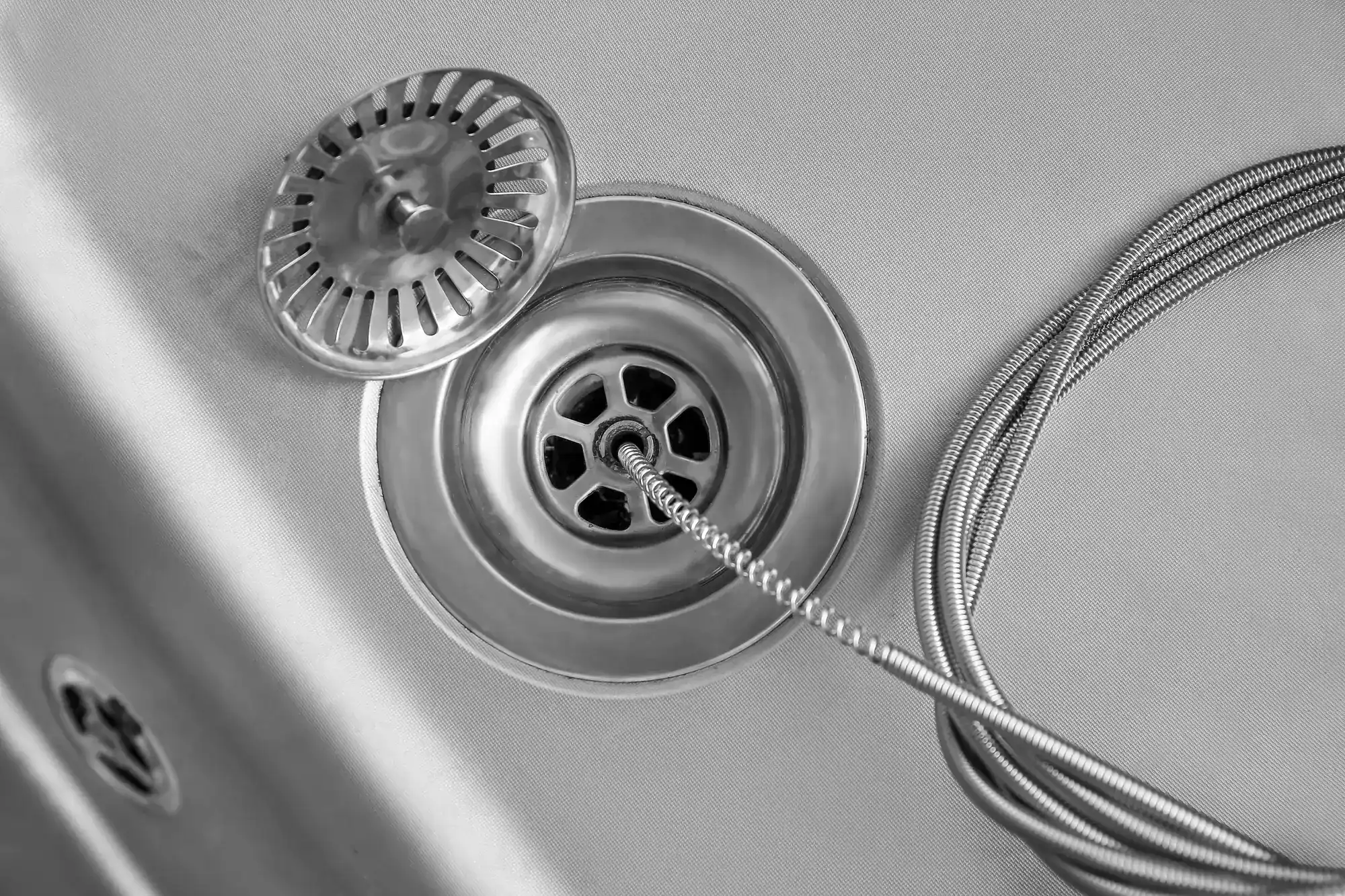
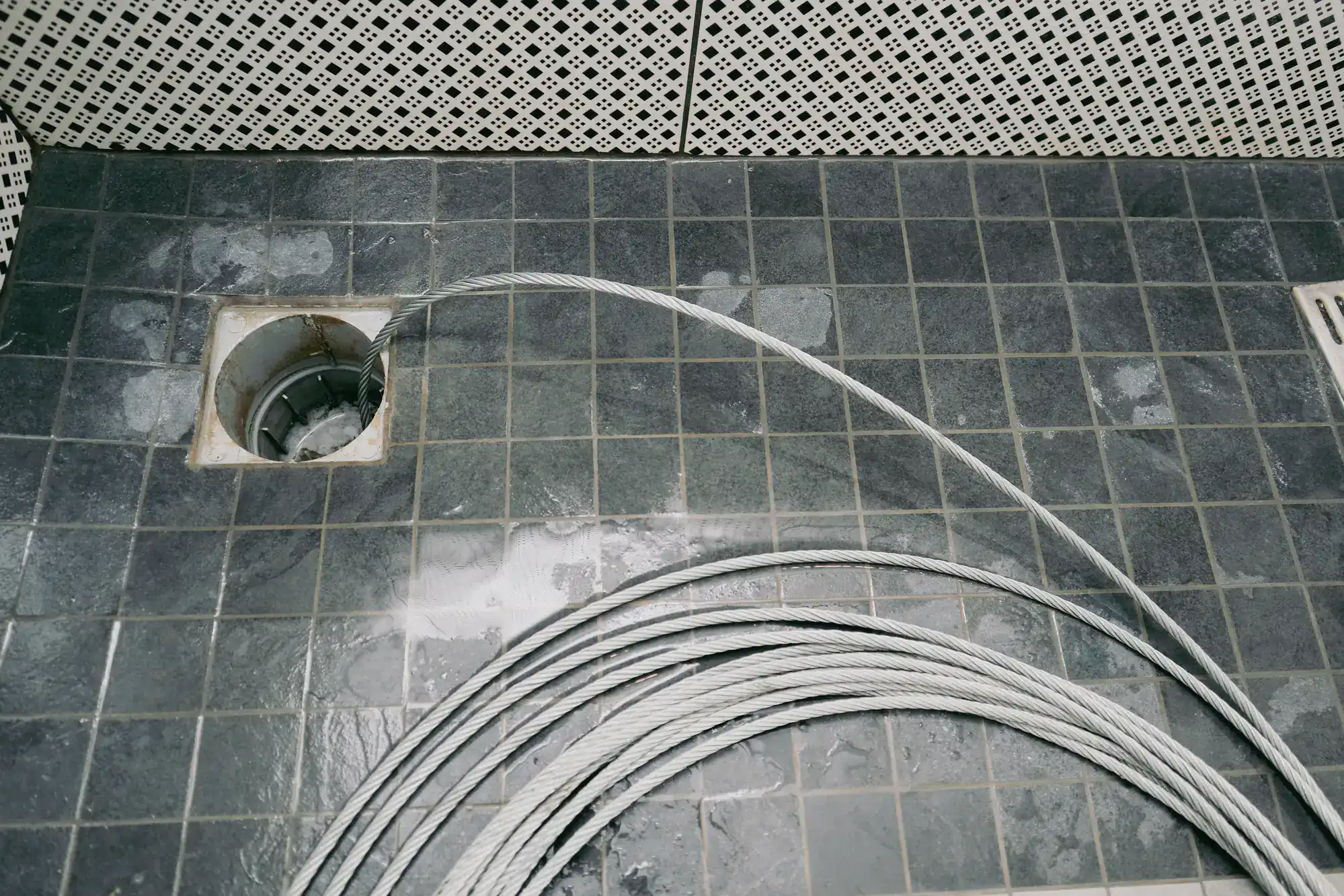
A drain snake; also called a cable auger; is a long, flexible cable with a cutting head that is fed into the pipe to break up or retrieve a blockage. It is effective for soft, localized clogs like hair and food debris, and it is usually the right first step for a straightforward blockage. The limitation is that a snake punches a hole through the clog rather than clearing the entire pipe wall. Grease, mineral scale, and root fragments that cling to the sides of the pipe are left behind, which is why snaked drains often re-clog faster than expected.
Hydro jetting uses pressurized water; typically at several thousand PSI; to scour the interior of the pipe from wall to wall. It removes grease buildup, dissolves mineral scale deposits, and clears root fragments in a way that a cable auger simply cannot. For homes in El Dorado County and Placer County where hard water mineral buildup is a documented, ongoing issue, hydro jetting is not an upsell; it is often the only method that produces a lasting result rather than a temporary one.
The right choice depends on what is in the pipe, which is why camera inspection before the job matters so much. We skip the diagnosis and go straight to the method that solves your problem; not just the most expensive option.
This is one of the questions we get most often, and the honest answer is: it depends on your home, your habits, and where you live.
For most households in Sacramento County; urban homes on municipal sewer lines, relatively newer construction, average water usage; professional drain cleaning every one to two years is a reasonable baseline for preventive maintenance. It keeps buildup from accumulating to the point of causing a problem and gives us the chance to spot early warning signs before they become expensive repairs.
For homes in El Dorado County and the foothill communities of Placer County, the calculus is a bit different. If your home was built in the 1970s or 1980s, you are working with plumbing that is past its expected service life in some respects. Galvanized steel pipes corrode from the inside out, progressively narrowing the diameter of the pipe over decades. Cast iron drain lines crack and shift. Hard water mineral deposits build up year after year on pipe walls. In these homes, annual professional drain cleaning is not excessive; it is practical.
If your property has mature trees anywhere near the sewer lateral; the pipe that runs from your home to the municipal connection; root intrusion is a real and recurring risk. We have cleared sewer lines in Placerville and Shingle Springs that needed annual root clearing just to stay functional. That is not a sign of a failing system necessarily; it is a sign that the roots are doing what roots do, and staying ahead of it is less disruptive than dealing with a full blockage or a pipe repair.
One more factor worth mentioning: if your home uses a septic system, which is common in the more rural parts of El Dorado County, your drain cleaning schedule should be coordinated with your septic maintenance. We understand both systems, not just one or the other, so we can give you more useful guidance on timing.
If your drain is slow and it is the first time, try the basics. If it keeps coming back, if multiple fixtures are affected, if you are hearing gurgling or smelling sewage, or if you have already run a snake and nothing changed; stop waiting. Those are the signs that the problem is past the DIY stage, and letting it sit rarely makes it cheaper or easier to fix.
The goal of professional drain cleaning is not just to get the water moving again. It is to find out why it stopped, clear it completely, and give you a clear picture of what your pipes look like so you are not caught off guard six months from now.
If you are in El Dorado County, Placer County, or Sacramento County and you are not sure what you are dealing with, we are happy to talk it through with you. No diagnostic fees, no pressure; just a straight answer about what is going on and what it will take to fix it.
Article details:
Share:
Continue learning: