From dripping faucets to burst pipes, El Dorado County homeowners deal with the same plumbing problems repeatedly. Here's what's actually going on — and what to do about it.
Share:
Summary:
Most homeowners in El Dorado County don’t call a plumber the moment something goes wrong. They wait — hoping the slow drain clears on its own, or that the toilet stops running by morning. Sometimes it does. More often, it doesn’t, and by the time they call, the problem has gotten worse and the repair has gotten more expensive.
This page breaks down the plumbing repairs we see most often across Placerville, El Dorado Hills, Cameron Park, and the surrounding foothill communities — what causes them, what happens when they’re ignored, and when it’s time to stop guessing and call someone who can actually fix it.
The majority of homes in El Dorado County were built in the 1970s and 1980s. That means a large portion of the local housing stock is now running on plumbing systems that are 40 or more years old — original pipes, original fixtures, original drain lines that were never designed to last this long.
That age shows up in predictable ways. Galvanized steel pipes corrode from the inside out, slowly strangling water pressure and eventually failing. Cast iron drain lines crack and shift. Fixtures that were installed during the Carter administration weren’t built for modern water usage. When you add in El Dorado County’s wet winters, dry summers, and the ground movement that comes with foothill soil, you get a specific set of plumbing problems that repeat themselves across the county year after year.

Leaking pipes are one of the most common plumbing repairs we handle, and they’re also one of the most underestimated. The average home leaks around 10,000 gallons of water per year — most of it from slow, hidden sources that don’t announce themselves with a puddle on the floor.
In older El Dorado County homes, the culprit is often galvanized steel pipe. These pipes were standard in construction before the 1980s, and they corrode from the inside over time. The rust builds up, restricts flow, and eventually the pipe wall gets thin enough to develop pinhole leaks or outright fail. By the time you notice discolored water or reduced pressure at the faucet, the corrosion has usually been progressing for years.
Copper pipes hold up better but aren’t immune. In foothill areas where well water is more common, higher mineral content accelerates wear on copper fittings and joints. And in any home, the combination of seasonal ground movement — wet winters expanding the soil, dry summers contracting it — puts physical stress on underground supply lines and drain connections that eventually shows up as a crack or separation.
The tricky part about pipe leaks is that the damage often happens where you can’t see it — inside walls, under slabs, or in crawl spaces. A slow leak behind drywall can rot framing and breed mold for months before it’s discovered. That’s why we use waterproof sewer inspection cameras and leak detection equipment to find the actual source before recommending any repair. No guessing, no unnecessary digging, no opening up walls that don’t need to be opened.
If your water bill has been creeping up without any obvious explanation, or if you’re noticing soft spots in flooring, staining on ceilings, or a musty smell in certain rooms, those are worth taking seriously. A leak detection visit is far less expensive than the water damage restoration that follows a leak that goes unaddressed.
A slow drain is easy to dismiss. You pour some store-bought cleaner down it, things improve for a week, and then it’s slow again. That cycle is one of the most common patterns we hear from homeowners across El Dorado Hills and Placerville — and it usually means the actual problem was never addressed, just temporarily masked.
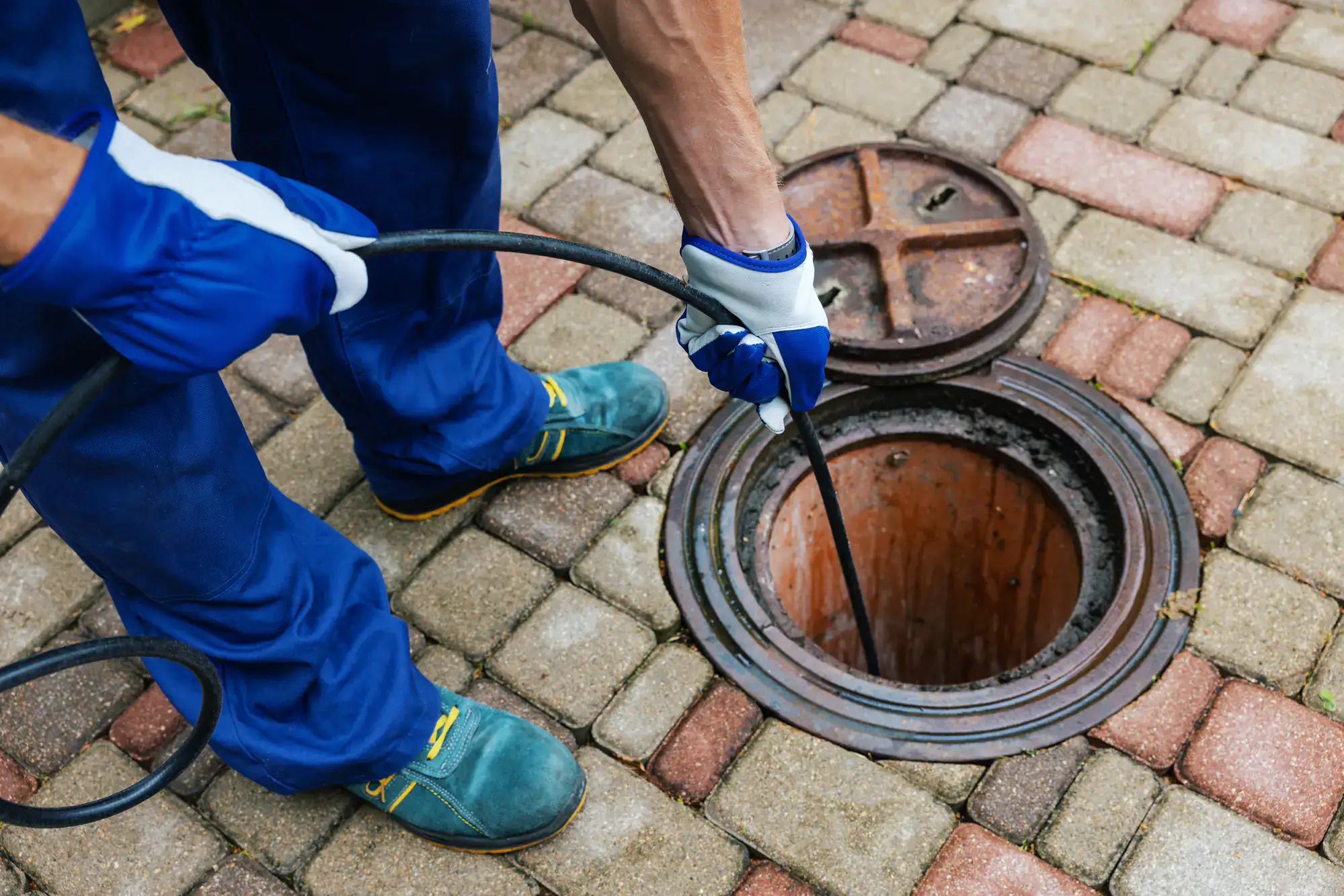
Most drain clogs start with buildup. In kitchen lines, it’s grease and food particles that accumulate on the pipe walls over years of use. In bathroom drains, it’s soap scum and hair. These don’t clear with liquid drain cleaners — those products can actually damage older pipes while doing little to remove the underlying buildup. What clears them is mechanical cleaning: a drain snake for localized clogs, or hydro jetting for stubborn or recurring blockages that have built up further down the line.
The more serious version of this problem involves the main sewer line. El Dorado County’s established neighborhoods have mature trees — and tree roots are drawn to the moisture and nutrients inside sewer pipes. They infiltrate through small cracks or loose joints and grow over time until they’re causing partial or complete blockages. Heavy winter rains compound this, saturating the soil and pushing additional groundwater into aging sewer lines through those same entry points.
When a main line is partially blocked, you’ll often notice it in the form of multiple slow drains at once, gurgling sounds from toilets when you run a sink, or sewage odors coming up through floor drains. These are signs the problem is further down the system than a plunger can reach. A camera inspection is the right first step — it shows exactly what’s happening and where, so the repair is targeted rather than exploratory.
Ignoring a slow main line drain long enough typically ends in a sewage backup. That’s a much more disruptive and expensive situation than a drain cleaning visit would have been. If your drains have been sluggish for a while, especially after heavy rain, it’s worth having someone take a look before the problem forces your hand.
Want live answers?
Connect with a Murray Plumbing expert for fast, friendly support.
Research consistently shows that around 60% of homeowners delay plumbing repairs because they’re worried about the cost. The problem is that most plumbing issues don’t stay the same size while you wait — they grow. A running toilet wastes up to 200 gallons of water per day, which translates to a noticeably higher water bill every single month it goes unaddressed. A dripping faucet can waste hundreds of gallons over time and often signals a worn component that, if left alone, will eventually require a full fixture replacement rather than a simple repair.
The repairs that get delayed most often are also the ones with the clearest cost-of-waiting math. Fixing a running toilet today is a straightforward, affordable job. Waiting six months means you’ve paid for the repair in wasted water anyway — and still need the repair.
A running toilet is one of those problems that blends into the background. You hear it cycling at night, you jiggle the handle, it stops — and you forget about it until it starts again. But a toilet that runs continuously can waste significant water daily. At California utility rates, that’s a measurable monthly loss that adds up quickly, especially during summer when water rates and usage are both elevated.
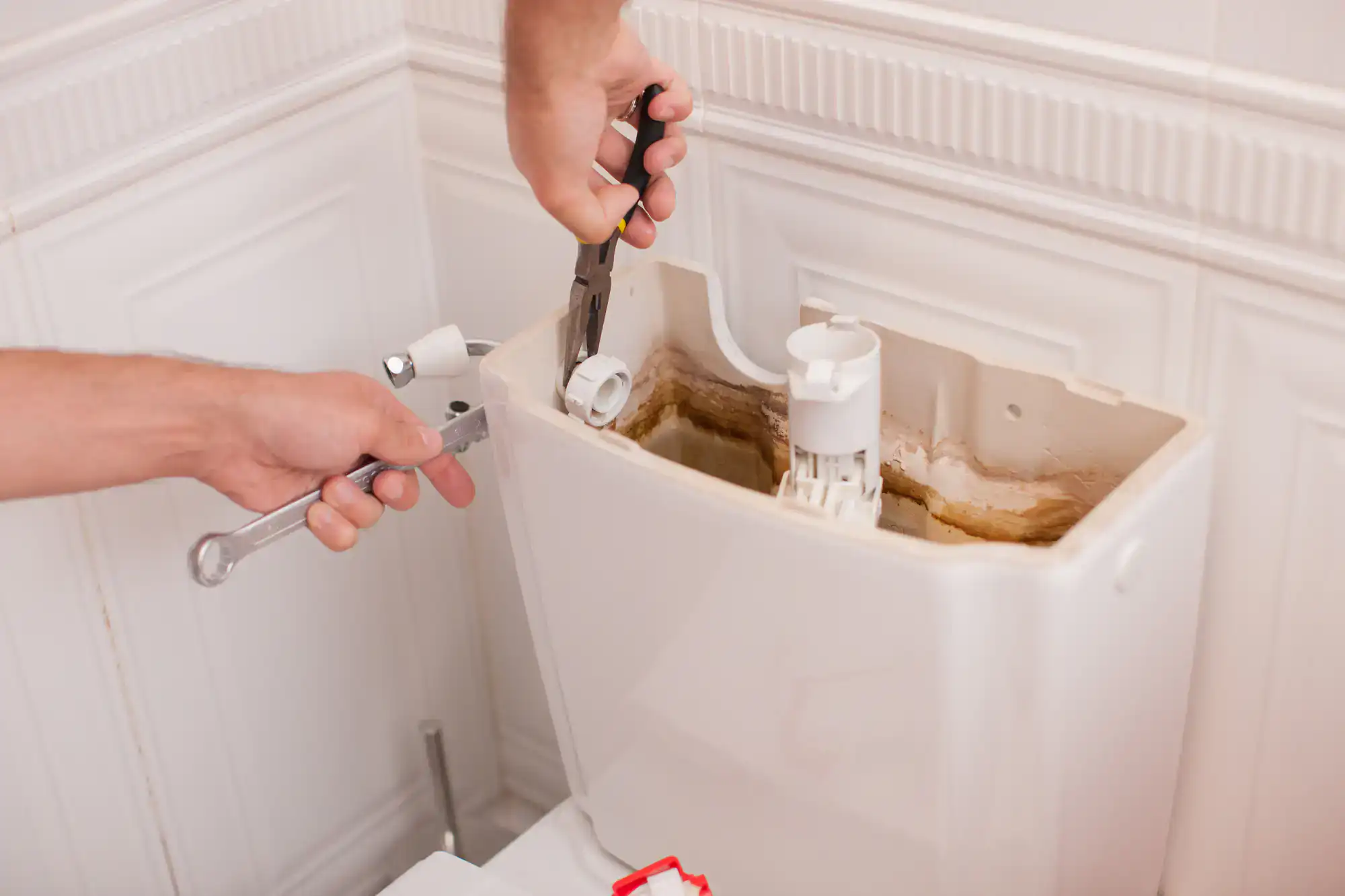
The most common causes are a worn flapper that no longer seals properly, a float that’s set too high, or a fill valve that’s reached the end of its life. These are relatively simple repairs when caught early. The issue is that homeowners tend to live with a running toilet far longer than they should because it doesn’t feel urgent — until the water bill arrives.
Faucet repairs follow a similar pattern. A dripping faucet at one drip per second can waste more than 3,000 gallons per year. Beyond the water waste, a persistent drip usually means a worn washer, O-ring, or cartridge inside the fixture. Left alone, that wear continues until the faucet starts leaking at the base or the valve seat corrodes — turning what would have been a $100 repair into a full fixture replacement.
In older El Dorado County homes, faucet issues are often compounded by the age of the fixtures themselves. A faucet installed in 1985 may not have replacement parts readily available, and the supply lines connected to it may be just as old and just as brittle. When we service an older fixture, we assess the full picture — not just the drip, but the condition of everything connected to it — so you’re not calling us back three months later for the next failure in the same line.
The honest answer to “should I fix this now?” is almost always yes. Not because we want the work, but because the math on delayed plumbing repairs rarely favors waiting.
This is one of the most common questions homeowners ask, and it’s a fair one. Not every plumbing issue requires a professional. Plunging a toilet, replacing a showerhead, or swapping out a faucet aerator are things most handy homeowners can handle without issue.
But California law draws a clear line: any plumbing work valued at $500 or more requires a licensed C-36 Plumbing Contractor. That’s not a suggestion — it’s a legal requirement enforced by the California Contractors State License Board. Hiring an unlicensed person for work above that threshold exposes you to real risk: no insurance coverage if something goes wrong, no recourse if the work fails, and potential code violations that surface when you try to sell the home.
The C-36 license isn’t easy to obtain. It requires at least four years of journeyman-level plumbing experience, passing two CSLB exams, maintaining a contractor’s bond, and carrying workers’ compensation insurance. It’s a meaningful credential, and it’s worth verifying before anyone starts work on your home. You can check any contractor’s license status at cslb.ca.gov using their license number. Ours is C1#916322.
In El Dorado County specifically, there are a few additional factors worth knowing. If your property is in an unincorporated area and uses a private septic system rather than municipal sewer — which is common in communities like Pollock Pines, Camino, and parts of Diamond Springs — the work involves a different set of considerations than a standard municipal sewer connection. A contractor who only works in suburban Sacramento may not be familiar with those distinctions. We are, because this is where we work every day.
Similarly, if your home is on well water rather than a municipal supply, the higher mineral content common in Sierra Nevada foothill wells can affect everything from water heater longevity to pipe scale buildup. Knowing that context changes how we approach a repair and what we recommend for long-term maintenance.
The short version: if the job is more than a simple swap-out, if it involves pipes, drains, water heaters, or anything underground, call a licensed plumber. The cost of doing it right the first time is almost always less than the cost of fixing it twice.
Most plumbing problems in El Dorado County homes are predictable, fixable, and far less expensive when addressed early. The 40-year-old pipes, the wet winters, the tree roots working their way into sewer lines — these aren’t surprises. They’re the reality of owning a home in the foothills, and they respond well to straightforward, honest repair work by someone who actually knows the area.
What matters most when choosing a plumber isn’t the flashiest website or the lowest number on a quick quote. It’s whether we show up when we say we will, tell you the real cost before we start, and do work that holds up. Those things are harder to fake than a five-star average — and they’re exactly what the people who’ve used us have said, repeatedly, in their own words.
If you’re dealing with a leak, a slow drain, a running toilet, or something you can’t quite diagnose yet, we’re available to help — same day for most repairs, around the clock for emergencies. Give us a call and we’ll tell you exactly what’s going on and what it’ll take to fix it.
Article details:
Share:
Continue learning: