
Hear from Our Customers

When a seismic event hits and no one’s home, there’s no one to smell the gas. That’s the reality for most property owners in Kyburz and it’s the exact scenario an automatic gas shut-off valve is built for. The moment ground movement reaches a seismic threshold, the valve closes on its own. No call needed. No one has to be there.
Kyburz sits at over 4,000 feet in the Eldorado National Forest, and most of the cabins along this corridor are older builds not exactly the generation of construction that came with seismic safety infrastructure built in. That matters because older gas line connections and fittings are more vulnerable to movement, and a rupture in a remote, unoccupied structure can go undetected for days. A properly installed seismic valve stops that scenario before it starts.
The Caldor Fire in 2021 forced evacuations right through this community. If you were one of the property owners who left not knowing what you’d come back to, you already understand what it means when something goes wrong out here and there’s no one around to catch it. This is the same logic applied to gas. One device, installed once, working automatically every time it’s needed.
We’ve been doing this work since 2009. Ryan Murray holds California C-36 License #916322 the specific plumbing contractor classification required by state law to legally perform gas line and seismic valve work. You can verify that in about 30 seconds at cslb.ca.gov. That’s not a detail we throw in to sound official it’s the difference between work that’s done right and work that creates liability.
We serve El Dorado County, including the Highway 50 mountain corridor communities that a lot of contractors simply won’t drive to. Kyburz is not a suburb. Getting a licensed, permitted installation done on a cabin near the South Fork of the American River takes someone who actually knows this region and is willing to show up for it. That’s what we do.
Our Google rating sits at 4.7 out of 5 based on 93 reviews, and the pattern you’ll see in those reviews is consistent: we show up when we say we will, the price matches the quote, and the work is documented. For absentee property owners coordinating service from Sacramento or the Bay Area, that track record is worth more than any sales pitch.
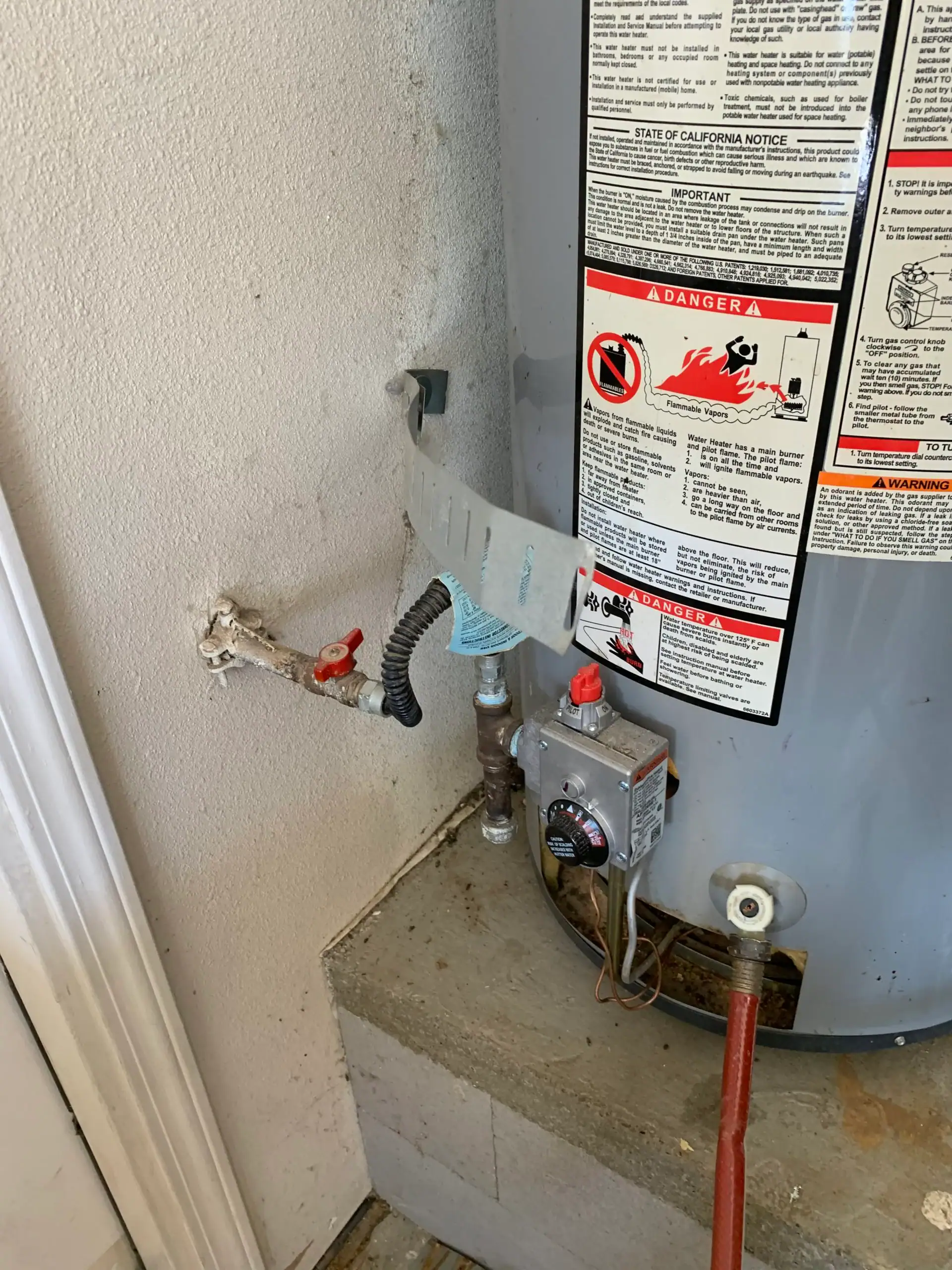
It starts with a free pre-installation assessment. Before any money changes hands, we look at your gas meter configuration, your existing piping, and the access conditions at your specific property. Kyburz cabins vary a lot some have straightforward setups, some have older or non-standard configurations that need a closer look before we can give you an accurate number. That assessment protects you from committing to a price before we’ve actually seen what we’re working with.
Once we’ve confirmed the scope, we pull a permit through El Dorado County Building Services. That’s standard on every installation we do not optional, not something we skip to save time. The permit creates a legal record of the work, which matters if you ever file an insurance claim, sell the property, or need to prove the installation was done to code. For a vacation cabin that changes hands or sits empty for months at a time, that documentation is genuinely valuable.
The installation itself typically takes a few hours. We mount a DSA-certified seismic shut-off valve at your gas meter, test the system, and schedule the county inspection. When it’s done, you get written documentation of the installation, the valve certification, and the permit record. We also walk you through what to do if the valve ever trips including why you should not attempt to reset it yourself until a licensed plumber has confirmed your lines are undamaged.
Ready to get started?
All-in pricing for most residential installations runs $400 to $650. That covers the DSA-certified valve, labor, permit fees, and all written documentation. There are no separate line items for the permit, no add-on fees for the inspection, and no surprise charges after the fact. If your property has conditions that affect the scope unusual meter placement, older piping, access limitations common in older Eldorado National Forest-area cabins we’ll identify that during the free assessment before any work begins.
Every valve we install is DSA-certified, which is the California standard required for seismic shut-off devices. This isn’t just a technical detail it’s what satisfies El Dorado County’s permit requirements, what insurance carriers look for when reviewing gas safety documentation, and what protects you in a real estate transaction. A non-certified valve installed without a permit is an unpermitted modification you’d have to disclose as a liability. A properly documented installation is the opposite of that.
If your Kyburz property runs on propane rather than utility-supplied natural gas which is common in areas this far up the Highway 50 corridor where PG&E gas mains don’t always reach we work with both systems. The valve selection and installation process differs slightly between natural gas and propane setups, and we’ll confirm the right approach during your assessment. Either way, the outcome is the same: automatic shut-off when it matters, documented and permitted so you have proof it was done right.
The vacancy is actually the reason the valve matters most. When a property is occupied, someone is there to notice a gas smell, call the utility, and get out. When a cabin in Kyburz sits empty for weeks or months which describes the majority of properties here, where roughly 85% of homes are seasonal or vacation use there’s no one to catch a post-earthquake gas leak before it becomes something much worse. An automatic seismic shut-off valve closes the moment ground movement hits the trigger threshold, regardless of whether anyone is home.
For absentee property owners, this is less about personal safety in the moment and more about protecting an unoccupied asset from a scenario that could unfold over days without anyone knowing. A gas leak in a remote cabin near the South Fork of the American River, with the nearest fire response significantly farther away than any urban setting, is a different kind of risk than the same scenario in a Sacramento suburb. The valve doesn’t require a phone call, a neighbor, or anyone being present. It just works.
For most residential properties, all-in pricing runs $400 to $650. That includes the DSA-certified valve, labor, permit fees, and written documentation. There are no separate charges for the permit or the county inspection those are part of the job, not add-ons. The range exists because older cabins and non-standard meter configurations both of which are common in the Kyburz area can affect the scope of the work. That’s exactly why we do a free pre-installation assessment before quoting a final number.
What you want to avoid is a low quote that excludes the permit fee, uses a non-certified valve, or doesn’t include a licensed plumber for the gas line work. Those installations may cost less upfront, but they create real problems unpermitted modifications you have to disclose in a sale, documentation that won’t satisfy an insurance carrier, and work that may not hold up under county inspection. Our pricing is all-in because that’s the only way the number is actually meaningful.
California does not have a universal statewide mandate requiring earthquake shut-off valves on all existing residential properties, and El Dorado County does not currently have a local ordinance that makes them universally required for existing homes. That said, installation is required to be permitted whenever the work is performed meaning you can’t legally have a valve installed without pulling a building permit through El Dorado County Building Services and scheduling a final inspection. Any contractor who skips the permit process is cutting a corner that creates real liability for you as the property owner.
Where the “requirement” conversation tends to come up is in real estate transactions and insurance reviews. Buyers’ inspectors frequently flag the absence of a seismic valve in older California properties, and some insurance carriers are beginning to treat it as a documentation item during policy reviews. If you’re planning to sell your Kyburz cabin or want to ensure your coverage is clean, having a permitted, documented installation on record is the proactive move regardless of whether a law technically requires it.
PG&E’s Sacramento-Sierra Division does serve El Dorado County broadly, but in a community as small and remote as Kyburz sitting at over 4,000 feet along the Highway 50 corridor individual properties don’t always have access to utility-supplied natural gas. If your property is connected to a PG&E meter, you have natural gas. If you have a tank on the property, you’re on propane. The physical setup at your meter or tank will make it obvious, and if you’re not sure, your utility bill or a quick call to PG&E will confirm it.
The reason this matters for earthquake valve installation is that the valve selection and installation process differs slightly between the two systems. Both natural gas and propane systems can be equipped with DSA-certified seismic shut-off valves, but the specific valve model and mounting configuration need to match your setup. We work with both systems and will confirm the right approach during the free pre-installation assessment so there’s no guesswork on your end before the job starts.
If your seismic valve trips while the property is unoccupied, the gas supply to the structure is cut off automatically which is exactly what it’s supposed to do. The valve stays closed until it’s manually reset by a licensed plumber after a safety inspection confirms the gas lines are undamaged. You should not attempt to reset it yourself, and you should not ask a caretaker or neighbor to reset it either. The whole point of the post-trip inspection is to confirm there’s no rupture before gas flows back into the structure.
If you’re managing a Kyburz property remotely and you find out the valve has tripped whether through a smart home alert, a caretaker call, or a visit the right sequence is: contact PG&E to report the event, then call a licensed C-36 plumber to inspect the lines before any reset is attempted. We’re available 24/7, including after regional seismic events when demand spikes and wait times at other contractors can stretch out significantly. Having our number on file before something happens is a lot easier than finding a licensed plumber on short notice from 60 miles away.
It can work in your favor, though the specific impact depends on your carrier and policy. Some insurance companies in California are beginning to treat seismic gas shut-off valves as a documented safety feature particularly for properties in higher-risk or remote locations. Having a permitted, DSA-certified installation on record gives your carrier something concrete to reference, which is different from an undocumented valve that was installed without a permit and can’t be verified.
For Kyburz vacation property owners, the insurance conversation has become more pointed in recent years. The broader California insurance market has been tightening carriers have been reassessing coverage in high-risk areas, and El Dorado County properties have not been exempt from that scrutiny, especially after the Caldor Fire drew attention to the region. A seismic valve installation doesn’t replace a broader conversation with your insurance agent, but it is a legitimate, documentable safety upgrade that puts you in a stronger position. We provide written documentation of every installation valve certification, permit record, and inspection confirmation specifically so you have something tangible to share with your carrier if it comes up.
Other Services we provide in Kyburz